

Green Transportation Strategies
Green Transportation Strategies: Sustainable Solutions for a Greener Future
1. Introduction
Green Transportation Strategies is revolutionising the way we move, transforming urban mobility and long-distance travel to align with sustainability goals.  With the escalating environmental crisis, businesses, governments, and individuals are increasingly focusing on eco-friendly travel solutions that mitigate climate change, reduce pollution, and improve public health. The transition towards greener transport is essential not only for environmental sustainability but also for economic benefits, energy efficiency, and the well-being of future generations.
The adverse impacts of conventional transport systems—such as high carbon emissions, air and noise pollution, and excessive fuel consumption—necessitate urgent action. Sustainable mobility solutions such as electric vehicles (EVs), improved public transport networks, and active travel alternatives are emerging as viable strategies to combat these challenges. This article explores the critical need for Green Logistics, innovative solutions, and strategies for fostering a cleaner, more sustainable future.
3 Key Takeaways
- Electric Vehicles and Sustainable Fuels are critical for reducing emissions and achieving climate goals.
- Public Transport and Active Travel should be prioritised to create cleaner, healthier cities.
- Businesses and Policies play a significant role in shaping the future of sustainable transport.
First a quick plug – Our sister companies Fresh Pharma whom are GDP Compliant Pharma couriers and ‘Fresh Fridge Hire‘ are our (compliant GDP) refrigerated vehicle hire.
2. The Need for Green Transportation Strategies
Traditional transport methods have significantly contributed to environmental degradation, particularly through the reliance on fossil fuels. The excessive use of petrol and diesel-powered vehicles has led to alarming carbon dioxide (CO2) emissions, exacerbating global warming and causing detrimental effects on air quality, biodiversity, and public health. The necessity for Green Transportation Strategies arises from several key issues:
Impact of Traditional Transport on Climate Change
The transport sector accounts for approximately 27% of the UK’s total greenhouse gas (GHG) emissions, making it the largest emitter of CO2. Road vehicles, particularly private cars, are the primary culprits, contributing to congestion, noise pollution, and respiratory diseases. The shift towards sustainable transportation is not merely a choice but a necessity for reducing environmental impact and achieving net-zero emissions targets.
Comparison of CO2 Emissions by Mode of Transport
| Mode of Transport | CO2 Emissions (g/km) |
| Petrol Car | 192 |
| Diesel Car | 171 |
| Electric Car | 0 (Exhaust pipe) |
| Bus | 105 |
| Bicycle | 0 |
As evident, electric vehicles and bicycles provide carbon-free mobility solutions, whereas traditional fossil-fuel vehicles continue to release harmful emissions.
Governments worldwide are recognising the urgency of adopting green transport strategies. Policies promoting low-emission zones, carbon taxes, and incentives for sustainable commuting options are becoming more prevalent. The UK government has also committed to phasing out the sale of new petrol and diesel cars by 2035, emphasising the push towards cleaner mobility.
3. Electric Vehicles (EVs) as a Key Solution
Electric vehicles (EVs) have emerged as one of the most promising solutions to combat transport-related carbon emissions. Unlike internal combustion engine (ICE) vehicles, EVs run on electricity, producing zero tailpipe emissions and significantly lowering overall carbon footprints when charged from renewable energy sources.
Growth of EV Infrastructure in the UK
The UK has witnessed a rapid expansion of EV infrastructure, driven by both government initiatives and private sector investment. Key developments include:
- Public Charging Points: Over 50,000 public EV charging points across the UK as of 2024, ensuring accessibility for EV owners.
- Fast-Charging Networks: Expansion of ultra-fast charging stations to reduce charging times and enhance convenience for long-distance travel.
- Government Incentives: Grants and subsidies for EV purchases, home charging installations, and tax benefits for businesses adopting electric fleets.
- Battery Technology Advancements: Ongoing research into longer-lasting batteries with faster charging times, reducing reliance on rare earth materials.
The increasing affordability of EVs, coupled with improvements in battery technology and expanded charging networks, is accelerating the transition towards widespread EV adoption.
4. Public Transport Innovations for Green Transportation Strategies
Public transport remains a crucial component of sustainable mobility, reducing the need for individual car ownership and minimising urban congestion. Innovations in public transport systems, particularly the shift towards electric and hydrogen-powered vehicles, are helping to lower emissions and enhance energy efficiency.
Sustainable Public Green Transportation Strategies
| Initiative | Impact on Emissions Reduction |
| Hydrogen Buses | 60% lower emissions |
| Electric Trains | Zero direct emissions |
| Trams | Powered by renewable energy |
Investment in electrified rail networks, smart ticketing systems, and digital infrastructure is also improving the efficiency and accessibility of public transport. Cities such as London, Manchester, and Edinburgh are increasingly adopting low-emission bus fleets and integrating smart transport systems to promote eco-friendly commuting.
5. Active Travel: Walking and Cycling as part of Green Transportation Strategies
Encouraging walking and cycling not only reduces emissions but also offers numerous health benefits. By prioritising pedestrian-friendly infrastructure and dedicated cycle lanes, cities can significantly reduce reliance on motor vehicles while fostering a healthier population.
Benefits of Active Travel
- Health Benefits: Regular walking and cycling lower the risk of cardiovascular diseases, obesity, and mental health issues, contributing to overall well-being.
- Environmental Impact: Zero emissions from active travel methods help in reducing air pollution and carbon footprints.
- Economic Advantages: Cost-effective transport alternatives with no fuel expenses, lowering commuting costs for individuals.
- Reduced Congestion: Encouraging active travel decreases traffic congestion, making urban areas more liveable.
Cities such as Amsterdam and Copenhagen serve as exemplary models for integrating cycling into urban planning. The UK is also investing in improved cycling infrastructure, with initiatives such as bike-sharing schemes, car-free zones, and pedestrianised high streets gaining traction.
6. Carpooling and Ride-Sharing Services
Carpooling and ride-sharing have emerged as key solutions for reducing greenhouse gas emissions and minimising road congestion. By decreasing the number of single-occupancy vehicles on the road, these services contribute to lower fuel consumption and improved air quality.
The Benefits of Carpooling and Ride-Sharing
One of the primary advantages of carpooling is the reduction in traffic congestion, which in turn leads to lower emissions. A study by the UK Department for Transport (DfT) suggests that if every commuter car carried one additional passenger, traffic congestion could be reduced by up to 20%. Additionally, fewer vehicles on the road mean decreased wear and tear on infrastructure, leading to lower maintenance costs for public authorities.
Carpooling also offers financial benefits for commuters. By sharing fuel and maintenance costs, passengers and drivers can significantly lower their travel expenses. For example, a typical UK commuter travelling 20 miles daily could save over £1,000 annually by carpooling with one or more people.
Technological Advancements within Green Transportation Strategies
Ride-sharing services such as Uber and Lyft have revolutionised urban mobility by offering shared ride options. Their platforms use advanced algorithms to match passengers travelling in similar directions, reducing overall mileage and emissions. Additionally, corporate car-sharing schemes, such as those provided by businesses to employees, further enhance sustainability efforts. Companies like Liftshare and BlaBlaCar have seen significant growth in the UK, supporting a culture of shared travel.
Governments and local authorities are also promoting carpooling through initiatives such as High-Occupancy Vehicle (HOV) lanes, car-sharing parking benefits, and tax incentives for businesses that encourage shared transport.
7. The Role of Sustainable Fuels
Sustainable fuels play a crucial role in reducing transport-related carbon emissions. As traditional petrol and diesel contribute significantly to global warming, alternative fuels such as biofuels, hydrogen, and synthetic fuels offer cleaner energy solutions.
Types of Sustainable Fuels
| Fuel Type | Emissions Reduction Potential | Key Advantages | Challenges |
| Biofuels | Up to 50% lower than petrol/diesel | Renewable, widely available | Land use and food crop competition |
| Hydrogen | Near-zero emissions | High energy density, clean burn | Infrastructure development, cost |
| Synthetic Fuels | Carbon-neutral possibilities | Compatible with existing engines | Energy-intensive production |
Biofuels, such as biodiesel and ethanol, are derived from organic materials and significantly reduce emissions. However, concerns about land use and agricultural impact remain. Hydrogen, particularly green hydrogen produced using renewable energy, offers near-zero emissions but requires significant infrastructure investment. Synthetic fuels, which can be produced using captured carbon dioxide and renewable energy, present an emerging opportunity for carbon-neutral transport.
The UK government is actively supporting research and adoption of these fuels, with initiatives such as grants for hydrogen refuelling stations and incentives for biofuel production.
8. Smart Cities and Green Transportation Strategies
As urban populations grow, smart cities are integrating technology to enhance transportation efficiency, reduce carbon, and improve overall sustainability. Digitalisation, artificial intelligence (AI), and the Internet of Things (IoT) are playing key roles in optimising traffic flow and reducing congestion.
Examples of Smart Green Transportation Strategies
| Solution | Impact |
| Low-emission zones (ULEZ) | Reduced air pollution and vehicle emissions |
| Congestion charges | Decreased traffic in city centres |
| AI-driven traffic management | Enhanced flow, reduced idling emissions |
| Smart public transport | Increased efficiency of buses and rail networks |
| Cycling and pedestrian zones | Promotes sustainable, active travel |
London’s Ultra Low Emission Zone (ULEZ) has successfully reduced nitrogen dioxide (NO2) levels by nearly 50% since its implementation. Similarly, AI-driven traffic lights in cities like Manchester adjust timings based on real-time congestion levels, improving fuel efficiency and reducing emissions.
Investments in public transport, alongside pedestrian-friendly infrastructure, are key to achieving long-term sustainability in urban mobility.
9. Sustainable Aviation and Green Transportation Strategies in Air Travel
The aviation industry is a major contributor to greenhouse gas emissions, responsible for approximately 2.5% of global CO2 emissions. To address this, airlines and aerospace manufacturers are investing in new technologies, alternative fuels, and efficiency improvements.
Key Sustainable Aviation Initiatives
| Initiative | Expected Impact by 2030 |
| Electric Planes | Up to 80% lower emissions |
| Sustainable Aviation Fuels (SAFs) | 50% reduction in CO2 |
| Carbon Offsetting | Supports net-zero goals |
Electric aircraft, currently under development by companies like Rolls-Royce and Airbus, could significantly reduce emissions, especially for short-haul flights. Sustainable Aviation Fuels (SAFs), derived from waste oils and biomass, can cut CO2 emissions by up to 50%. Airlines such as British Airways and Virgin Atlantic are already incorporating SAFs into their operations.
Carbon offsetting schemes, where emissions are compensated through tree planting and renewable energy investments, are also gaining traction. While not a complete solution, they contribute to mitigating aviation’s environmental impact.
10. Eco-Friendly Shipping and Freight Transport in Green Transportation Strategies
The freight and shipping industry plays a vital role in global trade but is a significant source of emissions. The sector is now adopting electric and hybrid vehicles, optimised logistics, and green shipping practices to reduce its environmental footprint.
Sustainable Freight Initiatives
| Solution | Impact |
| Electric and hybrid lorries | Lower emissions, reduced fuel dependency |
| Green shipping fuels | Cleaner alternatives to heavy fuel oils |
| Optimised logistics | More efficient transport routes |
| Slow steaming | Lower fuel use by reducing ship speeds |
| Port electrification | Reduced emissions from docked ships |
The use of electric and hybrid freight vehicles is expanding, with major companies such as Tesla and Volvo developing zero-emission lorries. The maritime industry is also shifting towards liquefied natural gas (LNG) and hydrogen-based fuels to replace traditional heavy fuel oil.
Port electrification is another significant development, allowing ships to use onshore power rather than burning diesel while docked. This reduces both emissions and air pollution in port cities.
By implementing these sustainable measures, the transport and logistics industry is moving towards a greener future, supporting global efforts to combat climate change.
11. Policy and Regulations Driving Green Transportation Strategies
Governments worldwide are increasingly recognising the urgent need to address climate change and reduce greenhouse gas emissions. In the UK and the European Union (EU), stringent policies and regulations are being implemented to accelerate the transition towards Green Transportation Strategies. These measures aim to reduce reliance on fossil fuels, promote sustainable mobility, and ensure compliance with international climate agreements such as the Paris Agreement.
Key UK and EU Policies
- Ban on New Petrol and Diesel Cars by 2035
The UK government has announced a ban on the sale of new petrol and diesel cars by 2035, with a similar policy adopted by the EU. This landmark decision is a cornerstone of efforts to decarbonise the transport sector, which accounts for a significant portion of global carbon emissions. The ban is expected to drive a massive shift towards electric vehicles (EVs) and other low-emission alternatives. To support this transition, the government is investing in EV infrastructure, including charging points and battery recycling facilities. Additionally, grants and incentives are being offered to consumers to make EVs more affordable. - Stricter Emissions Standards for Manufacturers
The EU’s Euro 7 emissions standards, set to take effect in the coming years, will impose stricter limits on pollutants such as nitrogen oxides (NOx) and particulate matter (PM) from vehicles. These regulations will push manufacturers to innovate and adopt cleaner technologies, such as hybrid engines, hydrogen fuel cells, and fully electric powertrains. In the UK, the Zero Emission Vehicle (ZEV) mandate requires automakers to ensure that a growing percentage of their sales come from zero-emission vehicles, starting from 2024. - Investment in Renewable Energy-Powered Transport
Both the UK and EU are investing heavily in renewable energy sources to power the transport sector. This includes funding for solar, wind, and hydrogen energy projects, as well as the development of smart grids to support electric vehicles. For example, the UK’s Renewable Transport Fuel Obligation (RTFO) mandates that a certain percentage of transport fuel must come from renewable sources, such as biofuels and synthetic fuels. Similarly, the EU’s Green Deal includes a €20 billion investment in clean energy infrastructure, with a focus on transport.
Table: Key Policies Driving Green Transportation Strategies in the UK and EU
| Policy | Description | Impact |
| Ban on Petrol/Diesel Cars by 2035 | Prohibits the sale of new internal combustion engine vehicles from 2035. | Accelerates adoption of EVs and reduces carbon emissions. |
| Euro 7 Emissions Standards | Stricter limits on vehicle pollutants. | Encourages cleaner vehicle technologies and improves air quality. |
| Renewable Transport Fuel Obligation | Mandates a percentage of transport fuel from renewable sources. | Reduces reliance on fossil fuels and promotes sustainable energy. |
These policies are not only driving innovation but also creating a regulatory environment that incentivises businesses and individuals to adopt greener transport options.
12. The Role of Businesses in Green Transport Strategies
Businesses play a pivotal role in the transition to Green Transportation Strategies. As major contributors to carbon emissions through logistics, employee commuting, and corporate travel, companies are increasingly adopting sustainable practices to reduce their environmental impact. By integrating green transport strategies into their operations, businesses can not only meet regulatory requirements but also enhance their brand reputation and achieve long-term cost savings.
Business Initiatives
- Fleet Electrification
Many companies are transitioning their vehicle fleets to electric or hybrid models. For instance, delivery giants like Amazon and DPD have committed to electrifying their fleets, with Amazon ordering 100,000 electric delivery vans from Rivian. Fleet electrification reduces operational costs, as EVs have lower maintenance and fuel expenses compared to traditional vehicles. Additionally, businesses can benefit from government incentives, such as tax breaks and grants, for adopting green fleets. - Remote Work Policies
The COVID-19 pandemic has demonstrated the feasibility of remote work, and many businesses are now adopting flexible work policies to reduce employee commuting. By allowing employees to work from home, companies can significantly cut down on carbon emissions associated with daily travel. For example, a study by Global Workplace Analytics found that remote work could reduce greenhouse gas emissions by 54 million tons annually in the US alone. - Cycle-to-Work Schemes
Cycle-to-work schemes are gaining popularity as a way to promote active travel and reduce reliance on cars. These initiatives, supported by government tax incentives, allow employees to purchase bicycles and cycling equipment at a discounted rate. Companies like Halfords and Evans Cycles have reported increased participation in such schemes, which not only reduce emissions but also improve employee health and productivity.
Table: Benefits of Business Green Transportation Strategies
| Initiative | Benefits |
| Fleet Electrification | Lower operational costs, reduced emissions, and eligibility for government incentives. |
| Remote Work Policies | Reduced commuting emissions, improved employee work-life balance. |
| Cycle-to-Work Schemes | Promotes active travel, reduces car usage, and enhances employee well-being. |
By embracing these initiatives, businesses can contribute to a greener future while reaping economic and social benefits.
13. Technology and Innovation in Green Transportation Strategies
Technological advancements are at the forefront of the green transport revolution. Innovations in artificial intelligence (AI), the Internet of Things (IoT), and autonomous vehicles are transforming the way we travel, making transportation more efficient, sustainable, and accessible.
- AI and IoT in Transport
AI and IoT are being used to optimise traffic flow, reduce congestion, and improve fuel efficiency. For example, smart traffic management systems use real-time data to adjust traffic signals, reducing idle times and emissions. IoT-enabled sensors in vehicles and infrastructure provide valuable data for predictive maintenance, ensuring that transport systems operate efficiently. - Autonomous Vehicles
Self-driving cars and trucks have the potential to revolutionise transport by reducing human error, improving safety, and optimising routes. Autonomous vehicles can also be integrated into shared mobility services, reducing the number of cars on the road and lowering emissions. - Future Technologies
Emerging technologies such as hyperloop and high-speed rail promise to transform long-distance travel. Hyperloop systems, which use magnetic levitation to propel pods through low-pressure tubes, could enable travel at speeds of up to 700 mph, significantly reducing travel time and emissions. High-speed rail networks, like the UK’s HS2 project, offer a sustainable alternative to air travel for medium-distance journeys.
Table: Emerging Technologies in Green Transportation Strategies
| Technology | Description | Potential Impact |
| AI and IoT | Optimises traffic flow and vehicle efficiency. | Reduces congestion and emissions. |
| Autonomous Vehicles | Self-driving cars and trucks. | Improves safety and reduces the need for private car ownership. |
| Hyperloop | High-speed travel in low-pressure tubes. | Revolutionises long-distance travel with minimal environmental impact. |
These technologies are paving the way for a greener, more efficient transport system.
14. Challenges and Barriers to achieving the Green Transportation Strategies
Despite the progress made in Green Transportation Strategies, several challenges remain. These include infrastructure limitations, high costs, and public resistance, which must be addressed to ensure a smooth transition to sustainable mobility.
- Infrastructure Limitations
The lack of charging infrastructure for electric vehicles is a significant barrier to adoption. While the UK has over 30,000 public charging points, this number is insufficient to meet the growing demand. Expanding the EV charging network, particularly in rural areas, is essential to support the transition to electric vehicles. - High Costs
The upfront cost of electric vehicles and other green technologies can be prohibitive for many consumers. Government subsidies and incentives, such as the UK’s Plug-in Car Grant, are crucial to making green transport more affordable. - Public Perception
Misconceptions about the performance and reliability of green transport options can deter adoption. Public awareness campaigns and education initiatives are needed to highlight the benefits of sustainable mobility.
Table: Challenges and Solutions in Green Transportation Strategies
| Challenge | Solution |
| Charging Infrastructure | Expand EV charging networks and invest in fast-charging technology. |
| High Costs | Provide government subsidies and incentives for green transport options. |
| Public Perception | Launch awareness campaigns to educate the public about the benefits of green transport. |
15. Future Outlook
Green Transportation Strategies is no longer a choice but a necessity for a sustainable future. Governments, businesses, and individuals must work together to overcome challenges and accelerate the shift towards eco-friendly mobility. The future of transport lies in electric vehicles, renewable energy, and innovative technologies that prioritise sustainability.
The journey towards green transport is well underway, but collective action is needed to drive meaningful change. Let’s embrace the opportunities and challenges ahead to build a greener, more sustainable future for all
Green Logistics
- What are green transportation methods?
Green transportation methods are eco-friendly ways to move people or goods, including electric vehicles, public transit, cycling, walking, and rail transport that reduce emissions.
- What are the 5 strategies for sustainable development?
They include efficient resource use, renewable energy adoption, waste reduction, sustainable transportation, and environmental protection policies.
- What are the strategies of green logistics?
Green logistics strategies focus on reducing carbon emissions, optimizing routes, using energy-efficient vehicles, recycling packaging, and adopting eco-friendly supply chain practices.
- What are the 5 transport methods?
The five main transport methods are road, rail, air, water, and pipeline transport.
- What are the 4 methods of transport?
The four common methods are road, rail, air, and water transport.
- How can we promote green transportation?
We can promote green transportation by encouraging public transit, using electric or hybrid vehicles, developing cycling infrastructure, and supporting carpooling initiatives.
- What are the 4 types of transportation?
The four types are road, rail, air, and water transportation.
- What are five types of green technology?
Five types include solar power, wind energy, electric vehicles, energy-efficient buildings, and smart grids.
- What are the 5 types of transportation?
They are road, rail, air, water, and pipeline transportation.
- What are green techniques?
Green techniques are practices that reduce environmental impact, such as using renewable energy, minimizing waste, recycling, and adopting eco-friendly manufacturing and transport methods.


Carbon Reduction Plan
Carbon Reduction Plan Guidance for the Logistics Industry
In an era where environmental concerns are paramount, the need to address Carbon Reduction Plan (CRP) and reduce our impact on the planet has become crucial. CRP provides a strategic framework for organisations and communities to minimise their greenhouse gas emissions and work towards a sustainable future. This article aims to guide you through the concept of CRP, their key components, challenges in implementation, successful case studies, and the numerous benefits they offer.
First a quick plug – Our sister companies Fresh Pharma whom are GDP Compliant Pharma couriers and ‘Fresh Fridge Hire‘ are our (compliant GDP) refrigerated vehicle hire.
Click the link at the end of this post for your FREE UK government template download
 Understanding Carbon Reduction Plans
What is a Carbon Reduction Plan?
A CRP is a comprehensive strategy that outlines the steps and measures needed to reduce carbon dioxide (CO2) and other greenhouse gas emissions. It serves as a roadmap for organisations, cities, and individuals to quantify their carbon footprint, set targets, and implement strategies to achieve emissions reductions.
Importance of Carbon Reduction Plans
Carbon reduction plans play a crucial role in mitigating climate change and transitioning to a low-carbon economy. By addressing the sources of greenhouse gas emissions, such as energy consumption, transportation, and waste management, these plans pave the way for sustainable practices and contribute to global efforts to limit temperature rise.
Benefits of Implementing Carbon Reduction Plans
Implementing CRP offers numerous benefits. It helps organisations and communities enhance their environmental stewardship, improve resource efficiency, reduce operating costs, and demonstrate their commitment to sustainability. Furthermore, it can strengthen reputation, attract eco-conscious customers, and foster innovation.
Key Components of a Carbon Reduction Plan
A well-structured carbon reduction plan consists of several key components, each playing a vital role in achieving emission reduction goals.
Setting Goals and Targets
The first step in creating a carbon reduction plan is setting clear and measurable goals and targets. These objectives should be aligned with international frameworks such as the Paris Agreement and consider both short-term and long-term goals.
Assessing Carbon Footprint
To effectively reduce carbon emissions, it is essential to assess the organisation’s or community’s carbon footprint. This involves calculating the total greenhouse gas emissions generated across various activities, including energy consumption, transportation, waste generation, and supply chain.
Identifying Reduction Strategies
Once the carbon footprint is determined, the next step is to identify suitable reduction strategies. This may involve implementing energy-efficient technologies, promoting renewable energy adoption, optimising transportation systems, improving waste management practices, and encouraging sustainable procurement.
Implementing Measures and Monitoring Progress
After selecting the reduction strategies, it is crucial to implement them effectively. This includes allocating resources, engaging stakeholders, and establishing monitoring and reporting mechanisms to track progress and ensure continuous improvement.
Creating an Effective Carbon Reduction Plan
Conducting a Baseline Assessment
To create an effective carbon reduction plan, it is important to conduct a baseline assessment. This involves evaluating the current state of emissions, identifying the major sources, and understanding the potential for reduction in each area.
Establishing Realistic Goals and Targets
Setting realistic and achievable goals is crucial for the success of a CRP. Goals should consider the organisation’s or community’s capacity, available resources, and external factors. They should be specific, measurable, attainable, relevant, and time-bound (SMART).
Identifying Suitable Reduction Strategies
Based on the baseline assessment, suitable reduction strategies should be identified. This may involve a combination of energy efficiency measures, renewable energy adoption, waste reduction and recycling initiatives, transportation optimization, and behaviour change campaigns.
Engaging Stakeholders
Successful implementation of a carbon reduction plan requires the active involvement and support of stakeholders. This includes employees, management, suppliers, customers, and the local community. Engaging stakeholders through communication, education, and collaboration helps create a shared vision and fosters commitment.
Allocating Resources and Budget
Implementing a CRP may require financial resources. Allocating a budget for initiatives such as energy audits, equipment upgrades, renewable energy installations, and employee training is essential. Additionally, considering the long-term cost savings resulting from emissions reduction can justify the investment.
Monitoring and Reporting
Regular monitoring of progress is crucial to ensure the effectiveness of the plan. Monitoring mechanisms should be established to track energy consumption, emissions, waste generation, and other relevant metrics. Periodic reporting allows for transparency, accountability, and identification of areas for improvement.
Challenges and Solutions in Implementing Carbon Reduction Plans
- Lack of Awareness and Understanding
One of the major challenges in implementing carbon reduction plans is the lack of awareness and understanding among stakeholders. Many individuals and organisations are unaware of the impact of their activities on carbon emissions or the available strategies to reduce them. Education and awareness campaigns can help address this challenge.
- Limited Resources and Funding
Limited financial resources can hinder the implementation of carbon reduction plans, especially for small businesses or underfunded organisations. Seeking external funding opportunities, leveraging government incentives, and prioritising initiatives with high returns on investment can help overcome this challenge.
- Technological and Infrastructural Barriers
In some cases, the lack of appropriate technologies or infrastructure can impede the adoption of carbon reduction measures. Collaborating with technology providers, exploring innovative solutions, and advocating for supportive policies and regulations can help overcome these barriers.
- Regulatory Compliance
Complying with regulatory requirements related to carbon emissions can be challenging, particularly for industries with complex operations. Staying updated with applicable regulations, investing in emission monitoring systems, and collaborating with regulatory bodies can aid in meeting compliance obligations.
- Engaging Stakeholders
Engaging stakeholders and obtaining their buy-in is crucial for the success of a carbon reduction plan. This requires effective communication, involvement in decision-making processes, and addressing concerns or resistance. Building partnerships with relevant stakeholders, such as community organisations, industry associations, and government agencies, can help overcome this challenge.
Case Studies: Successful Carbon Reduction Plans
Company A: Achieving Carbon Neutrality through Renewable Energy
Company A, a manufacturing firm, implemented a carbon reduction plan that focused on transitioning to renewable energy sources. They installed solar panels on their facilities, reducing their reliance on grid electricity and significantly lowering their carbon emissions. Additionally, they invested in energy-efficient equipment and implemented employee training programs to promote energy conservation practices. As a result, Company A successfully achieved carbon neutrality and reduced their operational costs.
City B: Implementing Sustainable Transportation Solutions
City B recognized the importance of addressing transportation-related emissions and implemented a comprehensive plan. They prioritised the development of a robust public transportation system, including electric buses and bike-sharing programs. The city also invested in infrastructure to support walking and cycling, reducing the reliance on private vehicles. Through these initiatives, City B significantly decreased carbon emissions from transportation and improved air quality for its residents.
Organisation C: Reducing Emissions through Energy Efficiency Measures
Organization C, a non-profit organisation, implemented a plan focused on energy efficiency measures. They conducted energy audits of their buildings and implemented upgrades such as LED lighting, efficient HVAC systems, and smart energy management systems. Organization C also engaged employees in energy conservation practices, raising awareness and encouraging behavioural changes. As a result, they achieved substantial energy savings and a significant reduction in carbon emissions.
Benefits and Impacts of Carbon Reduction Plans
Environmental Benefits
Implementing carbon reduction plans leads to significant environmental benefits. By reducing greenhouse gas emissions, these plans contribute to mitigating climate change, preserving natural resources, and protecting ecosystems. They help in conserving biodiversity, improving air quality, and minimising environmental pollution.
Economic Advantages
Carbon reduction plans can bring economic advantages to organisations and communities. By implementing energy-efficient measures, businesses can reduce operating costs, improve resource efficiency, and enhance their competitive edge. Additionally, renewable energy investments create new job opportunities and stimulate economic growth in the clean energy sector.
Health and Social Benefits
Reducing carbon emissions has direct health and social benefits. By transitioning to cleaner energy sources and improving air quality, carbon reduction plans help reduce respiratory diseases and other health issues associated with pollution. Moreover, they contribute to creating healthier and more liveable communities, promoting well-being and quality of life for residents.
Conclusion
Implementing a comprehensive plan is crucial for organisations, cities, and individuals to address climate change and work towards a sustainable future. By setting clear goals, assessing carbon footprints, implementing reduction strategies, engaging stakeholders, and monitoring progress, we can achieve significant emissions reductions and contribute to global efforts to combat climate change. The numerous benefits, including environmental preservation, economic advantages, and improved health and well-being, make the implementation of carbon reduction plans a win-win for all. Let us take action now and pave the way for a greener and more sustainable world.
Carbon Reduction plan
- Why are carbon reduction plans important?
Carbon reduction plans are vital for addressing climate change, reducing greenhouse gas emissions, and transitioning to a sustainable future. They provide a roadmap for organisations and communities to take concrete actions and contribute to global efforts in combating climate change.
- How can businesses benefit from implementing carbon reduction plans?
Businesses can benefit from carbon reduction plans in multiple ways. By implementing energy-efficient measures and transitioning to renewable energy sources, they can reduce operating costs, enhance their environmental stewardship, attract eco-conscious customers, and improve their reputation.
- What are some key challenges in implementing carbon reduction plans?
Challenges in implementing carbon reduction plans include lack of awareness and understanding, limited resources and funding, technological and infrastructural barriers, regulatory compliance requirements, and engaging stakeholders. Overcoming these challenges requires education and awareness campaigns, seeking external funding opportunities, collaborating with technology providers, staying updated with regulations, and effective communication with stakeholders.
- Are there any regulatory requirements for carbon reduction plans?
Regulatory requirements for carbon reduction plans vary across jurisdictions. Many countries and regions have implemented regulations and policies to address carbon emissions, such as carbon pricing mechanisms and emission reduction targets. It is crucial to stay informed about the specific requirements applicable to your location and industry.
- How can individuals contribute to carbon reduction efforts?
Individuals can play a significant role in carbon reduction efforts. Simple actions such as conserving energy at home, using public transportation or carpooling, reducing waste, recycling, and supporting sustainable products and services can contribute to lowering carbon emissions. Additionally, raising awareness, advocating for sustainable practices, and participating in community initiatives can make a positive impact.
Food Waste - The Carbon and Financial Cost
Food Waste in Temperature Controlled Logistics: Reducing Loss Across the UK Supply Chain
Food Waste in Temperature Controlled Logistics remains a pressing concern across the United Kingdom. Approximately 9.5 million tonnes of food are wasted annually
This costs the UK economy close to £20 billion each year. A substantial proportion occurs within the supply chain. Temperature controlled logistics plays a crucial role in protecting perishable goods. These include fresh produce, meat, seafood, dairy, and chilled ready meals. When temperature control fails, spoilage accelerates rapidly.
Even minor fluctuations can shorten shelf life significantly. Food Waste in Temperature Controlled Logistics increases carbon emissions unnecessarily. Wasted food represents wasted energy, water, and labour. Retailers and distributors also face reputational risk. Consumers increasingly expect sustainable practices from suppliers.
The challenge requires coordinated action across storage, transport, and distribution stages. Cold chain management must remain consistent from farm to retailer. Any break in that chain creates financial and environmental consequences. Fortunately, targeted strategies can reduce avoidable waste. Modern technologies and improved collaboration offer practical solutions. Businesses that address Food Waste in Temperature Controlled Logistics strengthen resilience. They also support national sustainability objectives and regulatory compliance.
First a quick plug – Our sister companies Fresh Pharma whom are GDP Compliant Pharma couriers and ‘Fresh Fridge Hire‘ are our (compliant GDP) refrigerated vehicle hire.
3 Key Takeaways on Food Waste in Temperature Controlled Logistics
1. Food Waste in Temperature Controlled Logistics Is Largely Preventable
Food Waste in Temperature Controlled Logistics often results from avoidable operational weaknesses. Poor visibility, inaccurate forecasting, and inconsistent temperature control create unnecessary losses. Small temperature deviations can significantly reduce shelf life. Perishable goods deteriorate quickly without strict monitoring. Real-time tracking systems and predictive analytics reduce this risk. Preventative maintenance also limits refrigeration failures. Businesses that monitor performance data consistently identify problems earlier. Early intervention protects product quality and revenue. Waste reduction therefore depends on proactive management rather than reactive correction.
2. Technology and Collaboration Are Essential for Reducing Food Waste in Temperature Controlled Logistics
Technology alone cannot solve Food Waste in Temperature Controlled Logistics. However, it provides the foundation for informed decision-making. RFID tracking, wireless sensors, and automated forecasting improve accuracy. Data sharing between suppliers and retailers enhances planning. Joint forecasting reduces surplus production and overstocking. Collaboration ensures smoother scheduling and fewer delivery delays. Integrated systems create transparency across the supply chain. This transparency improves accountability at every stage. Organisations that share data responsibly reduce inefficiencies significantly.
3. Sustainable Practices Strengthen Profitability and Reputation
Reducing Food Waste in Temperature Controlled Logistics delivers financial and environmental benefits. Lower spoilage rates protect profit margins. Reduced landfill disposal lowers environmental impact. Customers increasingly favour sustainable suppliers. Retailers prefer logistics partners with measurable waste reduction targets. Strong environmental performance enhances brand trust. Businesses that prioritise sustainability gain competitive advantage. Long-term resilience depends on responsible cold chain management. Waste reduction is therefore both a moral and commercial imperative within the UK food sector.
Food Waste in Temperature Controlled Logistics: Understanding the Wider Impact
Food Waste in Temperature Controlled Logistics affects environmental, social, and economic systems. When chilled goods spoil during transit, landfill disposal often follows. This produces methane emissions and increases landfill pressure. The UK food supply chain involves producers, processors, wholesalers, logistics firms, and retailers. Each stage presents potential waste risks. Temperature deviations during overnight storage can compromise dairy products. Delays in distribution may reduce shelf life for fresh fruit. Supermarkets often reject deliveries that fall outside temperature specifications. This creates additional waste upstream. The table below outlines key impacts.
| Impact Area | Consequence | UK Example |
| Environmental | Increased greenhouse gases | Landfill disposal of spoiled produce |
| Economic | Financial losses | Rejected chilled supermarket deliveries |
| Social | Reduced food availability | Less surplus for redistribution charities |
| Operational | Compliance breaches | Failure to meet food safety standards |
Food Waste in Temperature Controlled Logistics therefore extends beyond financial loss. It undermines sustainability goals and resource efficiency. Addressing these impacts requires coordinated cold chain management. Improved oversight and accountability are central to long-term reduction.
The Issue of Food Waste in Temperature Controlled Logistics: Supply Chain Challenges
Food Waste in Temperature Controlled Logistics arises from the complexity of modern distribution networks. Perishable goods require strict temperature ranges during every transfer point. Chilled goods typically remain between 0°C and 5°C. Frozen items require temperatures below -18°C. Any deviation increases bacterial growth risk. The perishability of food amplifies small operational errors. Delays at regional depots can shorten retail shelf life. Inadequate vehicle maintenance may lead to refrigeration breakdowns. Multi-drop deliveries increase door opening frequency. This raises internal vehicle temperatures. Poor forecasting may result in surplus stock. Overstocked goods often expire before sale. The issue involves interconnected factors. The table below summarises common systemic challenges.
| Contributing Factor | Operational Effect | Waste Outcome |
| Complex supply chains | Multiple handling stages | Higher damage risk |
| Inaccurate forecasting | Overstocking | Expired inventory |
| Weak monitoring | Delayed response | Spoilage during transit |
| Limited coordination | Inefficient scheduling | Reduced product freshness |
Food Waste in Temperature Controlled Logistics therefore reflects structural inefficiencies. Addressing root causes requires better data sharing and proactive management.
Causes of Food Waste in Temperature Controlled Logistics: Root Cause Analysis
Understanding Food Waste in Temperature Controlled Logistics begins with identifying root causes. Lack of supply chain visibility remains a leading factor. Without real-time data, businesses struggle to manage stock accurately. Inefficient inventory systems often result in surplus goods. Excess inventory increases spoilage risk. Packaging also plays a vital role. Inadequate insulation exposes products to fluctuating temperatures. Poor pallet stacking may restrict airflow in refrigerated vehicles. Humidity mismanagement can damage fresh produce quality. Collaboration gaps compound the issue. Suppliers and retailers may operate with misaligned forecasts. Limited technology adoption reduces process optimisation. Staff training gaps further increase risk. Improper handling during loading can compromise chilled goods quickly. The table below categorises root causes clearly.
| Root Cause | Practical Example | Resulting Impact |
| Poor visibility | No live tracking system | Overstocking or delays |
| Weak packaging | Thin insulation liners | Temperature excursions |
| Limited collaboration | Separate planning systems | Excess buffer stock |
| Inadequate training | Incorrect loading methods | Damaged perishables |
| Minimal analytics use | No demand modelling | Inefficient distribution |
Food Waste in Temperature Controlled Logistics therefore stems from preventable inefficiencies. Identifying these drivers supports targeted improvement strategies.
Practical Solutions
Reducing Food Waste in Temperature Controlled Logistics requires coordinated strategic action. Improving supply chain visibility offers immediate benefit. Real-time monitoring tools provide accurate stock and temperature data. Technologies such as RFID and wireless sensors improve transparency. Efficient inventory management systems reduce overstocking. Automated forecasting tools align supply with demand. Proper packaging protects goods against temperature fluctuations. Insulated containers and humidity control extend shelf life. Collaboration across suppliers and retailers improves scheduling accuracy. Shared data reduces duplication and surplus production. Technology adoption enhances predictive maintenance of refrigeration units. Data analytics identifies inefficiencies before loss occurs. Staff training strengthens operational discipline. Employees must understand correct loading procedures. They should also recognise early warning signs of spoilage. The table below summarises key strategies.
| Strategy | Benefit | Example in Practice |
| Real-time tracking | Faster intervention | Monitoring chilled fleet vehicles |
| Automated forecasting | Reduced surplus | Retail demand modelling |
| Improved packaging | Extended shelf life | Insulated pallet covers |
| Stakeholder collaboration | Better coordination | Joint supply planning meetings |
| Staff education | Fewer handling errors | Cold chain compliance workshops |
Food Waste in Temperature Controlled Logistics can decline significantly with structured implementation. A proactive approach strengthens profitability and sustainability simultaneously.
Strengthening Long-Term Resilience and Sustainability
Food Waste in Temperature Controlled Logistics demands sustained strategic attention from every stakeholder within the UK supply chain. The cold chain does not end at delivery. It extends into retail storage and final distribution stages. A single weak link can undermine the entire process. Temperature deviations, delayed decision-making, and fragmented communication all contribute to avoidable waste. Businesses must therefore embed waste reduction into daily operational culture. Leadership commitment is essential for measurable improvement. Clear performance indicators should track temperature compliance and spoilage rates. Continuous monitoring enables early intervention before products deteriorate. Investment in predictive maintenance reduces refrigeration breakdowns. Advanced analytics can forecast seasonal demand more accurately. This reduces surplus stock and markdown losses.
Sustainability reporting increasingly influences procurement decisions. Retailers favour logistics partners demonstrating measurable waste reduction. Environmental responsibility now shapes brand perception across the UK market. Food Waste in Temperature Controlled Logistics also connects to national carbon reduction targets. Lower waste volumes reduce landfill emissions and resource consumption. Collaboration with redistribution charities can further minimise surplus disposal. Surplus edible food may support community programmes rather than enter waste streams. Staff engagement also plays a critical role. Employees must understand how daily decisions influence waste outcomes. Ongoing training reinforces accountability and compliance standards.
Ultimately, reducing Food Waste in Temperature Controlled Logistics strengthens operational resilience. It protects profit margins while supporting environmental stewardship. Businesses that prioritise innovation and collaboration will lead industry transformation. A transparent, data-driven cold chain ensures long-term sustainability and competitive advantage within the evolving UK food sector.
Food Waste
- How much food is wasted in the UK each year?
Approximately 9.5 million tonnes of food are wasted in the UK each year.
- Why is temperature controlled logistics particularly challenging in terms of managing food waste?
Temperature controlled logistics involves the storage, transportation, and distribution of temperature-sensitive goods, which are more susceptible to spoilage and waste.
- What are some common causes of food waste in temperature controlled logistics?
Some common causes include lack of visibility across the supply chain, inefficient inventory management, poor packaging and storage practices, lack of collaboration between stakeholders, limited use of technology, and lack of training and education for staff.
- Why is reducing food waste important?
- How can technology be used to reduce food waste in temperature controlled logistics?
Technology such as data analytics and automation can help to optimise processes and reduce waste by identifying areas for improvement and reducing human error.

Future-Proof Supply Chains with technology
How Leveraging Standards Through Technology Can Future-Proof Supply Chains
Supply chains are the backbone of many businesses, and disruptions to the logistics network can cause significant financial losses. In recent years, supply chains have faced numerous challenges, including natural disasters and severe weather, geopolitical tensions, and pandemics. To future-proof supply chains, businesses need to leverage standards through technology. In this blog, we will discuss how technology can help businesses to achieve standardised and future-proof supply chains.
First a quick plug – Our sister companies Fresh Pharma whom are GDP Compliant Pharma couriers and ‘Fresh Fridge Hire‘ are our (compliant GDP) refrigerated vehicle hire.
 The Importance of Standards in Supply Chains to Future-Proof Supply Chains
Why Standards are Important
SOPs (Standard Operating Procedure’s) play a critical role in ensuring that supply chains run smoothly. Standards provide a common language for suppliers, manufacturers, and retailers, ensuring that everyone is on the same page. Standards also help to ensure that products are of consistent quality and meet regulatory requirements.
Different Types of Standards
There are various types of standards in supply chains, including product standards, process standards, and management standards. Product standards define the characteristics of a product, while process standards define the steps involved in producing the product. Management standards, such as ISO 9001, define the requirements for a quality management system.
Standards and Technology to Future-Proof Supply Chains
Technology Solutions for Standardisation
Emerging Technologies are Boosting Business Growth and achieve standardised supply chains by providing solutions for data sharing, traceability, and quality control. For example, blockchain technology can be used to create a transparent and traceable supply chain, while the internet of things (IoT) can be used to monitor product quality in real-time.
Benefits of Technology and Standards
By leveraging technology and standards, businesses can achieve numerous benefits, including improved efficiency, reduced costs, and enhanced customer satisfaction. For example, by implementing a transparent and traceable supply chain, businesses can reduce the risk of counterfeiting and ensure that products are ethically sourced.
Future-Proofing Supply Chains with Standards and Technology
The Importance of Future-Proofing Supply Chains
In today’s rapidly evolving business landscape, the importance of future-proofing supply chains cannot be overstated. As global markets become more interconnected and consumer expectations continue to rise, businesses must adopt strategies that allow them to remain agile and resilient. The use of digital twins in supply chain management reduce risks immensely. Future-proofing supply chains is about preparing for unforeseen disruptions, leveraging technological advancements, and staying ahead of customer demand. This proactive approach ensures sustained competitiveness and operational efficiency.
Resilience to Disruptions
One of the primary benefits of future-proofing supply chains is enhanced resilience. In recent years, supply chains have faced numerous disruptions, from natural disasters and geopolitical tensions to pandemics like COVID-19. Such events can cause significant delays, increased costs, and loss of customer trust. By implementing robust risk management strategies, businesses can mitigate the impact of these disruptions. This includes diversifying suppliers, maintaining strategic stock reserves, and investing in advanced analytics for predictive modelling. A resilient supply chain can quickly adapt to disruptions, ensuring continuity of operations and minimizing financial losses.
Leveraging Technological Advancements
Future-proofing supply chains involves the integration of cutting-edge technologies that drive efficiency and innovation. Technologies such as the Internet of Things (IoT), artificial intelligence (AI), blockchain, and automation are revolutionizing supply chain management. IoT devices enable real-time tracking of goods, providing visibility into every stage of the supply chain. Supply chain management and AI with machine learning algorithms can optimise inventory management, forecast demand more accurately, and enhance decision-making processes. Blockchain technology ensures transparency and security in transactions, reducing the risk of fraud and errors. Automation, through the use of robotics and autonomous vehicles, streamlines operations and reduces reliance on manual labour. By embracing these technologies, businesses can enhance their operational capabilities and respond swiftly to market changes.
Here’s an extended version of your blog with additional detail and depth for the section “Adapting to Changing Customer Demands” and seamless continuation into the following sections:
Adapting to Changing Customer Demands
Consumer behaviour is continually evolving, driven by factors such as technological advancements, socio-economic shifts, and changing preferences. Businesses that fail to adapt to these changes risk losing their competitive edge. Future-proofing supply chains involves understanding and anticipating customer needs and being able to fulfill them efficiently. This requires a customer-centric approach, leveraging data analytics to gain insights into buying patterns and preferences. Businesses can then tailor their supply chain strategies to ensure timely delivery of products, customization options, and superior customer service.
Agile supply chains that can adapt to varying demand levels and offer personalized experiences are more likely to retain customer loyalty and drive long-term growth. This agility not only involves rapid response to market fluctuations but also proactive planning using predictive analytics and demand forecasting tools. By integrating real-time data from multiple sources, including social media trends, e-commerce activity, and consumer feedback, businesses can identify emerging customer expectations more quickly.
Furthermore,
Companies must also focus on omnichannel fulfilment strategies, ensuring that customers receive a seamless experience whether they are shopping online, in-store, or through hybrid models such as click-and-collect. The rise of customization and personalization has further amplified the need for flexible manufacturing and distribution processes, which can cater to niche demands without sacrificing efficiency.
In addition,
Collaboration across the supply chain is essential. Businesses should foster strong partnerships with suppliers, logistics providers, and technology platforms to build responsive, resilient networks. By creating transparent and interconnected ecosystems, companies can quickly reroute shipments, source alternative materials, and adjust production schedules to meet sudden shifts in customer preferences.
Ultimately, businesses that invest in adaptability, digital capabilities, and customer-centric supply chain models will be best positioned to thrive in a marketplace where consumer demands are more dynamic and fast-changing than ever before.
Enhancing Sustainability to Future-Proof Supply Chains
Sustainability is becoming a critical factor in supply chain management. Consumers and regulators are increasingly demanding environmentally responsible practices. Future-proofing supply chains means incorporating sustainability into every aspect of operations. This includes reducing carbon footprints, minimizing waste, and sourcing materials ethically.
Sustainable practices not only meet regulatory requirements but also enhance brand reputation and appeal to eco-conscious consumers. More customers are actively choosing brands that demonstrate genuine commitment to environmental and social responsibility. To meet these expectations, businesses are adopting circular economy principles, focusing on recycling, reusing, and designing products with end-of-life considerations in mind.
Implementing green logistics will Future-Proof Supply Chains
Such as optimising transportation routes, consolidating shipments, using electric or low-emission vehicles, and transitioning to renewable energy sources in warehouses and production facilities, contributes to both cost savings and operational efficiency. Additionally, digital supply chain tools can assist in monitoring environmental performance, enabling businesses to track their sustainability metrics in real-time and make data-driven improvements.
By integrating sustainability goals with supply chain strategies, companies can also unlock new opportunities for innovation, such as developing eco-friendly packaging, partnering with green suppliers, or introducing sustainable product lines. Businesses that prioritize sustainability are better positioned to meet future regulatory changes and societal expectations while building stronger, trust-based relationships with their customers.
Future-Proof Supply Chains
Supply chains are essential to the success of many businesses. Disruptions can cause significant financial losses and long-term reputational damage. By leveraging global standards and advanced technologies. Businesses can create standardized, interconnected networks that are more resilient and transparent. Solutions such as blockchain and the Internet of Things (IoT) play a pivotal role in enhancing supply chain visibility. Enabling real-time tracking, improving traceability, and ensuring stringent quality control.
Future-proofing supply chains is not simply about reacting to challenges. It’s about building proactive, flexible systems that can evolve alongside shifting market dynamics, technological innovations, and sustainability imperatives. Businesses that embrace agility, invest in customer-focused solutions, and commit to sustainable practices. They will be best equipped to remain competitive and responsive to future changes in the global marketplace.
Standardised supply chains can lead to improved efficiency, reduced costs, and enhanced customer satisfaction. Technology solutions such as blockchain and the IoT can help achieve transparency, traceability, and quality control in supply chains. Management standards define the requirements for a quality management system, such as ISO 9001. Future-proofing supply chains is essential to remain competitive and adapt to future changes in the marketplace. Standards provide businesses with best practices and ensure that they meet regulatory and ethical requirements, which are essential for future-proofing supply chains. Some challenges businesses face when future-proofing their supply chains include the need for significant investments in technology, changes in regulatory requirements, and changes in customer demand. C Yes, technology solutions for supply chains can be customised for different industries to meet their specific needs and requirementsLeveraging Standards

Final-mile logistics through the Gig Economy
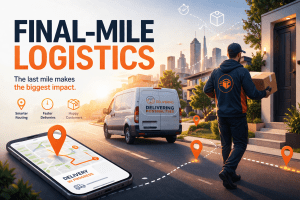 Final-mile logistics through the Gig Economy -Exploring the Historical Shifts
The Final-mile logistics sector has experienced a remarkable transformation over the years, and at the heart of this evolution lies the gig economy. In this article, we’ll embark on a journey to explore how the gig economy has revolutionised the final stage of product delivery. From the rise of gig workers to their substantial impact on the last-mile landscape, we’ll uncover the pivotal changes that have shaped this dynamic industry.
First a quick plug – Our sister companies Fresh Pharma whom are GDP Compliant Pharma couriers and ‘Fresh Fridge Hire‘ are our (compliant GDP) refrigerated vehicle hire.
Unveiling the Last-Mile logistics: A Gig Economy Perspective
As we dive into this exploration, it’s essential to understand the significance of the last-mile in the broader supply chain. This final stage of delivery is often the most critical, as it represents the moment when products reach the hands of the end consumers. Historically, this phase was characterised by traditional courier services, which relied on full-time employees to ensure timely deliveries. However, the landscape has shifted dramatically.
Riding the Gig Wave: The Gig Economy’s Influence on Final-mile logistics
The gig economy has surged into the Final-mile logistics landscape, reshaping it in multiple ways. Gig workers, often referred to as independent contractors or freelancers, have become the backbone of this transformation. Their on-demand availability and flexible schedules enable companies to meet the evolving needs of modern consumers. Let’s analyse the multifaceted impact of gig workers on Final-mile logistics:
Analysing the Impact of Gig Workers on the Final-mile logistics Landscape
Gig workers, also known as drivers or couriers in the last-mile context, have brought about several significant changes to the way products are delivered to consumers. The impact can be summarised in the following key areas:
- Increased Speed and Efficiency:
- Gig workers, armed with navigation apps and real-time tracking tools, have revolutionised the speed and efficiency of Final-mile logistics. Their familiarity with local areas and ability to respond quickly to orders has reduced delivery times significantly.
- Flexibility and On-Demand Availability:
- The gig economy is defined by flexibility, and this quality extends to Final-mile logistics. Gig workers are available on a per-task basis, making it easier for companies to scale their delivery workforce according to demand fluctuations.
- Cost-Effective Solutions:
- Many businesses find cost advantages in the gig economy model. They can save on full-time employee expenses and offer competitive pricing to consumers. This has allowed businesses to offer more affordable delivery options.
From Couriers to Gig Workers: The Last-Mile Evolution
To appreciate the full scope of the last-mile’s transformation, we need to step back and trace the evolution of Final-mile logistics personnel over the years. The journey begins with traditional courier services, which employed full-time couriers to ensure packages reached their destinations. However, with the advent of the gig economy, the nature of the workforce in this sector has undergone a significant shift.
In the past, courier services typically hired full-time employees with fixed schedules. These employees were responsible for delivering packages and mail. This model had its advantages, particularly in terms of company loyalty and a consistent workforce. However, it lacked the flexibility required to meet the ever-changing demands of the modern market.
As we transition from the historical context to the present, we can see how the gig economy has emerged as a dynamic solution to the challenges of Final-mile logistics. The next section will delve into the specific role of the gig economy in addressing the unique challenges posed by e-commerce delivery.
The Gig Economy’s Role in E-Commerce Last-Mile Challenge
The exponential growth of e-commerce has introduced unique challenges to the Final-mile logistics process. Consumers now expect faster delivery times, real-time tracking, and the ability to schedule deliveries at their convenience. This shift in consumer behaviour has put pressure on companies to adapt and meet these evolving expectations.
Stay with us as we explore how gig workers are rising to the occasion and offering innovative solutions. Plus the distinctive challenges of e-commerce delivery. The gig economy’s adaptability and on-demand nature make it particularly well-suited to address these challenges. We will dissect how this transformation is taking place.
In summary, the gig economy is reshaping the final stage of product delivery. Revolutionising the last-mile landscape, and providing efficient and cost-effective solutions. It’s a pivotal force in the world of e-commerce and modern consumer expectations. Thus making it an essential component of the evolving Final-mile logistics sector. In the next section, we’ll further analyse how gig workers are meeting the specific challenges posed by e-commerce, underlining their crucial role in this transformative journey.
The Gig Economy’s Role in E-Commerce Last-Mile Challenge
E-commerce has become a dominant force in the retail landscape, with consumers increasingly turning to online shopping for convenience and a vast array of product options. As this trend continues to rise, it brings forth unique challenges, particularly in the final stage of product delivery known as the last-mile. This article delves into the pivotal role played by gig workers in addressing the distinct challenges posed by e-commerce delivery.
How Gig Workers Are Addressing the Unique Challenges of E-Commerce Final-mile logistics
The rise of e-commerce has introduced several complexities and demands in the Final-mile logistics process. Consumers now expect fast, reliable, and often flexible delivery options, creating a need for adaptable and agile delivery personnel. Gig workers, with their on-demand availability, flexible schedules, and efficiency, have become key players in meeting these challenges head-on.
E-commerce presents a set of unique challenges for Final-mile logistics:
- Speed and Timeliness:
- Customers expect quicker deliveries, often with same-day or next-day options. Gig workers, who can respond to orders promptly, contribute significantly to meeting these expectations.
- Delivery Windows:
- Many consumers prefer specific delivery time slots. Gig workers’ flexibility allows companies to offer these personalised options, enhancing customer satisfaction.
- High Volume and Seasonal Peaks:
- E-commerce experiences surges during peak seasons and sales events. Gig workers can be scaled up or down as needed, providing the capacity to handle fluctuations in demand.
- Last-Mile Efficiency:
- Optimising the last-mile is critical for cost-effectiveness. Gig workers are skilled at navigating local areas, improving route planning, and reducing delivery costs.
- Customer Communication:
- Real-time tracking and communication are vital in e-commerce. Gig workers use technology to keep customers informed about their deliveries, enhancing the overall experience.
Final-mile logistics Gig Economy Trends: What Lies Ahead?
The gig economy’s role in Final-mile logistics is expected to grow and evolve in response to shifting consumer expectations and advancements in technology. Let’s take a glimpse into what the future holds for this transformative segment:
| Trends and Innovations in Final-mile logistics | Description |
| Advanced Route Optimization | Gig platforms and delivery companies will invest in cutting-edge route optimization tools to further improve efficiency, reduce delivery times, and lower costs. |
| Eco-Friendly Initiatives | Sustainability is a growing concern. Gig workers and delivery companies will adopt eco-friendly practices, including electric vehicles and reduced packaging, to align with evolving environmental standards. |
| Customised Services | Expect more personalised delivery experiences, with options for consumers to choose their preferred gig worker, delivery speed, and delivery window. |
| Last-Mile Automation | Automation, including the use of drones and autonomous vehicles, will complement gig workers, enhancing speed and precision in Final-mile logistics. |
| Enhanced Worker Benefits | Gig worker platforms will likely offer improved benefits, including insurance and earnings stability, to attract and retain a skilled and reliable workforce. |
Flexible Workforces and Fast Final-mile logistics: The Gig Economy Connection
The gig economy has proven to be the ideal connector between the demand for fast deliveries in the e-commerce era and a flexible, agile workforce. Gig workers, equipped with the right technology and support, enable companies to provide efficient and responsive Final-mile logistics services.
As e-commerce continues to thrive, the synergy between flexible gig workers and the need for rapid deliveries will remain a linchpin in the evolution of the Final-mile logistics sector. In our next section, we’ll explore the symbiotic relationship between e-commerce growth and the gig economy’s vital contribution to the last-mile ecosystem.
Challenges and Opportunities: Gig Economy Final-mile logistics Innovations
The gig economy has brought significant innovations to the Final-mile logistics sector. However, like any transformative force, it has also faced its share of challenges. In this section, we will explore how gig workers and companies have overcome hurdles and seized opportunities, ushering in a new era of Final-mile logistics.
How Gig Workers and Companies Are Overcoming Hurdles and Seizing Opportunities in the Final-mile logistics
Meeting High Demand
One of the key challenges in Final-mile logistics, especially in the context of e-commerce, is managing surges in demand. Gig workers have proven invaluable in this regard. Companies can swiftly scale their workforce to handle increased delivery requests during peak seasons and promotions. For gig workers, this means more opportunities for income.
Ensuring Consistency on the Final-mile logistics
Consistency in service quality can be challenging in a gig economy setup where delivery personnel change frequently. To address this, companies invest in training and technology. Gig workers are provided with training on customer service and efficient delivery practices, ensuring a consistent customer experience.
Navigating Urban Logistics
Urban areas pose unique challenges for Final-mile logistics, with congestion, limited parking, and complex routes. Gig workers equipped with GPS and route optimization technology are better positioned to navigate these obstacles efficiently.
Leveraging Technology
Technology, including mobile apps and real-time tracking, is a vital component of gig economy last-mile innovations. It enhances the customer experience, allows for efficient route planning, and provides gig workers with tools to perform their tasks more effectively.
The Human Element in Final-mile logistics: Gig Workers Unveiled
While technology plays a crucial role in Final-mile logistics, it’s essential not to overlook the human element. Behind every successful Final-mile logistics, there is a gig worker. In this section, we’ll delve into the stories of these individuals and explore the human side of the gig economy’s last-mile success.
Exploring the People Behind the Gig Economy’s Final-mile logistics Success Stories
Gig workers are a diverse group, encompassing people from various backgrounds, experiences, and motivations. They might be students, retirees, freelancers, or part-time workers. What unites them is their ability to adapt to a gig-based work model, where flexibility and on-demand availability are key.
| Type of Gig Worker | Motivation and Role |
| The Student Gig Worker | Many students turn to gig work to financially support themselves during their studies. The flexibility of gig work allows them to effectively balance academic commitments with earning income. |
| The Retiree Returning to Work | Retirees often find fulfilment and an additional source of income through gig work. Their wealth of experience and strong work ethic makes them valuable contributors to the gig economy. |
| The Freelancer Supplementing Income | Freelancers may take up gig work to supplement their irregular income. This provides them with a steady source of earnings while retaining the freedom and independence of freelance work. |
| The Part-Timer with a Side Gig | Some individuals who work part-time jobs choose to engage in gig work as a side hustle to increase their overall earnings. This flexible approach to work aligns with their lifestyle and financial goals. |
The Gig Worker’s Perspective on Final-mile logistics and gig economy
Gig workers enjoy the autonomy, flexible hours, and often the ability to choose the gigs they accept. While there are challenges, such as income stability and access to benefits, many gig workers appreciate the non-traditional career path the gig economy offers.
In the next section, we’ll explore how technology and gig workers have formed a winning combination that is revolutionising Final-mile logistics. This fusion is at the heart of the gig economy’s success in this sector, and it presents unique opportunities for further growth and innovation.
Conclusion to Final-mile logistics:
In the ever-evolving world of Final-mile logistics, the gig economy stands as a transformative force. Reshaping the landscape of product delivery and e-commerce. We’ve taken an in-depth journey through the historical shifts, explored how gig workers are addressing the unique challenges of e-commerce, and uncovered the innovations and human stories behind this remarkable transformation. The gig economy’s role in Final-mile logistics is poised for continued growth, promising both challenges and opportunities.
Challenges Met with Innovation:
The surge in demand, the need for consistency, navigating complex urban logistics, and other challenges have been met with innovative solutions. Gig workers and companies have adapted through training, technology, and flexible scaling, ensuring efficiency and quality.
The Human Element:
It’s crucial to recognize that behind the gig economy’s success are diverse individuals with their unique stories and motivations. The gig workforce spans students, retirees, freelancers, and part-timers. Each finding a niche in the gig economy that suits their lifestyle and financial goals.
Technology’s Role:
Technology is a vital enabler of the gig economy’s influence on Final-mile logistics. Mobile apps, real-time tracking, and route optimization tools enhance efficiency and the overall customer experience, making the gig worker’s job more effective.
A Bright Future:
The synergy between technology and the gig economy creates an environment ripe for future innovation. Advanced route optimization, eco-friendly initiatives, customised services, automation, and improved worker benefits are on the horizon, promising a brighter future for Final-mile logistics.
In closing,
the gig economy’s transformative journey in Final-mile logistics is a testament to adaptability and the human spirit. As we look ahead, the gig economy’s continued growth. Its role in shaping the future of delivering products to our doorsteps is a narrative filled with promise and potential. It’s a testament to the power of innovation. The capacity of individuals to meet challenges, seize opportunities, and redefine industries.
Last Mile
- What is last-mile delivery?
Last-mile delivery is the final stage of the delivery process where goods are transported from the distribution centre to the end customer.
- What are the challenges of last-mile delivery?
Some of the common challenges of last-mile delivery include traffic congestion, delivery density, time sensitivity, and last-minute changes.
- How can I manage customer expectations and communications?
You can manage customer expectations and communications by providing accurate delivery estimates, offering delivery tracking, and providing clear communication channels.

Rewilding Your Workplace
Rewilding Your Workplace: Innovative Strategies to Integrate Nature
A Conservation Approach
Rewilding Your Workplace is a progressive conservation strategy aimed at restoring and protecting natural processes and wilderness areas. This involves reintroducing native species, rebuilding ecosystems, and allowing nature to reclaim lands that have been altered by human activities. The goals of rewilding are to enhance biodiversity, combat climate change, and foster sustainable ecosystems.
First a quick plug – Our sister companies Fresh Pharma whom are GDP Compliant Pharma couriers and ‘Fresh Fridge Hire‘ are our (compliant GDP) refrigerated vehicle hire.
Business changing/ building project.
Using a positive business wide project like ‘Rewilding Your Workplace’ is a massive opportunity and are rare. The Rewilding Your Workplace project can obviously create teams but it can actually have a business building drive throughout the business which is rare to say the list..
Everyone in the business from the fork lift driver to the MD are pulling the same way, makes a business, a very powerful entity. The unicorn of business utopia.
Creating cross functional teams that normally would not work together creates diversity but also a deeper understanding of each other roles and business pressures. Creating a very fertile landscape to create and develop relationships and understanding of each other. The outcome from Rewilding Your Workplace has great ‘hard’ outcomes, but the soft outcomes heavily outweigh the former.
Something interesting and different going on when Rewilding Your Workplace
 We have found that many customers, clients, local schools, and nurseries etc, want to get involved (and I mean physically as well). the kids love nature.
The local press and media have a great story to run with regular updates. This create diverse relationship with many groups and intuitions not only in our local but business community.
Showing creativity and the appetite to be the market leader is a clear signal to all parties
Also your company websites and blogs actually have something interesting to read about.
Understanding Rewilding Your Workplace in a Corporate Context
Definition and Origins of Rewilding
Rewilding your workplace offers a myriad of benefits, ranging from improved employee well-being and productivity to environmental sustainability and corporate image enhancement typically refers to restoring natural habitats and ecosystems, but in the corporate context, it involves integrating natural elements into the workspace to create a healthier, more productive environment. This can range from simple additions like indoor plants to more comprehensive strategies such as creating outdoor workspaces and using natural materials in office design.

The Concept of Rewilding your Workplace
Applying rewilding principles to the workplace means transforming traditional office environments into spaces that harmonise with nature. This transformation is driven by a growing recognition of the benefits that nature brings to employee wellbeing and productivity.
The Shift Towards Nature-Inspired Rewilding Your Workplace
As businesses increasingly prioritise employee health and sustainability, nature-inspired workspaces are becoming more common. Companies are adopting biophilic design principles, which incorporate natural elements to create a more engaging and restorative work environment.
Key Takeaways
| Benefit | Description |
| Improved Employee Wellbeing | Nature can reduce stress and increase morale |
| Enhanced Productivity | Natural environments boost creativity and focus |
| Sustainability | Eco-friendly designs support environmental goals |
The Benefits of Integrating Nature when Rewilding Your Workplace
Psychological and Physical Health Benefits
Stress Reduction and Mental Health Improvements
Integrating nature into the workplace has been shown to significantly reduce stress levels among employees. The presence of plants, natural light, and outdoor spaces can create a calming atmosphere, which is crucial for maintaining mental health.
Physical Health Enhancements through Nature
Exposure to natural elements can also lead to physical health benefits. Improved air quality, increased physical activity from outdoor spaces, and the presence of plants can enhance overall health, reducing sick days and improving employee wellbeing.
Improved Air Quality and its Effects
Plants are natural air purifiers. They can remove toxins from the air, leading to a healthier indoor environment. Improved air quality can decrease respiratory issues and boost overall health, contributing to a more productive workforce.
Boosting Employee Productivity and Creativity
The Impact of Natural Environments on Focus when Rewilding Your Workplace
Natural elements in the workplace can enhance concentration and focus. Studies have shown that employees working in environments with natural light and greenery are more productive and have better cognitive function.
Creativity Boosts from Natural Elements
Nature has a profound effect on creativity. The varied and stimulating environments created by incorporating natural elements can inspire innovative thinking and problem-solving skills among employees.
Case Studies and Real-Life Examples
Several companies have successfully integrated nature into their workplaces with remarkable results. For example, tech giants like Google and Amazon have incorporated extensive green spaces and biophilic design elements to create more engaging and productive work environments.
Environmental and Sustainability Advantages from Rewilding Your Workplace
Reducing the Carbon Footprint from Rewilding Your Workplace
Integrating natural elements can significantly reduce a workplace’s carbon footprint. Green roofs, living walls, and energy-efficient natural ventilation systems contribute to sustainability goals by reducing energy consumption and promoting biodiversity.
Promoting Biodiversity through Corporate Landscaping
Corporate landscapes designed with native plants and green spaces can support local biodiversity. This not only enhances the aesthetic appeal but also promotes ecological balance and sustainability.
Long-Term Sustainability Benefits
Nature-inspired workplaces are not just a trend; they offer long-term benefits. Sustainable practices, reduced energy consumption, and healthier work environments contribute to a more sustainable and resilient business model.
Creating Green Spaces: Indoor Plants and Vertical Gardens
Best Plants for Office Environments
Choosing the right plants is essential for creating a thriving indoor environment. Some of the best plants for offices include snake plants, pithos, and spider plants. These plants are low-maintenance, thrive in low-light conditions, and are excellent air purifiers.
Maintenance Tips for Indoor Office Plants
To keep indoor plants healthy, it’s important to understand their specific needs. Regular watering, appropriate lighting, and occasional fertilising are key. Additionally, creating a plant care schedule can ensure that plants receive the attention they need to thrive.
Maximising the Benefits of Indoor Plants
Strategically placing plants around the office can maximise their benefits. Plants should be placed in areas where employees spend the most time, such as workstations, break rooms, and meeting areas. This ensures that the calming and air-purifying effects are felt throughout the office.
Designing and Implementing Vertical Gardens
Choosing the Right Plants for Vertical Gardens
Vertical gardens, or green walls, are an excellent way to incorporate a large number of plants into the workplace without taking up floor space. Choosing plants that thrive in vertical setups, such as ferns, ivy, and succulents, is crucial for success.
Installation and Maintenance of Vertical Gardens
Installing a vertical garden requires careful planning. It’s important to consider factors like lighting, irrigation, and structural support. Once installed, regular maintenance, including pruning and watering, is necessary to keep the garden healthy and vibrant.
Case Studies of Successful Vertical Gardens in Offices
 Many companies have successfully implemented vertical gardens, transforming their workspaces into green havens. For instance, the green wall at the CaixaForum in Madrid is a prime example of how vertical gardens can enhance the aesthetic and environmental quality of an office.
Outdoor Workspaces: Designing Nature-Inspired Areas
Planning and Designing Outdoor Office Areas
Creating outdoor workspaces involves careful planning to ensure functionality and comfort. Factors to consider include seating arrangements, shading options, and the integration of natural elements like plants and water features.
Choosing the Right Furniture and Features
Outdoor workspaces should be equipped with durable and comfortable furniture that can withstand various weather conditions. Additionally, features like Wi-Fi access, charging stations, and adequate lighting are essential to make the space practical for work.
Ensuring Year-Round Usability
To ensure that outdoor workspaces can be used year-round, it’s important to incorporate elements that provide comfort in different weather conditions. This might include heaters for colder months, fans or misting systems for summer, and canopies or pergolas for rain protection.
Benefits of Rewilding Your Workplace
Enhanced Employee Morale and Wellbeing
Outdoor workspaces offer a refreshing change from traditional indoor settings, boosting employee morale and overall well being. Access to fresh air and natural surroundings can significantly improve mood and job satisfaction.
Increased Collaboration and Team Building
Nature-inspired outdoor spaces can foster greater collaboration and team building. Informal outdoor meetings and group activities can enhance communication and strengthen team bonds.
Boosted Creativity and Innovation
Working in natural settings has been shown to boost creativity and innovation. The stimulating environment provided by outdoor workspaces can inspire new ideas and approaches, benefiting both individual and collective productivity.
Natural Light and Ventilation: Enhancing the Indoor Environment when Rewilding Your Workplace
Benefits of Natural Light on Productivity
Natural light is known to have a positive impact on productivity. Exposure to natural light helps regulate circadian rhythms, leading to better sleep patterns, increased alertness, and improved cognitive function.
Design Strategies to Increase Natural Light
To maximise natural light in the office, consider design strategies such as open floor plans, large windows, and the use of glass partitions. Reflective surfaces and light colours can also help distribute natural light more effectively.
Using Skylights and Large Windows Effectively
Skylights and large windows are excellent ways to bring more natural light into the office. They can be strategically placed to maximise light exposure throughout the day while minimising glare and heat gain.
Improving Indoor Ventilation
Importance of Fresh Air when Rewilding Your Workplace
Good ventilation is crucial for maintaining a healthy indoor environment. Fresh air helps dilute indoor pollutants and can significantly improve air quality, reducing the risk of respiratory issues and increasing overall comfort.
Implementing Natural Ventilation Systems
Natural ventilation systems, such as operable windows and ventilated facades, can enhance air circulation without relying solely on mechanical systems. This not only improves air quality but also reduces energy consumption.
Balancing Ventilation with Energy Efficiency
Balancing ventilation with energy efficiency involves using advanced technologies like energy recovery ventilators (ERVs) that capture heat from outgoing air to warm incoming fresh air. This approach ensures a comfortable and healthy environment while maintaining energy efficiency.
Biophilic Design Principles: Bringing Nature Indoors
Introduction to Biophilic Design in Rewilding Your Workplace
Definition and Origins
Biophilic design stems from the concept of biophilia, which suggests humans have an innate connection to nature. The term was popularised by biologist Edward O. Wilson in the 1980s, who posited that this connection is crucial for our well-being and productivity. Biophilic design aims to incorporate natural elements into built environments, enhancing the human-nature connection.
Importance in Modern Workplaces
Modern workplaces often lack natural elements, leading to sterile environments that can negatively impact employee well-being. Biophilic design seeks to address this by integrating nature into the workplace, thereby improving mental health, reducing stress, and boosting productivity.
Key Elements of Biophilic Design
Natural Light
One of the most impactful elements of biophilic design is natural light. Access to daylight can improve mood, increase alertness, and enhance overall well-being. Design strategies to maximise natural light include using large windows, skylights, and glass partitions.
Greenery and Plant Life
Incorporating plants and greenery is a straightforward way to bring nature indoors. This can range from simple potted plants to elaborate green walls and indoor gardens. Plants improve air quality, reduce stress, and create a more aesthetically pleasing environment.
Natural Materials
Using natural materials like wood, stone, and bamboo in office design helps to create a warm and inviting atmosphere. These materials not only enhance the visual appeal but also contribute to a healthier indoor environment by reducing the presence of synthetic compounds.
Water Features
Water features such as indoor fountains or aquariums can provide a calming effect, reduce stress, and improve air quality through humidification. The sound of flowing water also has a soothing effect that can enhance concentration and creativity.
Implementing Biophilic Design in the Workplace
Conducting a Needs Assessment
Before implementing biophilic design, conduct a needs assessment to understand the specific requirements of your workplace. This involves evaluating the current environment, identifying areas for improvement, and determining the most suitable natural elements to incorporate.
Engaging Employees in the Design Process
Involving employees in the design process can lead to more effective and personalised biophilic design solutions. Solicit feedback and ideas from staff to ensure the new design meets their needs and preferences.
Balancing Aesthetics and Functionality
While the primary goal of biophilic design is to create a connection with nature, it’s important to balance aesthetics with functionality. Ensure that natural elements do not impede workflow or create distractions but rather enhance the overall work environment.
Case Studies and Examples
Google’s Office in Zurich
 Google’s Zurich office incorporates numerous biophilic elements, including extensive indoor greenery, natural materials, and water features. These design choices create a vibrant and stimulating work environment that supports employee well-being and productivity.
Benefits of Biophilic Design
Improved Mental Health and Well-being
Biophilic design has been shown to reduce stress, anxiety, and depression, leading to improved mental health and overall well-being. Natural elements create a more relaxing and enjoyable work environment.
Enhanced Productivity and Creativity
Exposure to nature and natural elements can boost cognitive function, leading to increased productivity and creativity. Employees in biophilic environments tend to perform better and generate more innovative ideas.
Sustainability and Environmental Impact
Biophilic design often involves sustainable practices, such as using renewable materials and enhancing energy efficiency through natural light and ventilation. This not only benefits the environment but also aligns with corporate sustainability goals.
Incorporating Water Features for a Calming Effect when Rewilding Your Workplace
Introduction to Water Features in the Workplace
The Calming Effect of Water
Water features, such as fountains, aquariums, and ponds, have a universally calming effect. The sound of flowing water is inherently soothing, helping to reduce stress and create a tranquil atmosphere. This can be particularly beneficial in high-stress work environments.
Historical Use of Water in Design
The use of water in design has ancient roots, from the Roman atrium fountains to Japanese koi ponds. These historical precedents highlight the timeless appeal and benefits of incorporating water into living and working spaces.
Types of Water Features for Rewilding Your Workplace
Indoor Fountains
Indoor fountains are a popular choice for offices. They come in various sizes and styles, from tabletop models to large wall-mounted installations. Fountains not only add visual interest but also improve air quality through humidification.
Aquariums
 Aquariums bring a slice of aquatic life into the office. Watching fish can reduce anxiety and improve mood. Aquariums also provide a unique focal point and can be a conversation starter, enhancing social interaction in the workplace.
Water Walls
Water walls are visually striking features where water cascades down a vertical surface. These installations can be integrated into walls or stand alone as partitions. They add a dynamic element to office design and help in noise reduction.
Ponds and Water Gardens
For offices with outdoor spaces, ponds and water gardens can create a serene outdoor retreat. These features can be designed with native plants and fish, promoting biodiversity and providing a peaceful area for breaks and meetings.
Benefits of Water Features when Rewilding Your Workplace
Stress Reduction
The sound of flowing water can lower stress levels and promote relaxation. This effect is particularly beneficial in high-pressure work environments, helping employees stay calm and focused.
Improved Air Quality
Water features, especially those that involve moving water, can help humidify the air. This is particularly useful in dry climates or during winter months when indoor air can become dry due to heating systems.
Enhanced Aesthetic Appeal
Water features enhance the aesthetic appeal of the workplace. They add a natural and sophisticated element to office design, creating a more pleasant and inviting environment.
Implementing Water Features in the Office
Choosing the Right Water Feature
Selecting the appropriate water feature depends on the office layout, budget, and maintenance capabilities. Consider the space available, the desired impact, and the resources required for upkeep.
Maintenance Considerations
Regular maintenance is crucial to keep water features functioning properly and looking their best. This includes cleaning, checking water levels, and ensuring filtration systems are working correctly. Assigning maintenance tasks to a dedicated team or hiring a professional service can ensure longevity and efficiency.
Integrating Water Features into Office Design
Water features should be strategically placed to maximise their benefits. Consider areas where employees frequently gather, such as lobbies, break rooms, and meeting spaces. Integrating water features with other natural elements, like plants and natural light, can create a cohesive and harmonious design.
Case Studies and Examples for Rewilding Your Workplace
Salesforce Tower’s Water Wall
The Salesforce Tower in San Francisco features an impressive water wall in its lobby. This installation not only serves as a striking visual element but also creates a calming atmosphere for employees and visitors.
The AquaDom in Berlin
 The AquaDom in Berlin is the world’s largest cylindrical aquarium, located in the lobby of the Radisson Blu Hotel. This massive structure not only provides a stunning visual experience but also demonstrates the potential for large-scale aquatic installations in commercial spaces.
Using Natural Materials in Office Design and The Role of Wildlife-Friendly Landscaping when Rewilding Your Workplace
Introduction to Natural Materials
Benefits of Natural Materials
Natural materials such as wood, stone, and bamboo bring several benefits to office design. They are sustainable, durable, and often have a lower environmental impact compared to synthetic materials. Natural materials also contribute to a warm and inviting atmosphere, enhancing the overall aesthetic and comfort of the workspace.
Historical Context and Modern Trends
Historically, natural materials have been used in construction and design for centuries. Modern trends are rediscovering these materials, emphasising sustainability and biophilic design principles. The resurgence in their popularity reflects a growing desire to create healthier and more eco-friendly work environments.
Types of Natural Materials
Wood
Wood is a versatile and popular choice for office design. It can be used for flooring, furniture, wall panels, and decorative elements. Different types of wood offer various aesthetics and durability levels, making it suitable for diverse design styles.
Stone
Stone adds a sense of permanence and elegance to office interiors. It can be used for flooring, countertops, and accent walls. Stone materials such as granite, marble, and slate offer durability and a unique visual appeal.
Bamboo
Bamboo is an eco-friendly alternative to traditional wood. It grows quickly and is highly renewable, making it a sustainable choice. Bamboo can be used for flooring, furniture, and decorative elements, adding a modern and
Eco-Friendly Practices: Reducing Your Workplace’s Carbon Footprint
Importance of Reducing Carbon Footprint
Reducing the carbon footprint of your workplace is crucial for both environmental sustainability and corporate responsibility. It involves minimising greenhouse gas emissions generated by office activities and promoting practices that contribute to a healthier planet.
The Role of Businesses in Climate Action
Businesses play a significant role in combating climate change. By adopting eco-friendly practices, companies can significantly reduce their environmental impact, set industry standards, and inspire other organisations to follow suit.
Strategies to Reduce Carbon Footprint when Rewilding Your Workplace
Energy Efficiency Improvements
Improving energy efficiency is one of the most effective ways to reduce a workplace’s carbon footprint. This can be achieved through measures such as upgrading to LED lighting, using energy-efficient appliances, and optimising heating, ventilation, and air conditioning (HVAC) systems.
Table: Common Energy Efficiency Measures and Benefits
| Measure | Benefit |
| LED Lighting | Reduces energy consumption by up to 80% |
| Energy-Efficient Appliances | Lowers operational costs and emissions |
| HVAC Optimization | Enhances comfort and reduces energy use |
Renewable Energy Sources for Rewilding Your Workplace
Switching to renewable energy sources such as solar, wind, or geothermal power can drastically reduce your office’s carbon emissions. Installing solar panels or purchasing green energy from providers supports sustainable energy infrastructure.
Waste Reduction and Recycling
Implementing comprehensive waste reduction and recycling programs is essential. Encourage employees to reduce waste by minimising paper use, recycling office supplies, and composting organic waste. Setting up clearly labelled recycling stations can facilitate proper waste disposal.
Sustainable Transportation Options

Promote sustainable transportation options such as cycling, carpooling, public transport, and electric vehicles. Offering incentives like subsidies for public transit passes or installing electric vehicle charging stations can encourage employees to choose greener commuting methods.
Green Building Certifications
Pursuing green building certifications such as LEED (Leadership in Energy and Environmental Design) or BREEAM (Building Research Establishment Environmental Assessment Method) can guide sustainable building practices and improve environmental performance.
Table: Green Building Certifications and Benefits
| Certification | Benefit |
| LEED | Recognized globally, improves energy efficiency and sustainability |
| BREEAM | Comprehensive assessment, enhances building performance |
| WELL Building Standard | Focuses on human health and well-being |
Implementing Eco-Friendly Rewilding Your Workplace Practices
Green Office Supplies
Choose eco-friendly office supplies made from recycled or sustainable materials. This includes paper, pens, furniture, and cleaning products. Supporting companies that prioritise sustainability can amplify your efforts.
Digital Transformation
Reducing paper use by embracing digital tools and workflows can significantly cut down on waste. Utilise cloud storage, digital signatures, and online collaboration platforms to minimise reliance on physical documents.
Employee Engagement and Education
Educate employees about the importance of eco-friendly practices and how they can contribute. Regular training sessions, workshops, and informational campaigns can foster a culture of sustainability within the workplace.
Monitoring and Reporting Progress
Regularly monitor and report on the progress of your sustainability initiatives. Use tools and software to track energy consumption, waste reduction, and other metrics. Transparent reporting can help identify areas for improvement and celebrate successes.
Benefits of Reducing Carbon Footprint
Environmental Impact
Reducing your workplace’s carbon footprint helps mitigate climate change and preserve natural resources. It contributes to cleaner air and water, and promotes biodiversity.
Economic Savings
Many eco-friendly practices, such as energy efficiency improvements and waste reduction, lead to significant cost savings over time. Lower operational costs and potential tax incentives can improve the company’s bottom line.
Enhanced Corporate Image
Adopting sustainable practices enhances your corporate image and can attract environmentally conscious clients, customers, and employees. It demonstrates a commitment to social responsibility and ethical business practices.
Case Studies of Eco-Friendly Rewilding Your Workplace
Interface, Inc.
Interface, a global manufacturer of modular flooring, has made significant strides in reducing its carbon footprint. The company has implemented sustainable manufacturing processes, achieved zero waste to landfill, and aims to become carbon negative by 2040.
Google has invested heavily in renewable energy and sustainable office practices. Its campuses feature energy-efficient buildings, extensive recycling programs, and sustainable transportation options. Google has been carbon neutral since 2007 and aims to run entirely on carbon-free energy by 2030.
Case Studies: Successful Rewilding Your Workplace Projects in Corporate Spaces
The Concept of Rewilding Your Workplace in Corporate Spaces
Rewilding involves restoring natural habitats and integrating nature into urban environments. In corporate settings, this means transforming office spaces to include natural elements, which can significantly improve employee well-being and environmental sustainability.
Importance of Case Studies
Examining successful Rewilding Your Workplace projects provides valuable insights and inspiration for other businesses looking to implement similar initiatives. These case studies highlight practical approaches, challenges, and the benefits of rewilding corporate spaces.
Notable Rewilding Your Workplace Projects
Amazon Spheres, Seattle
 Amazon’s Spheres are a groundbreaking example of Rewilding Your Workplace. These three glass domes house over 40,000 plants from around the world, creating a unique urban rainforest. The Spheres provide employees with a lush, green space for relaxation and meetings, promoting well-being and creativity.
Apple Park, Cupertino
 Apple’s headquarters, is designed with nature in mind. The campus features extensive green spaces, orchards, and native plants. The central courtyard includes a pond and walking paths, providing employees with ample opportunities to connect with nature during their workday.
Table: Key Features of Rewilding Your Workplace Projects
| Project | Key Features | Benefits |
| Amazon Spheres | Urban rainforest, 40,000 plants | Enhanced creativity, reduced stress |
| Apple Park | Green spaces, native plants, central pond | Improved well-being, environmental sustainability |
Microsoft Campus, Redmond
 Microsoft’s campus in Redmond, Washington, incorporates numerous biophilic design elements. The campus features green roofs, extensive landscaping with native plants, and natural light. These features create a healthier and more engaging work environment for employees.
Google’s BayView Campus
 Google’s BayView campus is designed with sustainability and nature integration at its core. The campus includes green roofs, solar panels, and extensive outdoor spaces. The design prioritises natural light and ventilation, enhancing both employee well-being and environmental performance.
Benefits of Rewilding Your Workplace Projects
Employee Well-being and Productivity
Rewilding projects create environments that enhance mental and physical health. Access to nature reduces stress, improves mood, and boosts productivity. Employees are likely to be more engaged and satisfied in their work.
Environmental Impact
Integrating natural elements into corporate spaces supports biodiversity, reduces urban heat island effects, and improves air quality. These projects contribute to broader environmental sustainability goals and demonstrate corporate responsibility.
Corporate Image and Attractiveness
Companies that implement rewilding projects often enjoy an enhanced corporate image. These initiatives signal a commitment to sustainability and innovation, which can attract environmentally conscious clients, customers, and employees.
Challenges in Implementing Rewilding Your Workplace Projects
Initial Costs and Investment
Rewilding projects can require significant initial investment. Costs associated with design, construction, and maintenance can be substantial, but the long-term benefits often justify the expenditure. As a SME in the UK, you do not need lots of money, just some passion sprinkled with enthusiasm will go a long way.
Maintenance and Upkeep
Maintaining green spaces and natural elements can be challenging. It requires regular upkeep, which can be resource-intensive. However, proper planning and investment in maintenance infrastructure can mitigate these challenges.
Balancing Aesthetics and Functionality
Ensuring that natural elements do not interfere with the functionality of the workspace is crucial. Design solutions must balance aesthetics with practicality, creating environments that are both beautiful and conducive to work.
Lessons Learned from Case Studies of Rewilding Your Workplace
Importance of Planning and Design when Rewilding Your Workplace
Successful rewilding projects emphasise the importance of thorough planning and thoughtful design. Engaging with experts in landscape architecture, horticulture, and sustainable design can ensure that projects are effective and sustainable.
Employee Involvement
Involving employees/ local schools in the planning and implementation process can lead to more successful outcomes. Soliciting feedback and encouraging participation fosters a sense of ownership and ensures that the new spaces meet the needs of the workforce and community.
Long-Term Commitment
Rewilding projects require a long-term commitment to maintenance and continuous improvement. Companies must be prepared to invest in the upkeep of green spaces and adapt as necessary to ensure the continued success of these initiatives.
Challenges and Solutions in Rewilding Your Workplace
Common Challenges in Rewilding Your Workplace
Budget Constraints when Rewilding Your Workplace
One of the primary challenges in rewilding workspaces is budget constraints. The initial costs for incorporating natural elements, such as plants, water features, and sustainable materials, can be high. Additionally, ongoing maintenance costs must be considered.
Space Limitations
Many office spaces have limited square footage, making it challenging to incorporate significant rewilding features. Balancing the desire for greenery and natural elements with the practical needs of the workspace can be a complex task, especially in densely populated urban areas.
Lack of Expertise
Another challenge is the lack of expertise within organisations regarding Rewilding Your Workplace and biophilic design principles. Without proper knowledge and guidance, companies may struggle to implement effective strategies and may not fully understand the potential benefits of integrating nature into the workplace.
Resistance to Change
Resistance to change from employees or stakeholders can hinder Rewilding Your Workplace. Some individuals may be sceptical about the value of incorporating natural elements into the workplace or may prefer traditional office environments. Overcoming resistance and gaining buy-in from all parties involved is essential for successful implementation.
Solutions to Overcome Rewilding Your Workplace Challenges
Budget-Friendly Alternatives while Rewilding Your Workplace
While some rewilding features may require a significant investment, there are budget-friendly alternatives available. Companies can start small by incorporating indoor plants, creating green walls, or introducing natural materials gradually. Additionally, seeking out grants, subsidies, or corporate sustainability funds can help offset costs.
Creative Use of Space
Maximising space efficiency through creative design solutions can help overcome limitations. Vertical gardens, rooftop gardens, or even indoor planters suspended from ceilings can make use of otherwise unused space. Collaborating with architects and designers experienced in space optimization can yield innovative solutions.
Education and Training for Rewilding Your Workplace
Investing in education and training for employees is crucial for overcoming the lack of expertise challenge. Providing workshops, seminars, or online courses on rewilding principles and their benefits can empower staff to champion these initiatives within the organisation. Additionally, partnering with external experts or consultants can provide valuable insights and guidance.
Change Management Strategies
Implementing change management strategies can help address resistance to Rewilding Your Workplace initiatives. Engaging stakeholders early in the process, communicating the rationale behind the changes, and addressing concerns openly can help build support and foster a culture of acceptance. Demonstrating tangible benefits, such as improved well-being or productivity, can also help win over sceptics.
Evaluating the Success of Rewilding Your Workplace Projects
Establishing Key Performance Indicators (KPIs)
To measure the success of rewilding projects, it’s essential to establish clear KPIs aligned with the organisation’s goals. These may include metrics such as employee satisfaction, productivity levels, energy savings, or carbon footprint reduction. Tracking progress against these KPIs allows for ongoing evaluation and adjustment as needed.
Employee Feedback and Surveys
Gathering feedback from employees through surveys, focus groups, or interviews is invaluable for understanding the impact of Rewilding Your Workplace initiatives. Employees can provide insights into what aspects of the rewilding efforts are most beneficial and areas that may need improvement. Their input can inform future decision-making and help prioritise investments.
Environmental Monitoring lets you know how well your Rewilding Your Workplace is going
Monitoring the environmental impact of rewilding projects is essential for assessing their effectiveness. This may involve tracking changes in air quality, biodiversity, or energy consumption over time. Collaborating with environmental experts or researchers can provide valuable data and insights into the project’s ecological benefits.
Case Studies and Benchmarking for Rewilding Your Workplace
Comparing the outcomes of Rewilding Your Workplace projects with industry benchmarks or similar case studies can provide valuable context and insights. Analysing successful Rewilding Your Workplace projects in other organisations and identifying best practices can inform future strategies and help set realistic goals for improvement.
Future Trends: The Evolution of Rewilding Your Workplace
Integration of Technology
The future of nature-inspired workspaces is likely to involve greater integration of technology to enhance the user experience and environmental sustainability. Smart sensors, automated climate control systems, and virtual reality simulations could optimise indoor environments to mimic natural settings and maximise comfort and productivity.
Biophilic Architecture a must when Rewilding Your Workplace
Biophilic architecture, which emphasises the connection between humans and nature in building design, is expected to gain prominence. Buildings designed with biophilic principles in mind will prioritise natural light, ventilation, and green spaces, creating healthier and more inspiring work environments.
Urban Greening Initiatives
As urbanisation continues to increase, there will be a growing emphasis on urban greening initiatives to combat the negative effects of concrete jungles. Cities may invest in projects such as green roofs, vertical gardens, and urban forests to improve air quality, mitigate heat islands, and enhance residents’ quality of life.
Holistic Well-being
The focus on holistic well-being in the workplace is likely to expand beyond physical health to encompass mental and emotional well-being. Nature-inspired workspaces will incorporate elements that promote relaxation, mindfulness, and stress reduction, such as dedicated meditation areas, biophilic art installations, and outdoor retreat spaces.
Cultural Shift towards Sustainability via Rewilding Your Workplace
A broader cultural shift towards sustainability and environmental stewardship will drive demand for nature-inspired workspaces. Businesses will increasingly prioritise green building certifications, carbon neutrality, and corporate social responsibility initiatives to align with societal values and attract talent and customers.
Rewilding Your Workplace
Rewilding your workplace offers a myriad of benefits, ranging from improved employee well-being and productivity to environmental sustainability and corporate image enhancement. By integrating nature-inspired design elements, implementing eco-friendly practices, and overcoming challenges through innovative solutions, businesses can create healthier, more inspiring work environments for their employees.
As demonstrated by successful case studies and emerging trends, the evolution of nature-inspired workspaces is poised to revolutionise the future of office design. By embracing biophilic principles, harnessing technology, and fostering a culture of sustainability, organisations can lead the way towards a greener, more harmonious relationship between humans and their built environment.
Through ongoing evaluation and adaptation, businesses can ensure that their Rewilding Your Workplace efforts continue to deliver tangible benefits for both people and the planet. By investing in nature integration, companies not only future-proof their workplaces but also contribute to a more sustainable and resilient global ecosystem.
Rewilding your Workplace
- What is rewilding your workplace?
Rewilding your workplace involves incorporating elements of nature and biodiversity into the work environment. This can include introducing plants, creating green spaces, using natural materials, and implementing practices that promote ecological health and sustainability. The goal is to create a more pleasant, productive, and environmentally friendly workplace.
- What are the benefits of rewilding the workplace?
Rewilding the workplace offers numerous benefits, including:
- Improved Mental Health: Access to natural elements can reduce stress, improve mood, and enhance overall well-being.
- Increased Productivity: A greener environment can boost concentration and creativity, leading to higher productivity.
- Better Air Quality: Plants can improve indoor air quality by filtering pollutants and increasing oxygen levels.
- Enhanced Sustainability: Rewilding promotes sustainable practices and can reduce the carbon footprint of a workplace.
- Employee Engagement: A nature-friendly workplace can increase employee satisfaction and engagement, reducing turnover rates.
- How can we start rewilding our workplace?
Starting the rewilding process can be simple and gradual:
- Introduce Indoor Plants: Place a variety of plants throughout the office to create a greener environment.
- Create Green Spaces: Designate areas for indoor gardens, green walls, or outdoor break areas with natural elements.
- Use Natural Materials: Incorporate natural materials like wood, stone, and bamboo in office furniture and decor.
- Encourage Outdoor Time: Provide spaces for employees to work or take breaks outside, such as patios or rooftop gardens.
- Implement Sustainable Practices: Adopt practices like recycling, composting, and reducing plastic use to support a healthier environment.
- Are there any challenges to rewilding the workplace?
While rewilding offers many benefits, there can be challenges:
- Initial Costs: Setting up green spaces and purchasing plants or natural materials may require an initial investment.
- Maintenance: Plants and green spaces need regular care, which can be time-consuming and may require professional services.
- Space Limitations: In some workplaces, space constraints might limit the extent of rewilding efforts.
- Allergies and Sensitivities: Some employees may have allergies to certain plants or sensitivities to strong scents.
- Balancing Aesthetics: Integrating natural elements while maintaining a professional appearance can be challenging.
- How can we measure the success of rewilding efforts?
The success of rewilding efforts can be measured through various indicators:
- Employee Feedback: Regular surveys and feedback sessions can gauge employee satisfaction and well-being.
- Productivity Metrics: Monitor changes in productivity, creativity, and overall work performance.
- Health Data: Track health metrics such as sick days, stress levels, and reports of allergies or respiratory issues.
- Environmental Impact: Measure reductions in energy consumption, waste production, and the carbon footprint of the office.
- Biodiversity: Assess the variety and health of plant and animal life introduced into the workplace environment.
Rewilding the workplace is an ongoing process that requires commitment and adaptation, but the positive impacts on employees and the environment make it a worthwhile investment

Training in Logistics
Effective Training in Logistics
A Comprehensive Guide for UK Businesses.
Logistics is a backbone of the UK economy, driving industries from manufacturing to retail.  With Brexit reshaping trade routes and the rise of e-commerce demanding faster, more efficient services, businesses in the UK must continuously improve their logistics operations. One of the most effective ways to achieve this is through well-structured and comprehensive training. In this first part of a three-part series, we will explore the importance of logistics training, its role in enhancing business operations, and how it helps companies stay competitive in the ever-evolving UK market.
First a quick plug – Our sister companies Fresh Pharma whom are GDP Compliant Pharma couriers and ‘Fresh Fridge Hire‘ are out (compliant GDP) refrigerated vehicle hire.
Brief Overview of Training in Logistics
Logistics training has become a strategic imperative for businesses in the UK. In a sector where timely deliveries, optimal stock management, and effective fleet operations are critical, a well-trained workforce can make the difference between success and failure. Effective training helps logistics professionals keep pace with changing regulations, customer expectations, and technological advancements, ensuring that businesses remain agile, efficient, and profitable.
Training programmes help employees develop the technical and soft skills necessary to handle complex logistics challenges, from managing inventory and warehouse operations to optimising transport routes. As the industry faces new challenges—such as Brexit’s effect on trade regulations and the growing demand for sustainable practices—companies need to prioritise continuous learning to stay ahead.
Training in Logistics Statistics
The UK logistics sector is a key contributor to the economy, valued at approximately £127 billion annually. With more than 2.5 million people employed in the sector, effective training is crucial for sustaining growth. The logistics industry is also undergoing rapid digital transformation, with 41% of companies planning to invest in new technologies and automation, making training in these areas essential for businesses to remain competitive.
2. Why Training in Logistics is Crucial
Efficiency and Productivity
One of the primary benefits of logistics training is the improvement in overall efficiency and productivity. Employees who are well-trained in the latest logistics practices, technology, and safety protocols can execute their tasks more quickly and with fewer errors. This leads to faster turnaround times, smoother operations, and a better allocation of resources.
For instance, training warehouse staff to handle advanced automated systems or teaching drivers how to use real-time route optimization tools can significantly reduce delays, lower fuel consumption, and enhance delivery accuracy. Efficiency improvements at every stage of the logistics process lead to increased profitability.
Customer Satisfaction
Customer satisfaction is a vital component of any business strategy, and logistics plays a central role in meeting customer expectations. Well-trained logistics teams ensure that products are delivered on time, in perfect condition, and with real-time tracking capabilities. By implementing advanced training in areas such as inventory management and customer communication, businesses can offer quicker responses to customer queries, reduce delivery errors, and enhance the overall customer experience.
An example of this is in the growing e-commerce sector, where customers expect same-day or next-day deliveries. Logistics teams trained to handle high volumes with precision and care are more likely to meet these expectations, thereby boosting customer loyalty and repeat business.
Cost Management
Training employees in logistics not only improves service quality but also helps businesses manage and reduce costs. Errors in logistics, such as mishandling stock or inefficient transport routes, can lead to costly delays, wasted resources, and customer dissatisfaction. By equipping staff with the skills to avoid these mistakes, businesses can save money on both short-term operational costs and long-term expenses like returned goods or lost customers.
Additionally, logistics professionals trained in cost-saving techniques—such as efficient fleet management, optimal inventory control, and waste reduction—can contribute to a leaner, more profitable business model.
| Key Benefits of Logistics Training | Impact on Business |
| Increased efficiency and productivity | Faster operations, reduced delays |
| Improved customer satisfaction | On-time delivery, better customer experience |
| Enhanced cost management | Reduced errors, lower operational costs |
3. Understanding the UK Logistics Training Landscape
Brexit and Its Impact
Brexit has had a profound impact on the logistics industry in the UK, introducing new customs regulations, border checks, and paperwork. Businesses now face longer lead times, more complex documentation requirements, and the need to adapt to new trade routes. Logistics professionals must be well-versed in these changes to prevent delays and ensure compliance.
Training plays a crucial role in helping staff understand the new post-Brexit regulations, navigate cross-border complexities, and streamline processes to minimise disruptions. This is especially important for companies trading with the European Union, as new customs checks and documentation requirements have increased the risk of delays.
E-commerce Growth
The growth of e-commerce in the UK has placed significant pressure on the logistics sector. With more consumers shopping online, businesses are now handling larger volumes of orders and returns. This has increased demand for logistics staff who are trained to manage fast-paced, high-volume operations without compromising on accuracy or service quality.
Training in areas such as order fulfilment, last-mile delivery, and inventory management is essential for businesses to meet the expectations of the modern consumer. Additionally, with many e-commerce businesses offering same-day or next-day delivery, companies need to ensure that their logistics teams are equipped to handle tight deadlines and efficient routing.
Sustainability Focus
Sustainability has become a key focus for UK businesses, and the logistics industry is no exception. As consumers and regulators place increasing importance on reducing carbon footprints, companies are being pushed to adopt eco-friendly practices across their supply chains.
Logistics training can help staff understand how to implement sustainable practices, such as using fuel-efficient vehicles, reducing waste in warehousing, and optimising transport routes to lower emissions. Training programmes can also focus on educating employees about new regulations, such as the UK’s net-zero emissions targets, and how to align operations with these goals.
| Logistics Trend | Training Focus |
| Post-Brexit compliance | Understanding new customs regulations, documentation, and trade routes |
| E-commerce growth | Managing high-volume operations, last-mile delivery |
| Sustainability | Implementing eco-friendly logistics practices |
4. Key Areas of Training in Logistics
Warehouse Management
Training in warehouse management is crucial for improving efficiency and reducing errors. Employees need to be proficient in handling various warehouse functions, such as inventory tracking, order picking, and stock replenishment. Additionally, with the rise of automated systems and robotics in modern warehouses, staff must be trained to operate and maintain this technology effectively.
Proper warehouse management training ensures that products are stored and handled correctly, minimising damage and maximising space utilisation. Well-organised warehouses lead to faster order processing and better stock accuracy, resulting in improved customer satisfaction.
Inventory Control
Effective inventory control is essential to avoid overstocking or understocking, both of which can negatively impact business profitability. Overstocking ties up capital and increases storage costs, while understocking leads to missed sales and disappointed customers. Training in inventory management teaches employees how to monitor stock levels, forecast demand accurately, and use technology to maintain optimal inventory levels.
By implementing training in this area, businesses can reduce the risk of stockouts, minimise excess inventory, and improve cash flow. Well-trained employees can also respond more quickly to fluctuations in demand, helping businesses stay agile and competitive.
Transport & Fleet Management
The transport and fleet management aspect of logistics is critical for ensuring that goods are delivered on time, at the lowest possible cost. Training in this area includes optimising routes, managing driver schedules, and maintaining vehicles to prevent breakdowns and delays. With the increasing use of telematics and route-planning software, it is essential that drivers and fleet managers are trained to use these tools effectively.
Well-trained transport and fleet managers can significantly reduce operational costs by improving fuel efficiency, reducing vehicle wear and tear, and minimising delivery times. Additionally, they can ensure that drivers comply with regulations on working hours, vehicle safety, and road transport laws.
Supply Chain Management
Supply chain management is the backbone of logistics, encompassing everything from sourcing raw materials to delivering finished products to customers. Training in supply chain management helps staff understand the entire process, identify bottlenecks, and implement strategies to optimise each stage.
Well-trained supply chain professionals can improve coordination between different departments, ensuring that goods flow smoothly from suppliers to end customers. This leads to faster production cycles, reduced lead times, and better supplier relationships.
| Key Area | Training Benefits |
| Warehouse Management | Improved efficiency, reduced errors, better space utilisation |
| Inventory Control | Optimal stock levels, reduced stockouts, improved cash flow |
| Transport & Fleet Management | Reduced operational costs, improved fuel efficiency, faster deliveries |
| Supply Chain Management | Smoother operations, reduced lead times, better supplier coordination |
5. Modern Training in Logistics
E-learning
E-learning has become an increasingly popular training method in logistics, offering flexibility and convenience. Online courses allow employees to learn at their own pace, fitting training around their work schedules. These courses can cover a wide range of topics, from warehouse management and supply chain logistics to specific software training.
E-learning platforms often include interactive content such as quizzes, videos, and case studies, helping employees retain information more effectively. This training method is particularly beneficial for businesses with dispersed workforces or limited training budgets, as it reduces the need for physical classrooms and travel costs.
On-the-Job Training
On-the-job training (OJT) is one of the most effective ways to teach logistics employees practical skills. By learning in a real-world environment, staff can immediately apply what they’ve learned to their daily tasks. OJT is especially valuable in logistics, where hands-on experience with equipment, software, and processes is crucial.
This training method allows employees to learn while contributing to the business, reducing downtime and increasing productivity. It is also highly customizable, allowing trainers to focus on specific areas where employees need improvement.
Workshops & Seminars
Workshops and seminars provide employees with the opportunity to learn from industry experts, share experiences, and discuss new trends and challenges. These events often cover specific topics such as regulatory updates, new technology, or best practices in logistics.
Workshops are particularly useful for team-building and problem-solving, as they encourage collaboration and active participation. Seminars, on the other hand, are more focused on delivering new information, making them ideal for keeping employees up-to-date with the latest industry developments.
Gamification & Simulation
Simulations and gamification are innovative training methods that help employees develop complex skills in a risk-free environment. Simulations allow employees to practise scenarios they may encounter in their day-to-day roles, such as navigating a supply chain disruption or optimising a warehouse layout. Gamification adds a competitive element to training, motivating employees to engage with the material and apply their learning in real-world situations.
By incorporating technology into training, businesses can create a more engaging and effective learning experience for their employees.
| Training Method | Benefits |
| E-learning | Flexible, cost-effective, scalable |
| On-the-Job Training | Practical experience, immediate application |
| Workshops & Seminars | Expert insights, networking opportunities |
| Simulations & Gamification | Engaging, risk-free, skill development |
6. Certified Training in Logistics Programs and Qualifications in the UK
To ensure that logistics professionals are equipped with the skills and knowledge required in today’s complex logistics environment, several certified programs and qualifications are available in the UK. These certifications not only enhance the competency of employees but also boost the reputation of businesses by showcasing a commitment to high standards.
CILT (Chartered Institute of Logistics and Transport)
The Chartered Institute of Logistics and Transport (CILT) is one of the most respected professional bodies in the logistics and transport industry. It offers a wide range of certification and professional development programs that cater to logistics professionals at all stages of their careers.
- Certifications: CILT offers qualifications such as the CILT Level 2 Certificate in Logistics and Transport, which is ideal for individuals starting their careers, and advanced courses like the CILT Level 6 Advanced Diploma, suited for managers and decision-makers.
- Professional Development: CILT provides continuous professional development (CPD) opportunities that ensure staff stay updated with industry trends and best practices.
IOSCM (Institute of Supply Chain Management)
The Institute of Supply Chain Management (IOSCM) is another leading body that offers accredited logistics and supply chain courses. It focuses on practical, vocational training that equips learners with hands-on skills.
- Accredited Courses: IOSCM offers courses that cover various aspects of logistics and supply chain management,. Such as Level 2 in Warehouse Management and Level 5 in Supply Chain and Operations Management.
- Flexible Learning: IOSCM courses are designed to be flexible, allowing employees to study part-time or online while working. Making it easier for businesses to support their staff’s education.
NVQs in Logistics
National Vocational Qualifications (NVQs) are practical qualifications based on the skills required for specific roles. NVQs in logistics are highly regarded for logistics and warehousing staff and are recognized across the UK.
- Logistics & Warehousing NVQs: There are different levels of NVQs. Such as the Level 2 NVQ in Warehousing and Storage for entry-level staff and the Level 3 NVQ in Supply Chain Management. This is for more experienced workers.
- Skill Development: NVQs focus on practical, on-the-job learning. Ensuring that employees gain the real-world skills they need to perform their tasks efficiently.
| Certified Training Program | Certification Offered | Target Audience |
| CILT (Chartered Institute) | Level 2-6 Qualifications in Logistics & Transport | Entry-level staff to senior management |
| IOSCM (Institute of Supply Chain Management) | Levels 2-5 in Logistics and Supply Chain Management | Operational staff to mid-level managers |
| NVQs in Logistics | NVQ Level 2-3 in Warehousing, Logistics, and Storage | Warehousing, logistics, and supply chain workers |
7. Training in Logistics for New Technologies
With technological advancements rapidly reshaping logistics, businesses must ensure that their staff are trained to work with cutting-edge systems and tools. Artificial intelligence (AI), automation and the Internet of Things (IoT) are revolutionising the industry, and employees need the right training to leverage these technologies effectively.
Automation & Robotics
Automation is becoming increasingly prevalent in UK warehouses, with robotic systems handling everything from sorting to packing. Training employees to work alongside these machines is critical to ensure smooth operations.
- Robot Programming: Training focuses on teaching staff how to program, troubleshoot, and maintain robotic systems.
- Safety Protocols: Employees must also be trained in safety protocols to ensure safe interaction with automated equipment.
Artificial Intelligence (AI)
AI is being used in logistics to optimise processes, predict demand, and enhance decision-making. Staff need to be trained to understand and work with AI-powered tools.
- Predictive Analytics: Training covers how AI can predict stock levels, optimise routes, and anticipate customer demand.
- AI-driven Decision Making: Employees are taught how to use AI tools to make informed logistics decisions, such as dynamic pricing or adjusting inventory levels.
Internet of Things (IoT)
IoT devices are used to track shipments in real time, monitor environmental conditions (such as temperature in reefer containers), and manage fleet performance. Employees need to understand how to use these systems to gain real-time insights.
- Real-time Monitoring: Training involves using IoT systems for real-time tracking of goods throughout the supply chain.
- Data Analysis: Employees are trained to analyse data from IoT devices to make informed decisions, such as rerouting shipments based on real-time traffic updates.
| Technology | Training Focus | Benefits |
| Automation & Robotics | Robot programming, safety protocols | Increased efficiency, reduced human error |
| Artificial Intelligence | Predictive analytics, AI-driven decision-making | Optimised operations, demand forecasting |
| Internet of Things (IoT) | Real-time tracking, data analysis | Improved visibility, better decision-making |
8. Training Compliance and Safety in UK Logistics
Safety and compliance are non-negotiable aspects of logistics operations in the UK. Businesses must ensure that their staff are fully trained in health and safety regulations, data protection, and compliance with industry standards.
Health & Safety Regulations
The logistics sector involves several hazards, from working with heavy machinery to handling hazardous materials. Health and safety training is essential to minimise risks and prevent workplace accidents.
- Safety Procedures: Training includes safe lifting techniques, operating machinery, and emergency response protocols.
- Risk Assessments: Employees are trained to conduct risk assessments to identify potential hazards and mitigate risks.
Driver CPC (Certificate of Professional Competence)
For professional drivers in the logistics sector, the Driver CPC is a mandatory qualification that ensures they meet the required standards for driving large vehicles.
- CPC Courses: These include modules on vehicle safety, eco-driving, and first aid.
- Continuous Professional Development: Drivers must undergo periodic training to keep their CPC qualification up to date.
GDPR and Data Security
With increasing reliance on digital systems and data, logistics companies must comply with the General Data Protection Regulation (GDPR) to protect customer information.
- Data Security: Training focuses on data handling, encryption, and secure data storage.
- GDPR Compliance: Employees are taught how to ensure that customer data is processed and stored according to GDPR guidelines.
| Compliance Area | Training Focus | Outcome |
| Health & Safety | Safety procedures, risk assessments | Reduced workplace accidents, better compliance |
| Driver CPC | Vehicle safety, eco-driving, periodic training | Safer driving practices, legal compliance |
| GDPR and Data Security | Data handling, encryption, GDPR compliance | Secure data management, legal compliance |
9. The Role of Apprenticeships as part of Training in Logistics
Apprenticeships play a key role in developing the next generation of logistics professionals. In the UK, the government has introduced several initiatives to encourage businesses to offer apprenticeships in logistics, which benefit both employers and employees.
Government Initiatives
The UK government offers financial support for businesses that provide apprenticeships in logistics. These schemes help businesses develop a skilled workforce without incurring high upfront training costs.
- Apprenticeship Levy: Large businesses contribute to the Apprenticeship Levy, which funds apprenticeship training.
- Financial Incentives: Smaller businesses can receive financial support for taking on apprentices, helping to offset the costs of training.
Benefits for Employers and Employees
For employers, apprenticeships offer a way to shape and develop talent from the ground up. Apprentices learn on the job, gaining practical experience while working towards a recognised qualification.
- Employer Benefits: Businesses can tailor the training to their specific needs, ensuring that apprentices gain the skills required for the company’s operations.
- Employee Benefits: Apprentices gain hands-on experience while earning a qualification, making them highly employable and valuable assets to their employers.
| Aspect of Apprenticeship | Benefit for Employer | Benefit for Employee |
| Government Initiatives | Financial support for training | Opportunity to gain qualifications while working |
| Tailored Training | Customised training to meet business needs | Practical experience in logistics operations |
| Long-term Development | Building a loyal, skilled workforce | Career progression opportunities |
10. Challenges in Implementing Effective Training in Logistics
While training is essential for maintaining a competitive edge in logistics, businesses often face challenges when trying to implement effective training programs.
Cost & Time
One of the most common concerns is the cost and time involved in training employees. Logistics businesses often operate on thin margins, and taking staff out of their roles for training can disrupt operations.
- Cost Management: To overcome this challenge, businesses can opt for more cost-effective training methods, such as online courses and e-learning.
- Time Efficiency: Flexible training options, such as part-time or evening courses, allow employees to continue working while learning.
Staff Turnover
The logistics industry is known for its relatively high staff turnover rates. This can make it difficult for businesses to invest in training, only for employees to leave shortly after.
- Retention Strategies: Offering career progression opportunities and creating a positive work environment can help retain employees, making training a more worthwhile investment.
Keeping Up with Change
The logistics industry is rapidly evolving, with new technologies and regulations constantly being introduced. Keeping staff up-to-date with these changes can be a challenge for businesses.
- Continuous Learning: Businesses can establish a culture of continuous learning by offering regular training updates and encouraging employees to stay informed about industry developments.
11. Measuring the Success of Training in Logistics
Training is an investment, and like any business investment, it’s important to measure its effectiveness. By evaluating logistics training through specific metrics, businesses can ensure that their training programmes are delivering tangible results.
Key Performance Indicators (KPIs)
To measure the impact of logistics training on operational performance, businesses should track key performance indicators (KPIs) such as:
- Order Accuracy Rate: A well-trained team can significantly reduce errors in order picking, packaging, and delivery.
- Delivery Times: Improved efficiency in logistics processes can lead to faster deliveries and higher customer satisfaction.
- Inventory Turnover: Effective inventory management training can optimise stock levels, reducing overstock and stockouts.
These KPIs help businesses assess whether their training has led to improvements in productivity, accuracy, and overall logistics performance.
Employee Retention & Satisfaction
Training is not only about improving logistics performance but also about retaining skilled employees. A strong correlation exists between employee satisfaction and retention after effective training programmes.
- Retention Rates:. Companies that invest in their employees’ growth often see higher retention rates. Reducing the costs associated with high turnover.
- Employee Surveys:. Surveys can be used to gauge how employees feel about their training. Including whether they believe it has improved their skills and career prospects.
Customer Feedback
Satisfied customers are the ultimate measure of a successful logistics operation. After implementing training, it’s important to monitor customer feedback:
- Customer Satisfaction Scores (CSAT): By comparing CSAT scores before and after training implementation, businesses can determine whether training has led to an improvement in service quality.
- Net Promoter Score (NPS): NPS helps measure customer loyalty by determining how likely they are to recommend a company’s services. Well-trained logistics teams contribute to better customer experiences, resulting in higher NPS.
| Measure of Success | What it Monitors | Impact of Training |
| Order Accuracy Rate | Accuracy in fulfilling customer orders | Reduction in errors and improved service |
| Delivery Times | Speed of deliveries | Faster operations and higher customer satisfaction |
| Employee Retention & Surveys | Employee engagement and retention rates | Higher satisfaction and lower turnover |
| Customer Satisfaction (CSAT) | Customer feedback on service quality | Improved customer experience and loyalty |
12. Case Studies: Successful Training in Logistics in the UK
To illustrate the real-world impact of logistics training, let’s explore two case studies of UK businesses that enhanced their logistics operations through targeted training.
Example 1: Company A – Enhancing Warehouse Efficiency
Company A, a major UK retail chain, faced issues with warehouse inefficiencies, resulting in delayed deliveries and customer dissatisfaction. The company implemented a focused training programme that targeted warehouse operations, including inventory management and order processing.
- Training Approach: On-the-job training was combined with e-learning modules to cover warehouse management and operational best practices.
- Results: Within six months, the company reported a 20% improvement in order accuracy and a 15% reduction in delivery times, leading to increased customer satisfaction.
Example 2: Company B – Leveraging Technology-Driven Training
Company B, a logistics provider, struggled to adopt new technologies such as automated systems and AI-driven analytics. By implementing a technology-driven training programme that included simulations and gamification, they improved their team’s ability to work with these tools.
- Training Approach: The company introduced simulation-based training that allowed employees to work with virtual systems before transitioning to real-life applications.
- Results: After the training, the company saw a 25% increase in productivity, with employees now adept at managing automated systems and using AI for predictive analytics.
13. Choosing the Right Training in Logistics Partner in the UK
Choosing the right training provider is critical to the success of a logistics training programme. Here are some factors to consider when selecting a partner for logistics training in the UK.
Top Training Providers
Several reputable logistics training providers operate in the UK, offering a variety of certified courses, workshops, and bespoke programmes:
- CILT (Chartered Institute of Logistics and Transport): Offers a wide range of qualifications, from entry-level to advanced logistics certifications.
- IOSCM (Institute of Supply Chain Management): Specialises in supply chain and logistics management courses, with a focus on practical, vocational training.
- Logistics Skills Alliance: Offers accredited apprenticeships and bespoke training programmes tailored to the specific needs of businesses.
Factors to Consider
When selecting a training partner, businesses should evaluate the following criteria:
- Reputation and Accreditation: Ensure the provider is accredited by recognized bodies such as CILT or IOSCM.
- Flexibility and Delivery Method: Opt for a provider that offers flexible learning options. Including e-learning and on-site training, to suit your business needs.
- Customisation: Choose a training partner that offers bespoke training solutions tailored to your specific logistics operations and challenges.
Custom Training Programs
Some businesses may require training that is tailored to their specific logistics needs, such as working with new technologies or handling unique supply chain challenges. Custom training programs offer the flexibility to focus on areas that matter most to the business.
| Training Partner | Strengths | Training Focus |
| CILT (Chartered Institute) | Industry-recognized certifications | Logistics and transport management qualifications |
| IOSCM (Institute of Supply Chain Management) | Vocational, practical training | Supply chain and operations management |
| Logistics Skills Alliance | Bespoke training, apprenticeships | Apprenticeships, custom training for businesses |
14. Future Trends in Training in Logistics
As the logistics industry evolves, training methods and content will need to adapt to new challenges and technologies. Here are some key trends shaping the future of logistics training.
Digital Transformation within Training in Logistics
The logistics sector is undergoing a digital transformation. With technologies such as AI, automation, and big data analytics becoming central to operations. Future training will need to focus heavily on these areas to keep employees at the forefront of innovation.
-
AI and Machine Learning:
Employees will need to be trained to use AI-powered tools for demand forecasting, route optimization, and supply chain management.
-
Data Analytics
Training will need to focus on interpreting and using big data to make informed decisions, improve efficiency, and predict trends.
Sustainability & Green Logistics is a key part of Training in Logistics
With growing pressure to reduce the environmental impact of logistics operations, sustainability training will become a priority for businesses. This includes training employees on:
- Eco-friendly practices: How to reduce carbon emissions through greener transportation methods and more efficient warehouse operations.
- Sustainable Supply Chains: Understanding how to integrate sustainability into every part of the supply chain, from sourcing to distribution.
Continuous Learning within Training in Logistics
As logistics operations continue to evolve, continuous learning will become essential. Businesses need to create a culture of ongoing education. Where employees are encouraged to update their skills regularly through professional development courses and certifications.
- Lifelong Learning:. Offering opportunities for employees to engage in continuous education and skill-building will ensure that businesses remain agile and competitive.
| Future Trend | Focus Area | Impact on Logistics Training |
| Digital Transformation | AI, automation, data analytics | Employees need to master new technologies |
| Sustainability & Green Logistics | Eco-friendly practices, sustainable supply chains | Training will focus on reducing environmental impact |
| Continuous Learning | Lifelong learning, professional development | Businesses will prioritise ongoing training |
15. Conclusion
In today’s competitive and rapidly evolving logistics landscape, investing in effective training is essential for UK businesses. From certified programmes that enhance operational efficiency to forward-thinking training on new technologies and sustainability. Well-trained staff are the key to staying ahead.
By measuring the success of training programs through KPIs. Employee retention, and customer feedback, businesses can ensure their investment pays off. Real-life case studies show how UK companies have benefited from targeted and technology-driven training. Choosing the right training partner is also crucial in ensuring that businesses get the most out of their training efforts.
As logistics continues to evolve with advancements in technology and a focus on sustainability. Ongoing training will be vital to maintaining a skilled and agile workforce. UK businesses that embrace training as a continuous process will be best positioned to thrive in the future.
Protecting Your Operator Licence
- How much is an operator's licence in the UK?
The cost of a UK operator’s licence depends on the type and number of vehicles operated. For example, the application fee for a Goods Vehicle Operator Licence is £257, with an annual continuation fee of £401 per vehicle.
- How do I become an owner-operator truck driver in the UK?
To become an owner-operator truck driver, you need to:
- Obtain an Operator’s Licence.
- Have a valid HGV driving licence.
- Pass a medical exam.
- Secure commercial insurance and financing for a vehicle.
- How many types of licences are there in the UK?
There are three types of operator licences in the UK:
Standard National (for domestic haulage).
Standard International (for cross-border transport).
Restricted (for businesses carrying goods for their own use).
- How long is an OLAT course?
An OLAT (Operator Licence Awareness Training) course typically lasts one day, covering the key aspects of compliance, vehicle safety, and legal obligations.
- What is an operator's licence in the UK?
An operator’s licence is a legal requirement for businesses using goods vehicles above a certain weight for commercial purposes. It ensures compliance with safety and environmental standards for transport operators.
- Is OLAT Mandatory for All Operators?
No, OLAT is not mandatory for all operators. However, the Traffic Commissioner may recommend or require it if there are compliance issues or if a transport manager’s performance is under review.
- How Often Should I Attend OLAT?
While OLAT is usually required when compliance issues arise, it is also beneficial to attend regularly as part of Continuing Professional Development (CPD). This ensures that transport managers stay updated on changes to regulations and best practices.
- Can I Complete OLAT Online?
Yes, many providers now offer online OLAT courses. This option has become more popular, especially after the increased demand for remote learning during the COVID-19 pandemic.
- What Happens If I Don’t Comply with Operator Licence Regulations?
Non-compliance can lead to severe penalties, including fines, licence revocation, and even a ban from operating commercial vehicles. It can also damage a company’s reputation and result in lost business.
- How Long Does the OLAT Certification Last?
OLAT certification does not have an official expiry date. However, attending refresher courses periodically can help ensure ongoing compliance and keep transport managers updated on any regulatory changes.

Electric Vehicles
Electric Vehicles vs Hydrogen Vehicles: Comparing the Future of Sustainable Transport
In recent years, the UK and global markets have witnessed a significant shift towards sustainable transportation solutions. Rising environmental concerns, stricter emissions regulations, and increasing fuel costs have prompted businesses and consumers to explore alternative mobility technologies. Among these, electric vehicles (EVs) and hydrogen fuel cell vehicles (HFCVs) stand out as two of the most promising solutions driving the green mobility revolution.
Electric vehicles are powered by rechargeable batteries, using electricity as a clean energy source. They have become increasingly popular across the UK, with major manufacturers expanding EV lineups and government incentives encouraging adoption. Hydrogen vehicles, on the other hand, use hydrogen gas to generate electricity via fuel cells. While less widespread than EVs, hydrogen technology offers distinct advantages for long-distance travel and heavy-duty applications.
This comparison is particularly relevant for logistics companies, public transport providers, and fleet operators in the UK, where the choice between EVs and hydrogen vehicles can impact operational efficiency, costs, and sustainability targets. Understanding the differences in performance, infrastructure requirements, environmental impact, and total cost of ownership is crucial for informed decision-making.
In this blog, we will explore:
- How EVs and hydrogen vehicles work and their core technologies
- Environmental and economic benefits of each option
- Practical considerations for adoption in UK logistics and transport sectors
- Infrastructure and refuelling challenges affecting deployment
- Long-term sustainability and market outlook for EVs and hydrogen vehicles
By analysing these factors, UK businesses and consumers can make informed choices about which technology aligns best with their operational needs, environmental goals, and long-term cost efficiency.
First a quick plug – Our sister companies Fresh Pharma whom are GDP Compliant Pharma couriers and ‘Fresh Fridge Hire‘ are our (compliant GDP) refrigerated vehicle hire.
Overview of Electric Vehicles (EVs)
Electric vehicles (EVs) are powered by electric motors fuelled by electricity stored in batteries. They come in two main types:
Definition and Types of Electric Vehicles
Electric vehicles (EVs) are automobiles powered by electricity stored in rechargeable batteries. They come in two primary types:
Battery Electric Vehicles (BEVs): These vehicles rely solely on electric batteries for power,
Plug-in Hybrid Electric Vehicles (PHEVs): PHEVs combine a conventional internal combustion engine with an electric motor and a battery. They can be charged through both regenerative braking and plugging into an external power source.
Advantages of Electric Vehicles
Electric vehicles offer several advantages over traditional internal combustion engine vehicles:
Lower emissions and environmental impact: EVs produce zero tailpipe emissions, reducing greenhouse gases and air pollutants.
Lower operating costs: EVs have lower fuel and maintenance costs compared to traditional vehicles powered by gasoline or diesel.
Ease of home charging infrastructure: Charging an EV at home is convenient and cost-effective, especially with the availability of residential charging stations.
Challenges of Electric Vehicles
Despite their advantages, EVs face several challenges that need addressing:
Limited driving range: EVs typically have a shorter driving range compared to hydrogen vehicles, which can limit long-distance travel without frequent recharging. Range anxiety has become a common worry.
Dependence on charging infrastructure development: The availability and accessibility of charging stations are crucial for EV adoption. Rural areas and regions with limited infrastructure may face challenges.
Environmental concerns: Issues such as battery production’s environmental impact, including mining and disposal, need sustainable solutions.
Overview of Hydrogen Vehicles
Hydrogen vehicles use hydrogen gas to power an electric motor through a fuel cell, or in some cases, through internal combustion engines. They are classified into two main types:
Definition and Types of Hydrogen Vehicles
Hydrogen vehicles utilise hydrogen gas as a fuel source, typically through two main types:
Fuel Cell Electric Vehicles (FCEVs): FCEVs generate electricity through a chemical reaction between hydrogen and oxygen in fuel cells, producing electricity to power the vehicle’s electric motor.
Hydrogen Internal Combustion Engine Vehicles (HICEVs): These vehicles use hydrogen in a modified internal combustion engine, similar to traditional gasoline or diesel engines.
Advantages of Hydrogen Vehicles
Hydrogen vehicles offer unique advantages in the realm of sustainable transportation:
Zero emissions at point of use: Hydrogen vehicles emit only water vapour and heat, making them emission-free at the tailpipe and environmentally friendly.
Fast refuelling times: Refuelling hydrogen vehicles is comparable to refuelling traditional vehicles, taking just a few minutes, offering convenience similar to gasoline or diesel vehicles.
Potential for longer driving ranges: Hydrogen vehicles can achieve longer driving ranges compared to many electric vehicles, making them suitable for long-distance travel and heavy-duty applications.
Challenges of Hydrogen Vehicles
However, hydrogen vehicles also face significant challenges:
Limited refuelling infrastructure: Hydrogen refuelling stations are currently sparse and concentrated in specific regions, limiting the widespread adoption of hydrogen vehicles.
High production costs: Producing and storing hydrogen requires energy-intensive processes, which can be costly and may rely on fossil fuels.
Technological advancements: Developing efficient and durable fuel cell technology remains a challenge, requiring ongoing research and investment.
Comparison of Environmental Impact
Lifecycle Emissions Comparison Between Electric Vehicles and Hydrogen Vehicles
Electric vehicles typically have lower lifecycle emissions compared to hydrogen vehicles, primarily due to the energy-intensive nature of hydrogen production. However, this comparison can vary depending on the electricity sources used for EV charging and hydrogen production. Green Logistics initiatives and a carbon reduction plan are important strategic goal in modern business
Impact of Production, Distribution, and Disposal/Recycling Processes
Both EVs and hydrogen vehicles have environmental impacts associated with their production, distribution, and end-of-life processes. EVs face challenges related to battery production and disposal/recycling, while hydrogen vehicles contend with emissions from hydrogen production and distribution.
Market Adoption and Consumer Acceptance
Current Market Penetration and Adoption Rates of Electric Vehicles and Hydrogen Vehicles
Electric vehicles have seen significant market penetration, especially in passenger cars, with increasing adoption rates driven by government incentives and environmental awareness. Hydrogen vehicles, however, have a slower adoption rate due to infrastructure limitations and higher costs.
Consumer Preferences and Concerns Influencing Adoption Decisions
Consumers are influenced by factors such as vehicle cost, driving range, refuelling infrastructure availability, and environmental considerations when choosing between EVs and hydrogen vehicles. Perception of reliability and convenience also play crucial roles in adoption decisions.
Technological Advancements and Innovation
Recent Advancements in Battery Technology for Electric Vehicles
Recent advancements in battery technology have led to improvements in energy density, charging speed, and battery life for electric vehicles. These innovations are crucial for extending driving ranges and enhancing overall performance.
Innovations in Hydrogen Production, Storage, and Fuel Cell Technology
Technological advancements in hydrogen production methods, storage solutions, and fuel cell technology are ongoing. Innovations aim to reduce costs, improve efficiency, and expand the viability of hydrogen as a sustainable fuel source for vehicles.
Government Policies and Incentives
Overview of Governmental Support and Incentives for Electric Vehicles and Hydrogen Vehicles
Governments worldwide have implemented various incentives to promote the adoption of electric vehicles (EVs) and hydrogen vehicles. These incentives include subsidies, tax credits, grants for research and development, and exemptions from road taxes or congestion charges.
Impact of Regulatory Frameworks on Market Growth and Consumer Adoption
Regulatory frameworks play a critical role in shaping the market dynamics for EVs and hydrogen vehicles. Policies such as emission standards, vehicle procurement mandates, and incentives for renewable energy adoption significantly influence consumer adoption rates and market growth.
Infrastructure Development
Challenges and Progress in Developing Charging and Refuelling Infrastructure
The development of charging infrastructure for EVs and refuelling stations for hydrogen vehicles presents significant challenges. These include high initial investment costs, regulatory approvals, and the need for extensive network coverage to alleviate range anxiety among consumers.
Investment Trends in Public and Private Sectors
Both public and private sectors are investing heavily in infrastructure development for EVs and hydrogen vehicles. Governments are allocating funds for charging stations and hydrogen refuelling stations, while private companies are exploring partnerships and innovative business models to expand infrastructure rapidly.
Cost Considerations
Total Cost of Ownership Comparison Between Electric Vehicles and Hydrogen Vehicles
The total cost of ownership (TCO) for EVs and hydrogen vehicles involves upfront purchase costs, operational costs (including fuel or electricity costs), maintenance costs, and potential savings over the vehicle’s lifetime. EVs generally have lower TCO due to lower fuel and maintenance costs, but hydrogen vehicles may offer competitive advantages in specific use cases.
Factors Influencing Upfront Costs, Operational Costs, and Long-Term Savings
Upfront costs for EVs are primarily influenced by battery prices and technological advancements, while hydrogen vehicles face higher costs related to fuel cell technology and hydrogen production infrastructure. Operational costs depend on electricity or hydrogen prices, maintenance requirements, and government incentives affecting long-term savings.
Future Outlook and Industry Trends
Predictions for the Future of Electric Vehicles and Hydrogen Vehicles
The future of EVs and hydrogen vehicles is promising, with advancements expected in battery technology, charging infrastructure, hydrogen production methods, and fuel cell efficiency. Market growth will be driven by technological innovations, environmental regulations, and consumer preferences for sustainable transportation solutions.
Emerging Technologies and Potential Disruptions in the Automotive Industry
Emerging technologies such as solid-state batteries for EVs and advancements in renewable hydrogen production could disrupt the automotive industry. These innovations have the potential to enhance vehicle performance, reduce costs, and accelerate the adoption of zero-emission vehicles.
Finally
EVs and hydrogen vehicles represent promising solutions for achieving sustainable transportation goals. Each technology has unique advantages and challenges, influenced by government policies, infrastructure development, and cost considerations. Consumers and policymakers must consider these factors carefully when choosing between EVs and hydrogen vehicles to promote a greener and more efficient automotive industry.
Electric Vehicles
- What are electric vehicles (EVs)?
Electric vehicles are automobiles powered by electric motors, using rechargeable batteries or other energy storage systems. They operate without internal combustion engines, reducing or eliminating tailpipe emissions.
- What are the benefits of electric vehicles?
Electric vehicles offer several advantages, including environmental benefits due to zero tailpipe emissions, lower operating costs from cheaper electricity compared to gasoline or diesel, and enhanced performance with instant torque.
- What types of electric vehicles are there?
There are primarily two types of electric vehicles: Battery Electric Vehicles (BEVs), which run solely on electric power from rechargeable batteries, and Plug-in Hybrid Electric Vehicles (PHEVs), which have both an electric motor and a gasoline engine.
- What are the challenges of adopting electric vehicles?
Challenges include concerns about range anxiety for long trips, the availability of charging infrastructure, higher upfront costs compared to gasoline vehicles, and issues related to battery life, recycling, and production.
- Are electric vehicles suitable for everyone?
Electric vehicles are suitable for a wide range of drivers, particularly those with access to home or workplace charging facilities who primarily drive shorter distances. They are ideal for urban commuting, local errands, and fleet operations where charging infrastructure is readily available.
- Are there any fully electric trucks?
Yes. There are several fully electric trucks operating today, especially in short-haul and urban logistics. Big fleets in the UK — like Amazon — have deployed 160 electric heavy goods vehicles (eHGVs), including Mercedes-Benz eActros 600 and Volvo electric trucks, on UK roads for deliveries. These can cover hundreds of miles and cut carbon emissions on regional runs.(CILT
- What is the best EV truck in the UK?
For heavy electric HGVs, models like the Mercedes-Benz eActros and DAF CF Electric are among the most advanced specs being used by fleets in the UK. These suit local and regional freight, with up to ~310-mile range and fast charging solutions.
For pickup EVs (light trucks) coming soon, options such as the Isuzu D-Max Electric and Fisker Alaska are projected to arrive in the UK market — though currently full-electric pickups are limited
- Are there electric lorries in the UK?
Yes — major logistics firms are already operating them. For example, Amazon has expanded its electric lorry fleet in the UK significantly, with plans to support up to 160 eHGVs carrying goods between depots with zero tailpipe emissions.(CILT)
- What is the 80/20 rule for electric cars?
In EV charging context, the “80/20 rule” refers to charging the battery between 20% and 80% for everyday use. Charging beyond 80% (up to 100%) frequently can stress the battery, slowing long-term health, whereas staying above 20% avoids deep discharge that can also degrade cells. This practice optimises battery lifespan. (General EV guidance)
- What are the drawbacks of electric trucks?
Electric HGVs promise environmental benefits, but there are some challenges right now:
- Longer charging times compared to refuelling a diesel truck — often 8–12 hours in real-world conditions for a full charge.
- High upfront cost — electric trucks tend to cost more than diesel equivalents.
- Battery recycling/disposal concerns due to chemical contents.
- Payload reductions because battery weight takes space and weight limit share.
Infrastructure (chargers for HGVs across motorways) is still developing, which limits long-haul practicality.
- How many electric trucks are there in the UK?
Numbers are currently small compared to diesel fleets, but growing:
- Only a few hundred electric HGVs are reported to be registered and used across the UK, compared to hundreds of thousands of diesel lorries on the road.
- Major commercial orders (like Amazon’s) are expanding this number rapidly in logistics operations.
Industry sources estimate tens of thousands electric trucks could be needed — but currently they make up a tiny fraction of the fleet.
- Is Ford stopping electric trucks?
Ford is delaying some electric truck projects — for example, the next-gen electric full-size truck (codenamed T3) has been pushed to around 2028, later than originally planned.
Other industry news suggests Ford has shifted strategy away from some full EV truck projects toward hybrid or extended-range systems.
- What is the lifespan of an electric truck?
EV truck lifespan depends on battery health, use, charging cycles and maintenance. Generally:
- Battery packs are expected to maintain usable capacity for around 8–12 years or many thousands of kilometres before significant degradation occurs. (Typical EV battery guidance)
- The vehicle chassis and motors may last much longer with less maintenance than diesel engines.
- How long would it take to charge an electric truck?
Charging a large electric truck depends on charger power:
- High-power DC charging (250–400+ kW) can get a truck from ~20% to ~80% in about 1–2 hours with suitable infrastructure.
- Using lower-power chargers or depot charging, a full charge could take 8–12 hours or more.
This is longer than refuelling a diesel truck — part of the challenge for mass adoption.
- Why are there no EV trucks?
There are EV trucks, but they are not yet widespread because of a few key barriers:
- High cost of purchase and infrastructure investment.
- Lack of dedicated high-power charging network for HGVs nationwide.
- Range and charging speed makes long-haul logistics harder without network build-out.
As infrastructure improves and governments support adoption (e.g., subsidies in the UK), uptake is increasing.
- How long do electric truck batteries last?
Electric truck batteries typically last many years but gradually lose capacity:
- A typical EV battery pack may hold good capacity for 8–12+ years before needing replacement. (General EV battery longevity principle)
- Actual lifespan varies with temperature, charging habits, load and usage patterns.
- Is Cybertruck a hit or flop?
Tesla’s Cybertruck sales have fallen well below Musk’s original projections, with only about 20,000 units sold in the U.S. in 2025 — significantly short of earlier targets. It has faced quality and pricing challenges, and wider global availability has been limited due to regulatory, design and market factors.
That said, whether it’s a “hit” or “flop” depends on perspective: it continues to generate attention, but its sales haven’t matched Tesla’s initial expectations.
Range Anxiety
- What are electric vehicles (EVs)?
Electric vehicles are automobiles powered by electric motors, using rechargeable batteries or other energy storage systems. They operate without internal combustion engines, reducing or eliminating tailpipe emissions.
- What are the benefits of electric vehicles?
Electric vehicles offer several advantages, including environmental benefits due to zero tailpipe emissions, lower operating costs from cheaper electricity compared to gasoline or diesel, and enhanced performance with instant torque.
- What types of electric vehicles are there?
There are primarily two types of electric vehicles: Battery Electric Vehicles (BEVs), which run solely on electric power from rechargeable batteries, and Plug-in Hybrid Electric Vehicles (PHEVs), which have both an electric motor and a gasoline engine.
- What are the challenges of adopting electric vehicles?
Challenges include concerns about range anxiety for long trips, the availability of charging infrastructure, higher upfront costs compared to gasoline vehicles, and issues related to battery life, recycling, and production.
- Are electric vehicles suitable for everyone?
Electric vehicles are suitable for a wide range of drivers, particularly those with access to home or workplace charging facilities who primarily drive shorter distances. They are ideal for urban commuting, local errands, and fleet operations where charging infrastructure is readily available.

Range anxiety in an electric vehicle
What is range anxiety?
At Fresh Logistics we have been researching EVs. Electric vehicles (EVs) have been touted as the future of transport. They are allegedly environmentally friendly, require less maintenance, and have most relevant in todays climate lower operating costs compared to traditional Internal Combustion Engines (ICE)-powered vehicles. However, one concern that has been preventing many people from making the switch to an electric car is range anxiety.
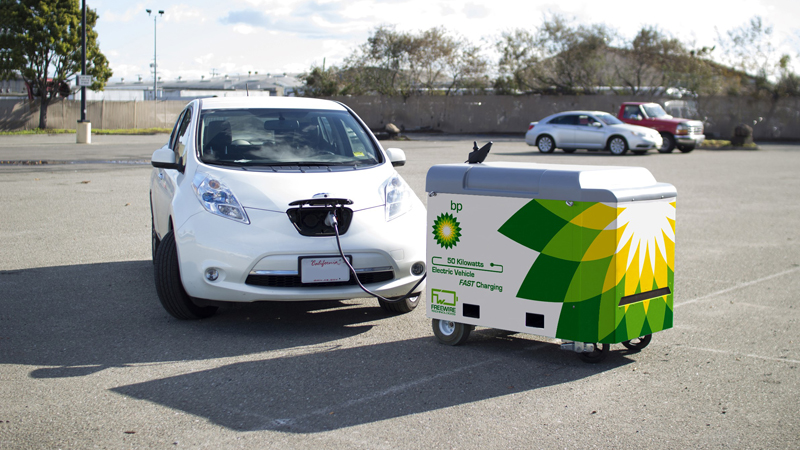
Range anxiety is the fear of running out of battery power while driving an electric vehicle. It is a genuine concern for many potential electric vehicle owners who worry that they will be stranded on the side of the road with no power source. Unlike ICE-powered vehicles, which can be refuelled in minutes, charging an EV can take several hours, when you get to a charging station, making it less convenient for long-distance travel.
First a quick plug – Our sister companies Fresh Pharma whom are GDP Compliant Pharma couriers and ‘Fresh Fridge Hire‘ are our (compliant GDP) refrigerated vehicle hire.
Average low range of an electric vehicle
The range of an electric vehicle depends on many factors, including the size of the battery, driving conditions, weight and weather. EV manufacturers often advertise a range of over 200 miles, which is more than enough for most daily commutes. However, when it comes to long-distance travel, range anxiety becomes a real issue.
EV manufacturers have been working on improving battery technology and increasing the range of their vehicles. Tesla, for example, recently announced the launch of a new battery with a range of over 500 miles. However, longer ranges come with a higher price tag, making EVs less feasible.
Infrastructure to prevent range anxiety in electric vehicle
Another solution to range anxiety is the development of charging infrastructure. EV charging stations are becoming more widespread. Many companies are investing in the installation of fast-charging stations along major motorways. This allows EV owners to charge their vehicles quickly while on the go, reducing the fear of running out of power on long trips.
However, there are still challenges to the development of charging infrastructure, including the cost of installation and maintenance of charging stations, as well as the lack of standardisation among charging networks. It can be confusing for EV owners to navigate the different charging options available, especially when travelling to unfamiliar areas.
The solution to range anxiety
Solution 1: Plan Your Route
One of the easiest ways to overcome range anxiety is to plan your route carefully. This involves researching the charging stations along your route and ensuring that you have enough charge to reach your destination. There are several online tools that can help you plan your route, such as the PlugShare app or the EV Trip Planner.
Solution 2: Install a Home Charging Station to reduce range anxiety
Another way to overcome range anxiety is to install a home charging station. This allows you to charge your electric vehicle overnight, ensuring that you start each day with a full battery. Home charging stations are relatively inexpensive and easy to install, and they can significantly reduce the anxiety associated with owning an electric vehicle.
Solution 3: Use Public Charging Stations
Public charging stations are another solution to range anxiety. Many cities and towns now have public charging stations that are free or available for a small fee. These charging stations are usually located in public places such as parking lots or near shopping centres, making it easy to top up your battery while you go about your daily business.
Solution 4: Invest in a Portable Charger
Investing in a portable charger is another way to overcome range anxiety. These chargers are small and easy to carry in the vehicle. Thus allowing you to charge your electric vehicle while on the go. Portable chargers are perfect for long road trips, where finding a charging station may be difficult.
Solution 5: Upgrade Your Electric Vehicle to reduce range anxiety
If you are still experiencing range anxiety, you may want to consider upgrading your electric vehicle. Newer electric vehicles have longer ranges, which means that you can travel further on a single charge. Upgrading your electric vehicle can also provide you with additional features and benefits that can enhance your driving experience.
Conclusion: Overcoming Range Anxiety to Embrace Electric Vehicles in the UK
Range anxiety remains one of the most significant barriers to widespread adoption of electric vehicles (EVs) in the UK. Many potential EV owners worry about running out of battery power during journeys. Particularly on longer trips or in areas with limited charging infrastructure. However, with careful planning and practical strategies. This concern can be effectively managed, allowing drivers to fully embrace the environmental, financial, and performance benefits of EV ownership.
Several solutions are available to UK EV drivers to mitigate range anxiety:
- Route Planning: Use navigation apps and in-vehicle systems to identify charging points along your journey, ensuring you never travel too far from a charging station.
- Home Charging Stations: Installing a domestic charger provides the convenience of overnight charging, ensuring your vehicle is ready each morning with a full battery.
- Public Charging Infrastructure: The UK has a growing network of public charging stations, including rapid chargers on major roads, which support longer trips and reduce travel uncertainty.
- Portable Chargers: Carrying a portable charger as a backup can provide peace of mind for emergencies or locations without fixed charging points.
- Upgrading Your Vehicle: Investing in newer EV models with larger battery capacity or improved efficiency extends driving range, reducing the likelihood of running low on charge.
By combining these strategies,
UK drivers can overcome range anxiety and confidently transition to electric mobility. Beyond addressing concerns about distance, adopting EVs contributes to reduced fuel costs, lower carbon emissions, and compliance with emerging government policies aimed at promoting sustainable transport.
For businesses operating fleets
Such as delivery services, logistics providers, and refrigerated transport companies—strategic EV adoption. Coupled with route planning and charging infrastructure management, ensures operational efficiency while meeting sustainability targets. Ultimately, overcoming range anxiety empowers individuals and organisations alike to enjoy the economic, environmental, and practical benefits of electric vehicles. Along with fostering a cleaner, greener, and more resilient transport network across the UK.
Range Anxiety
- What is Range Anxiety?
Range anxiety is the fear of not being able to reach your destination due to the limited range of your electric vehicle’s battery.
- How can I plan my route to overcome range anxiety?
- Are home charging stations expensive?
Home charging stations are relatively inexpensive and easy to install, making them a great solution to range anxiety.
- Where can I find public charging stations?
Many cities and towns now have public charging stations that are free or available for a small fee. These charging stations are usually located in public places such as parking lots or near shopping centres. Download Apps to your phone. They can get very busy.
- Should I upgrade my electric vehicle to overcome range anxiety?
If you’re still experiencing range anxiety even after trying the other solutions, upgrading your electric vehicle may be a good option. Newer electric vehicles have longer ranges, which can provide you with a more comfortable driving experience. Plus, newer models often come with additional features such as faster charging times and improved driving performance.
- How can I find a portable charger for my electric vehicle?
You can find portable chargers for your electric vehicle online or at your local electric vehicle dealership. It’s important to make sure that the portable charger is compatible with your electric vehicle before purchasing.
- Can range anxiety be completely eliminated?
While range anxiety can never be completely eliminated, the solutions provided in this article can help reduce its impact and make owning an electric vehicle more convenient and enjoyable.
- What are the benefits of electric vehicle ownership?
Electric vehicles are more environmentally friendly than traditional Internal Combustion Engines ICE vehicles, produce less noise pollution, and can save you money in the long run due to their lower maintenance and fuel costs.
- Is it difficult to switch from an petrol engine to an electric vehicle?
While there may be an adjustment period, switching from an Internal Combustion Engines ICE vehicle to an electric vehicle is relatively easy. Electric vehicles have many of the same features and functions as ICE vehicles, and there are many resources available to help you make the transition
- Is it difficult to switch from an diesel engine to an electric vehicle?
While there may be an adjustment period, switching from an Internal Combustion Engines ICE vehicle to an electric vehicle is relatively easy. Electric vehicles have many of the same features and functions as ICE vehicles, and there are many resources available to help you make the transition
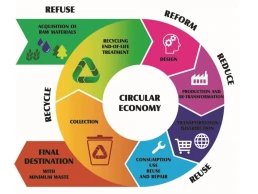
Circular Economy
Circular Economy on the Rise of Corporate Agendas Worldwide
As global concerns about climate change and resource depletion increase. More and more companies are adopting a circular economy approach to their operations. In this blog,, we’ll explore what the circular economy is, why it’s becoming more popular among businesses, and how it can help to create a more sustainable future. We’ll also look at some examples of companies that are successfully implementing principles.
First a quick plug – Our sister companies Fresh Pharma whom are GDP Compliant Pharma couriers and ‘Fresh Fridge Hire‘ are our (compliant GDP) refrigerated vehicle hire.
 What is the Circular Economy?
It is an economic model that seeks to minimise waste and maximise the use of resources by keeping products and materials in use for as long as possible. It is a departure from the traditional linear economy model, which relies on the extraction of raw materials, the production of goods, and their disposal at the end of their useful life.
Why is the Circular Economy becoming more popular?
There are several reasons why it is becoming more popular among businesses. One of the most significant factors is the growing awareness of the environmental impact of traditional linear economy practices. Companies are realising that they can no longer afford to ignore the negative impact of their operations on the environment.
Another factor driving the adoption of principles is the desire to reduce costs and increase efficiency. By reusing materials and products, companies can save money on raw materials and reduce their waste disposal costs.
Benefits of the Circular Economy
Offers several benefits, including:
Environmental Benefits
By reducing waste and minimising the use of resources, this can help to reduce greenhouse gas emissions, protect natural habitats, and conserve energy and water.
Economic Benefits
By reducing waste and reusing materials, companies can save money on raw materials, reduce waste disposal costs, and create new revenue streams through the sale of recycled or repurposed products.
Social Benefits
It can also have social benefits by creating new jobs in the recycling and repurposing industries and by supporting local communities through the development of circular supply chains.
Examples of Circular Economy Practices
There are many examples of companies successfully implementing practices. Here are a few examples:
H&M
H&M, the Swedish fashion retailer, has implemented a garment collection program that allows customers to return used clothing to their stores. The company then sorts the clothes and sends them to recycling facilities or repurposes them into new products.
Philips
Philips, the Dutch electronics company, has implemented a circular business model for its lighting products. The company now leases its lighting products to customers and takes back the products at the end of their useful life for refurbishment or recycling.
Veolia
Veolia, the French waste management company, has implemented a model for water management. The company now recycles wastewater and sells the recycled water back to businesses and municipalities.
The future looks promising, as more and more businesses are recognizing the benefits of this approach. Here are some predicted trends for the future on the rise of corporate agendas worldwide:
Future trends for the circular economy,
Increased Adoption of Principles
As more companies become aware of the benefits, we can expect to see increased adoption of principles. This will include a focus on designing products for circularity, as well as the development of circular supply chains.
Collaboration and Partnerships
Collaboration and partnerships will be critical to the success. We can expect to see more businesses working together to build, develop new technologies and processes that support the circular supply chains.
Technology and Innovation in the circular economy,
new technologies and innovations to support circular supply chains and enable the reuse and recycling of materials. We can expect to see increased investment in research and development in this area.
Government Support is critical to the circular economy,
Government support will be essential to the success. We can expect to see increased regulation and policy support, as well as government investment in infrastructure and research and development.
Consumer Behaviour
Changing consumer behaviour will be critical to the success. We can expect to see increased education and awareness campaigns aimed at encouraging consumers to reduce waste, recycle, and support businesses that are implementing principles.
Overall, the future looks bright, with increased adoption principles, collaboration and partnerships, technology and innovation, government support, and changing consumer behaviour all playing a role in driving the transition to a more sustainable and efficient economy.
Limitations of a Circular Economy
The circular economy is an economic system that aims to eliminate waste and pollution by keeping materials in use for as long as possible. It is an innovative and sustainable approach to the traditional linear economy, where resources are extracted, used, and then disposed of. The circular economy is gaining momentum globally due to its potential to address environmental and social issues while also creating economic opportunities. However, despite its numerous benefits, it also has some limitations that need to be addressed. In this article, we will explore the limitations and potential solutions to overcome them.
Technology Limitations
Recycling Technology
One of the significant limitations of the circular economy is recycling technology. Recycling technology is not yet advanced enough to recycle all types of materials, which limits the amount of waste that can be recycled. Many products contain a mix of materials that make them difficult to recycle. For example, electronic devices contain various metals, plastics, and glass, making it challenging to separate and recycle them.
Collection Technology
Another limitation is collection technology. Collecting and sorting waste is a significant challenge. Collection systems are not always efficient or effective, which can lead to recyclable materials ending up in landfills or incinerators. In some cases, waste management systems are not developed, making it impossible to collect and recycle materials.
Consumer Behaviour Limitations
Low Consumer Awareness
Low consumer awareness is another significant limitation of the circular economy. Many consumers are unaware of the benefits of recycling and the circular economy. They may not know which materials can be recycled or how to recycle them correctly. Lack of awareness and education can lead to low participation rates, which can undermine the circular economy’s effectiveness.
Consumer Habits
Consumer habits are another limitation of the circular economy. Many consumers are used to the convenience of disposable products, and changing these habits can be challenging. Single-use plastic products, such as straws and bags, are widely used and difficult to replace with more sustainable alternatives. These habits contribute to the production of waste, which undermines the circular economy’s goals.
Economic Limitations
Limited Availability of Circular Products
The limited availability of circular products is another limitation of the circular economy. Circular products are those that are designed to be reused, repaired, or recycled. However, circular products are not yet widely available in the market. This limited availability is due to the lack of demand for circular products and the higher initial investment required to produce them.
High Initial Investment to kickstart the circular economy
Another economic limitation is the high initial investment required to transition. This requires significant investment in technology, infrastructure, and education to be successful
Environmental and Social Impacts of Limitations
Pollution
The limitations of the circular economy have environmental and social impacts. The linear economy’s high production rates generate massive amounts of waste, which contributes to pollution. Waste incineration and landfilling produce toxic gases and leachates that can contaminate soil and water bodies. Pollution undermines the circular economy’s goal of reducing waste and preserving natural resources.
Resource Depletion in the V
Resource depletion is another environmental impact of the limitations of the circular economy. The linear economy’s reliance on the extraction of virgin materials contributes to the depletion of natural resources. The aim is to reduce this impact by promoting the reuse and recycling of materials. However, the limitations of recycling technology and collection systems mean that not all materials can be recycled, which limits the ability to conserve resources.
Job Losses due to the circular economy
The limitations have social impacts. The transition from a linear to a circular economy may lead to job losses in some sectors. For example, the shift away from single-use plastic products may lead to job losses in the plastics industry. However, it can create new job opportunities in recycling, repair, and remanufacturing.
Health Concerns
Health concerns are another social impact of the limitations. Waste incineration and landfilling generate toxic gases and leachates that can have adverse health effects on nearby communities. The aim is to reduce these health impacts by promoting waste reduction and sustainable waste management practices.
Overcoming Limitations of the Circular Economy
Advancements in Recycling Technology
Advancements in recycling technology can help overcome the limitations. Research and development in recycling technology can improve the efficiency and effectiveness of recycling processes. For example, new technologies can make it possible to recycle a wider range of materials, such as electronic devices.
Education and Awareness Programs
Education and awareness programs can also help overcome the limitations. These programs can increase consumer awareness and participation in recycling. Education and awareness can also help shift consumer habits away from single-use products and toward circular products.
Financial and Regulatory Support to circular economy
Financial and regulatory support can also help overcome the limitations. Governments and businesses can provide financial incentives for the production and consumption of circular products. Regulations can also be put in place to promote sustainable waste management practices and reduce the production of waste.
Conclusion
It is a promising alternative to the traditional linear economy model, which has led to the depletion of natural resources and the accumulation of waste. By adopting principles, companies can reduce their environmental impact, save money, and create new revenue streams. As more companies realise the benefits, it is likely to become an increasingly popular approach to business.
Circular Economy
- What are some benefits of the circular economy?
Some benefits of the circular economy include reduced waste and pollution, increased resource efficiency, and the creation of new business opportunities.
- How can businesses get started with the circular economy?
Businesses can get started with the circular economy by conducting a circularity assessment of their products and processes, identifying areas where circular economy principles can be applied, and collaborating with partners to build circular supply chains.
- What role do governments play in the circular economy?
Governments can play a critical role in the circular economy by providing policy support and investment in infrastructure and research and development.
- How can the circular economy contribute to sustainable development?
The circular economy can contribute to sustainable development by reducing waste and pollution, promoting resource efficiency, and creating new business opportunities that support economic growth and job creation.
- How can consumers contribute to the circular economy?
Consumers can contribute to the circular economy by reducing their waste and recycling, supporting businesses that implement circular economy principles, and advocating for policies that promote a circular economy.

Green Logistics - Benefits and Challenges in the UK
The Benefits of Implementing Green Logistics Practices in the UK: A Comprehensive Overview
Introduction to Green Logistics Practices in the UK
Green Logistics has a considerable impact on the environment, particularly through carbon emissions, energy consumption, and waste generation.

In the UK, supply chains increasingly contribute to air pollution and resource depletion, prompting companies to explore sustainable solutions. Green Logistics is a holistic approach that seeks to minimise environmental impact while maintaining efficiency and competitiveness. It covers every aspect of the supply chain, including transportation, warehousing, packaging, and reverse logistics.
The UK government’s Net Zero 2050 target and stricter environmental regulations have accelerated the adoption of Green Logistics practices. Businesses now recognise that sustainability is no longer optional but a core operational requirement. Green Logistics delivers benefits across three major areas: environmental, economic, and social. Environmentally, it reduces emissions, optimises resource use, and mitigates waste. Economically, it can lower operational costs, improve customer loyalty, and ensure regulatory compliance. Socially, it improves public health, creates green employment, and enhances brand reputation.
This article explores these benefits in detail, examines challenges in implementation, and highlights strategies and real-world UK case studies that demonstrate successful adoption.
First a quick plug – Our sister companies Fresh Pharma whom are GDP Compliant Pharma couriers and ‘Fresh Fridge Hire‘ are our (compliant GDP) refrigerated vehicle hire.
Three Key Takeaways on Green Logistics in the UK
1. Environmental Benefits Are Substantial and Measurable
Implementing Green Logistics practices significantly reduces carbon emissions, energy consumption, and waste. Sustainable transport methods, such as electric or hybrid vehicles, combined with route optimisation and energy-efficient warehousing, minimise environmental impact. Recycling programmes and reusable packaging further reduce landfill contributions. These practices not only support UK environmental regulations but also enhance air quality and conserve natural resources.
2. Economic Advantages Strengthen Competitiveness
Green Logistics offers tangible economic benefits, including lower fuel and energy costs, reduced waste disposal expenses, and improved operational efficiency. Compliance with environmental legislation prevents fines and penalties, while demonstrating sustainability can increase customer loyalty. Companies investing in technology, automation, and process optimisation gain cost savings and maintain a competitive edge in the UK market.
3. Social Impact and Reputation Are Enhanced
Sustainable logistics practices improve public health by reducing air pollution and creating safer working conditions. They also generate green employment opportunities in transport, warehouse management, and renewable technologies. Additionally, companies that adopt Green Logistics strengthen brand reputation, attracting environmentally conscious consumers and fostering trust with stakeholders. These social benefits reinforce a company’s commitment to responsible and sustainable operations.
Environmental Benefits of Green Logistics Practices in the UK
The most significant environmental benefit of Green Logistics practices is the reduction of carbon emissions. Transportation accounts for a major share of greenhouse gas emissions in the UK, particularly road haulage and air freight. Adopting electric or hybrid vehicles, optimising delivery routes using AI-based route planning, and shifting to low-emission transport modes can substantially reduce fuel consumption. In addition, sustainable warehouse practices, such as energy-efficient lighting, solar power installations, and water conservation measures, help minimise resource use. Waste reduction initiatives, including recycling, reusable packaging, and circular economy approaches, further mitigate environmental impact. For example, companies adopting reusable pallet systems or biodegradable packaging significantly reduce landfill contributions.
These practices not only support environmental stewardship but also align with UK regulations, including the Environment Act 2021, which promotes sustainable business practices and resource efficiency. The integration of environmentally friendly logistics contributes to cleaner air, reduced greenhouse gases, and lower operational footprints, forming a foundation for long-term corporate sustainability.
Economic Benefits of Green Logistics Practices in the UK
Green Logistics practices also deliver measurable economic advantages. By reducing fuel use, energy consumption, and waste, companies can achieve significant cost savings. Route optimisation and transport consolidation reduce unnecessary mileage and improve fleet efficiency, lowering operational expenses. Customers increasingly prioritise environmentally responsible brands, enhancing customer loyalty and trust for companies that adopt sustainable logistics practices. Compliance with environmental regulations, such as carbon reporting requirements or packaging waste directives, helps avoid fines and penalties, which can be costly for large-scale operations.
Moreover, Green Logistics often leads to operational efficiency improvements. Automated systems, electric vehicle fleets, and smart warehousing reduce human error and streamline processes, creating long-term savings. In the competitive UK market, companies with sustainable practices gain both financial and reputational advantages, making sustainability a strategic investment rather than a mere ethical choice.
Social Benefits of Green Logistics Practices in the UK
Green Logistics has significant social benefits that extend beyond business operations. Reducing emissions and pollution improves air quality, which benefits public health, lowering respiratory illnesses and related healthcare costs. Sustainable practices also create employment opportunities in emerging “green” sectors, such as electric vehicle maintenance, renewable energy logistics, and environmental compliance roles. Employees working in companies committed to sustainability often report higher job satisfaction, as they perceive their work as contributing to positive environmental and social outcomes. Implementing sustainable practices also enhances brand reputation.
UK consumers are increasingly environmentally conscious, and companies that demonstrate responsibility through Green Logistics can build trust and loyalty. Collectively, these social benefits strengthen communities, improve health outcomes, and create a workforce aligned with sustainability values, reinforcing a company’s social licence to operate.
Challenges of Implementing Green Logistics in the UK
Despite the benefits, implementing Green Logistics practices presents challenges. One major hurdle is the lack of awareness or understanding among logistics professionals, leading to resistance to change. High initial investment costs, particularly for electric fleets, renewable energy systems, and automated warehouses, can be prohibitive, especially for small and medium-sized enterprises (SMEs). Organisational resistance is another challenge, as employees and management may be reluctant to adopt new practices or technologies. In addition, infrastructure limitations, such as insufficient EV charging networks or inadequate recycling facilities, can hinder adoption. Overcoming these obstacles requires clear strategic planning, stakeholder engagement, and phased investment strategies to make sustainable logistics practical and cost-effective.
Strategies for Implementing Green Logistics Practices in the UK
Companies can adopt several strategies to overcome these challenges. Setting clear environmental goals, such as reducing carbon emissions by specific percentages or adopting fully electric fleets, provides measurable targets. Collaboration with supply chain partners allows knowledge and resources to be shared, supporting more efficient and widespread adoption. Investment in technology, including AI-based route optimisation, telematics, and automated warehouses, improves efficiency while reducing environmental impact. Staff training and awareness programmes ensure employees understand the importance and practical application of sustainable practices. Pilot projects can test new methods before scaling, reducing risk while demonstrating feasibility. By integrating these strategies, UK logistics companies can achieve sustainability objectives while maintaining operational performance.
Case Studies of Successful Green Logistics in the UK
Several UK companies provide examples of successful Green Logistics implementation. Tesco has reduced carbon emissions by using alternative fuels, optimising delivery routes, and consolidating supply chain operations. The John Lewis Partnership uses electric vans for home deliveries and has reduced packaging waste through reusable systems. DHL Supply Chain UK has implemented route optimisation, introduced electric and hybrid vehicles, and adopted renewable energy in warehouses. These companies demonstrate that sustainable logistics can be cost-effective, operationally efficient, and environmentally beneficial when planned and executed strategically.
Conclusion: The Strategic Importance of Green Logistics in the UK
In conclusion, the benefits of Green Logistics practices in the UK are wide-ranging. Environmentally, they reduce emissions, conserve resources, and minimise waste. Economically, they lower costs, increase efficiency, and strengthen customer loyalty. Socially, they enhance public health, create green jobs, and improve corporate reputation. Although challenges such as high initial costs, resistance to change, and infrastructure limitations exist, these can be overcome with strategic planning, collaboration, and technological innovation. Ultimately, adopting Green Logistics is essential for companies that aim to remain competitive, meet regulatory requirements, and satisfy growing consumer demand for sustainable products and services. The UK logistics sector that embraces these practices is not only contributing to environmental stewardship but also positioning itself for long-term operational resilience and success.
Green Logistics
- What is Green Logistics?
Green Logistics refers to the practice of minimising the environmental impact of supply chain activities such as transportation, warehousing, and packaging.
- What are the economic benefits of implementing sustainable practices?
- What are the challenges of implementing sustainable practices in the UK?
The challenges include lack of awareness and understanding, high initial costs, and resistance to change.
- How can stakeholders in the supply chain industry collaborate to implement sustainable practices?
Stakeholders can collaborate by setting clear environmental goals and objectives, adopting technology and innovation, and partnering with supply chain partners.
- Can you provide examples of companies that have successfully implemented sustainable practices in the UK?
Yes, Tesco, John Lewis Partnership, and DHL are examples of companies that have successfully implemented sustainable practices in the UK.

Reduce Carbon Footprint in Logistics
How to Reduce Carbon Footprint in Logistics
Logistics is an important part of many businesses, but it is also one of the most polluting industries in the world. The carbon footprint of logistics is enormous, and it is responsible for a significant amount of greenhouse gas emissions. Fortunately, there are ways to reduce the carbon footprint of logistics, and in this article, we will explore some of these solutions.
Three Key Takeaways
| Key Takeaway | Explanation | Example |
|---|---|---|
| Optimise Transport and Fleet | Efficient route planning and maximising vehicle loads reduce fuel consumption and emissions | Using telematics to plan delivery routes in urban areas |
| Adopt Eco-Friendly Vehicles | Electric, hybrid, or alternative-fuel vehicles lower greenhouse gas emissions | Replacing diesel vans with electric vans for last-mile deliveries |
| Green Warehousing Practices | Energy-efficient lighting, temperature control, and renewable energy reduce warehouse carbon footprint | Installing solar panels and LED lighting in refrigerated warehouses |
These strategies collectively help businesses in the UK reduce carbon emissions, improve operational efficiency, and strengthen their sustainability credentials.
First a quick plug – Our sister companies Fresh Pharma whom are GDP Compliant Pharma couriers and ‘Fresh Fridge Hire‘ are our (compliant GDP) refrigerated vehicle hire.
Introduction: Reducing Carbon Footprint in Logistics
Logistics is a cornerstone of modern business operations, enabling the movement of goods efficiently across regions and countries. Yet, it comes with a significant environmental cost. The logistics industry contributes heavily to greenhouse gas emissions, primarily carbon dioxide, through fuel consumption, electricity use in warehouses, and transportation activities. This growing carbon footprint not only affects the environment but also increases operational costs and regulatory pressures for businesses.
Fortunately, businesses can implement strategies to reduce emissions without sacrificing efficiency or competitiveness. These solutions range from optimising transportation routes and leveraging fuel-efficient or electric vehicles to adopting sustainable warehousing practices and minimising packaging waste. Technology and data-driven tools, such as telematics, route-planning software, and energy management systems, can also play a pivotal role in reducing emissions while improving operational performance.
What is a Carbon Footprint?
A carbon footprint quantifies the total greenhouse gases produced, directly or indirectly, by an activity, product, or service. It is commonly measured in tonnes of carbon dioxide equivalent (CO2e) per year. In logistics, the carbon footprint arises from multiple sources, including fuel consumption by trucks, vans, and ships, electricity usage in storage and distribution centres, and even packaging materials. Understanding and measuring this footprint is the first step for businesses aiming to implement effective carbon-reduction strategies.
By accurately calculating their carbon footprint, companies can identify the largest emission sources, prioritise reduction initiatives, and track progress over time. This approach allows businesses to make informed decisions that balance environmental responsibility with operational efficiency, helping them stay competitive in a market where sustainability is increasingly valued by consumers and regulators alike.
If you want, I can continue by expanding the practical solutions for reducing carbon footprint in logistics, complete with examples and best practices in the UK context. Do you want me to do that?
The Importance of Reducing Carbon Footprint in Logistics
Reducing carbon emissions in logistics is essential not only for environmental sustainability but also for economic efficiency. The logistics sector is a major contributor to global greenhouse gas emissions due to fuel consumption by trucks, vans, ships, and aeroplanes, as well as energy usage in warehouses and distribution centres. These emissions accelerate climate change, contribute to air pollution, and increase regulatory pressures on businesses.
Beyond environmental responsibility,
Reducing the carbon footprint in logistics can bring significant financial benefits. Lower fuel consumption through optimised routes or eco-friendly vehicles directly reduces operating costs. Efficient energy use in warehouses and storage facilities can decrease electricity expenses, while minimising packaging materials and waste reduces disposal costs. These operational efficiencies improve profitability while supporting corporate sustainability goals.
Sustainability is increasingly important to consumers, investors, and regulators. Businesses that demonstrate measurable reductions in carbon emissions gain a competitive advantage by building a positive brand reputation and meeting environmental compliance standards. Furthermore, proactive carbon management can help companies anticipate and adapt to future regulations, avoiding potential fines and penalties.
Finally, reducing carbon emissions encourages innovation in logistics operations. Implementing electric vehicles, renewable energy solutions, smart route planning, and green warehouse practices not only lowers emissions but also fosters technological advancement and operational resilience. Overall, businesses that prioritise reducing their carbon footprint in logistics can achieve a triple benefit: protecting the environment, enhancing efficiency, and strengthening their market position.
Ways to Reduce Carbon Footprint in Logistics
Optimise Transport Routes to Reduce Carbon Footprint in Logistics
One of the most effective ways to reduce the carbon footprint of logistics is to optimise transport routes. This involves using data and analytics to find the most efficient routes for transport. By optimising transport routes, businesses can reduce the number of miles travelled, leading to lower fuel consumption and fewer emissions.
Use Eco-Friendly Vehicles
Another way to reduce the carbon footprint of logistics is to use eco-friendly vehicles. Electric vehicles, hybrid vehicles, and other alternative fuel vehicles produce fewer emissions than traditional petrol and diesel vehicles. Switching to eco-friendly vehicles can also help businesses comply with environmental regulations and reduce operating costs.
Implement Electric Vehicles
In addition to using eco-friendly vehicles, businesses can also consider implementing electric vehicles. Electric vehicles produce zero emissions, making them an excellent option to lower your footprint. Although electric vehicles have a higher upfront cost, they offer significant long-term benefits, including reduced fuel costs and lower maintenance costs.
Use Renewable Energy to Reduce Carbon Footprint in Logistics
Using renewable energy sources, such as solar or wind power, can also help reduce the carbon footprint of logistics. Businesses can install solar panels or wind turbines on their premises or purchase renewable energy credits to offset their energy consumption. By using renewable energy sources, businesses can reduce their reliance on fossil fuels and lower their carbon emissions.
Reduce Packaging
Another way to lower carbon is to minimalise packaging. Excessive packaging leads to more waste, higher transportation costs and more emissions. By reducing packaging, businesses can reduce the amount of waste generated, lower transport costs, and improve the efficiency of logistics operations. Businesses can use sustainable packaging materials, such as biodegradable or recyclable materials, to reduce their carbon footprint.
Implement Green Warehouses to Reduce Carbon Footprint in Logistics
Implementing green warehouses can also help reduce the carbon footprint of logistics. Green warehouses are designed to be energy-efficient and use renewable energy sources, such as solar or wind power. They also use sustainable building materials and technologies to reduce their environmental impact. By implementing green warehouses, businesses can reduce their energy consumption and carbon emissions while improving the efficiency of their logistics operations.
The Role of Technology in Reducing Carbon Footprint in Logistics
Technology plays a critical role in reducing carbon in logistics. Digital technologies, such as data analytics, artificial intelligence, and the internet of things, can help businesses optimise their logistics operations and reduce their carbon emissions. For instance, data analytics can be used to optimise transport routes, reduce fuel consumption, and minimise waste. Artificial intelligence can be used to forecast demand, optimise inventory levels, and reduce energy consumption. The internet of things can be used to monitor energy consumption, optimise warehouse operations, and improve supply chain visibility.
The Benefits of Reducing Carbon Footprint in Logistics
Reducing the carbon footprint of logistics offers many benefits for businesses and the environment. Firstly, it can help businesses comply with environmental regulations and meet sustainability goals. Secondly, it can lead to cost savings, such as lower energy costs, lower waste, and more efficient operations. Thirdly, it can improve the reputation of businesses, as consumers increasingly demand environmentally sustainable products and services. Fourthly, it can reduce the environmental impact of logistics, helping to mitigate the effects of climate change.
Challenges in Implementing Solutions to Reduce Carbon Footprint in Logistics
Implementing solutions can be challenging, as it requires significant investment, changes in business processes, and stakeholder buy-in. For instance, switching to eco-friendly vehicles or implementing green warehouses can be expensive and time-consuming. It may also require changes in supply chain management, logistics operations, and employee behaviour. Additionally, it may require regulatory compliance and coordination with stakeholders, such as suppliers, customers, and government agencies.
Conclusion: Reducing Carbon Footprint in Logistics
Reducing carbon emissions in logistics is essential for both environmental sustainability and long-term business efficiency. Companies can adopt multiple strategies to lower their carbon footprint, including optimising transport routes, using eco-friendly or electric vehicles, and implementing renewable energy in warehouses. Efficient route planning reduces unnecessary fuel consumption, while fleet electrification and hybrid vehicles help cut greenhouse gas emissions significantly. Energy-efficient warehouses, combined with sustainable packaging, further reduce the environmental impact of logistics operations.
Technology plays a pivotal role in achieving carbon reduction goals. Digital tools such as route-optimisation software, telematics, and inventory management systems enable businesses to monitor emissions, improve operational efficiency, and make data-driven sustainability decisions. Although implementing these solutions may involve upfront costs and operational changes, the long-term benefits—including cost savings, regulatory compliance, and improved brand reputation—far outweigh the challenges.
In summary, businesses that proactively adopt carbon-reduction strategies in their logistics operations can achieve sustainable growth, contribute to environmental protection, and meet increasing consumer expectations for greener supply chains.
Carbon Footprint
- What is a carbon footprint in logistics?
A carbon footprint is a measure of the amount of greenhouse gases emitted by logistics activities, such as transportation, warehousing, and packaging.
- Why is reducing your carbon footprint important?
It is important to achieve sustainability goals, reduce the impact of climate change, and improve the reputation and cost efficiency of businesses.
- What are some ways to reduce your carbon footprint?
Optimising transport routes, using eco-friendly and electric vehicles, using renewable energy, reducing packaging, and implementing green warehouses.
- What is the role of technology in reducing carbon footprint?
Technology plays a critical role in enabling businesses to optimise their operations and reduce pollution

Pest Control - Don't get Closed Down
Pest Control in Temperature Controlled Logistics
Pest Control – In the intricate web of the United Kingdom’s logistics industry, where precision and reliability are paramount, the temperature-controlled logistics sector plays a pivotal role. From perishable goods to pharmaceuticals, this niche industry ensures that products are stored and transported at specific temperatures to maintain their quality and integrity. However, lurking beneath the surface of this complex operation are pests, ready to compromise the entire supply chain. In this blog, we will delve into the world of “Pest management’ in Temperature Controlled Logistics ” and understand why safeguarding this industry against pests is of paramount importance.
First a quick plug – Our sister companies Fresh Pharma whom are GDP Compliant Pharma couriers and ‘Fresh Fridge Hire‘ are our (compliant GDP) refrigerated vehicle hire.
These takeaways highlight the importance of pest control in temperature-controlled logistics, the risks associated with pest infestations, and the role of modern technologies in effective pest management.
| Takeaway | Description |
|---|---|
| Significance of Pest Control in Temperature-Controlled Logistics | Pest management is crucial in industries reliant on precise temperature control, such as pharmaceuticals and food. Pest infestations can have catastrophic consequences for the supply chain. |
| Risks and Consequences of Pest Infestations | Pest infestations in temperature-controlled logistics can lead to product contamination, financial losses, damage to reputation, and regulatory compliance issues. |
| Importance of Modern Pest Control Technologies | Advanced technologies, such as smart monitoring systems, drones, biological control, and data analytics, play a significant role in timely detection, efficiency, sustainability, cost savings, safety, and compliance in pest control. |
 The Significance of Pest Control:
Why is Pest Control Crucial in Temperature-Controlled Logistics?
Temperature-controlled logistics are the lifeblood of industries reliant on the precise maintenance of temperature conditions, such as pharmaceuticals, food, and even art preservation. In this delicate dance of temperature regulation, the presence of pests can have catastrophic consequences. Pest management, therefore, stands as the bulwark against disruptions and losses that could jeopardise the entire supply chain.
The Potential Risks and Consequences:
Imagine a warehouse storing vaccines that are bound for distribution to healthcare facilities across the UK. A rat infestation in such a warehouse can lead to the contamination and spoilage of these vaccines, not to mention the potential health risks. In this context, pest infestations can lead to:
- Product Contamination: Pests can carry diseases and bacteria that can contaminate goods, rendering them unsafe for consumption or use.
- Product Loss: Infested products often have to be discarded, leading to financial losses for businesses.
- Damage to Reputation: A pest infestation can tarnish a company’s reputation, eroding trust among customers and partners.
- Regulatory Compliance Issues: Non-compliance with pest regulations can result in legal trouble, fines, and business shutdowns.
Statistics and Real-Life Examples:
To underscore the gravity of the situation, consider these statistics:
- According to the British Pest Association, rats and mice are responsible for over 25% of all recorded pest infestations in the UK.
- In 2019, an outbreak of the highly contagious Norovirus in the UK was traced back to frozen raspberries, highlighting the risks of pest contamination in the food supply chain.
- A case study involving a pharmaceutical storage facility in the UK revealed that a failure in pest management led to the contamination of valuable medicines, resulting in a loss of millions of pounds.
These examples vividly illustrate the real-world implications of inadequate pest managwement measures in temperature-controlled logistics.
Pest Control in Temperature-Controlled Logistics:
Identifying the Culprits:
To effectively combat pests in temperature-controlled logistics, it’s crucial to know your adversaries. Common pests that pose a threat to this industry include:
| Pest Category | Description |
| Rodents (Rats and Mice) | These agile creatures can infiltrate even the most secure facilities and are known for their rapid breeding. |
| Insects (Cockroaches, Flies, and Beetles) | Insects are notorious for contaminating stored goods and transmitting diseases. |
| Stored-Product Pests (Moths and Weevils) | These pests can wreak havoc on stored commodities, especially grains and cereals. |
Why Are They Attracted to Temperature-Controlled Environments?
Temperature-controlled environments provide ideal conditions for pests, as they often offer:
- Abundant food sources, such as stored goods.
- Shelter from harsh weather conditions.
- Stable temperatures, which are attractive for breeding.
The combination of these factors makes temperature-controlled logistics an inviting habitat for pests, making it all the more imperative to implement robust pest control measures.
Pest Control Methods:
Guarding the Supply Chain:
Effective pest control in temperature-controlled logistics involves a multi-faceted approach. Here are some key methods and techniques:
Sanitation
Maintaining impeccable hygiene within storage and transportation facilities is the first line of defence. Regular cleaning and waste disposal can eliminate food sources for pests.
Sealing Entry Points
Identifying and sealing potential entry points for pests, such as gaps in walls or doors, is crucial in preventing their access.
Regular Inspections
Routine inspections by trained professionals can detect pest activity early, allowing for prompt intervention.
Environmental Pest Control
Temperature-controlled environments can be modified to deter pests. For instance, adjusting humidity levels can discourage certain insects.
Chemical Pest Control
In some cases, the judicious use of pesticides may be necessary. However, this should always be handled by licensed professionals, with strict adherence to safety regulations.
The Importance of Professional Pest Control Services:
Hiring a professional pest control service is often the most effective way to safeguard your temperature-controlled logistics business. These experts have the knowledge, experience, and tools to assess, prevent, and eradicate pest infestations while ensuring compliance with industry regulations and safety standards.
We’ve just scratched the surface of the complex world of pests in temperature-controlled logistics . Implementing robust pest control measures and staying vigilant are essential to protect the integrity of the supply chain and the reputation of businesses operating in this critical industry. Stay tuned for more insights on how to secure your temperature-controlled logistics against these persistent invaders.
Regulatory Compliance:
Pest regulations in the UK are stringent and meticulously enforced, especially within the logistics industry where the consequences of non-compliance can be dire. Understanding and adhering to these regulations is paramount for maintaining both legal and reputational integrity.
Exploring Regulatory Requirements:
In the UK, pest control regulations are primarily governed by several key laws and guidelines:
Food Safety Act 1990
This act places the responsibility on businesses to ensure that the food they produce, store, or transport is safe and uncontaminated by pests.
Food Hygiene Regulations 2013
These regulations dictate that food businesses must take adequate measures to prevent pest infestations, including maintaining clean and hygienic storage facilities.
Health and Safety at Work Act 1974
This legislation requires employers to provide a safe and healthy working environment. Pest control is essential for upholding these standards.
Environmental Protection Act 1990
This act addresses waste management, including proper disposal of pest control materials and waste.
Consequences of Non-Compliance:
Non-compliance with pest regulations can lead to significant legal and reputational repercussions:
Fines and Legal Action
Failure to meet regulatory standards can result in fines, legal actions, and potential business shutdowns.
Product Recalls
If pests contaminate products, businesses may have to recall and destroy their inventory, incurring substantial financial losses.
Reputational Damage
News of pest infestations or non-compliance can tarnish a company’s reputation, eroding trust among customers and partners.
Loss of Business Opportunities
Non-compliance can disqualify businesses from participating in contracts and tenders, limiting growth opportunities.
Case Studies:
1. XYZ Pharmaceuticals: A Success Story
XYZ Pharmaceuticals, a UK-based company specialising in temperature-controlled logistics for medical supplies, faced a severe pest infestation that threatened their operations. They promptly hired professional pest control services, implemented strict sanitation protocols, and reinforced entry points. This proactive approach not only eliminated the infestation but also ensured compliance with regulations.
The Result:
- Regulatory compliance was maintained.
- Zero product losses due to pests.
- Enhanced reputation for prioritising safety and quality.
2. Frosty Foods Ltd: A Cautionary Tale
Frosty Foods Ltd, a frozen food distributor, neglected proper pest control measures, leading to a severe infestation in their cold storage facilities. The ensuing product recalls, legal penalties, and negative media coverage led to significant financial losses and damaged their reputation.
The Outcome:
- Heavy fines for non-compliance.
- Extensive product recalls and losses.
- Loss of trust among customers and partners.
Best Practices in Pest Control:
For temperature-controlled logistics businesses looking to excel in pest control, here are some best practices:
Regular Inspections
Conduct routine pest inspections by trained professionals to identify and address issues promptly.
Hygiene Protocols
Maintain impeccable cleanliness in storage and transportation areas to eliminate potential food sources for pests.
Training
Train employees in pest awareness and prevention, emphasising their role in compliance.
Documentation
Maintain meticulous records of pest control measures and inspections to demonstrate regulatory compliance.
Collaboration
Collaborate with professional pest control services to create tailored pest management plans.
Integrated Pest Management (IPM):
Integrated Pest Management (IPM) is a holistic approach to pest control that emphasises prevention and sustainable practices. In the logistics industry, IPM can be a game-changer.
Implementing IPM:
Inspection and Identification
Begin by conducting thorough facility inspections to identify potential pest issues. Understand the specific pests that may pose a threat.
Prevention
Implement preventive measures such as sealing entry points, maintaining sanitation, and proper waste disposal to reduce pest attraction.
Monitoring
Regularly monitor for pest activity using traps, sensors, or other technology to detect problems early.
Pest Control Measures
When necessary, employ control measures such as pesticides, but do so judiciously and with a focus on minimising environmental impact.
Review and Adapt your Pest Control
Continually assess the effectiveness of your Integrated Pest Management (IPM) program and make adjustments as needed based on monitoring results.
Pest Control Technologies:
In the era of advancing technology, several innovative pest control technologies are emerging in the UK logistics sector:
Smart Pest Control Systems
These systems employ sensors and AI to detect pest activity and send real-time alerts, enabling immediate action.
Drones
Drones equipped with cameras and thermal imaging can swiftly survey large storage areas for signs of infestations.
Biological Pest Control
Beneficial organisms like nematodes or predators can be introduced to control pests in an environmentally friendly manner.
Data Analytics in Pest Control
Leverage data analysis to identify trends and patterns in pest activity, enabling more precise preventive measures.
Advantages of Modern Technology in Pest Control:
| Aspect | Description |
| Timely Detection | Technology enables early detection, reducing the severity of infestations. |
| Efficiency | Automation and data-driven decision-making streamline pest control efforts. |
| Sustainability | Some technologies, like biological control, are environmentally friendly. |
| Cost Savings | Preventing infestations and minimising product loss can result in significant cost savings. |
Pest control in temperature-controlled logistics in the UK is not only a legal requirement but also a critical component of maintaining product quality and reputation. By adhering to regulations, learning from case studies, implementing best practices, adopting IPM strategies, and embracing modern technology, businesses can protect their supply chain and prosper in this challenging environment.
In the fast-paced world of temperature-controlled logistics in the United Kingdom, where precision and efficiency are essential, the emergence of cutting-edge technologies is changing the game. Modern technology offers innovative solutions for preventing, monitoring, and mitigating pest infestations, which are particularly critical in the realm of temperature-sensitive goods. In this article, we will delve into the latest technologies that can be adopted by the UK logistics sector and explore the numerous advantages they bring to the table.
Emerging Pest Control Technologies:
1. Smart Pest Monitoring Systems:
Smart pest monitoring systems represent a breakthrough in real-time pest detection. These systems use a combination of sensors, cameras, and artificial intelligence (AI) to continuously monitor environments for signs of pest activity. When pests are detected, the system sends instant alerts, allowing for swift response.
-
Advantages:
- Early Detection: Smart systems catch pest activity at its onset, preventing infestations from growing.
- Minimised Human Error: AI reduces the risk of missed signs of infestation compared to manual monitoring.
- Cost-Efficiency: Early intervention saves businesses money by reducing the extent of infestations and product losses.
2. Drones in Pest Control:
Unmanned aerial vehicles, commonly known as drones, have found applications in large storage facilities or warehouses. Equipped with cameras and thermal imaging, drones can quickly and efficiently survey vast areas to identify signs of pest infestations.
-
Advantages:
- Rapid Surveillance: Drones cover large areas in a fraction of the time it would take humans, accelerating detection.
- Enhanced Safety: Drones can access hard-to-reach and potentially hazardous areas without risking human safety.
- Cost-Efficient: Drones reduce the labour and time required for inspections.
3. Biological Pest Control:
Biological pest control involves introducing natural predators or beneficial organisms to combat pests. In the logistics sector, this can include using nematodes, parasitosis, or microbial agents to target specific pest populations.
-
Advantages:
- Eco-Friendly: Biological control methods are environmentally sustainable, reducing the need for chemical pesticides.
- Targeted Approach: Beneficial organisms specifically target the pests, minimising harm to non-target species.
- Long-Term Solution: Once established, biological control agents can provide ongoing pest management.
4. Data Analytics:
Data analytics is transforming pest control by leveraging data from various sources, such as sensor networks and historical pest activity records. Machine learning algorithms analyse this data to identify trends and predict potential pest outbreaks.
-
Advantages:
- Predictive Capability: Analytics can forecast pest activity, enabling proactive prevention.
- Efficiency: Data-driven decisions optimise the allocation of resources for pest control.
- Continuous Improvement: Analytics help refine pest control strategies over time.
Advantages of Using Modern Technology for Pest Control and Monitoring:
The integration of modern technology into pest control practices offers numerous benefits for the UK logistics sector:
| Aspect | Description |
| Timely Detection | Technology enables early detection of pest activity, preventing infestations from reaching critical levels. |
| Efficiency | Automation and data-driven decision-making streamline pest control efforts, reducing time and resources. |
| Sustainability | Technologies like biological pest control and data analytics promote eco-friendly pest management practices. |
| Cost Savings | Preventing infestations and minimising product loss can result in significant cost savings for businesses. |
| Safety | Technologies like drones can access difficult or dangerous areas, improving safety for workers. |
| Compliance | Many of these technologies align with regulatory requirements, helping businesses stay compliant with pest control regulations in the UK. |
Training and Education:
Emphasising the Importance of Training in Pest Control:
While advanced pest control technologies can be a game-changer, it’s crucial to emphasise that they are most effective when complemented by well-trained personnel. Employees at all levels should be educated about pest control measures, including:
- Recognition: Training should help employees recognize signs of pest activity and understand the importance of reporting any sightings promptly.
- Prevention: Staff should be aware of the role they play in pest prevention, such as maintaining cleanliness and proper waste disposal.
- Response: Employees should know the appropriate actions to take if they encounter pests or signs of infestations.
Recommendations for Training and Education in Pest Control:
In-House Training: Logistics businesses should create customised in-house training programs to address their unique operational requirements.
Certified Training Providers: The British Pest Control Association (BPCA) offers training and certification programs for professionals. Companies can collaborate with BPCA-certified trainers to provide comprehensive training to their employees.
Online Resources: Take advantage of online resources, webinars, and e-learning platforms that offer modules on training. These options can be both convenient and cost-effective for educating your staff.
Continual Education: Ensure that training remains an ongoing process to keep your employees updated on the latest advancements and best practices in the field.
Conclusion:
In the dynamic landscape of temperature-controlled logistics in the UK, technologies are transforming the way businesses safeguard their operations. From smart monitoring systems to drones, these innovations offer timely detection, efficiency, and sustainability. However, it’s essential to remember that these technologies are most effective when paired with a well-trained workforce that recognises the significance of pest control.
In conclusion, pest management is not merely a legal obligation but a crucial element in maintaining product quality, reputation, and the smooth flow of operations. By embracing modern pest technologies and investing in employee training and education, businesses can proactively safeguard their supply chains and thrive in this demanding industry. Stay vigilant, stay innovative, and keep those pests at bay.
Pest Control
- What are the risks of pest infestations in temperature-controlled logistics businesses?
Pests can contaminate products with droppings, urine, and hair, transmit diseases, damage packaging and storage units, and cause financial losses and damage to reputation.
- What are the common pests found in temperature-controlled logistics businesses in the UK?
The most common pests include rodents, insects such as flies and cockroaches, and birds such as pigeons and seagulls.
- How can temperature-controlled logistics businesses prevent pest infestations?
By implementing best practices such as regular inspections, sanitation, exclusion, monitoring, and trapping.
- What should businesses do if they detect a pest infestation?
They should contact a pest control professional immediately to conduct an inspection and develop a pest management plan.
- Are chemical control methods safe to use in temperature-controlled logistics businesses?
Chemical control methods such as insecticides and rodenticides should only be used as a last resort and under the guidance of a pest control professional to ensure safety for human health and the environment
IoT Sensing-as-a-Service role
The Role of IoT Sensing-as-a-Service in Reducing Food Waste
IoT Sensing-as-a-Service is transforming the way the food industry tackles waste. Delivering benefits for both businesses and the environment. In the UK, up to 40% of food goes uneaten, leading to significant financial losses and unnecessary greenhouse gas emissions. By deploying IoT sensors across the supply chain—from warehouses and transportation vehicles to retail stores. Businesses can monitor critical factors such as temperature, humidity, and storage conditions in real time. This continuous monitoring enables early detection of potential spoilage, improves inventory management, and ensures that perishable products are delivered in optimal condition.
Effeciency
Beyond operational efficiency, IoT Sensing-as-a-Service helps companies meet sustainability goals by reducing food waste, lowering carbon emissions,
minimising economic losses. Leveraging this technology allows food retailers and distributors to make data-driven decisions, optimise their supply chains, and contribute to a more sustainable and profitable food system.
First a quick plug – Our sister companies Fresh Pharma whom are GDP Compliant Pharma couriers and ‘Fresh Fridge Hire‘ are our (compliant GDP) refrigerated vehicle hire.
What is IoT Sensing-as-a-Service?
IoT Sensing-as-a-Service is an innovative technology that combines Internet of Things (IoT) sensors with cloud-based analytics to monitor and optimise the food supply chain. Sensors are deployed across warehouses, refrigerated vehicles, and retail environments to track critical parameters such as temperature, humidity, and location. The data collected is transmitted in real-time to a central cloud platform. Where advanced analytics generate actionable insights and alerts for businesses. This enables companies to detect deviations from optimal conditions instantly, prevent spoilage, and maintain the quality and safety of perishable products. By leveraging IoT Sensing-as-a-Service, food retailers and distributors can improve inventory management, reduce waste, enhance operational efficiency, and make data-driven decisions throughout their supply chain. It represents a proactive approach to food logistics. Helping businesses achieve sustainability goals while safeguarding customer satisfaction and profitability.
Real-Time Monitoring
IoT Sensing-as-a-Service enables businesses to monitor food products continuously across the supply chain, from warehouses to transport vehicles and retail stores. Sensors track critical parameters such as temperature, humidity, and light exposure, ensuring that products remain within optimal storage conditions. Any deviation triggers instant alerts, allowing staff to take corrective action before spoilage occurs. For example, if a refrigerated vehicle experiences a temperature fluctuation, the system can notify drivers or warehouse managers immediately. Preventing compromised products from reaching consumers. This proactive approach not only reduces food waste but also ensures compliance with food safety regulations, maintains product quality, and protects brand reputation. By integrating IoT-based real-time monitoring into supply chain operations, companies can detect potential issues early, reduce losses, and maintain higher levels of operational efficiency. The technology also provides detailed historical data for analysis, enabling continuous improvement in logistics and storage practices.
Predictive Analytics
Another powerful way IoT Sensing-as-a-Service combats food waste is through predictive analytics. The technology collects large volumes of real-time data across the supply chain and applies advanced analytics and machine learning algorithms to detect patterns and trends. For instance, if a specific product consistently spoils during transport from warehouse to store, predictive analytics can highlight the root cause, such as inadequate refrigeration or delayed handling. Armed with these insights, businesses can implement preventive measures, such as adjusting storage practices, rerouting shipments, or modifying delivery schedules. Predictive analytics also helps in demand forecasting by identifying consumption patterns, seasonality, and product turnover rates, allowing for more accurate ordering and production planning. This reduces overstocking, prevents expired products, and ensures food is used efficiently. By leveraging IoT data for predictive insights, businesses can proactively manage their supply chains, improve sustainability, and reduce financial losses associated with wasted food.
Better Inventory Management
Optimising inventory is another critical benefit of IoT Sensing-as-a-Service in reducing food waste. By providing real-time visibility into stock levels, expiration dates, and product conditions, IoT systems allow businesses to make informed decisions about replenishment and product rotation. Overstocking is minimised because managers can track which products are selling quickly and which are at risk of expiration, enabling timely redistribution or promotional sales. Automated alerts help staff prioritise the use of items approaching their expiry date, reducing waste at the retail or warehouse level. Moreover, integrating IoT data with inventory management software improves overall supply chain planning, optimising storage space and reducing unnecessary procurement. By streamlining inventory processes with IoT technology, businesses not only reduce waste but also enhance operational efficiency, lower costs, and improve customer satisfaction by consistently providing fresh, high-quality products.
IoT Sensing-as-a-Service will Reduce Spoilage
Implementing IoT Sensing-as-a-Service allowed the UK food retailer to significantly reduce spoilage across its supply chain. Sensors placed in warehouses, trucks, and retail stores continuously monitored critical conditions. Such as temperature, humidity, and product freshness. By detecting deviations in real time, the system could alert staff to take corrective actions before spoilage occurred. For example, perishable products approaching critical thresholds were prioritised for sale or redistribution, preventing losses. This proactive approach not only helped preserve the quality of products but also ensured compliance with food safety regulations. Over time, the retailer reported a measurable reduction in unsellable stock, lowering waste disposal costs and improving sustainability credentials. By integrating real-time IoT monitoring into daily operations, the retailer could maintain the freshness of products from supplier to shelf. Reinforcing consumer trust and satisfaction while simultaneously contributing to environmental responsibility by minimising food waste.
IoT Sensing-as-a-Service will Improve Inventory Management
IoT Sensing-as-a-Service also revolutionised the retailer’s inventory management processes. The cloud-based platform collected and analysed real-time data from sensors across all locations, enabling more accurate forecasting of stock requirements. Overstocking and understocking were reduced, as the system provided actionable insights into product demand trends and shelf-life constraints. By aligning inventory levels with actual consumption patterns. The retailer could make smarter purchasing decisions, reducing unnecessary purchases and lowering holding costs. Additionally, the technology facilitated automated stock rotation. Ensuring that items nearing expiration were prioritised for sale, further reducing food waste. This data-driven approach allowed the retailer to balance supply with demand more effectively, optimise storage space, and improve order planning. The integration of IoT technology into inventory workflows empowerer staff. The focus was on strategic tasks, enhanced operational visibility, and supported sustainable supply chain practices while maintaining high customer satisfaction and product availability.
IoT Sensing-as-a-Service role will Increase Operational Efficiency
The implementation of IoT Sensing-as-a-Service delivered a substantial boost in operational efficiency for the food retailer. Real-time monitoring allowed staff to respond immediately to environmental changes or potential disruptions in the supply chain. For instance, temperature fluctuations in refrigerated storage or transit could be addressed before products were compromised, avoiding costly waste. The insights provided by IoT analytics also enabled better route planning for delivery vehicles and optimised scheduling of stock replenishment in stores. By automating data collection and analysis, employees could focus on more strategic tasks rather than manual inspections, increasing productivity across the supply chain.
Furthermore
The retailer was able to identify bottlenecks and inefficiencies, enabling continuous improvement of warehouse operations, transportation, and store-level handling. Overall, the integration of IoT technology not only reduced food waste but also streamlined workflows, lowered operational costs, and reinforced sustainability initiatives, establishing the retailer as a more efficient, environmentally responsible, and customer-focused business.
IoT Sensing-as-a-Service in Agriculture
Beyond retail, IoT Sensing-as-a-Service is transforming agriculture by providing real-time insights into soil and crop conditions. Sensors placed in fields monitor soil moisture, temperature, and nutrient levels. Thus allowing farmers to optimise irrigation and fertilisation schedules. By using precise data to determine when and where to water crops, farmers can reduce water usage, minimise runoff, and prevent crop stress, leading to higher yields and better-quality produce. This approach not only reduces operational costs but also promotes sustainable farming practices by conserving natural resources. Data collected through IoT platforms can also help predict pest infestations and environmental threats, enabling timely interventions that protect crops and improve productivity. By integrating IoT technology into agricultural operations, farmers gain unprecedented visibility and control. Transforming traditional farming methods into smart, data-driven processes that improve efficiency, reduce waste, and support environmental stewardship.
IoT Sensing-as-a-Service role in Healthcare
In healthcare, IoT Sensing-as-a-Service is being applied to monitor patient vital signs and enhance care delivery. Wearable sensors and connected devices continuously collect data such as heart rate, blood pressure, oxygen saturation, and temperature. Which is transmitted in real time to healthcare providers. This allows for early detection of health deterioration, timely interventions, and reduced risk of adverse events. Hospitals and clinics can also track equipment usage, monitor environmental conditions, and manage medication storage efficiently, ensuring compliance with safety standards. The data-driven insights from IoT systems streamline workflows, reduce manual monitoring, and enhance patient outcomes by allowing clinicians to make informed decisions quickly. By leveraging IoT technology, healthcare providers improve operational efficiency, lower costs associated with complications or readmissions, and deliver higher-quality care. This approach exemplifies how IoT can transform critical industries by combining real-time monitoring with actionable insights.
Conclusion to IoT Sensing-as-a-Service role
Food waste is a significant problem that affects not only the food industry but also the environment and economy. In the UK. By providing real-time monitoring, predictive analytics, and better inventory management, the technology can help businesses optimise their operations and reduce waste. As a result, businesses can improve their bottom line while also contributing to a more sustainable future.
We hope that this blog provides you with valuable insights into how the technology can help combat food waste. By implementing this technology, businesses can reduce waste, improve operational efficiency, and profit.
Technology
By implementing this technology, businesses can reduce waste, improve operational efficiency, and contribute to a more sustainable future. As businesses become more aware of the benefits of the technology. They can expect to see widespread adoption of this technology across the food industry.
If you’re interested in implementing the technology in your business, there are several providers available in the market. It’s essential to research and compare different solutions to find the one that best fits your business’s needs and requirements.
In summary,
Reducing food waste is crucial for businesses to remain competitive and sustainable. With the emergence of the technology, businesses now have the technology to combat food waste effectively. By implementing this technology, businesses can gain real-time insights, optimise their operations, and reduce waste, ultimately improving their bottom line and contributing to a more sustainable future.
IoT Sensing-as-a-Service
- Q: Is IoT sensing-as-a-service only relevant to the food industry?
No, IoT sensing-as-a-service can be applied to a variety of industries where environmental conditions and real-time data insights are crucial to optimising operations and reducing waste.
- How does IoT sensing-as-a-service help reduce food waste?
IoT sensing-as-a-service helps to track and monitor food waste, improve inventory management, and facilitate food donations.
- What are the challenges of implementing IoT sensing-as-a-service for food waste reduction?
Privacy concerns, implementation challenges, and cost considerations are the main challenges of implementing IoT sensing-as-a-service for food waste reduction.
- What is the future of IoT sensing-as-a-service for food waste reduction?
The future of IoT sensing-as-a-service for food waste reduction looks promising, with advancements in IoT technology and increased adoption of this service.
Role of IoT FAQs
- How much food is wasted in the UK each year?
9.5 million tonnes of food are wasted annually in the UK.
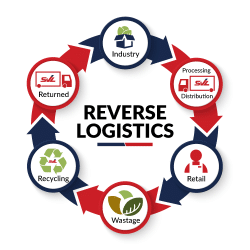
Managing Reverse Logistics
Best Practices for Managing Reverse Logistics.
Managing reverse logistics can be a challenging task for businesses, but it is an essential part of a sustainable supply chain. Efficient returns management ensures that products are handled correctly, resources are reused or recycled, and operational costs are minimised. In today’s competitive market, customers expect seamless returns processes, and businesses that deliver a smooth experience can gain a significant advantage over competitors.
This blog provides best practices for managing reverse logistics in the UK. By following these strategies, businesses can optimise returns processes, reduce costs, and maintain high levels of customer satisfaction. From prioritising sustainability and optimising your reverse logistics network to implementing technology solutions, these tips will help you build a more efficient, eco-friendly, and responsive supply chain.
First a quick plug – Our sister companies Fresh Pharma whom are GDP Compliant Pharma couriers and ‘Fresh Fridge Hire‘ are our (compliant GDP) refrigerated vehicle hire.
Understand the Importance of Reverse Logistics
Reverse logistics involves the management of the flow of products from the point of consumption back to the point of origin. This process includes product returns, repairs, refurbishment, and recycling.
Reverse logistics is crucial for businesses because it enables them to recover value from products that would otherwise be wasted It can also help companies reduce waste and improve their environmental sustainability.
In addition, efficient reverse logistics can improve customer satisfaction by providing hassle-free returns and exchanges. By investing in reverse logistics, companies can build trust with their customers and enhance their brand reputation.
Create a Comprehensive Returns Policy
To manage reverse logistics effectively, you need to have a comprehensive returns policy. Your policy should outline the conditions for returns, the process for returning products, and the time frame for returns.
Your returns policy should be easy to understand and prominently displayed on your website and in your store. This will help customers understand what they can expect when they need to return a product.
It is also essential to communicate your policy to your staff so they can handle returns effectively. Provide your employees with training on your returns policy so they can provide excellent customer service.
Optimise Your Reverse Logistics Network
A well-structured reverse logistics network is essential for efficiency and cost control. Companies must understand the locations of customers, suppliers, and warehouses to minimise unnecessary travel and reduce transport costs. Consolidating returns and establishing central processing hubs can lower operational expenses and carbon emissions. Collaborating with a third-party logistics provider (3PL) can also improve efficiency, as 3PLs bring expertise, technology, and scalable infrastructure to handle returns. By optimising routes and leveraging 3PL capabilities, businesses can reduce lead times, improve inventory management, and maintain higher service levels while keeping operational costs under control.
Implement Technology Solutions
Technology is a key enabler for efficient reverse logistics. Barcode scanning and RFID tagging allow real-time tracking of returned products, reducing errors and improving visibility across the network. Customer relationship management (CRM) software helps manage return requests, track patterns, and improve communication with clients. Furthermore, data analytics provides insights into return rates, processing times, and transport efficiency, allowing companies to identify bottlenecks and make data-driven decisions. Implementing technology solutions not only streamlines reverse logistics operations but also enhances sustainability, reduces costs, and improves the overall customer experience by ensuring timely and accurate returns processing.
Prioritising Sustainability in Reverse Logistics
Sustainability is becoming a central consideration in modern supply chain management, and it is equally crucial in reverse logistics. Companies that focus on sustainability not only reduce their environmental impact but also enhance their brand reputation and long-term operational efficiency. One effective way to prioritise sustainability is by adopting a circular economy approach. This involves designing products and packaging with reuse, refurbishment, and recycling in mind. By planning for the end-of-life stage of products from the outset, businesses can reduce waste, recover value from returned items, and create a more environmentally friendly supply chain.
In addition to product design, partnering with suppliers who follow sustainable practices is another critical step. Suppliers that prioritise energy efficiency, sustainable materials, and low-emission transportation contribute to a greener supply chain. By carefully selecting partners with strong sustainability credentials, companies can ensure that every stage of reverse logistics, from collection to refurbishment or recycling, aligns with environmental goals.
Furthermore, implementing sustainable practices in reverse logistics can include optimising return routes to reduce fuel consumption, consolidating shipments to lower transportation emissions, and employing digital tracking tools to manage returns efficiently. These actions not only reduce the carbon footprint but also improve operational efficiency. By embedding sustainability into reverse logistics strategies, businesses can turn environmental responsibility into a competitive advantage while contributing positively to broader climate goals.
Conclusion
Managing reverse logistics can be a challenging task, but it is essential for any business that wants to optimise its supply chain and provide excellent customer service. By implementing these best practices, you can minimise costs, reduce waste, and build a more sustainable supply chain.
To summarise, to manage reverse logistics effectively in the UK, you should:
- Understand the importance of reverse logistics and its impact on customer satisfaction and sustainability.
- Create a comprehensive returns policy and communicate it to your staff and customers.
- Optimise your reverse logistics network by understanding the locations of your customers, suppliers, and warehouses and consider using a 3PL.
- Implement technology solutions such as barcode scanning, CRM software, and data analytics.
- Prioritise sustainability by implementing a circular economy approach and working with sustainable suppliers.
By following these best practices, you can improve your returns processes and build a more efficient, sustainable, and customer-focused supply chain. Remember, reverse logistics is not just a cost centre, but a valuable opportunity to recover value from products and build customer trust. By investing in reverse logistics, you can stay ahead of the competition and provide a seamless customer experience.
Capacity in Logistics
- What are capacity constraints in logistics?
Capacity constraints in logistics refer to situations where the demand for logistics services exceeds the capacity of the logistics provider to meet that demand. This can occur due to various reasons, such as limited resources, lack of infrastructure, or unforeseen circumstances.
- What are the consequences of capacity constraints in logistics?
Capacity constraints can lead to several negative consequences, including delayed shipments, increased costs, reduced efficiency, and decreased customer satisfaction. In some cases, it may even result in lost business or damage to a company’s reputation.
- How can capacity constraints be addressed in logistics?
There are several strategies that logistics companies can use to address capacity constraints, such as:
- Investing in more infrastructure and equipment
- Optimising the use of existing resources through better planning and scheduling
- Collaborating with other logistics providers to share capacity and resources
- Outsourcing logistics services to third-party providers
- What role does technology play in addressing capacity constraints in logistics?
Technology can play a significant role in addressing capacity constraints in logistics by providing real-time visibility into operations, enabling better planning and scheduling, and automating various tasks. For example, using transportation management systems can help logistics providers optimise their operations and improve efficiency.
- How can logistics providers better manage their resources to address capacity constraints?
Logistics providers can better manage their resources by:
- Conducting regular capacity planning and forecasting to anticipate demand
- Optimising routes and scheduling to maximise efficiency
- Implementing inventory management systems to better manage inventory levels and reduce waste
- Investing in employee training and development to improve skills and productivity
- How can logistics providers ensure customer satisfaction despite capacity constraints?
To ensure customer satisfaction despite capacity constraints, logistics providers should prioritise effective communication and transparency. This includes providing timely updates on shipment status, managing customer expectations, and addressing any issues or concerns promptly.
Growing Demand for EV Charging
Growing Demand for EV Charging
The UK government has set ambitious targets to phase out the sales of petrol and diesel cars by 2030. This push towards electric vehicles (EVs) as a more environmentally-friendly alternative is a significant step in reducing carbon emissions. However, the growing demand for EV charging has raised concerns about the UK’s ability to support these needs, especially as more commercial fleets switch to EVs. In this blog, we will explore whether the UK National Grid can meet the growing demand for EV charging, including the charging requirements for commercial vehicles.
First a quick plug – Our sister companies Fresh Pharma whom are GDP Compliant Pharma couriers and ‘Fresh Fridge Hire‘ are our (compliant GDP) refrigerated vehicle hire.
The Current State of the UK National Grid by the Growing Demand for EV Charging
The UK’s National Grid has made significant strides in increasing its capacity to support the current level of EV adoption. As of now, Great Britain has 8.4GW of interconnector capacity, with National Grid’s portfolio totaling 6.4GW—enough to power around six and a half million British homes. One of the key components of this capacity is the 2GW IFA cable, which links Sellindge in Kent with Les Mandarins in Normandy.
While this capacity is sufficient for the present level of EV adoption, there are concerns about whether it can handle the anticipated surge in demand as more people switch to EVs. The transition to electric vehicles is expected to put additional stress on the grid, especially during peak usage times.
The Impact of Growing Demand for EV Charging on the National Grid
The impact of EV charging on the National Grid largely depends on the type and location of the charging infrastructure. Let’s break down the potential effects:
Home Charging is Growing Demand for EV Charging
Home charging accounts for the majority of EV charging and generally has a minimal impact on the National Grid. This is primarily because home charging can be done during off-peak hours when overall electricity demand is lower. However, widespread adoption of home EV chargers could still increase the baseline demand on the grid. Particularly if a large number of vehicles are charged simultaneously.
Public Charging Infrastructure
Public charging stations, particularly fast chargers, pose a greater challenge. Fast chargers can draw a significant amount of power in a short amount of time, which could strain the local grid infrastructure if not properly managed. This is especially true for charging stations located in high-traffic areas or those serving large numbers of vehicles simultaneously.
Commercial Vehicle Charging
Commercial vehicles, which typically have larger batteries and higher energy requirements, represent another significant impact. As more commercial fleets switch to EVs, the demand for energy to charge these vehicles will increase. This demand is often concentrated during business hours, which can coincide with peak electricity usage periods. Exacerbating the stress on the grid.
Measures to Address the Impact of Growing Demand for EV Charging on the National Grid
To mitigate the impact of growing EV charging demand on the National Grid, several measures have been proposed or are already being implemented. These measures aim to balance demand, optimise resource use, and ensure the grid’s stability.
Smart Charging
The technology can play a crucial role in balancing the demand for electricity. Smart chargers can delay charging during peak demand periods or adjust the charging speed based on real-time availability of electricity. By distributing the charging load more evenly throughout the day, smart charging helps prevent sudden spikes in demand that could strain the grid.
Time-of-Use Tariffs
Time-of-use tariffs incentivize EV owners to charge their vehicles during off-peak hours when the demand on the National Grid is lower. By offering lower electricity rates during these periods, these tariffs can encourage a shift in charging behaviour. Helping to balance overall demand and reduce the need for additional infrastructure.
Battery Storage
Battery storage systems can significantly smooth out electricity demand on the National Grid. These systems store excess electricity generated during low-demand periods and release it during peak periods. This approach not only helps balance supply and demand but also provides a backup power source in case of sudden spikes in usage or supply disruptions.
Increased Capacity is Growing Demand for EV Charging
To support the growing demand for EV charging, the National Grid may need to invest in increasing its overall capacity. This could involve upgrading existing infrastructure, building new power plants, or enhancing the interconnectivity with other grids. Increased capacity will ensure that the grid can meet the needs of EV owners, including those with commercial fleets.
The Role of Renewable Energy
Integrating renewable energy sources into the National Grid can also help address the growing demand for EV charging. Solar, wind, and other renewable energy sources can provide additional power to meet peak demand. Reducing reliance on fossil fuels and enhancing the sustainability of the electricity supply. Effective integration of renewable energy requires advancements in grid management technologies and storage solutions to ensure a stable and reliable supply of electricity.
Challenges and Considerations
While the measures discussed can help manage the growing demand for EV charging, several challenges and considerations must be addressed to ensure their effectiveness.
Infrastructure Development
Developing the necessary infrastructure to support widespread EV adoption requires significant investment and planning. This includes not only the charging stations themselves but also the underlying grid infrastructure to handle increased loads. Coordination between government agencies, private companies, and utility providers is essential to ensure that infrastructure development keeps pace with demand.
Regulatory and Policy Support
Government policies and regulations play a critical role in facilitating the transition to electric vehicles and the associated infrastructure. Incentives for EV adoption, funding for infrastructure projects, and regulations that promote the use of renewable energy are all necessary to support the growth of EV charging networks. Clear and consistent policies can encourage investment and provide a stable environment for development.
Public Awareness and Education is Growing Demand for EV Charging
Educating the public about the benefits of EVs and the importance of responsible charging practices is crucial. Awareness campaigns can encourage EV owners to take advantage of time-of-use tariffs and smart charging technologies. Increased public awareness can also drive demand for renewable energy and support for infrastructure projects, fostering a more sustainable energy future.
Technological Advancements in Growing Demand for EV Charging
Continued advancements in technology are essential to meet the growing demand for EV charging. Innovations in battery storage, grid management, and renewable energy integration. This will help ensure that the National Grid can handle increased loads without compromising stability or reliability. Ongoing research and development efforts are necessary to keep pace with evolving needs and technological capabilities.
Conclusion
The transition to electric vehicles is a crucial step in reducing carbon emissions and combating climate change. However, the growing demand for EV charging presents significant challenges for the UK’s National Grid. While the grid currently has the capacity to support the present level of EV adoption, future demand, particularly from commercial fleets, raises concerns about its ability to cope with increased loads.
To address these concerns, a combination of smart charging technologies, time-of-use tariffs, battery storage, and increased capacity is necessary. Integrating renewable energy sources and addressing infrastructure development, regulatory support, public awareness, and technological advancements are also critical components of a comprehensive strategy.
With careful planning, investment, and collaboration, it is possible for the UK National Grid to support the growing demand for EV charging. By embracing these measures, the UK can pave the way for a cleaner, more sustainable future, ensuring that the transition to electric vehicles is both smooth and successful.
EV Charging
- What is EV charging infrastructure?
EV charging infrastructure refers to the network of charging stations and equipment that allow EVs to recharge their batteries. This includes public charging stations, private charging stations, and mobile charging units.
- Why is there a growing demand for EV charging infrastructure?
The demand for EV charging infrastructure is growing because of the increasing popularity of electric vehicles. As more people switch to EVs, there is a greater need for charging stations to be installed in public spaces and at homes and businesses.
- What types of EV charging are available?
There are several types of EV charging, including:
Level 1 charging: This is the slowest type of charging and uses a standard 120-volt outlet. It can take up to 20 hours to fully charge an EV using level 1 charging.
Level 2 charging: This is a faster type of charging and requires a 240-volt outlet. It can take between 4 and 8 hours to fully charge an EV using level 2 charging.
DC fast charging: This is the fastest type of charging and can recharge an EV to 80% in as little as 30 minutes. However, it requires specialized equipment and is typically only available at public charging stations.
- Where are EV charging stations typically located?
EV charging stations can be located in a variety of places, including public parking lots, shopping centres, rest areas, and residential neighbourhoods. Many businesses are also starting to install EV charging stations to accommodate their customers and employees.
- How are EV charging stations funded?
EV charging stations can be funded through a variety of sources, including government grants, private investment, and public-private partnerships. In some cases, businesses may also choose to install charging stations at their own expense.

AdBlue in Diesel Tank - READ THIS NOW
Introduction to AdBlue in Diesel Tanks: A Comprehensive Guide
1. AdBlue in Diesel Tank…..Do not start your engine….
AdBlue in Diesel Tank – it is an expensive mistake if you do not know how to deal with the problem. To give you an idea of the potential costs, at Fresh we had an 18t vehicle which had AdBlue in Diesel Tank it cost £7k to repair.
As the world moves toward cleaner and more efficient transportation solutions, one technology that has gained significant attention is AdBlue.

This innovative solution plays a crucial role in reducing harmful emissions from diesel engines, helping vehicles comply with stringent environmental regulations. If you’re wondering what AdBlue is and why it’s so important, this blog will guide you through its key features, benefits, and how it works in modern diesel engines.
First a quick plug – Our sister companies Fresh Pharma whom are GDP Compliant Pharma couriers and ‘Fresh Fridge Hire‘ are our (compliant GDP) refrigerated vehicle hire.
2. What is AdBlue and Why is it Used in Diesel Engines?
AdBlue, sometimes known as Diesel Exhaust Fluid (DEF), is a non-toxic solution that is widely used in modern diesel engines to reduce the level of nitrogen oxide (NOx) emissions. NOx gases, which are harmful to both human health and the environment, are produced as a by-product of diesel combustion. To help diesel engines meet the strict emissions standards set by regulatory authorities, AdBlue has become an essential component of many vehicles, especially those fitted with Selective Catalytic Reduction (SCR) systems.
What is AdBlue Made Of?
AdBlue consists of 32.5% high-purity urea and 67.5% deionised water. Urea is a compound that is naturally found in urine but in AdBlue, it undergoes a refining process to create a pure, synthetic version that is safe to handle and use in diesel vehicles. This simple composition makes AdBlue highly effective in reducing emissions while being environmentally friendly and easy to store.
| Ingredient | Percentage |
| Urea | 32.5% |
| Deionised Water | 67.5% |
AdBlue is not a fuel additive but rather a separate fluid that is stored in its own tank on the vehicle. This tank is usually located near the diesel fuel tank or in the engine bay. Regular refills of AdBlue are required to ensure its proper functioning.
How Does AdBlue Help Diesel Engines Comply with Environmental Regulations?
Environmental regulations, particularly those concerning nitrogen oxide emissions, have become stricter in recent years. AdBlue helps diesel engines meet these regulations by converting harmful NOx gases into harmless nitrogen and water vapour. This process is part of the Selective Catalytic Reduction (SCR) system, which is discussed in more detail below.
Without the use of AdBlue, diesel engines would struggle to meet the increasingly stringent Euro 6 and other emission standards. By using AdBlue, manufacturers can design diesel vehicles that provide better fuel efficiency, cleaner emissions, and improved engine performance.
3. How Does AdBlue Work in Diesel Engines and why AdBlue in Diesel Tank is so harmful?
Understanding how AdBlue works in diesel engines requires knowledge of the SCR system, a critical component that interacts with AdBlue to reduce NOx emissions.
The Role of AdBlue in the Selective Catalytic Reduction (SCR) System
The SCR system is designed to break down nitrogen oxide emissions produced by the engine during combustion. When the exhaust gases exit the engine, they pass through a catalytic converter that contains a special catalyst. At this point, AdBlue is injected into the exhaust stream in the form of a fine mist.
AdBlue undergoes a chemical reaction in the exhaust system, where it decomposes into ammonia and carbon dioxide. The ammonia then reacts with the nitrogen oxide gases in the catalytic converter, breaking them down into harmless nitrogen and water vapour.
| SCR System Process | Description |
| Exhaust gases enter the SCR system | The exhaust gases contain harmful NOx emissions. |
| AdBlue is injected into the exhaust | AdBlue is introduced to reduce the NOx levels. |
| Chemical reaction takes place | AdBlue breaks down into ammonia and reacts with NOx gases. |
| Harmless by-products are formed | The result is harmless nitrogen and water vapour. |
This process helps reduce NOx emissions by up to 90%, making diesel engines much cleaner and environmentally friendly.
Process of How AdBlue is Injected into the Exhaust System and why AdBlue in Diesel Tank is so harmful
The injection of AdBlue into the exhaust system is controlled by an onboard computer system. The vehicle’s sensors detect the levels of nitrogen oxide in the exhaust gases and determine when and how much AdBlue needs to be injected. This ensures that the SCR system operates efficiently at all times, contributing to lower emissions and improved fuel economy.
The AdBlue injection occurs after the diesel particulate filter (DPF) and before the SCR catalyst. This placement ensures that the AdBlue can fully interact with the exhaust gases, creating the desired chemical reaction to break down harmful NOx emissions.
4. Benefits of AdBlue for Diesel Engine Efficiency
AdBlue is not just about reducing emissions—it also brings significant benefits to the overall efficiency and longevity of a diesel engine. By helping maintain cleaner emissions, AdBlue contributes to better fuel efficiency, extended engine life, and reduced maintenance costs.
Reducing Emissions and Increasing Engine Performance
AdBlue’s primary benefit lies in its ability to reduce NOx emissions. In modern diesel engines, NOx gases are a major contributor to air pollution and can have harmful effects on human health. By injecting AdBlue into the exhaust system, the SCR system converts these dangerous gases into nitrogen and water, which are both harmless. This process ensures that diesel engines meet stringent emissions standards without sacrificing performance.
Furthermore, because AdBlue helps optimise the combustion process, it can enhance engine performance by reducing the strain on the engine caused by the build-up of pollutants.
| Benefit | Explanation |
| Reduced NOx Emissions | AdBlue helps reduce harmful NOx emissions by up to 90%. |
| Improved Fuel Efficiency | Cleaner combustion leads to better fuel economy. |
| Enhanced Engine Performance | Optimised emissions result in smoother, more efficient engine operation. |
Extending the Life of the Engine and Related Components
Another key advantage of using AdBlue is its contribution to the longevity of diesel engines and related components. By reducing the levels of harmful emissions, AdBlue helps protect the engine’s internal components, such as the exhaust system, the turbocharger, and the particulate filter. This reduction in wear and tear can lead to fewer breakdowns, reduced maintenance costs, and ultimately a longer-lasting engine.
Lower Maintenance Costs
Using AdBlue can lower the frequency of repairs and maintenance that a diesel engine requires. With less carbon and soot build-up, components like the DPF are less likely to clog or require expensive cleaning. The AdBlue system itself is also designed for minimal maintenance, requiring only occasional refills.
5. The Relationship Between AdBlue and Diesel Exhaust Fluid (DEF)
Many people confuse AdBlue with Diesel Exhaust Fluid (DEF), but while the two terms are often used interchangeably, there are some important distinctions between them.
Clarifying the Connection Between AdBlue and DEF
In fact, AdBlue is the European brand name for DEF. The two terms refer to the same chemical solution made of 32.5% urea and 67.5% deionised water. The only difference is that AdBlue is the brand name commonly used in Europe, while DEF (Diesel Exhaust Fluid) is more widely used in the United States.
Common Myths and Misconceptions
Despite the widespread use of AdBlue/DEF, there are still many misconceptions surrounding its use. Some of the most common myths include:
- Myth: AdBlue is a fuel additive.
- Fact: AdBlue is not mixed with fuel; it is a separate fluid that works in the exhaust system to reduce NOx emissions.
- Myth: AdBlue can be used to improve fuel efficiency.
- Fact: While AdBlue indirectly contributes to better fuel efficiency by reducing engine strain, it is not designed to directly improve fuel economy.
- Myth: AdBlue can be substituted with other liquids.
- Fact: Only high-quality, certified AdBlue should be used in vehicles. Substituting it with other liquids can damage the SCR system and void the vehicle’s warranty.
AdBlue has become an essential part of modern diesel vehicles, particularly in reducing nitrogen oxide emissions and ensuring compliance with environmental regulations. It works in tandem with the SCR system to reduce harmful emissions, improve engine efficiency, and prolong the lifespan of engine components. Whether you are a fleet manager, truck driver, or vehicle owner, understanding how AdBlue works and its importance is crucial for maintaining optimal engine performance and reducing your environmental impact.
6. How to Know if Your Diesel Tank Requires AdBlue
One of the key concerns for diesel vehicle owners and operators is knowing when to refill AdBlue to avoid running out, which can lead to engine performance issues and, in some cases, the inability to start the engine. Fortunately, most modern vehicles come equipped with warning indicators that make it easy to keep track of your AdBlue levels.
Understanding the AdBlue Warning Indicators in the Dashboard
When your AdBlue level is low, your vehicle’s dashboard will typically display a warning light or message. This is a crucial feature that helps ensure you never run out of AdBlue, as running out could trigger a system failure. The exact warning signs may vary depending on the vehicle manufacturer, but they generally include:
- AdBlue Warning Light: A symbol resembling a fuel tank with the letters “AdBlue” or a liquid drop.
- Dashboard Message: A message such as “AdBlue Low” or “Refill AdBlue” will appear, often accompanied by a countdown.
It’s important to address the warning promptly to avoid further complications. If ignored for too long, your vehicle may enter “limp mode” and limit engine performance to protect the SCR system.
When to Top-Up and How to Avoid Running Out
AdBlue consumption varies depending on your driving style, the type of vehicle, and the type of driving you do (urban vs. long-distance). As a rule of thumb, topping up AdBlue every time you refill diesel fuel is a good habit to ensure you never run out.
Tip: Most vehicles will alert you when the AdBlue level falls below 25%, giving you enough time to plan for a refill. However, if your vehicle is nearing empty, it’s recommended to refill immediately to avoid engine performance issues. Be careful not to put AdBlue in Diesel Tank
7. The Impact of AdBlue on Fuel Consumption
AdBlue may seem like an additional cost, but its impact on overall fuel efficiency is generally positive. Let’s take a closer look at how AdBlue affects fuel consumption and costs.
Analysis of AdBlue’s Effect on Overall Fuel Efficiency
AdBlue doesn’t directly improve fuel efficiency, but its role in reducing NOx emissions does have an indirect effect on the engine’s performance and fuel usage. By reducing engine strain and keeping components cleaner, AdBlue can actually help maintain optimal fuel consumption over time.
| Effect of AdBlue on Efficiency | Explanation |
| Engine Performance Improvement | Cleaner combustion means the engine can operate at higher efficiency. |
| Optimal Emission Control | Maintaining NOx levels helps prevent engine damage and poor performance. |
Comparing Fuel Costs with and Without the Use of AdBlue
While AdBlue adds an additional cost, it is minimal when compared to the potential costs of engine repairs or the environmental penalties that could result from exceeding emissions limits. The cost of AdBlue typically ranges from £1 to £2 per litre, depending on your location and the brand. This cost is relatively small when compared to the potential fuel savings and engine performance improvements.
However, without AdBlue, your engine could become inefficient over time, resulting in higher maintenance costs and fuel inefficiency, especially as the engine struggles to meet emissions standards.
8. How to Refill AdBlue in Diesel Tank
Refilling AdBlue is a straightforward process, but there are some key points to remember to ensure it’s done properly. Here’s a step-by-step guide on how to refill AdBlue and common mistakes to avoid.
Step-by-Step Guide on How to Properly Refill AdBlue avoiding AdBlue in Diesel Tank
- Locate the AdBlue Tank:
- Most diesel vehicles have a separate AdBlue tank located next to the diesel fuel tank, or sometimes under the bonnet. You may need to check the vehicle manual for the exact location.
- Prepare the AdBlue:
- Always use high-quality, certified AdBlue from a reputable supplier. Avoid using any other fluids to top up, as it could damage the SCR system.
- Open the Tank Cap:
- Open the AdBlue filler cap, which may be labelled clearly as “AdBlue” or “DEF.”
- Insert the Nozzle and Fill:
- Use an AdBlue dispensing nozzle, or a specially designed AdBlue bottle, to pour the fluid into the tank. Be sure not to spill any fluid, as AdBlue can corrode paint if left untreated.
- Close the Cap:
- Once the AdBlue tank is full, securely close the cap to avoid any leaks or contamination.
- Check the Warning Light:
- After refilling, check the dashboard to see if the warning light has turned off. If the light remains on, you may need to reset it (refer to your vehicle’s manual) or check the AdBlue system for any issues.
Common Mistakes to Avoid While Refilling
- Using the Wrong Fluid: Never use anything other than certified AdBlue. Using water, antifreeze, or other liquids can damage the SCR system.
- Overfilling: While most systems will prevent overfilling, it’s important not to force in too much AdBlue, as this could cause leakage or damage.
- Spilling AdBlue: Spills can be harmful to the paintwork of your vehicle. Be sure to clean up any spilt fluid immediately with water.
- AdBlue in Diesel Tank
9. How Much AdBlue Does a Diesel Vehicle Use?
Understanding how much AdBlue your diesel vehicle consumes can help you plan for refills and keep the system running smoothly.
Average Consumption Rates Per 1000 Miles for Diesel Engines
The average consumption of AdBlue is around 1 to 2 litres per 1000 miles, though this can vary depending on the engine type, driving conditions, and vehicle load. On average, diesel engines require around 5-10% of the amount of diesel they consume in AdBlue.
| Vehicle Type | Average AdBlue Consumption |
| Small Diesel Cars | 1-1.5 litres per 1000 miles |
| Large Diesel Vehicles | 2-3 litres per 1000 miles |
| Heavy Duty Trucks | 3-5 litres per 1000 miles |
Factors That Affect AdBlue Consumption
While average consumption rates provide a helpful guide, several factors can influence how much AdBlue your vehicle uses:
- Driving Style: Aggressive driving, such as rapid acceleration and high-speed driving, can increase NOx emissions and, consequently, AdBlue consumption.
- Vehicle Load: Heavier loads or towing will often result in higher emissions and increased AdBlue usage.
- Type of Engine: Larger, more powerful diesel engines may consume more AdBlue due to higher exhaust emissions.
- Environmental Conditions: Cold weather can affect AdBlue usage as the system may have to work harder to maintain optimal emissions control.
10. Common Problems with AdBlue Systems and How to Solve Them
While AdBlue systems are generally reliable, like any technology, they can encounter issues. Here are some common problems and how to resolve them.
Issues Such as Blockage, Poor Quality, and Incorrect Storage
- Blockage in the AdBlue System: Over time, the SCR system can accumulate dirt or debris, causing blockages. Regular maintenance and use of high-quality AdBlue can prevent this.
- Poor-Quality AdBlue: Low-quality AdBlue can damage the SCR system and lead to system failures. Always use certified, pure AdBlue.
- Incorrect Storage: AdBlue should be stored in a cool, dry place and away from direct sunlight. Exposure to extreme temperatures can degrade the fluid.
Solutions and Preventative Measures
- Regular Maintenance: Periodically check the AdBlue system for leaks or blockages.
- Use High-Quality AdBlue: Always buy certified AdBlue from reputable suppliers.
- Proper Storage: If you store AdBlue in bulk, ensure it is kept in proper containers, protected from UV light and extreme temperatures.
11. Can You Drive Without AdBlue in Your Diesel Tank?
Running a vehicle without AdBlue is not only problematic for the engine but also illegal in many regions due to environmental regulations. If your diesel vehicle uses AdBlue, it’s essential to keep the tank filled. But what happens if you run out of AdBlue?
What Happens If You Run Out of AdBlue?
If you run out of AdBlue, your vehicle will enter “limp mode” as a protective measure. Limp mode reduces engine power to minimise emissions while the vehicle cannot use the SCR (Selective Catalytic Reduction) system. This is a clear indication that the vehicle cannot continue running optimally without AdBlue.
Legal and Performance Implications for Your Vehicle
- Legal Implications: In many countries, such as the UK and throughout Europe, it’s illegal to operate a vehicle without AdBlue if the vehicle is designed to use it. Failing to use AdBlue can result in fines or penalties, as it violates emissions regulations.
- Performance Implications: Without AdBlue, your engine’s NOx emissions will increase dramatically. The SCR system cannot function, causing the vehicle to fail emissions tests. This could lead to expensive repairs, a failure to pass inspection, or even the inability to register your vehicle in certain jurisdictions.
Tip: Always check your AdBlue levels regularly to avoid running out. Most vehicles will alert you with plenty of time to spare, so staying on top of it is simple.
12. How AdBlue Affects the Environment and Emissions Standards
One of the most significant advantages of AdBlue is its positive impact on the environment. Diesel engines, while highly efficient, produce harmful nitrogen oxide (NOx) gases that contribute to air pollution. AdBlue helps mitigate these harmful emissions, making diesel vehicles much cleaner.
Understanding the Environmental Benefits of Using AdBlue and the consequences of AdBlue in Diesel Tank
AdBlue works in the Selective Catalytic Reduction (SCR) system to reduce NOx emissions by up to 90%. This process turns NOx gases into harmless nitrogen and water, both of which are safe to release into the atmosphere. As a result, AdBlue helps significantly reduce the vehicle’s overall carbon footprint.
The environmental benefits include:
- Reduced Air Pollution: By decreasing harmful NOx emissions, AdBlue helps improve air quality and public health.
- Sustainable Diesel Technology: AdBlue makes diesel engines more sustainable by allowing them to comply with stringent environmental regulations without sacrificing performance.
How AdBlue Helps Meet Euro 6 and Other Emission Regulations
Euro 6 is a set of strict European emissions standards that apply to all new diesel and petrol vehicles. These standards limit the amount of NOx and particulate matter that can be emitted by vehicles. AdBlue plays a critical role in helping diesel vehicles meet Euro 6 regulations by reducing the NOx emissions produced during combustion.
- Euro 6 Standards: Without AdBlue, a diesel vehicle would struggle to meet Euro 6 standards, particularly concerning NOx emissions. AdBlue enables vehicles to comply with these regulations, thus preventing penalties and ensuring cleaner air.
| Emissions Standard | NOx Emission Limit | Role of AdBlue |
| Euro 5 | 180 mg/km | Limited compliance without AdBlue |
| Euro 6 | 80 mg/km | AdBlue crucial for meeting limit |
In addition to Euro 6, many countries have their own regulations that AdBlue helps meet, making it a vital part of diesel vehicles in these markets.
13. Storing AdBlue: Tips for Maintaining Quality
Proper storage of AdBlue is essential to maintain its effectiveness and ensure that it doesn’t degrade over time. Here are some tips for storing AdBlue properly:
How to Properly Store AdBlue to Avoid Degradation
AdBlue in Diesel Tank is one hazard, but AdBlue is sensitive to heat and direct sunlight. If exposed to high temperatures, it can degrade and lose its effectiveness, leading to potential issues in the SCR system. Therefore, proper storage conditions are vital for ensuring the fluid remains functional.
- Store in a Cool, Dry Place: AdBlue should be stored in a location that is consistently cool, away from extreme temperatures and direct sunlight. Ideal storage temperatures range from -5°C to 30°C.
- Avoid Freezing: AdBlue can freeze at temperatures below -11°C, which may cause it to become unusable. However, it will typically return to normal once it thaws, though it’s best to store it in places that are not prone to freezing.
- Use Proper Containers: Always store AdBlue in clean, airtight containers made specifically for AdBlue to avoid contamination.
Recommended Storage Conditions and Lifespan
- Storage Temperature: -5°C to 30°C.
- Lifespan: When stored correctly, AdBlue has a shelf life of around 12 months, though it’s always best to use it sooner if possible to ensure the highest quality.
14. AdBlue Costs: What You Need to Know
While AdBlue is essential for reducing emissions, it also comes with its own cost. Understanding how AdBlue fits into your overall vehicle running costs is crucial for effective fleet management or personal budgeting.
Breakdown of the Cost of AdBlue and Its Impact on Overall Vehicle Running Costs
The cost of AdBlue varies depending on your location and supplier, but on average, it costs between £1 and £2 per litre. The amount of AdBlue you’ll need to purchase depends on your vehicle’s consumption, which can range from 1 to 3 litres per 1000 miles, depending on the engine and driving conditions.
| Vehicle Type | AdBlue Consumption per 1000 Miles | Cost per 1000 Miles (Approx.) |
| Small Diesel Car | 1-1.5 litres | £1-£3 |
| Large Diesel Vehicle | 2-3 litres | £2-£6 |
| Heavy Duty Truck | 3-5 litres | £3-£10 |
Comparison with the Cost of Other Emissions Control Methods
While AdBlue adds a cost to vehicle maintenance, it is far less expensive than other emissions control methods. For example, the cost of maintaining diesel particulate filters (DPF) or addressing engine failure due to ignored emissions regulations can be significantly higher. Therefore, using AdBlue to reduce NOx emissions is a cost-effective solution in the long term.
15. Conclusion: AdBlue in Diesel Tank and The Future of AdBlue in Diesel Vehicles
AdBlue has proven to be an essential tool in reducing harmful emissions from diesel engines, ensuring compliance with strict environmental standards, and improving engine efficiency. As the automotive industry evolves, there are ongoing advancements in emissions control technology, and AdBlue will continue to play a key role.
Potential Advancements in AdBlue Technology and Alternatives
The future of AdBlue may include further innovations, such as:
- More Efficient SCR Systems: Improved SCR systems may lead to more efficient use of AdBlue, potentially reducing consumption and lowering costs.
- Alternative Emissions Reduction Technologies: As the automotive industry moves toward electrification, there may be a gradual reduction in the reliance on diesel engines. However, for the foreseeable future, AdBlue will remain a crucial component in the diesel engine sector.
Summary of the Importance of AdBlue in Diesel Tank
AdBlue remains one of the most effective solutions for managing emissions in diesel vehicles, offering environmental, legal, and performance benefits. By reducing NOx emissions, it helps meet stringent regulations like Euro 6 and improves engine longevity. While the costs of AdBlue must be considered, its overall impact on fuel efficiency and vehicle performance makes it a wise investment for both personal and commercial vehicle owners.
As we look toward a more sustainable future in transportation, AdBlue will continue to play a pivotal role in maintaining cleaner, more efficient diesel vehicles.
AdBlue is a diesel exhaust fluid that is injected into the exhaust system of diesel engines to reduce emissions of harmful pollutants. If AdBlue is accidentally added to the diesel tank, it can cause significant damage to the engine. AdBlue is not meant to be used as a fuel and has different chemical properties compared to diesel. When AdBlue is added to the diesel tank, it will mix with the diesel fuel and create a chemical reaction that will cause the diesel fuel to break down. This can lead to a number of issues, such as clogged fuel filters, damaged fuel injectors, and even engine failure. you should not drive your vehicle if AdBlue has been added to the diesel tank. You should stop the engine immediately and follow the steps outlined in this article for damage control. While it is possible to remove AdBlue from the diesel tank yourself, it is recommended that you seek the assistance of a qualified mechanic. They will have the necessary equipment and expertise to safely and effectively remove the AdBlue and prevent further damage to the engine. To prevent AdBlue from being accidentally added to the diesel tank, it’s important to ensure that the AdBlue and diesel tanks are clearly labelled and that the AdBlue filling nozzle is not compatible with the diesel tank. Additionally, it’s important to take care when filling up the vehicle to ensure that the correct fluids are being added to the correct tanks.Adblue in Diesel Tank
No,

Myths and Misconceptions - Busted
Common Myths and Misconceptions about Temperature Controlled Logistics
Temperature-controlled logistics is a vital aspect of many industries, including food and pharmaceuticals. The transportation and storage of these sensitive goods require strict temperature control to maintain their quality and efficacy. However, there are several common myths and misconceptions surrounding temperature-controlled logistics. In this article, we will explore these misconceptions and provide accurate information to help businesses better understand temperature-controlled logistics.
First a quick plug – Our sister companies Fresh Pharma whom are GDP Compliant Pharma couriers and ‘Fresh Fridge Hire‘ are our (compliant GDP) refrigerated vehicle hire.

Temperature-Controlled Logistics – An Overview
Temperature-controlled logistics, also known as cold chain logistics, is the specialised process of transporting and storing temperature-sensitive goods to maintain their quality, safety, and efficacy. This critical aspect of the supply chain is essential for industries such as food and beverages, pharmaceuticals, biotechnology, and perishable goods, where exposure to incorrect temperatures can lead to spoilage, reduced product effectiveness, or safety risks.
Temperature-controlled logistics involves maintaining a precise temperature range at every stage—from storage in refrigerated warehouses to transportation in chilled or frozen vehicles. Advanced technologies, including IoT-enabled sensors, real-time monitoring, and automated alerts, play a vital role in ensuring that goods remain within their required temperature parameters throughout the supply chain.
Proper implementation of temperature-controlled logistics helps businesses reduce product loss, comply with regulatory standards, and deliver high-quality goods to customers. By safeguarding sensitive products, companies can enhance operational efficiency, customer trust, and profitability, while also minimising environmental impact through reduced waste.
Myths and Misconceptions – Temperature Control is not Necessary for Short Transport Distances
One of the most common myths surrounding temperature-controlled logistics is that temperature control is not necessary for short transport distances. Many businesses believe that if the transport distance is short, they can transport their products without temperature control. However, this is far from the truth. Temperature control is crucial for all transport distances, regardless of the distance covered. Even a short distance of a few miles can result in temperature fluctuations that can impact the quality and efficacy of the goods.
Myths and Misconceptions – All Temperature-Sensitive Products Require the Same Temperature Conditions
Another common myth surrounding temperature-controlled logistics is that all temperature-sensitive products require the same temperature conditions. This is not true. Different products have different temperature requirements, and it is essential to maintain the correct temperature for each product. For example, vaccines require a temperature range of 2 to 8°C , while frozen foods require a temperature range of -18°C or below.
Myths and Misconceptions – Standard Vehicles Can Transport Temperature-Sensitive Products
Many businesses believe that standard vehicles can transport temperature-sensitive products. However, this is not true. Standard trucks do not have temperature control features, and they cannot maintain a consistent temperature for sensitive products. Temperature-controlled trucks or reefers are specially designed to transport temperature-sensitive products, and they have features such as temperature sensors, insulation, and cooling systems to maintain the correct temperature range.
Myths and Misconceptions – Temperature Control is Expensive
Another common myth is that temperature control is expensive. While temperature-controlled logistics may seem costly, it is essential to consider the cost of product loss due to temperature fluctuations. Products that are exposed to incorrect temperature conditions can become ineffective, resulting in product loss and decreased profits. Temperature control is a necessary investment to ensure the quality and efficacy of temperature-sensitive products.
Bursting the Myths and Misconceptions – Accurate Information on Temperature Controlled Logistics
Now that we have debunked some of the common myths surrounding temperature-controlled logistics, let’s explore some accurate information on this topic.
Myths and Misconceptions – Temperature Control is Necessary for all Transport Distances
Temperature control is necessary for all transport distances, regardless of the distance covered. Even a short distance of a few miles can result in temperature fluctuations that can impact the quality and efficacy of the goods. It is essential to maintain a consistent temperature range to ensure the quality and efficacy of temperature-sensitive products.
Myths and Misconceptions – Different Products Require Different Temperature Conditions
Different products have different temperature requirements, and it is essential to maintain the correct temperature for each product. The temperature range for vaccines is 2 to 8°C , while frozen foods require a temperature range of -18°C or below. It is crucial to understand the temperature requirements for each product to ensure the quality and efficacy of the goods.
Myths and Misconceptions – Temperature-Controlled Trucks are Necessary
Temperature-controlled trucks or reefers are necessary to transport temperature-sensitive products. These trucks have temperature sensors, insulation, and cooling systems to maintain the correct temperature range. Standard trucks do not have these features, and they cannot maintain a consistent temperature for sensitive products.
Myths and Misconceptions – Temperature Control is an Investment
Temperature control is an investment in ensuring the quality and efficacy of temperature-sensitive products. While it may seem expensive, the cost of product loss due to temperature fluctuations can be even higher. Temperature-controlled logistics is a necessary investment for businesses that transport and store temperature-sensitive goods.
Benefits of Temperature-Controlled Logistics
Temperature-controlled logistics, often referred to as cold chain management, is essential for businesses that handle perishable or temperature-sensitive products, including food, pharmaceuticals, and biotech products. By maintaining strict temperature control throughout storage, handling, and transportation, businesses can achieve significant operational, financial, and regulatory advantages.
Benefit 1 – Maintains Product Quality and Efficacy
One of the primary advantages of temperature-controlled logistics is its ability to maintain the quality, freshness, and efficacy of products. For industries such as pharmaceuticals, vaccines, and specialty foods, even small deviations in temperature can compromise product integrity. By using advanced solutions like IoT sensors, real-time monitoring, and automated alerts, businesses can ensure that products remain within the optimal temperature range. This not only reduces spoilage but also protects brand reputation, enhances customer satisfaction, and ensures that end-users receive safe and effective products.
Benefit 2 – Reduces Product Loss and Waste
Temperature fluctuations are a leading cause of product loss in the supply chain, resulting in financial losses and increased waste. Implementing robust temperature-controlled logistics systems helps businesses minimise these losses by ensuring that all products are transported and stored under ideal conditions. Reduced product loss translates into cost savings, increased profit margins, and a lower environmental impact due to decreased food or pharmaceutical waste. Advanced technologies, such as predictive analytics, can further optimise storage and transportation conditions, proactively preventing potential spoilage before it occurs.
Benefit 3 – Ensures Regulatory Compliance
Many industries, particularly pharmaceuticals, biotechnology, and perishable food sectors, operate under strict regulatory frameworks, such as GDP (Good Distribution Practice), FDA guidelines, or EU cold chain regulations. Temperature-controlled logistics helps businesses remain compliant by providing documented evidence of temperature monitoring throughout the supply chain. Compliance protects businesses from legal penalties, supports audits, and strengthens partnerships with suppliers and customers who rely on the safe handling of temperature-sensitive goods.
Benefit 4 – Enhances Operational Efficiency and Visibility
Beyond quality and compliance, temperature-controlled logistics improves supply chain efficiency. With real-time data from IoT-enabled sensors and cloud-based tracking platforms, companies gain full visibility of their cold chain operations. This allows for faster decision-making, optimised route planning, and proactive management of potential risks, such as delays or equipment malfunctions. Enhanced efficiency reduces operational costs while ensuring timely delivery of products in optimal condition.
Benefit 5 – Supports Sustainability Initiatives
By reducing product spoilage, waste, and inefficient energy use in storage and transport, temperature-controlled logistics contributes to a more sustainable supply chain. Companies can leverage energy-efficient refrigeration systems, smart route planning, and predictive maintenance to minimise carbon emissions, supporting both environmental goals and corporate social responsibility initiatives.
Conclusion: Importance of Temperature-Controlled Logistics
Temperature-controlled logistics is a vital process for any business transporting or storing temperature-sensitive products. From perishable foods to pharmaceuticals, maintaining the correct temperature throughout the supply chain ensures that products arrive in optimal condition. Without proper temperature control, goods can spoil, degrade, or lose efficacy, resulting in financial losses, wasted resources, and reputational damage.
It is equally important to understand and dispel common myths and misconceptions about temperature-controlled logistics. Many assume it is only necessary for frozen goods, but in reality, chilled, ambient-sensitive, and even some packaged products require precise temperature management. Another misconception is that investing in temperature-controlled logistics is prohibitively expensive. In truth, the cost is offset by reduced waste, extended product shelf life, and higher customer satisfaction. Educating stakeholders on these facts ensures better adoption and investment decisions.
By implementing robust temperature-controlled logistics systems,
By implementing robust temperature-controlled logistics systems, businesses can significantly enhance operational efficiency. Ensuring compliance with food safety and regulatory standards, and build stronger trust with their customers. Leveraging advanced technologies such as real-time monitoring, IoT-enabled sensors, and predictive analytics further improves supply chain reliability, reduces losses, and increases transparency across all stages of product handling.
In conclusion, temperature-controlled logistics is far more than a compliance requirement—it is a strategic investment. It safeguards product quality, protects brand reputation, boosts customer confidence, and drives sustainable business growth. Companies that prioritise efficient and technology-enabled cold chain management can minimise risks. Reducing operational costs, and maintain a competitive advantage in an increasingly demanding market. In today’s fast-paced logistics environment, investing in temperature-controlled solutions is essential for businesses that want to maximise profitability while delivering safe, high-quality products consistently.
Myths and Misconceptions
- What temperature range is required for transporting vaccines?
In the main, Vaccines require a temperature range of 2 to 8°C .
- Can standard trucks transport temperature-sensitive products?
No, standard trucks do not have temperature control features and cannot maintain a consistent ‘controlled’ temperature for sensitive products.
- Is temperature control necessary for short transport distances?
Yes, temperature control is necessary for all transport distances, regardless of the distance covered.
- Is temperature-controlled logistics expensive?
While it may seem expensive, temperature-controlled logistics is a necessary investment in ensuring the quality and efficacy of temperature-sensitive products.
- What are the benefits of temperature-controlled logistics?
The benefits of temperature-controlled logistics include maintaining product quality and efficacy, reducing product loss, and complying with regulatory requirements.
Sustainable Chilled Logistics
The Urgent Need for Sustainable Chilled Logistics
Importance of Chilled Logistics in the Modern Supply Chain
Sustainable Chilled Logistics within the Chilled delivery service, also known as the cold chain, plays a vital role in the transportation and storage of temperature-sensitive goods. 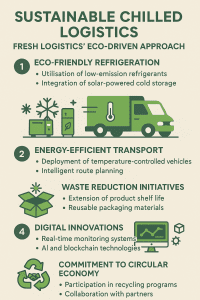 These goods include perishable foods, pharmaceuticals, certain chemicals, and even high-value floral products, all of which require specific temperature ranges to maintain quality and safety. In the United Kingdom, the demand for chilled logistics has surged due to growing consumer expectations for fresh and organic produce, increased pharmaceutical needs, and e-commerce expansion. For example, supermarkets like Tesco and Sainsbury’s rely on a robust chilled supply chain to ensure dairy products and meats are safe and fresh when they reach customers.
Modern supply chains have become globalised, and products often travel hundreds or thousands of miles before reaching the consumer. Chilled logistics ensures that these perishable goods arrive in optimal condition, which not only affects the quality and safety of the products but also the financial performance of suppliers and retailers. However, while chilled logistics is essential, its environmental impact is profound.
First a quick plug – Our sister companies Fresh Pharma whom are GDP Compliant Pharma couriers and ‘Fresh Fridge Hire‘ are our (compliant GDP) refrigerated vehicle hire.
The Environmental Cost of Sustainable Chilled Logistics
Refrigerated vehicles and storage units are energy-intensive. They often rely on diesel-powered refrigeration units, which emit substantial amounts of carbon dioxide and other pollutants. According to the Department for Transport, refrigerated trucks can consume up to 20% more fuel than their non-refrigerated counterparts. Additionally, many refrigeration systems use hydrofluorocarbons (HFCs), potent greenhouse gases that contribute significantly to climate change.
Moreover, the infrastructure supporting chilled logistics—from refrigerated warehouses to cold storage distribution centres—demands continuous power. This constant energy consumption has a direct environmental cost, especially when the electricity comes from non-renewable sources. For instance, a typical cold storage facility can use up to 30 kWh per square metre annually, contributing heavily to the carbon footprint of the logistics sector.
Why Sustainable Chilled Logistics is No Longer Optional
With the UK government setting ambitious climate targets, including reaching net-zero emissions by 2050, the logistics industry is under increasing pressure to adapt. Regulatory frameworks such as Clean Air Zones (CAZs) and the expansion of the Ultra Low Emission Zone (ULEZ) in London directly impact logistics operations. Companies that fail to comply face financial penalties and reputational damage.
 Moreover, consumers are becoming more environmentally conscious. A study by Deloitte UK found that over a third of British consumers consider sustainability when making purchasing decisions. This shift in consumer values means that companies investing in sustainable chilled logistics are not only future-proofing their operations but also aligning with market expectations.
Sustainability in chilled logistics is no longer a choice; it is a business imperative. It offers a strategic advantage in terms of compliance, cost savings, and customer loyalty, all while contributing positively to the planet.
What is Sustainable Chilled Logistics? A Brief Overview
Definition and Scope
Chilled logistics refers to the management and transportation of goods that must be kept within a specific cool temperature range, typically between 0°C and 8°C, to ensure product integrity. It includes all stages of the supply chain: production, storage, transportation, and distribution. This system ensures that products remain safe, effective, and consumable throughout their lifecycle. In the UK, this applies to sectors such as food and beverage, pharmaceuticals, and horticulture.
Difference Between Chilled and Frozen Logistics
Although often used interchangeably, chilled and frozen logistics are distinct. Chilled logistics deals with goods requiring cool temperatures, while frozen logistics concerns products that must be kept below freezing, generally -18°C or lower. Each has unique infrastructure requirements and handling protocols. For example, transporting chilled milk differs significantly from transporting frozen fish. The former requires gentle refrigeration and shorter shelf-life management, whereas the latter demands ultra-low temperatures and more robust insulation.
Furthermore, the energy requirements for frozen logistics are typically higher, given the need to maintain sub-zero temperatures consistently. Consequently, frozen logistics may have an even greater environmental footprint, underscoring the importance of tailored sustainability strategies for each.
Role in Food, Pharma, and Floral Supply Chains
Chilled logistics is integral to various industries. In the food sector, it preserves freshness and prevents bacterial growth. British retailers depend on cold chains to offer a wide range of dairy, meat, and fresh produce. For instance, chilled logistics ensures strawberries from Kent reach shelves in London without spoilage.
In the pharmaceutical industry, the stakes are even higher. Many vaccines, including those used during the COVID-19 pandemic, require strict temperature controls. NHS supply chains depend heavily on chilled logistics to maintain the efficacy of these life-saving drugs.
Floral logistics is another niche but essential area. Flowers are highly perishable and temperature-sensitive. Chilled logistics ensures that blooms from regions like Lincolnshire or imported varieties from the Netherlands remain vibrant and sellable in British flower shops and supermarkets.
Chilled logistics, therefore, is not merely a function of transport but a critical enabler of economic activity, public health, and consumer satisfaction.
Environmental Impact of Sustainable Chilled Logistics
CO₂ Emissions from Refrigerated Transport
Traditional refrigerated transport systems are major contributors to CO₂ emissions. Refrigerated vans and lorries often rely on auxiliary diesel engines to power cooling units, resulting in higher emissions than standard freight vehicles. A study by the Carbon Trust found that refrigerated vehicles can emit up to 29% more CO₂ per kilometre.
Moreover, these emissions are particularly concerning in urban areas, where logistics vehicles contribute to air quality issues. This has prompted initiatives such as London’s ULEZ, which imposes penalties on high-emission vehicles. As such, the carbon footprint of refrigerated transport is a significant environmental concern that must be addressed through cleaner fuels, electric refrigeration units, and route optimisation.
Energy Consumption in Cold Storage Facilities
Cold storage facilities are notoriously energy-hungry. These warehouses must maintain consistent temperatures, often over vast areas, resulting in continuous energy use. A report from the UK Green Building Council noted that cold storage warehouses consume nearly twice the energy of ambient storage facilities.
Inefficient insulation, outdated refrigeration systems, and poor building design contribute to excessive energy use. For example, older facilities may lack advanced insulation materials or rely on non-variable speed compressors, leading to energy wastage. Transitioning to energy-efficient systems, renewable energy sources like solar panels, and advanced building management systems can significantly reduce this environmental burden.
Waste Generation and Inefficiencies
In addition to emissions and energy use, traditional cold chains often generate waste due to temperature fluctuations, poor planning, and product spoilage. For instance, if a refrigeration unit fails or goods are left unrefrigerated during loading, entire consignments can be lost. This not only wastes resources but also contributes to landfill and methane emissions.
Packaging waste is another concern. Single-use plastics and non-recyclable insulation materials are commonly used in cold chain logistics. Once discarded, these materials add to the growing problem of plastic pollution. Sustainable alternatives, coupled with better inventory management and temperature monitoring technologies, can help mitigate these inefficiencies.
The Business Case for Sustainable Chilled Logistics
Regulatory Pressures (e.g., UK Clean Air Zones)
Government regulations are increasingly mandating sustainability. The UK’s Clean Air Zones, such as those in Birmingham, Bath, and Portsmouth, aim to reduce air pollution by charging high-emission vehicles. Logistics companies using traditional refrigerated lorries face financial penalties unless they upgrade to cleaner alternatives.
Compliance with such regulations is not optional; it affects operational viability. Companies that proactively adopt low-emission vehicles and environmentally friendly technologies can avoid penalties and gain a competitive edge. Moreover, as more cities implement CAZs, nationwide adaptation becomes essential.
Cost Savings from Energy-Efficient Systems
Sustainability also makes financial sense. While the initial investment in energy-efficient refrigeration units or solar-powered warehouses may be high, the long-term savings are substantial. Reduced fuel and electricity bills, coupled with lower maintenance costs, improve profitability.
For example, a logistics firm in Manchester retrofitted its fleet with electric refrigeration units and reported a 15% reduction in operating costs within two years. Similarly, warehouses using LED lighting, advanced insulation, and renewable energy sources have significantly reduced their overheads. These savings can be reinvested in business growth or passed on to consumers, enhancing competitiveness.
Consumer Demand for Sustainable Chilled Logistics
Modern consumers are more eco-aware. According to a 2024 YouGov survey, 41% of UK shoppers consider environmental impact when selecting brands. Companies with transparent, green logistics practices often enjoy higher customer loyalty and better brand perception.
Supermarkets like Waitrose have capitalised on this trend by showcasing their sustainable sourcing and distribution practices. By aligning logistics with consumer values, companies not only meet expectations but also create market differentiation. Investing in sustainability is thus a pathway to customer trust and long-term success.
Sustainable Packaging for Sustainable Chilled Logistics
Recyclable and Biodegradable Insulation Materials
Packaging plays a crucial role in chilled logistics, maintaining temperature integrity during transit. Traditional options include polystyrene and polyurethane foam, which are effective but non-recyclable. These materials contribute to plastic pollution and are increasingly viewed as unsustainable.
Innovations in sustainable packaging have introduced recyclable and biodegradable alternatives. For instance, sheep wool liners, starch-based foams, and recycled paper pulp offer excellent insulation while being compostable or recyclable. British companies like Wool cool and TemperPack UK have pioneered such materials, proving that sustainability and performance can go hand in hand.
Packaging Innovations for Temperature Control
Recent advancements have led to smart packaging solutions that actively monitor and regulate temperature. Phase Change Materials (PCMs) can absorb or release heat to maintain a constant temperature range, reducing the need for active refrigeration. Thermochromic labels and sensors also help monitor temperature breaches, enhancing accountability and reducing spoilage.
Reusable cold packs and modular container systems are also gaining traction. These innovations not only enhance temperature control but also reduce single-use waste, aligning with circular economy principles.
Case Studies from Leading Brands
Several UK brands have embraced sustainable chilled packaging. For example, Abel & Cole, an organic food delivery service, uses fully recyclable insulation and encourages customers to return packaging for reuse. Another example is Gousto, which transitioned from plastic-lined boxes to cardboard and recyclable wool liners, reducing plastic waste by 74%.
These success stories demonstrate that sustainable packaging is not just an environmental imperative but also a marketing advantage. Brands that innovate in this space build consumer trust and lead industry standards.
Sustainable chilled logistics is no longer the future; it is the present. By embracing environmental responsibility through every link in the cold chain, businesses can reduce costs, meet regulations, and satisfy a growing demand for greener solutions.
Energy-Efficient Refrigeration Technologies for Sustainable Chilled Logistics
Use of Natural Refrigerants
The use of natural refrigerants is increasingly recognised as a cornerstone of energy-efficient refrigeration technologies in sustainable cold chain logistics. Unlike traditional synthetic refrigerants such as hydrofluorocarbons (HFCs), natural refrigerants—including ammonia (NH3), carbon dioxide (CO2), and hydrocarbons like propane (R290)—have negligible or zero global warming potential (GWP) and no ozone depletion potential (ODP). For example, ammonia is highly efficient and widely used in large industrial refrigeration systems throughout the UK’s food processing and storage sectors. It offers excellent thermodynamic properties but requires stringent safety protocols due to its toxicity. Carbon dioxide, though less efficient under certain conditions, is ideal for high-pressure systems and has gained traction in commercial refrigeration settings, including supermarket chains.
Propane, known for its efficiency and lower flammability risk, is being adopted in smaller commercial refrigeration units and transport refrigeration systems. These natural options not only reduce environmental impact but also lower long-term operating costs due to their superior energy efficiency. Moreover, the EU F-Gas Regulation and UK environmental targets are pushing industries towards these eco-friendly alternatives, with companies like Waitrose and Iceland leading the transition. A key benefit is regulatory compliance coupled with brand value enhancement through visible sustainability efforts.
Solar-Powered Refrigerated Units
Solar-powered refrigerated units are a game-changing innovation for energy-efficient cold chain logistics. These systems utilise photovoltaic panels to generate electricity, which then powers refrigeration units directly or charges a battery for later use. This technology is particularly beneficial in remote or off-grid locations, such as rural distribution points or mobile markets in the British countryside. It is also instrumental in supporting low-carbon goals in urban logistics. In practice, solar-powered refrigeration has been employed successfully in sectors like pharmaceuticals and food delivery, ensuring cold storage without relying on diesel generators.
For instance, mobile solar cold rooms have been trialled for transporting vaccines and fresh produce across areas with unstable electricity supplies. Additionally, these units contribute to reduced operational costs by minimising dependence on fossil fuels and decreasing maintenance frequency. To optimise performance, many solar refrigeration systems incorporate hybrid models that can switch to grid power when solar energy is insufficient, ensuring consistent cooling. Despite initial capital investment, the return on investment is favourable due to savings on fuel and reduced carbon taxes. As battery technology improves, these systems are expected to become more widespread and cost-effective.
Smart Sensors and AI Temperature Control
Smart sensors and AI-driven temperature control represent a significant advancement in maintaining precise conditions within cold chain logistics. These technologies utilise real-time data collection and machine learning algorithms to optimise refrigeration performance, reduce energy usage, and minimise spoilage. Smart sensors monitor variables such as temperature, humidity, door opening frequency, and compressor efficiency, transmitting this data to centralised systems for analysis.
Artificial Intelligence (AI) processes this information to identify patterns, predict maintenance needs, and adjust settings dynamically. For example, AI might determine the most energy-efficient cooling cycle during off-peak hours or adjust humidity levels to prolong the shelf life of fresh produce. In the UK, retailers like Tesco and Sainsbury’s have begun integrating such systems in their distribution centres to enhance product safety and reduce emissions. These innovations also enable predictive analytics, allowing logistics operators to pre-emptively address issues before they escalate, thus avoiding costly disruptions. Furthermore, integration with Internet of Things (IoT) platforms provides visibility across the entire supply chain, supporting compliance with UK food safety regulations. The long-term benefit is a resilient, sustainable refrigeration infrastructure aligned with the broader goals of carbon neutrality.
Low-Emission Transport Options in Sustainable Chilled Logistics
Electric Refrigerated Vehicles (E-Trucks and E-Vans)
Electric refrigerated vehicles, encompassing e-trucks and e-vans, are crucial components in achieving low-emission transport within the cold chain logistics sector. These vehicles utilise electric drivetrains combined with battery-powered refrigeration units, eliminating the need for diesel engines and significantly reducing both greenhouse gas emissions and noise pollution. In urban centres like London and Manchester, local governments have implemented low-emission zones, incentivising the adoption of electric vehicles (EVs) in delivery fleets.
Companies such as Ocado and Tesco have already integrated e-vans into their last-mile delivery operations, showcasing the feasibility and benefits of this technology. The reduced operational costs, due to fewer moving parts and lower energy costs, make electric vehicles an attractive option over the long term. However, challenges remain, including limited range, battery weight, and charging infrastructure. To address this, UK logistics firms are investing in depot-based charging stations and exploring route planning software to optimise delivery schedules. Innovations such as regenerative braking and lightweight vehicle materials are further improving efficiency. Government grants under the UK Plug-in Van Grant scheme also provide financial incentives for adoption. As battery technology continues to advance, electric refrigerated vehicles are expected to become the backbone of sustainable urban cold chain logistics.
Biofuel and Hybrid Logistics Fleets
Biofuel and hybrid logistics fleets represent a transitional solution towards achieving a low-carbon cold chain. Biofuels, including biodiesel and hydrotreated vegetable oil (HVO), are derived from renewable biological sources and can significantly reduce the carbon footprint of transport operations. In the UK, companies like ASDA and DHL have begun trialling biofuel-powered lorries for cold chain logistics, often in combination with electric refrigeration units. Hybrid vehicles, which combine internal combustion engines with electric motors, offer enhanced fuel efficiency and reduced emissions, particularly during start-stop urban delivery routes.
This dual capability ensures reliable operation across various terrains and delivery requirements. The flexibility of using existing fuelling infrastructure also makes biofuel and hybrid options attractive for companies hesitant to adopt fully electric fleets. Additionally, the Renewable Transport Fuel Obligation (RTFO) encourages the blending of biofuels into the national fuel supply, further supporting market uptake. Real-world data from UK logistics operators indicates emission reductions of up to 80% when switching to HVO from traditional diesel. While not entirely carbon neutral, these technologies offer an immediate path to lower emissions, enabling companies to make tangible progress on sustainability targets while preparing for a fully electrified future.
Intermodal Transport for Reduced Emissions
Rail and intermodal transport are strategic solutions for reducing emissions in cold chain logistics, particularly for long-distance freight. Trains are significantly more energy-efficient than road freight, emitting up to 76% less CO2 per tonne-kilometre. In the UK, the use of refrigerated rail freight is gaining momentum, supported by infrastructure investments and policy incentives. For example, the Tesco-DB Cargo partnership leverages refrigerated rail routes to move perishable goods from distribution centres in the Midlands to Scotland, effectively reducing road congestion and carbon emissions. Intermodal transport combines multiple modes—typically rail and road—to balance cost, speed, and environmental impact.
Specialised refrigerated containers are used to maintain the cold chain throughout the journey, and automated systems facilitate seamless transitions between modes. The main challenge lies in coordination and infrastructure compatibility, but digital platforms are emerging to optimise scheduling and real-time tracking. With the UK Government’s Rail Freight Strategy aiming to increase rail freight usage by 75% by 2050, the integration of rail and intermodal logistics is set to play a critical role in decarbonising supply chains. Businesses adopting this model not only reduce their carbon footprint but also benefit from enhanced reliability and reduced exposure to fuel price volatility.
Cold Storage: Greener Warehousing Solutions in Sustainable Chilled Logistics
Renewable Energy in Chilled Warehouses
The integration of renewable energy in chilled warehouses is a fundamental step towards achieving greener warehousing in cold chain logistics. Photovoltaic solar panels, wind turbines, and biomass energy systems are being increasingly deployed to supply sustainable power for refrigeration and warehouse operations. In the UK, major logistics firms are installing rooftop solar panels on distribution centres, generating enough electricity to power entire facilities during daylight hours. For instance, Aldi’s Regional Distribution Centre in Cardiff is partially powered by solar energy, reducing dependence on the grid and lowering emissions.
Wind energy, particularly viable in coastal regions of the UK, offers another avenue for clean power generation. Combined Heat and Power (CHP) systems using biomass can also be integrated to supply consistent energy while reusing organic waste. These solutions not only contribute to environmental goals but also provide cost savings through lower energy bills and eligibility for schemes like the Renewable Heat Incentive (RHI). Energy storage systems, such as lithium-ion batteries, are increasingly used to store excess renewable power, ensuring uninterrupted operation. Moreover, companies leveraging green energy often benefit from improved public perception and alignment with corporate social responsibility targets.
Insulation Improvements
Improving insulation is one of the most cost-effective ways to enhance energy efficiency in cold storage facilities. Modern insulation technologies include vacuum insulated panels (VIPs), phase-change materials, and reflective foils, all of which significantly reduce heat ingress. In the UK, retrofitting older warehouses with high-performance insulating materials has demonstrated energy savings of up to 40%. VIPs, though more expensive initially, offer superior thermal resistance and are ideal for space-constrained environments.
Phase-change materials can absorb and release thermal energy during transitions, maintaining stable internal temperatures even during power outages. Insulated doors and high-speed roll-up doors also play a crucial role in minimising cold air loss during frequent loading and unloading activities. Additionally, thermal imaging and energy audits are being employed to detect and address weak spots in insulation. Government programmes such as the Energy Technology List (ETL) support businesses in identifying eligible insulation products with proven energy savings. The cumulative effect of these improvements is a substantial reduction in energy demand, operating costs, and greenhouse gas emissions, contributing to a more sustainable cold storage network.
Temperature Zoning and Automation
Temperature zoning and automation technologies allow cold storage facilities to operate more efficiently by tailoring environmental conditions to specific product requirements. By segmenting a warehouse into distinct temperature-controlled zones—such as frozen, chilled, and ambient—facilities can avoid overcooling areas unnecessarily, thus conserving energy. Advanced automation systems, including programmable logic controllers (PLCs), automated storage and retrieval systems (AS/RS), and robotics, enable precise control and monitoring of temperature conditions.
In the UK, cold storage operators are adopting these systems to improve operational efficiency and reduce labour costs. Automated conveyor systems integrated with smart sensors can direct goods to the appropriate zone based on their storage requirements and expiry dates. Machine learning algorithms further enhance performance by optimising energy use based on historical data and predictive analytics. Remote monitoring systems allow for real-time adjustments and maintenance alerts, reducing downtime and ensuring product integrity. The strategic implementation of temperature zoning and automation not only improves sustainability but also enhances compliance with food safety standards, delivering long-term value to stakeholders across the supply chain.
Route Optimisation for Lower Carbon Footprints in Sustainable Chilled Logistics
Role of Telematics and GPS Tracking
Telematics and GPS tracking are vital technologies in reducing the carbon footprint of cold chain logistics. These systems provide detailed data on vehicle location, speed, fuel consumption, idle times, and refrigeration unit performance. In the UK, logistics providers are leveraging these insights to streamline delivery operations and minimise environmental impact. For example, tracking software allows fleet managers to monitor and optimise driving behaviour, reducing unnecessary fuel use and emissions.
Data gathered from telematics systems also supports predictive maintenance, preventing breakdowns and ensuring vehicles operate at peak efficiency. Moreover, integrated GPS tracking enhances transparency and customer satisfaction by providing accurate delivery times. In addition to environmental benefits, these systems contribute to cost savings through reduced fuel consumption, extended vehicle lifespans, and improved asset utilisation. When combined with advanced routing algorithms, telematics can further optimise delivery paths, reducing mileage and emissions. Many UK firms now require telematics integration as part of their fleet management strategy, aligning with broader sustainability goals and regulatory requirements.
Routing and Load Consolidation
<p>Dynamic Routing (DR) and load consolidation strategies are essential for minimising emissions and improving efficiency in cold chain logistics. DR involves continuously adjusting delivery routes based on real-time data such as traffic conditions, road closures, and delivery windows. Load consolidation focuses on maximising vehicle capacity by combining multiple shipments into a single trip, thereby reducing the total number of journeys.
These strategies not only reduce fuel consumption but also decrease labour and vehicle wear-and-tear. For instance, a logistics provider in the Midlands might consolidate deliveries from several farms to a central hub before distributing to urban retailers. Software tools now enable automated route planning that considers delivery urgency, vehicle capacity, and road conditions. In the UK, firms like DPD and Yodel have adopted dynamic routing platforms to enhance delivery efficiency while cutting emissions. This approach supports sustainability by ensuring that cold chain vehicles operate at optimal capacity and on the most efficient routes, ultimately lowering the carbon footprint of each delivery mile.
Real-Time Traffic and Weather Data Integration
Integrating real-time traffic and weather data into cold chain logistics systems enhances both reliability and environmental performance. Weather fluctuations can have a significant impact on refrigerated transport, affecting cooling loads and delivery schedules. By incorporating meteorological data, logistics software can adjust routes and cooling requirements dynamically. For example, if high ambient temperatures are predicted along a delivery route, the system can pre-cool cargo or reroute to shaded or cooler pathways. Real-time traffic data allows for swift adjustments to avoid congestion, reducing idle times and emissions. In the UK, collaborations between logistics firms and the Met Office are helping to refine these capabilities. Predictive models also use this data to forecast potential disruptions, enabling pre-emptive rescheduling and resource reallocation. The integration of traffic and weather analytics ensures that goods are delivered on time, in optimal condition, and with minimal environmental impact.
Reducing Food Waste Through Smarter Sustainable Chilled Logistics Management
Real-Time Temperature Monitoring
Real-time temperature monitoring is a critical strategy for reducing food waste in cold chain logistics. This technology ensures that perishable goods are stored and transported under ideal conditions, preventing spoilage and maintaining quality. Wireless temperature sensors placed throughout transport vehicles and storage facilities transmit continuous data to central monitoring platforms. In the UK, logistics providers are increasingly using cloud-based systems that send immediate alerts if temperatures deviate from acceptable ranges.
This allows for rapid intervention, such as rerouting deliveries or adjusting refrigeration settings. Moreover, regulatory frameworks like the UK Food Safety Act require strict temperature control for perishable goods, making real-time monitoring a compliance necessity. Retailers benefit from extended shelf life and reduced returns, while consumers enjoy safer and fresher products. Real-time monitoring also supports traceability, allowing for detailed audits in case of spoilage claims. When integrated with AI, these systems can predict potential equipment failures, enabling preventative maintenance and further reducing waste.
Data-Driven Expiry Tracking
Data-driven expiry tracking enables precise inventory management, minimising waste by ensuring products are sold or used before they expire. By leveraging data from production dates, batch numbers, and real-time sales trends, logistics systems can dynamically assess stock lifespans and prioritise their movement through the supply chain. In UK distribution centres, barcode and RFID technologies are used to capture expiry data at the item level, feeding into centralised inventory systems that trigger automatic reorder points and stock rotation protocols. This approach prevents overstocking and reduces the likelihood of unsold, expired goods. Advanced analytics also allow for demand forecasting, aligning procurement with actual consumption patterns. Retailers like Morrisons have implemented data-driven inventory systems that use expiry data to trigger discounts on near-expiry items, reducing waste and improving sales. Integrating expiry tracking with logistics operations not only enhances sustainability but also improves profitability by reducing shrinkage and optimising stock levels.
Coordinating First-Expiry, First-Out (FEFO) Systems
Coordinating first-expiry, first-out (FEFO) systems is a practical and effective method for reducing food waste across the cold chain. Unlike first-in, first-out (FIFO), which organises products based on arrival date, FEFO prioritises goods based on their actual expiry dates, ensuring that items closest to expiration are dispatched first. This requires precise labelling, robust data management, and highly organised warehousing practices. In the UK, many cold storage facilities use automated picking systems integrated with warehouse management software to implement FEFO seamlessly.
Temperature-controlled environments must be meticulously managed to ensure the accuracy of expiry dates and prevent quality degradation. Supermarkets, such as Co-op and Marks & Spencer, have adopted FEFO strategies in their supply chains, supported by real-time tracking and AI-based decision support systems. By aligning product flow with actual shelf life, FEFO reduces spoilage, enhances food safety, and ensures that inventory is used most efficiently. This system not only benefits the bottom line but also aligns with sustainability objectives and corporate social responsibility commitments in reducing the UK’s food waste footprint.
Circular Economy in Sustainable Chilled Logistics
Reusable Packaging and Pallet Pooling in Circular Economy for Chilled Logistics
The adoption of a circular economy in chilled logistics has significantly redefined how businesses manage materials, particularly in terms of packaging and transportation resources. Reusable packaging and pallet pooling stand out as two of the most effective circular strategies within this context. Unlike traditional linear models—where resources are used once and discarded—these circular practices aim to minimise waste, maximise material reuse, and enhance the sustainability of cold chain operations.
Packaging
Reusable packaging involves the use of containers, crates, and insulated boxes. They are designed for multiple trips through the logistics cycle. In the UK. Companies such as Tesco and Ocado have adopted reusable crates for transporting perishable goods. Thereby cutting down significantly on single-use plastic and cardboard waste. These reusable systems often feature durable materials like HDPE (high-density polyethylene). Which withstand repeated use and cleaning cycles without compromising hygiene—a critical concern in chilled logistics.
Pallet pooling
Is another core aspect of circular logistics. Rather than purchasing and disposing of wooden pallets after each delivery. Businesses can join pallet pooling networks managed by third-party providers like CHEP or IPP. These services maintain, clean, and redistribute standardised pallets across the supply chain. In the UK, this model is gaining traction among food distributors and retailers. Due to its cost-effectiveness, consistency, and lower environmental impact. A pooled pallet reduces CO2 emissions by being used dozens of times before eventual recycling. Whereas one-way pallets often end up in landfill after a single use.
Table: Comparison of Traditional vs Circular Packaging Models in Chilled Logistics
| Feature | Traditional Model | Circular Model (Reusable) |
| Packaging Material | Single-use cardboard/plastic | Durable, sanitised plastic crates |
| Environmental Impact | High waste generation | Waste reduction, closed loop |
| Cost Over Time | Repeated purchase costs | Higher upfront, lower long-term |
| Hygiene Management | Disposed after use | Regular sanitisation cycles |
| Logistics Efficiency | Inconsistent packaging sizes | Standardised for optimisation |
In summary, reusable packaging and pallet pooling form the bedrock of a sustainable chilled logistics strategy underpinned by the circular economy. These methods not only enhance operational efficiency but also deliver tangible environmental and cost benefits over time. With rising regulatory and consumer pressure in the UK, more businesses are expected to transition toward these practices as part of broader green logistics initiatives.
Reverse Logistics and Returns Management in Circular Chilled Logistics
Reverse logistics plays a crucial role in enabling a circular economy in chilled logistics. Particularly when dealing with perishable goods and temperature-sensitive materials. At its core, reverse logistics encompasses all operations related to the reuse. Either return, remanufacturing, or disposal of goods after they have reached the end customer. In the UK food retail sector. For instance, major supermarkets such as Sainsbury’s and Waitrose have developed robust reverse logistics systems to manage unsold perishables and defective cold chain assets.
One of the primary applications is the return of reusable asset
Temperature-controlled packaging, crates, and pallets—from retail outlets back to distribution centres. These returned items are cleaned, inspected for damage, and then reintegrated into the supply chain. This closed-loop system significantly reduces packaging waste and cuts the need for constant manufacturing of new packaging materials.
Moreover, reverse logistics is critical for handling customer returns. In chilled logistics. This is a complex challenge, as returned goods must be rapidly assessed to determine their suitability. For resale, donation, repurposing, or safe disposal. For example, some chilled food products returned due to overstock or nearing sell-by dates can be redirected to food banks or converted into animal feed.
Technology
Supporting this process through digital tracking systems, such as RFID tags and IoT sensors, which provide real-time data on product location, temperature integrity, and expiration status. These tools ensure swift decision-making in reverse logistics, maintaining quality assurance and regulatory compliance.
The integration of reverse logistics also involves the coordination of transportation, warehousing, and inventory systems. Vehicles used for delivery are often tasked with collecting reusable packaging or unsold goods during their return journey, thereby optimising fuel usage and reducing emissions. Warehouse systems are adapted to process returns efficiently, often including dedicated zones for inspection and reprocessing.
Regulatory framework
Such as WRAP (Waste and Resources Action Programme) encourage companies to reduce food waste and adopt circular principles in logistics. Compliance with such frameworks not only enhances brand reputation but also contributes to long-term operational savings and environmental responsibility.
In essence, reverse logistics and returns management are vital to achieving circularity in chilled logistics. They facilitate the reintegration of materials, minimise environmental impact, and support compliance with national sustainability goals.
Repair, Reuse, Recycle: Real-World Applications in Circular Sustainable Chilled Logistics
The principles of repair, reuse, and recycle are fundamental to embedding circular economy practices in the chilled logistics sector. In real-world UK applications, these strategies are increasingly adopted to extend the lifespan of logistics equipment. Reduce waste, and ensure regulatory compliance in cold chain operations.
Repair:
In chilled logistics, repair typically involves the maintenance of temperature-controlled assets such as refrigerated trailers, insulated containers, and cooling units. Companies like Lineage Logistics and Gist in the UK have in-house maintenance teams dedicated to prolonging the life of cold storage equipment through routine servicing and prompt repairs. This prevents premature disposal and reduces the need for manufacturing new equipment. Which often involves significant material and energy consumption.
Reuse:
Reuse initiatives in chilled logistics primarily focus on packaging and transport units. For instance, reusable gel packs, ice packs, and insulated boxes are widely employed in e-grocery deliveries. These items are collected from customers during subsequent deliveries, sanitised, and redeployed. The NHS Supply Chain has implemented similar systems for delivering temperature-sensitive medical supplies, ensuring that costly and specialised packaging can be reused safely and efficiently.
Recycle:
Recycling is the final step when items can no longer be repaired or reused. In chilled logistics, this might include recycling plastics from broken insulated containers or metal components from decommissioned refrigeration units. UK-based recycling partners, such as Veolia, specialise in dismantling and recycling cold chain infrastructure in compliance with environmental standards.
Table: Application of Repair, Reuse, and Recycle in Chilled Logistics
| Principle | Application Example (UK) | Benefit |
| Repair | Refrigerated trailer maintenance (Lineage Logistics) | Extends asset life, reduces CAPEX |
| Reuse | NHS Supply Chain reusable packaging | Reduces single-use waste |
| Recycle | Plastics from expired insulated boxes | Minimises landfill, reuses materials |
Collectively, these practices reflect a mature approach to sustainability in chilled logistics. Rather than discarding valuable assets, companies increasingly seek to maximise their utility and recover materials whenever possible. As customer and regulatory pressures mount in the UK for greener supply chains, the repair-reuse-recycle model will only grow in importance.
Finally
As global demand for temperature-sensitive goods continues to grow, the importance of sustainable chilled logistics becomes increasingly clear. By embracing energy-efficient technologies, optimizing transportation routes, and adopting eco-friendly packaging and refrigeration methods. Businesses can significantly reduce their environmental impact while maintaining product integrity. Sustainability in cold chain logistics is not just an environmental imperative. It’s a competitive advantage that aligns with evolving consumer expectations and regulatory standards. The industry must continue to innovate and collaborate to build a greener, more resilient supply chain for the future.
Green Logistics
- What is Green Logistics?
Green Logistics refers to the practice of minimising the environmental impact of supply chain activities such as transportation, warehousing, and packaging.
- What are the economic benefits of implementing sustainable practices?
- What are the challenges of implementing sustainable practices in the UK?
The challenges include lack of awareness and understanding, high initial costs, and resistance to change.
- How can stakeholders in the supply chain industry collaborate to implement sustainable practices?
Stakeholders can collaborate by setting clear environmental goals and objectives, adopting technology and innovation, and partnering with supply chain partners.
- Can you provide examples of companies that have successfully implemented sustainable practices in the UK?
Yes, Tesco, John Lewis Partnership, and DHL are examples of companies that have successfully implemented sustainable practices in the UK.

Profitability and Sustainability
Unlocking Profitability and Sustainability: The Role of Technology in Logistics Companies in the UK
I. Introduction
The logistics industry in the United Kingdom is a dynamic and critical sector that fuels the nation’s economic engine. It serves as the backbone of supply chains, ensuring that goods are efficiently transported from manufacturers to consumers. However, as the demands on the logistics sector continue to grow, so do the challenges it faces. This article delves into the pivotal role that technology plays in reshaping the logistics landscape, driving profitability, and promoting sustainability.
First a quick plug – Our sister companies Fresh Pharma whom are GDP Compliant Pharma couriers and ‘Fresh Fridge Hire‘ are our (compliant GDP) refrigerated vehicle hire.

These takeaways highlight the importance of technology adoption.
| Key Takeaway | Description |
| Embrace Technology for Growth | Logistics companies should adopt and invest in innovative technologies to enhance profitability, increase efficiency, and improve customer experiences. |
| Prioritise Sustainability | Sustainable practices, such as using electric vehicles and eco-friendly packaging, not only reduce the environmental impact but also position companies as socially responsible and future-ready. |
| Collaboration and Adaptability | Collaboration with logistics partners, investing in workforce training, and fostering adaptability are essential for navigating the digital landscape and ensuring successful technological adoption. |
The Significance of Profitability and Sustainability in Logistics
In the fast-paced world of logistics, profitability and sustainability are not mere buzzwords; they are fundamental pillars that underpin the success of logistics companies. Profitability ensures the financial health of these enterprises, enabling them to reinvest in their operations, improve services, and remain competitive. On the other hand, sustainability has gained paramount importance in recent years. It goes beyond eco-friendly practices; it encompasses the responsible stewardship of resources, reducing carbon footprints, and minimising environmental impact. In essence, profitability ensures the survival and growth of logistics companies, while sustainability safeguards the planet for future generations.
The Game-Changing Role of Technology IN Profitability and Sustainability
In the pursuit of profitability and sustainability, technology emerges as a powerful ally. The logistics industry has undergone a profound transformation driven by technological advancements. These innovations not only streamline operations but also open new avenues for improving sustainability. Technology acts as a bridge between profitability and sustainability, allowing logistics companies to achieve both objectives simultaneously. In the following sections, we will explore the current state of logistics in the UK, the impact of technology on profitability, and how technology is advancing sustainability within the industry.
II. The Current State of Logistics in the UK
Statistics on the Size and Significance of the Logistics Sector
The logistics sector in the United Kingdom is vast and vital. It encompasses a wide range of activities, including transportation, warehousing, distribution, and inventory management. To appreciate its magnitude, consider this: the UK logistics industry is estimated to be worth over £100 billion annually. It employs hundreds of thousands of individuals across the country and directly influences the operations of countless businesses, from small enterprises to multinational corporations.
Challenges Faced by Logistics Companies on Profitability and Sustainability
While the UK logistics industry thrives, it is not without its share of challenges. Intense competition within the sector drives companies to constantly seek ways to differentiate themselves. This competition, coupled with customer demands for faster and more cost-effective deliveries, exerts pressure on profit margins. Moreover, the logistics industry faces a growing imperative to address environmental concerns. The transportation of goods contributes significantly to greenhouse gas emissions, making it crucial for logistics companies to adopt sustainable practices.
The Need for Innovative Solutions
To thrive in this competitive and environmentally conscious landscape, logistics companies must embrace innovation. Innovative solutions not only enhance competitiveness but also drive profitability and sustainability. As technology evolves, logistics companies are presented with unprecedented opportunities to address these challenges effectively.
III. The Impact of Technology on Profitability and Sustainability
Optimising Operations, Reducing Costs, and Increasing Efficiency
Technology has revolutionised the way logistics companies operate. The adoption of advanced technologies such as the Internet of Things (IoT), data analytics, and automation has enabled logistics providers to optimise their operations. IoT sensors provide real-time visibility into the location and condition of goods, allowing for better tracking and monitoring. Data analytics harnesses the power of big data to make informed decisions, optimise routes, and reduce fuel consumption. Automation streamlines various processes, from order fulfilment to warehouse management, resulting in significant cost reductions and improved efficiency.
Examples of Technologies to enhance Profitability and Sustainability
| Technology | Description |
| IoT | IoT devices in vehicles and warehouses transmit data on temperature, humidity, and location. This data ensures the integrity of goods, especially in industries like pharmaceuticals and food. |
| Data Analytics | Advanced analytics tools process vast amounts of data to identify patterns, predict demand, and optimise supply chain operations. This enhances resource allocation and minimises waste. |
| Automation | Warehouse automation, including robotics and autonomous vehicles, speeds up order processing and reduces labour costs. |
Case Studies on Profitability and Sustainability
Several logistics companies in the UK have harnessed technology to boost profitability. For example, A major e-commerce logistics provider, implemented AI-driven route optimization software. By analysing traffic patterns and delivery routes in real-time, they reduced delivery times by 15%, resulting in lower fuel costs and improved customer satisfaction. A national courier service, invested in an IoT-based cold chain monitoring system. This allowed them to transport temperature-sensitive pharmaceuticals with strict temperature controls, gaining the trust of pharmaceutical manufacturers and securing high-value contracts.
IV. Advancing Profitability and Sustainability Through Technology
Reducing Environmental Footprint
Sustainability in logistics extends to minimising the environmental footprint of transportation and warehousing. Technology has played a pivotal role in this endeavour. For instance, the adoption of electric vehicles (EVs) and hybrid trucks in logistics fleets has significantly reduced emissions. Electric delivery vans produce zero tailpipe emissions, contributing to cleaner air in urban areas.
Green Logistics Practices
Green logistics practices encompass eco-friendly initiatives such as recycling, waste reduction, and energy-efficient facilities. Technology contributes to these practices through smart building management systems, which optimise lighting, heating, and cooling based on occupancy and demand. Additionally, the use of eco-friendly packaging materials and practices, including reusable packaging and biodegradable materials, further reduces the environmental impact of logistics operations.
Case Studies on Sustainability
The implementation of sustainability-focused technologies in logistics is not just theoretical; it’s happening now. Company C, a leading logistics provider, adopted a fleet of electric delivery vans powered by renewable energy sources. This move reduced their carbon emissions by 30% in
Exploring the Concept of Digital Transformation
Digital transformation has become a buzzword across industries, and the logistics sector is no exception. It refers to the integration of digital technologies into various aspects of a business, fundamentally changing how it operates and delivers value to customers. In the context of logistics, digital transformation entails leveraging advanced technologies to streamline operations, enhance customer experiences, and drive overall efficiency.
Relevance to the Logistics Sector
The logistics sector has traditionally relied on manual processes, paper-based documentation, and physical paperwork. However, the advent of digital transformation is reshaping this landscape. Logistics companies are increasingly recognizing the importance of adopting digital technologies to stay competitive and relevant in today’s rapidly evolving market.
Transformative Technologies
Cloud Computing
One of the foundational technologies enabling digital transformation in logistics is cloud computing. Cloud platforms provide the scalability and flexibility needed to handle the massive amounts of data generated in the logistics sector. Companies can store, access, and analyse data in real-time, leading to improved decision-making and enhanced operational efficiency.
Artificial Intelligence (AI)
AI is a game-changer in logistics. It enables predictive analytics, route optimization, demand forecasting, and even autonomous vehicles. AI-powered algorithms can analyse historical data to identify patterns and trends, helping logistics companies make more informed decisions. Additionally, AI-driven chatbots and virtual assistants enhance customer service and support.
Blockchain
Blockchain technology is gaining traction for its potential to revolutionise logistics operations. It creates an immutable ledger of all transactions, enhancing transparency and traceability in the supply chain. Blockchain can be used to verify the authenticity of products, track shipments, and ensure the integrity of data throughout the logistics journey.
Benefits of Embracing Digital Transformation
Enhanced Visibility
Digital transformation provides logistics companies with real-time visibility into their supply chains. With IoT sensors and data analytics, they can track the location and condition of goods, monitor vehicle performance, and predict maintenance needs. This visibility leads to better decision-making, reduced risks, and improved customer satisfaction.
Efficiency Gains
Automation and AI-driven processes streamline operations, reduce manual errors, and optimise routes. This results in cost savings, faster delivery times, and improved resource allocation. Warehouse automation, for example, can significantly increase picking and packing efficiency.
Customer-Centric Solutions
Digital transformation allows logistics companies to offer personalised and customer-centric solutions. From real-time tracking to self-service portals, customers benefit from enhanced experiences. Companies that prioritise customer satisfaction often gain a competitive edge.
VI. Challenges and Barriers
Identifying Common Challenges to Profitability and Sustainability
While the benefits of digital transformation are undeniable, logistics companies face several challenges and barriers in adopting technology.
Cybersecurity Concerns
As logistics operations become increasingly digital, they become more susceptible to cybersecurity threats. Data breaches, hacking attempts, and ransomware attacks can disrupt operations and compromise sensitive information. Ensuring robust cybersecurity measures is essential.
Data Privacy
Logistics companies handle vast amounts of data, including customer information, shipment details, and inventory data. Compliance with data privacy regulations, such as the General Data Protection Regulation (GDPR), is crucial. Mishandling data can result in legal consequences and damage to reputation.
Workforce Adaptation
The transition to digital operations requires a skilled workforce capable of using and managing new technologies. Resistance to change and the need for upskilling existing employees can be barriers to digital transformation. It’s essential to invest in training and change management strategies.
Strategies to Overcome Challenges in Profitability and Sustainability
Addressing these challenges requires a proactive approach:
| Action | Description |
| Invest in Cybersecurity | Implement robust cybersecurity measures, including firewalls, encryption, and regular vulnerability assessments. Stay informed about emerging threats and continuously update security protocols. |
| Data Governance | Develop clear data governance policies and ensure compliance with data privacy regulations. Educate employees on data handling best practices. |
| Employee Training | Invest in employee training and development programs to enhance digital literacy and technology adoption. Foster a culture of innovation and adaptability within the organisation. |
VII. Government Initiatives and Regulations to assist Profitability and Sustainability
Government Initiatives in the UK
The United Kingdom has been actively promoting sustainability in logistics through various initiatives and regulations. These efforts align with the broader goal of reducing greenhouse gas emissions and mitigating the environmental impact of transportation.
Incentives and Policies
The UK government offers incentives to encourage the adoption of green technologies and practices in logistics. These incentives include grants for electric vehicles, tax incentives for eco-friendly fleet management, and funding for research and development in sustainable transportation solutions.
Compliance with Environmental Standards
To promote sustainability, logistics companies must comply with environmental standards and regulations. This includes adhering to emissions targets, investing in energy-efficient vehicles, and adopting green logistics practices.
VIII. The Future of Technology in UK Logistics
Predictions for the Future
The future of technology in the UK logistics industry is poised for remarkable advancements. Predictive analytics will continue to play a vital role in optimising routes and predicting demand, reducing costs, and minimising waste. The Internet of Things (IoT) will see wider adoption, leading to more extensive real-time tracking and monitoring capabilities.
Emerging Technologies and Trends
Emerging technologies like 5G connectivity will enable faster data transmission, enhancing real-time communication and coordination. Autonomous vehicles and drones will become more prevalent, revolutionising last-mile deliveries. Additionally, sustainability will remain a central focus, driving innovation in electric and hydrogen-powered vehicles, as well as eco-friendly packaging solutions.
Potential for Further Improvements in Profitability and Sustainability
The future of technology in UK logistics holds the potential for further profitability and sustainability improvements. As logistics companies embrace digital transformation, they position themselves to meet the evolving needs of customers while reducing their environmental impact. By investing in technology and sustainability initiatives, the UK logistics industry is poised for a brighter and more efficient future.
Digital transformation is reshaping the logistics industry in the United Kingdom, unlocking new opportunities for profitability and sustainability. While challenges exist, proactive strategies, government initiatives, and emerging technologies are paving the way for a more efficient and eco-friendly logistics sector. As logistics companies continue to embrace digital transformation, they position themselves at the forefront of innovation and sustainability in the ever-evolving world of logistics.
IX. Success Stories in Profitability and Sustainability
Showcasing Technological Triumphs in Profitability and Sustainability
The United Kingdom’s logistics sector has seen a remarkable transformation in recent years, driven by the adoption of advanced technologies. In this section, we delve into some inspiring success stories of logistics companies that have harnessed technology to enhance profitability and sustainability.
Case Study 1: Ocado – Revolutionising Grocery Deliveries
Innovative Approach
Ocado, the online grocery giant, has emerged as a pioneer in utilising robotics and automation for order fulfilment. Their highly automated warehouses, known as Customer Fulfilment Centers (CFCs), are equipped with thousands of robots working in harmony to pick, pack, and dispatch orders with remarkable efficiency.
The Impact Profitability and Sustainability has on Business
The implementation of robotics has significantly increased Ocado’s order accuracy and reduced the time required to assemble orders. This, in turn, has led to improved customer satisfaction and loyalty. Moreover, their streamlined operations have contributed to reduced energy consumption and emissions, aligning with sustainability goals.
Case Study 2: DPD UK – Electric Dreams Turned Reality enhancing Profitability and Sustainability
Innovative Approach
DPD UK, a parcel delivery company, has committed to electrifying its delivery fleet. They’ve invested heavily in electric vehicles (EVs) and charging infrastructure, aiming to create a more sustainable and eco-friendly delivery network.
Impact on Business
By switching to electric delivery vans, DPD UK has not only reduced its carbon footprint but also benefited from lower operating costs. EVs are more energy-efficient and require less maintenance compared to traditional diesel vehicles. This transition has not only contributed to sustainability but also improved the company’s bottom line.
Case Study 3: Hermes UK – Embracing Data-Driven Decision-Making
Innovative Approach
Hermes UK, a leading parcel delivery service, has leveraged data analytics to optimise its delivery routes and processes. They use real-time data to predict delivery times accurately, enabling customers to track their parcels with precision.
Impact on Business
The implementation of data analytics has led to more efficient routing, reducing fuel consumption and emissions. This not only aligns with sustainability objectives but also cuts operational costs. Additionally, improved delivery accuracy has enhanced customer satisfaction and loyalty, translating into increased business.
X. Conclusion
Embracing Technology for a Brighter Future in UK Logistics
As we conclude our exploration of technology’s role in unlocking profitability and sustainability in the UK logistics sector, it becomes evident that embracing technological advancements is no longer an option but a necessity. The logistics landscape is evolving rapidly, and technology is the driving force behind this transformation.
Significance of Technology in Profitability and Sustainability
Profitability: Technology has redefined how logistics companies operate, leading to increased profitability through cost savings, enhanced efficiency, and improved customer experiences. Success stories like Ocado, DPD UK, and Hermes UK exemplify the tangible benefits of technological adoption.
Sustainability: The integration of technology in logistics is pivotal for reducing environmental impact. Electric vehicles, data analytics, and automation are just a few examples of how technology can promote sustainable practices. Companies that prioritise sustainability not only contribute to a greener future but also position themselves as socially responsible entities.
The Call to Action to icrease Profitability and Sustainability
To logistics companies in the UK and beyond, our message is clear: embrace technology as a catalyst for growth and sustainability. The success stories we’ve examined illustrate the transformative power of innovation. Whether it’s automating warehousing operations, electrifying delivery fleets, or harnessing data for smarter decisions, technology offers an array of solutions.
Investment:
Consider investing in technologies that align with your business objectives. Start with a clear strategy that outlines your goals and the role technology will play in achieving them.
Training and Talent:
Equip your workforce with the skills needed to navigate the digital landscape. Continuous learning and adaptability are key in a technology-driven world.
Collaboration for all to enhance Profitability and Sustainability:
Collaborate with partners and stakeholders in the logistics ecosystem. Sharing best practices and resources can accelerate technological adoption and drive industry-wide change.
Sustainability:
Prioritise sustainability in your operations. From electric vehicles to eco-friendly packaging, explore sustainable practices that reduce your carbon footprint.
Unlocking a Brighter Future to enhance Profitability and Sustainability
The logistics industry in the United Kingdom is at a pivotal juncture, poised for a brighter and more sustainable future. Technology is the key to unlocking this potential. By harnessing innovation, logistics companies can achieve higher profitability, reduce environmental impact, and enhance customer satisfaction.
In the journey towards a more tech-enabled and sustainable logistics sector, the possibilities are limitless. Embrace the opportunities, learn from success stories, and be part of the transformation. As we navigate the ever-evolving logistics landscape, let technology be your guiding light towards a prosperous and eco-conscious future.
In the words of William Gibson, “The future is already here—it’s just not evenly distributed.” The future of profitable and sustainable logistics through technology is within reach. It’s up to logistics companies to seize it and make it a reality.
Profitability and Sustainabilty
- How can technology help logistics companies implement lean principles?
Technology can help logistics companies implement lean principles by automating manual processes, providing real-time data for decision-making, and optimising operations.
- What are transportation management systems (TMS)?
- What are warehouse management systems (WMS)?
- What other technologies can logistics companies use to implement lean principles?
Logistics companies can also use technologies such as RFID tracking, autonomous vehicles, and predictive analytics to implement lean principles and improve their operations.
Net-Zero Emissions in Logistics
Net-Zero Emissions in Logistics (Temperature-Controlled)
A Comprehensive Guide to Net-Zero Emissions
In today’s world, the urgency to combat climate change has led to a growing emphasis on achieving net-zero emissions across various industries. One sector that significantly impacts carbon emissions is temperature-controlled logistics, which includes the storage and transportation of perishable goods such as food, pharmaceuticals, and chemicals. This comprehensive guide delves into the strategies and technologies that play a pivotal role in achieving net-zero emissions in logistics. Creating a carbon reduction plan is the first step.
First a quick plug – Our sister companies Fresh Pharma whom are GDP Compliant Pharma couriers and ‘Fresh Fridge Hire‘ are our (compliant GDP) refrigerated vehicle hire.

Understanding the Climate Impact of Temperature-Controlled Logistics
Before delving into the strategies for achieving net-zero emissions, it’s crucial to comprehend the climate impact in logistics. These operations are essential to our modern way of life, but they often rely on energy-intensive processes that contribute to greenhouse gas emissions.
Cold storage facilities, used to maintain the required temperature for various products, consume a significant amount of energy. Traditional refrigeration systems, while effective at preserving goods, can be energy-inefficient. The energy consumption in these facilities is a major contributor to emissions. In addition, refrigerated trucks and containers, which are fundamental for the transportation of perishable items, are often powered by fossil fuels, further contributing to emissions. Refrigerant leaks in these systems are another source of emissions, as some refrigerants have a high global warming potential.
The emissions resulting from logistics not only contribute to global warming but also deplete the ozone layer. The environmental impact extends beyond climate change, affecting food security and health. As such, it is crucial to address these emissions and transition toward a more sustainable approach.
The Role of Sustainable Refrigeration Systems in Net-Zero Emissions Reduction
One of the primary strategies for reducing emissions in temperature-controlled logistics is transitioning to sustainable refrigeration systems. Traditional refrigerants like hydrofluorocarbons (HFCs) have a high global warming potential, making them significant contributors to emissions. Sustainable alternatives offer a more environmentally friendly option. These alternatives include ammonia-based systems and carbon dioxide transcritical systems, which are known for their lower impact on the environment.
Sustainable refrigeration systems are characterised by their energy efficiency and reduced environmental footprint. They not only lower emissions but also provide a more cost-effective solution in the long run. By transitioning to these systems, cold storage facilities can significantly reduce their carbon footprint.
Strategies for Transitioning to Sustainable Refrigeration for Net-Zero Emissions
Transitioning to sustainable refrigeration systems involves a series of steps and strategies. This section outlines key measures to make the transition smoother and more effective.
Assessment of Current Systems
Initiate the sustainability journey by assessing the existing refrigeration systems in place. Identify the types of refrigerants used, evaluate their environmental impact, and assess the energy efficiency of the systems. This comprehensive assessment serves as the foundation for developing a transition plan towards sustainable refrigeration.
Identify Sustainable Alternatives as part of Net-Zero Emissions
Research and identify sustainable refrigeration alternatives that align with your specific requirements. Factors to consider include the type of products stored, temperature specifications, and the size of your facility. Identifying the most suitable sustainable alternatives is a crucial step in the transition process.
Equipment Replacement
Replace outdated or inefficient refrigeration equipment with sustainable alternatives. This may involve installing entirely new systems or retrofitting existing ones to make them more environmentally friendly. Equipment replacement is essential for reducing emissions and promoting sustainability.
Training and Education on Net-Zero Emissions
Ensure that staff members receive proper training in the operation and maintenance of sustainable refrigeration systems. Adequate training is pivotal in maximising efficiency and minimising emissions. Educated and skilled personnel are key to the successful implementation of sustainable practices.
Monitoring and Maintenance
Implement a rigorous monitoring and maintenance schedule to keep the new systems in optimal condition. Regular checks and maintenance are vital for preventing leaks and ensuring energy-efficient operation. The ongoing monitoring and upkeep of sustainable refrigeration systems are essential for long-term success
By following these strategies, the transition to sustainable refrigeration systems becomes more manageable and ultimately leads to significant emissions reductions.
Optimising Cold Storage Facilities for Net-Zero Emissions
Optimising cold storage facilities for energy efficiency is another critical step in achieving net-zero emissions. Cold storage facilities are known for their high energy consumption, and making them more efficient can significantly reduce emissions. Here are key strategies for optimising energy use in cold storage facilities:
| Aspect | Description |
| Insulation Upgrades | Improve insulation in cold storage rooms to minimise heat transfer and reduce the workload on refrigeration systems. Proper insulation helps maintain stable temperatures with less energy consumption. |
| Temperature Zoning | Implement temperature zoning to ensure that each storage area operates at the appropriate temperature. This prevents overcooling and reduces energy wastage. |
| LED Lighting | Replace traditional lighting with energy-efficient LED lighting systems. Lighting upgrades can lead to substantial energy savings in cold storage facilities. |
| High-Efficiency Doors | Install high-efficiency doors on cold storage rooms to prevent cold air from escaping. Proper sealing and insulation of doors are essential for maintaining temperature stability. |
| Variable Frequency Drives (VFDs) | Use VFDs in refrigeration systems to control compressor speeds based on cooling demand. This leads to more energy-efficient operation, especially during partial load conditions. |
| Energy Management Systems | Implement energy management systems that allow for real-time monitoring and control of energy usage. These systems provide insights and data that help identify areas for improvement. |
By optimising cold storage facilities for energy efficiency, businesses can significantly reduce their carbon footprint and contribute to the achievement of net-zero emissions in temperature-controlled logistics.
How Efficient Transportation Practices can achieve Net-Zero Emissions
Efficient transportation practices are a pivotal element in reducing emissions in logistics. Refrigerated trucks and containers are indispensable for the transportation of perishable goods, but their reliance on fossil fuels contributes significantly to emissions. carrying out efficient transportation practices can help minimise the environmental impact while ensuring the efficient distribution of temperature-sensitive products.
Efficiency in transportation involves various aspects, including vehicle selection, maintenance, and route optimisation. By addressing these factors, businesses can lower emissions and work toward achieving net-zero emissions in their logistics operations.
Vehicle Selection
Choosing the right type of refrigerated vehicle is crucial for sustainable logistics. Transitioning to electric or hybrid refrigerated trucks is a responsible choice. Electric and hybrid vehicles have lower emissions and are more energy-efficient compared to their conventional counterparts. This reduced reliance on fossil fuels leads to a lower carbon footprint, making electric and hybrid vehicles key components of emission reduction in logistics.
Maintenance and Net-Zero Emissions Control
Proper maintenance of refrigerated vehicles is essential to ensure they operate at their peak efficiency. Regular maintenance not only extends the lifespan of the vehicles but also reduces emissions by preventing inefficiencies. Additionally, carrying out emission control systems can further reduce the environmental impact of transportation, promoting sustainability and emissions reduction.
Route Optimisation
Route optimisation is a fundamental strategy for minimising emissions in logistics. It involves planning the most efficient routes for deliveries, reducing unnecessary mileage, and minimising fuel consumption. Advanced route optimisation software can provide real-time data and insights to make informed decisions that lower emissions while improving delivery efficiency. Route optimisation is a practical and environmentally responsible practice in temperature-controlled logistics.
Efficient transportation practices not only reduce emissions but also offer cost savings and operational benefits. By transitioning to electric and hybrid vehicles, maintaining vehicles for optimal performance, and optimising delivery routes, businesses can make substantial progress toward achieving net-zero emissions in logistics.
Transitioning to Electric and Hybrid Refrigerated vehicles to achieve Net-Zero Emissions
One of the most effective ways to reduce emissions in temperature-controlled logistics is by transitioning to electric and hybrid refrigerated trucks. These vehicles offer a more sustainable alternative to traditional refrigerated trucks that rely on fossil fuels. Electric and hybrid refrigerated trucks are becoming increasingly popular in the industry due to their environmental benefits and cost savings.
Environmental Benefits from Net-Zero Emissions:
Electric and hybrid refrigerated trucks produce fewer emissions compared to their conventional counterparts. They are powered by electricity and have a significantly lower carbon footprint. By reducing the reliance on fossil fuels, these vehicles contribute to emissions reduction and help businesses work toward net-zero emissions.
Energy Efficiency:
Electric and hybrid trucks are known for their energy efficiency. They utilise electric power, which is more efficient than traditional internal combustion engines. This efficiency leads to lower operating costs and less energy consumption.
Reduced Operating Costs as you achieve Net-Zero Emissions
While the initial investment in electric and hybrid trucks may be higher, the long-term operating costs are generally lower. Electric vehicles have fewer moving parts, reducing maintenance needs. Additionally, they benefit from lower fuel costs and government incentives for clean transportation.
Noise Reduction:
Electric trucks are quieter than their diesel counterparts, resulting in reduced noise pollution in urban areas. This is an added environmental benefit, especially in densely populated regions.
Transitioning to electric and hybrid refrigerated trucks is a significant step toward achieving net-zero emissions in temperature-controlled logistics. These vehicles not only lower emissions but also offer long-term economic advantages and contribute to a cleaner and quieter environment.
Reducing Carbon Footprint Through Route optimisation
Route optimisation is a fundamental strategy for reducing the carbon footprint in temperature-controlled logistics. It involves the planning and execution of the most efficient routes for product distribution. By optimising routes, businesses can minimise unnecessary mileage, reduce fuel consumption, and lower emissions, all of which are critical for achieving net-zero emissions.
Key considerations and steps involved in reducing the carbon footprint through route optimisation:
| Aspect | Description |
| Advanced Routing Software | Investment in advanced routing software that considers various factors like traffic, weather, delivery windows, and vehicle types. This software provides real-time data and insights to make informed decisions and generate efficient routes, contributing to emissions reduction and operational efficiency. |
| Dynamic Route Adjustments | Implementation of dynamic route adjustments based on real-time data. This feature allows routes to be adapted on the fly to account for changing conditions and priorities, ensuring flexibility and efficiency in transportation operations. |
| Minimising Empty Miles | Focus on minimising empty miles, which are miles travelled by a vehicle without cargo. Empty miles are a significant source of inefficiency and emissions. Route optimisation plays a vital role in reducing empty miles by ensuring optimal loading and efficient return trips. |
| Eco-Friendly Driving Practices | Encouragement of eco-friendly driving practices among drivers. This includes minimising idling, maintaining steady speeds, and avoiding rapid acceleration and braking. These practices not only reduce emissions but also contribute to fuel savings, making them essential for sustainability. |
| Regular Maintenance | Ensuring that the fleet is well-maintained. Well-maintained vehicles are more fuel-efficient, resulting in lower emissions. Regular maintenance checks also help identify and address issues that could affect the efficiency and environmental impact of the fleet, promoting sustainability. |
By carrying out route optimisation, businesses can reduce their carbon footprint while improving the efficiency of their logistics operations. This not only contributes to achieving net-zero emissions but also offers cost savings and operational benefits.
Leveraging Renewable Energy Sources in Logistics to achieve Net-Zero Emissions
One of the key strategies for achieving net-zero emissions in temperature-controlled logistics is leveraging renewable energy sources. While many logistics operations rely on conventional energy sources, transitioning to clean and renewable energy can significantly reduce carbon emissions and support sustainability efforts.
Renewable energy sources such as solar and wind power offer a more environmentally friendly way to meet the energy needs of cold storage facilities, distribution centres, and transportation systems. Here’s how renewable energy sources can be harnessed in logistics:
Solar Power Solutions for Net-Zero Emissions Cold Storage Facilities
Solar panels can be installed on the roofs of cold storage facilities to generate electricity from the sun’s energy. This clean energy source can power the refrigeration systems, lighting, and other electrical needs of the facility. Solar power reduces the reliance on conventional electricity sources and lowers carbon emissions, making it a sustainable and environmentally responsible choice for cold storage operations.
Wind Power Solutions for Net-Zero Emissions Energy Generation
Strategically placed wind turbines harness wind energy for electricity generation, making wind power a viable solution for cold storage facilities and distribution centres. Wind power can supplement or even replace traditional electricity sources, reducing the environmental impact associated with energy consumption. This transition to wind power supports emissions reduction and promotes sustainability.
Electric and Hybrid Vehicles Charged with Renewables enhancing Net-Zero Emissions
Electric and hybrid refrigerated trucks can be charged using electricity generated from renewable sources. This approach ensures that the vehicles themselves are powered by clean energy, further reducing emissions associated with transportation. Charging with renewables is a sustainable practice that aligns with efforts to achieve net-zero emissions in temperature-controlled logistics.
The adoption of renewable energy sources not only supports emissions reduction but also helps businesses reduce their energy costs over time. By transitioning to solar and wind power solutions, companies in logistics can make substantial progress toward achieving net-zero emissions.
Solar and Wind Power Solutions for Cold Storage Facilities
The utilisation of solar and wind power solutions for cold storage facilities is a significant step toward achieving net-zero emissions in temperature-controlled logistics. Wind and solar power offer clean and sustainable alternatives to conventional electricity sources, reducing the environmental impact of energy consumption while providing long-term cost savings.
Solar Power Solutions:
Solar power involve the installation of solar panels on the roofs of cold storage facilities. These panels capture energy from the sun and convert it into electricity. Solar power is a reliable and renewable source of energy that offers numerous benefits for cold storage facilities:
Reduced your Carbon Footprint as part of the Net-Zero Emissions
Solar power significantly reduces the reliance on conventional electricity sources, many of which involve the burning of fossil fuels. As a result, the carbon footprint of the facility is substantially lowered. Solar energy is a key contributor to emissions reduction in cold storage operations.
Lower Energy Costs
Generating their own electricity through solar power allows cold storage facilities to reduce their energy costs. In some cases, excess energy can even be sold back to the grid, providing an additional source of revenue. Solar power is not only environmentally friendly but also economically advantageous.
Energy Independence part of Net-Zero Emissions project
Solar power solutions make cold storage facilities more self-reliant in terms of energy. They become less susceptible to energy price fluctuations and grid outages, ensuring a more stable and secure energy supply. Energy independence contributes to operational resilience.
Sustainable Operations
Using solar power aligns the facility with sustainable and environmentally responsible practices. It demonstrates a clear commitment to reducing emissions and supporting clean energy. Sustainable operations enhance the facility’s reputation and appeal to eco-conscious customers, contributing to a more sustainable supply chain.
Wind turbine Solutions for Net-Zero Emissions:
Turbine power involves the use of wind turbines to generate electricity. Wind turbines can be installed on-site or in proximity to the cold storage facility to harness wind energy. The benefits of wind power solutions include:
Clean Energy Generation part of Net-Zero Emissions
Wind power is a clean and renewable energy source that doesn’t produce greenhouse gas emissions during electricity generation. It is a sustainable energy solution that significantly reduces the carbon footprint associated with power generation.
Energy Cost Reduction
Similar to solar power, wind power solutions can lead to lower energy costs for cold storage facilities. The adoption of wind power may also make the facility eligible for government incentives and rebates designed to promote the use of renewable energy sources, further enhancing cost savings.
Sustainable Image as a Net-Zero Emissions company
Utilising wind power in cold storage operations demonstrates a strong commitment to sustainability and responsible environmental practices. This choice not only reduces emissions but also enhances the facility’s reputation and appeals to environmentally conscious customers. It communicates a clear dedication to eco-friendly initiatives.
Energy Independence
Cold storage facilities that generate their own electricity from wind power become less reliant on conventional energy sources. This increased energy independence provides resilience against energy price fluctuations and grid outages. It represents a strategic move toward more self-reliant and sustainable operations.
The adoption of solar and wind power solutions is a significant step toward achieving net-zero emissions in temperature-controlled logistics. It not only lowers carbon emissions but also provides financial benefits and enhances the facility’s sustainability efforts.
 The Environmental Benefits of Net-Zero Emissions in Logistics
Waste reduction in logistics is a crucial aspect of achieving net-zero emissions. While it may not be immediately obvious, minimising waste has substantial environmental benefits that contribute to emissions reduction. This section explores the various environmental advantages of waste reduction in the logistics industry.
| Aspect | Description |
| Resource Conservation | Waste reduction promotes the efficient use of resources. This practice reduces the need for extracting, processing, and transporting raw materials, conserving energy and minimising the environmental impact of resource extraction and manufacturing. |
| Emission Reduction | Waste, especially food and product waste, generates emissions throughout the supply chain. Minimising waste leads to reduced emissions associated with production, transportation, and disposal, contributing to a lower carbon footprint. |
| Less Landfill Usage | Waste ending up in dumps produces harmful greenhouse gases. Waste minimization decreases landfill usage, reducing the volume of materials disposed of in dumps and leading to a decrease in methane emissions, a potent greenhouse gas. |
| Energy Savings | Waste reduction often involves more efficient processes and practices. These improvements result in energy savings, as less energy is required for producing, transporting, and disposing of goods. Lower energy consumption results in fewer emissions. |
| Enhanced Sustainability | Reducing waste aligns with sustainability principles. It promotes responsible resource use, reduces environmental impact, and contributes to a cleaner, healthier planet. Sustainable practices foster a more environmentally responsible approach. |
In summary, waste reduction in logistics not only leads to economic savings but also offers significant environmental benefits. It is a vital component of efforts to achieve net-zero emissions in temperature-controlled logistics.
Best Practices in Inventory Management for Waste Minimisation
Effective inventory management plays a pivotal role in minimising waste in the logistics industry. It involves the efficient control of stock levels, ordering practices, and product turnover to prevent overstocking and product obsolescence. By carrying out best practices in inventory management, businesses can significantly reduce waste and contribute to emissions reduction.
Just-In-Time (JIT) Inventory within Net-Zero Emissions
JIT inventory management involves ordering goods only as needed, which reduces the risk of overstocking and waste. This approach minimises storage requirements and, in turn, lowers the carbon footprint associated with storing excess products. JIT inventory is a vital strategy for optimising inventory levels while promoting sustainability in logistics.
Data Analytics
The use of data analytics and demand forecasting is crucial for understanding product demand and customer preferences. Accurate data empowers businesses to make informed decisions, reducing the chances of overordering and product spoilage. Data analytics plays a pivotal role in inventory management efficiency and waste reduction.
Product Rotation to achieve Net-Zero Emissions
carrying out a First-In, First-Out (FIFO) or Last-In, First-Out (LIFO) product rotation system ensures that older products are used or sold first. This approach reduces the risk of product obsolescence and waste. Effective product rotation is a key practice in minimising waste in the supply chain.

Supplier Collaboration
Collaborating with suppliers is essential for carrying out inventory management practices that reduce waste. This collaboration can include joint demand forecasting and ordering practices that align supply with demand. Suppliers are valuable partners in the effort to optimise inventory and minimise waste.
Recycling and Reusing is key to Net-Zero Emissions
Exploring opportunities to recycle or reuse materials and products that might otherwise become waste is a sustainable practice. This can involve repurposing damaged products or recycling packaging materials. Recycling and reusing contribute to waste reduction and support environmentally responsible logistics.

Regular Audits and Inspections
Conducting regular audits and inspections of inventory is a proactive approach to identifying potential waste sources. By pinpointing areas where waste can be minimised, businesses can prevent waste and reduce its impact on the environment. Regular audits are a fundamental practice in efficient and sustainable inventory management.
Efficient inventory management is a vital strategy for minimising waste and reducing emissions in logistics. By adopting best practices and carrying out data-driven solutions, businesses can significantly contribute to achieving net-zero emissions.
Collaborative Efforts in Achieving Net-Zero Emissions
Achieving net-zero emissions in temperature-controlled logistics requires collaborative efforts among all stakeholders in the supply chain. Collaboration is key to carrying out sustainable practices, reducing emissions, and promoting shared responsibility for the environment. This section explores the importance of collaboration in the journey towards net-zero emissions.
| Aspect | Description |
| Industry Partnerships | Collaborative efforts between businesses in the industry for knowledge sharing and sustainable practices. These partnerships drive innovation and eco-friendly technology adoption. |
| Supplier Engagement | Engaging with suppliers to promote sustainability. Encouraging suppliers to reduce emissions, enhance packaging, and adopt green practices, recognizing their role in the emissions footprint. |
| Cross-Functional Teams | Forming teams within the organisation that focus on sustainability and emissions reduction. These teams develop and implement strategies, monitor progress, and ensure sustainability integration. |
| Knowledge Sharing | Sharing knowledge and best practices through industry forums, conferences, and online communities. Facilitates information exchange and the adoption of sustainable strategies. |
| Regulatory Compliance | Collaboration with regulatory bodies to ensure compliance with environmental standards and emissions reduction targets. Regulatory agencies provide guidance and support for sustainable practices. |
| Consumer and Community Engagement | Engaging with consumers and local communities to promote sustainability. Educating consumers about the environmental benefits of sustainable products and practices, fostering local support and collaboration. |
Collaborative efforts in achieving net-zero emissions foster a collective commitment to environmental responsibility. By working together, businesses, suppliers, industry partners, and regulatory bodies can make substantial progress in reducing emissions and achieving a cleaner and more sustainable supply chain.
Regulatory Compliance and Environmental Standards in Logistics
Regulatory compliance and adherence to environmental standards are essential for achieving net-zero emissions in temperature-controlled logistics. Government agencies and international organisations have established guidelines and regulations to address emissions reduction and environmental sustainability in the logistics industry.
Emissions Reporting and Reduction Targets for Net-Zero Emissions
Emissions reporting and reduction targets are central to sustainability efforts. Regulatory bodies often mandate that businesses report their emissions and establish targets for emissions reduction. Compliance with these requirements is crucial, as it allows for the monitoring of progress and ensures that emissions are consistently reduced. This transparency and accountability are integral to achieving net-zero emissions in temperature-controlled logistics.
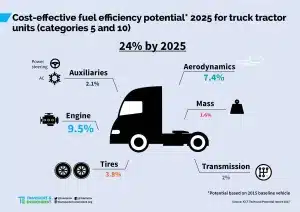 Fuel Efficiency Standards
Many countries have implemented fuel efficiency standards, including those applicable to refrigerated trucks. These standards are designed to reduce fuel consumption and emissions associated with the transportation of temperature-sensitive products. Fuel efficiency is a key consideration in the pursuit of emissions reduction and sustainability in logistics. Adhering to these standards helps lower the environmental impact of the industry.
Refrigerant Management is paramount for Net-Zero Emissions
Regulations related to the use and management of refrigerants play a critical role in preventing emissions of greenhouse gases. These regulations require businesses to monitor and manage refrigerant leaks, thereby reducing their environmental impact. Proper refrigerant management is essential in minimising emissions from refrigeration systems, a significant contributor to the carbon footprint in temperature-controlled logistics.
Energy Efficiency Mandates
Energy efficiency mandates can mandate businesses to adopt more energy-efficient practices and technologies, particularly in cold storage facilities. Compliance with these mandates can lead to significant emissions reduction. Energy efficiency not only contributes to sustainability but also helps lower operational costs. Embracing energy-efficient practices aligns with the goal of achieving net-zero emissions in temperature-controlled logistics.
Sustainability Certifications to achieve Net-Zero Emissions
Sustainability certifications serve as a badge of commitment to environmentally responsible practices. Many businesses seek certifications like ISO 14001 and Green Business Certification, Inc. (GBCI) to demonstrate their dedication to meeting environmental standards and earning recognition for their efforts. These certifications provide assurance to stakeholders and customers that a business is actively working towards reducing its environmental impact.
Collaboration with Net-Zero Emissions Regulatory Bodies
Collaborating with regulatory bodies and government agencies is essential for understanding and complying with environmental regulations. The logistics industry operates within a complex regulatory landscape, and engagement with regulatory entities can help businesses navigate these complexities. Such collaboration ensures that businesses stay on the path to net-zero emissions and remain in compliance with environmental standards.
Regulatory compliance is essential not only for avoiding legal consequences but also for contributing to a cleaner environment. Businesses that adhere to environmental standards and emissions regulations play a pivotal role in achieving net-zero emissions in temperature-controlled logistics.
Measuring and Reporting Net-Zero Emissions Reduction Progress
Measuring and reporting emissions reduction progress is a crucial aspect of any sustainability and net-zero emissions initiative, especially in the realm of logistics. It serves as the backbone for transparency, accountability, and the continuous improvement of environmental performance. In this section, we will delve into the importance of measuring and reporting emissions reduction progress, the key metrics to consider, and the benefits it brings to businesses and the environment.
The Importance of Measurement and Reporting Net-Zero Emissions
Measuring and reporting emissions reduction progress is essential for several reasons:
| Aspect | Description |
| Transparency | Transparent reporting enables stakeholders, including customers, partners, regulatory agencies, and the public, to understand a business’s commitment to sustainability and its progress in reducing emissions. It fosters trust and accountability. |
| Accountability | Establishing clear metrics and regularly reporting progress holds businesses accountable for their environmental impact. This accountability drives them to set and achieve ambitious emissions reduction targets. |
| Continuous Improvement | Regular measurement and reporting provide essential data for making informed decisions. It enables businesses to identify areas where emissions can be further reduced and implement strategies to drive continuous improvement. |
| Regulatory Compliance | Many regulatory bodies require businesses to report their emissions and reductions, ensuring compliance with environmental standards and legal requirements. |
| Stakeholder Expectations | Customers and partners increasingly expect transparency and commitment to sustainability. Measuring and reporting emissions reductions can help meet these expectations and differentiate businesses in the market. |
Key Metrics for Measuring Net-Zero Emissions Reduction
To effectively measure emissions reduction progress, several key metrics and indicators should be considered:
| Metric | Description |
| Carbon Emissions | This metric tracks the total amount of carbon emissions produced by the business, encompassing emissions from energy use, transportation, and refrigeration systems. Tools and software can be used for calculating and monitoring these emissions. |
| Energy Consumption | Tracking energy consumption provides insights into the efficiency of operations. Reducing energy use often leads to lower emissions. Businesses should measure energy use in cold storage facilities, transportation, and other operational areas. |
| Fuel Efficiency | In the context of logistics, fuel efficiency is a critical metric for vehicles. It involves monitoring fuel consumption and emissions from refrigerated trucks and containers. |
| Waste Reduction | Measuring the amount of waste generated and the success of waste reduction initiatives is important. Less waste not only conserves resources but also reduces emissions associated with waste disposal. |
| Refrigerant Management | Refrigerant leaks are a source of greenhouse gas emissions. Businesses should measure and report on the management of refrigerants, including leak prevention and control. |
| Renewable Energy Usage | Measuring the percentage of energy derived from renewable sources, such as solar and wind power, is a key indicator of a commitment to emissions reduction. |
| Inventory Management Efficiency | Tracking inventory management efficiency can provide insights into waste minimisation and efficient product turnover. |
| Transportation Efficiency | Metrics related to transportation, such as vehicle miles travelled, fuel consumption, and emissions from transportation, are essential for assessing the efficiency of logistics operations. |
The Benefits of Measuring and Reporting Net-Zero Emissions
Measuring and reporting emissions reduction progress offer numerous benefits:
Evident Progress: Reporting shows that a business is taking concrete steps to reduce emissions, which can be a strong selling point for customers who are increasingly conscious of their environmental impact.
Competitive Advantage: Demonstrating commitment to sustainability and emissions reduction can set businesses apart from competitors. It can attract environmentally conscious customers and partners.
Cost Savings: Regular measurement helps identify areas where energy and resource use can be reduced. This often results in cost savings and improved operational efficiency.
Regulatory Compliance: Accurate reporting ensures compliance with environmental regulations, which can help avoid legal issues and penalties.
Stakeholder Engagement: Measuring and reporting progress can foster engagement with stakeholders who appreciate transparency and commitment to sustainability.
Conclusion to Net-Zero Emissions
In the pursuit of achieving net-zero emissions in temperature-controlled logistics, it is evident that a multifaceted approach is required. This comprehensive guide has explored the various strategies, technologies, and best practices that play a crucial role in reducing emissions and promoting environmental sustainability within the industry.
Understanding the climate impact of logistics has shed light on the significant role these operations play in carbon emissions. High energy consumption in cold storage facilities, fuel usage in refrigerated transportation, and refrigerant leaks all contribute to the environmental footprint of the industry.
Transitioning to sustainable refrigeration systems, such as ammonia-based and carbon dioxide transcritical systems, offers a promising path to emissions reduction. These systems are known for their energy efficiency and reduced environmental impact, making them a key strategy in the journey towards net-zero emissions.
Efficient transportation practices is a key player to Net-Zero Emissions
Including the adoption of electric and hybrid refrigerated trucks, route optimisation, and the utilisation of renewable energy sources, provide further opportunities to minimise the environmental impact of refrigerated logistics. Electric and hybrid vehicles are not only more energy-efficient but also contribute to lower emissions. Solar and wind power solutions offer clean and sustainable alternatives for powering cold storage facilities and transportation systems.
Waste reduction, best practices in inventory management, and collaboration among all stakeholders in the supply chain have also been identified as essential components of emissions reduction. Minimising waste not only conserves resources but also reduces emissions, energy consumption, and the environmental impact of dumps. Collaboration fosters a collective commitment to sustainability and shared responsibility for the environment.
Furthermore on the road to Net-Zero Emissions
Regulatory compliance and adherence to environmental standards are pivotal for ensuring that emissions reduction efforts align with legal requirements. Government agencies and international organisations play a crucial role in setting guidelines and regulations to address emissions and environmental sustainability in the logistics industry.
Measuring and reporting emissions reduction progress are necessary steps to track and communicate the achievements of eco initiatives. Transparent data and reporting enable businesses to showcase their commitment to environmental responsibility and demonstrate the progress made towards net-zero emissions.
Finally to achieve Net-Zero Emissions
The journey towards net-zero emissions in temperature-controlled logistics is a complex but necessary endeavour. By carrying out the strategies and technologies discussed in this guide, businesses can significantly reduce their environmental impact and work towards a more sustainable and environmentally responsible future. It is important that all stakeholders embrace these practices to create a cleaner and healthier planet for future generations. Achieving net-zero emissions is not only of environmental importance but also a commitment to a more sustainable and economically efficient supply chain.
Net Zero Emission's
- What is refrigerated logistics?
Refrigerated logistics refers to the transportation and storage of temperature-sensitive goods such as food and pharmaceuticals using specialised equipment such as refrigeration units, insulated containers, and temperature monitoring systems.
- Why is reducing emissions in refrigerated logistics important?
Reducing emissions in refrigerated logistics is crucial for mitigating the impacts of climate change and protecting the environment. It can also lead to cost savings, meet customer demands for sustainable practices, and enhance brand reputation.
- What are some strategies for achieving net-zero emissions in refrigerated logistics?
Strategies for achieving net-zero emissions in refrigerated logistics include switching to renewable energy sources, improving energy efficiency, investing in green technologies, using alternative refrigerants, and implementing sustainable practices.
- What are the benefits of achieving net-zero emissions in refrigerated logistics?
The benefits of achieving net-zero emissions in refrigerated logistics include environmental benefits, cost savings and economic benefits, meeting customer demands for sustainable practices, and enhancing brand reputation.
- What are some challenges and barriers to achieving net-zero emissions in refrigerated logistics?
Challenges and barriers to achieving net-zero emissions in refrigerated logistics include the cost of implementing green technologies, lack of infrastructure and support, regulatory and policy barriers, and limited consumer demand for sustainable practices.
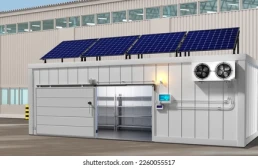
Solar-Powered Refrigeration
Solar-Powered Refrigeration: The Future of Sustainable Cold Chain Logistics
Refrigerated Transportation: A Vital Industry
Solar-powered refrigeration is undoubtedly the future of sustainable logistics. Refrigerated transportation is essential for maintaining the integrity of perishable goods, including food, pharmaceuticals, and chemicals.
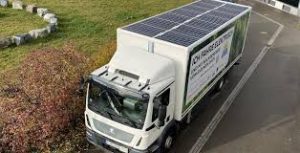 These temperature-controlled vehicles, commonly known as reefer trucks, ensure products remain fresh throughout the supply chain. However, traditional refrigerated vehicles rely heavily on diesel fuel, contributing significantly to carbon emissions and operational costs.
First a quick plug – Our sister companies Fresh Pharma whom are GDP Compliant Pharma couriers and ‘Fresh Fridge Hire‘ are our (compliant GDP) refrigerated vehicle hire.
For businesses looking to stay ahead of the curve, transitioning to renewables is a smart move. The future is green—let’s make it happen.
Key Takeaways:
- Solar-powered refrigeration offers significant cost savings and environmental benefits.
- Advances in technology continue to make solar refrigeration more efficient and accessible.
- Governments are providing incentives to help businesses transition to green logistics.
The Need for Sustainable Cold Chain Solutions
With growing environmental concerns and rising fuel prices, the logistics industry is under increasing pressure to adopt sustainable and energy-efficient solutions. Governments and businesses worldwide are seeking greener alternatives to reduce emissions, lower costs, and meet stringent environmental regulations.
Introduction to Solar-powered refrigeration
Solar-powered refrigerated vehicles present a revolutionary solution by harnessing renewable energy to power cooling systems. These vehicles utilise solar panels, battery storage, and advanced refrigeration technology to maintain optimal temperatures while significantly reducing fuel consumption and emissions.
2. Understanding Solar-powered refrigeration
Definition and Basic Working Principle
Solar-powered refrigerated vehicles integrate photovoltaic (PV) panels on their roofs to capture sunlight, which is then converted into electricity. This electricity powers the refrigeration unit, reducing dependency on diesel-powered generators.
Key Components of a Solar-Powered Refrigerated Vehicle
| Component | Function |
| Solar Panels | Capture sunlight and convert it into electrical energy. |
| Battery Storage | Stores excess energy for use during low sunlight conditions. |
| Refrigeration System | Maintains consistent cooling using solar-generated power. |
| Control Unit | Regulates energy distribution and monitors system performance. |
How They Differ from Traditional Refrigerated Vehicles
Unlike conventional refrigerated trucks, which rely on diesel-powered compressors, solar-powered vehicles use clean energy to operate cooling systems. This reduces fuel consumption, emissions, and operational costs, making them a sustainable alternative.
3. Importance of Sustainable Cold Chain Logistics
The Environmental Impact of Refrigerated Transport
Traditional refrigerated transport is a major contributor to greenhouse gas emissions due to its heavy reliance on diesel. According to industry reports:
- Refrigerated trucks account for up to 10% of total logistics emissions.
- A single diesel-powered reefer truck can emit over 100 metric tonnes of CO2 annually.
Growing Demand for Green Logistics Solutions
With global efforts to combat climate change, industries are shifting towards eco-friendly logistics. Companies are investing in renewable energy solutions to meet:
- Government sustainability targets (such as the UK’s Net Zero by 2050).
- Consumer demand for greener supply chains.
- Corporate social responsibility (CSR) goals.
How Solar Energy Contributes to Sustainability
| Benefit | Impact on Cold Chain Logistics |
| Reduced Fuel Dependency | Cuts diesel consumption, leading to cost savings. |
| Lower Carbon Emissions | Helps businesses meet emission reduction targets. |
| Energy Efficiency | Utilises abundant and renewable solar power. |
| Regulatory Compliance | Aligns with environmental laws and sustainability initiatives. |
4. How Solar-Powered Refrigeration Works in Vehicles
The Role of Solar Panels in Generating Electricity
Solar panels installed on the vehicle’s roof absorb sunlight and convert it into electrical energy through photovoltaic cells. This energy directly powers the refrigeration system or is stored in battery units for later use.
Battery Storage for Power During Low Sunlight Periods
Since solar energy availability fluctuates, battery storage systems ensure uninterrupted refrigeration. These batteries store excess solar energy during the day, allowing the system to function efficiently at night or during cloudy weather.
Integration with Traditional Refrigeration Technology
For enhanced reliability, some hybrid models integrate solar power with traditional refrigeration technology. This ensures:
- Continuous cooling even in low sunlight conditions.
- Backup power availability through secondary energy sources.
- Increased flexibility for long-haul transportation.
Energy Efficiency Comparison
| Power Source | Fuel Consumption | CO2 Emissions | Energy Efficiency |
| Diesel-Powered Refrigeration | High | High | Low |
| Hybrid Solar-Diesel | Medium | Medium | Moderate |
| Fully Solar-Powered | Low | Near Zero | High |
5. Benefits of Solar-Powered Refrigeration in Vehicles
1. Reduction in Fuel Consumption and Operational Costs
Switching to solar-powered refrigerated vehicles significantly reduces fuel consumption, leading to lower operating expenses. Over time, businesses can achieve substantial savings on fuel and maintenance costs.
2. Lower Carbon Footprint and Environmental Impact
By reducing dependency on fossil fuels,
- Cuts CO2 emissions.
- Supports businesses in meeting sustainability targets.
- Aligns with global climate change initiatives.
3. Enhanced Energy Efficiency and Long-Term Sustainability
Offers greater energy efficiency compared to conventional systems. This translates to:
- Improved performance in off-grid locations.
- Minimal environmental impact.
- Long-term savings due to lower energy costs.
4. Compliance with Green Regulations
Many governments offer tax incentives and grants for businesses adopting renewable energy solutions.
5. Improved Brand Image and Market Competitiveness
Sustainability is becoming a key differentiator in the logistics industry. Businesses that adopt green technologies gain a competitive edge by:
- Enhancing brand reputation.
- Attracting eco-conscious customers and partners.
- Meeting growing corporate sustainability expectations.
Cost Savings Over Time
| Year |
Diesel Costs (Traditional) |
Solar-Powered Refrigeration |
| Year 1 | £15,000 | £2,500 |
| Year 2 | £15,500 | £4,000 |
| Year 3 | £16,000 | £6,500 |
| Year 5 | £17,500 | £10,000 |
| Year 10 | £20,000 | £20,000 |
6. Challenges and Limitations of Solar-Powered Refrigeration
While systems offer a range of benefits, there are still a few challenges that businesses must address when adopting this technology. Here’s a breakdown of some of the key limitations:
Initial Investment Costs and ROI
One of the biggest challenges is the upfront investment. Installing solar panels and the necessary infrastructure can be expensive. However, these costs can be mitigated over time through energy savings and reduced maintenance expenses.
Factor |
Solar-Powered Refrigeration |
Traditional Refrigeration |
| Initial Investment | High initial cost | Lower upfront cost |
| Maintenance | Reduced maintenance | Frequent repairs needed |
| Energy Costs | Free from the sun | Fuel-dependent (higher cost) |
While the return on investment (ROI) may take several years to fully realise, the long-term benefits make solar-powered systems a viable choice.
Weather Dependency and Energy Storage Solutions
Solar-powered systems are dependent on sunlight, which can fluctuate depending on weather conditions. As such, energy storage solutions, such as advanced batteries, are required to maintain refrigeration during cloudy days or at night.
Maintenance and Technical Expertise
Systems require periodic maintenance to ensure their optimal functioning. Moreover, they rely on solar panel technology and battery systems, which may require specialised knowledge to repair and maintain. This could lead to additional training for staff and technicians.
7. Cost Analysis: Traditional vs Solar-Powered Refrigeration
When comparing traditional refrigeration systems to solar-powered systems, it’s crucial to examine the costs involved.
Breakdown of Fuel vs Solar-Powered Refrigeration Costs
Fuel for traditional refrigeration systems can be expensive, especially as fuel prices fluctuate. Solar energy, on the other hand, is free once the initial setup is complete.
| Cost Factor | Solar-Powered Refrigeration | Traditional Refrigeration |
| Energy Source | Free solar energy | Diesel or fuel-based |
| Fuel Costs | None | High (subject to price volatility) |
| Operational Costs | Low energy costs | High fuel costs |
Maintenance and Operational Expenses Comparison
While systems have higher initial costs, their maintenance and operational expenses are much lower in comparison to traditional systems. Solar panels require minimal maintenance, and their energy consumption costs are virtually non-existent.
Maintenance Costs |
Solar-Powered Refrigeration |
Traditional Refrigeration |
| Annual Maintenance Costs | Low | High |
| Energy Costs | Free (after installation) | Ongoing fuel costs |
Long-Term Financial Benefits of Solar-Powered Refrigeration
Solutions may have a higher upfront cost, but their long-term savings in energy costs, fuel expenses, and maintenance can lead to significant financial benefits over time.
8. Applications and Industries Benefiting from Solar-Powered Refrigeration
It is proving to be a game-changer for various industries. Here’s a look at some of the key sectors that stand to benefit the most:
Food and Beverage Industry
Solar refrigeration ensures that perishable food and beverages are transported at the correct temperatures, reducing spoilage and waste. By using solar energy, businesses can significantly cut down on fuel costs while also making their operations more sustainable.
Pharmaceutical and Healthcare Logistics
In the pharmaceutical and healthcare sectors, temperature-sensitive drugs and medical supplies require precise control during transportation. Systems provide a reliable, energy-efficient solution for ensuring that these sensitive products remain within required temperature ranges.
Agriculture and Perishable Goods Transport
Agricultural products, such as fruits, vegetables, and dairy products, often require refrigerated transport to maintain freshness. Solar refrigeration offers a sustainable method for delivering fresh produce to markets without the high environmental impact of traditional refrigeration methods.
9. Innovations and Advancements in Solar-Powered Refrigeration Technology
The solar refrigeration sector is evolving rapidly, with new technologies continuously improving efficiency and performance. Some of the latest advancements include:
Latest Developments in Solar Panel Efficiency
Modern solar panels are much more efficient than earlier versions, meaning they can produce more energy with fewer panels. This is particularly important for refrigerated vehicles, where space and weight are considerations.
Smart Energy Management Systems
Advancements in energy management technology allow solar-powered refrigeration systems to optimise energy use. Smart systems can track energy consumption, adjust for weather conditions, and ensure that refrigeration remains stable throughout transportation.
Hybrid Solutions Combining Solar with Other Renewable Sources
Hybrid systems that combine solar power with other renewable energy sources, such as wind or electric power, are becoming increasingly popular. These solutions can provide consistent energy, even during less sunny periods, ensuring that refrigeration needs are always met.
10. Case Studies and Real-World Implementations of Solar-Powered Refrigeration
Numerous companies around the world are successfully adopting solar-powered refrigerated vehicles. Here are a few examples:
Companies Adopting Solar-Powered Refrigeration in Vehicles
- Asda: The retail giant has committed to using solar-powered refrigeration in their logistics fleet, helping to cut down on fuel consumption and greenhouse gas emissions.
- Coca-Cola: Coca-Cola has implemented solar-powered refrigeration solutions for transporting beverages to remote areas where fuel availability is limited.
Success Stories and Key Takeaways
These companies are seeing tangible benefits, including reduced fuel consumption, lower emissions, and significant cost savings over time. Many are also meeting sustainability goals by reducing their carbon footprint.
Performance Analysis in Different Climates
Real-world performance of solar-powered refrigeration has proven to be effective in a variety of climates. With the proper energy storage systems in place, solar-powered refrigeration can function efficiently in both sunny and cloudy conditions.
11. Government Policies and Incentives for Solar-Powered Refrigeration
Governments worldwide are supporting the transition to sustainable energy sources, including solar-powered refrigeration, through various incentives:
UK and Global Initiatives Promoting Solar-Powered Refrigeration Solutions
- The UK Government offers grants for businesses investing in green transport technologies, including solar-powered refrigeration.
- Many countries in Europe, North America, and Asia are providing financial incentives for companies to reduce their carbon footprints, including tax rebates for businesses adopting solar technologies.
Tax Benefits and Grants for Adopting Sustainable Technologies
Governments provide tax incentives to reduce the cost burden on companies transitioning to green technologies. Businesses investing in solar refrigeration systems can take advantage of these financial aids to make the switch more affordable.
Regulations Driving the Shift Towards Green Energy in Logistics
Policies such as carbon reduction targets and emission control regulations are pushing companies to adopt cleaner, more energy-efficient logistics solutions, including solar-powered refrigeration.
12. Future Trends in Solar-Powered Refrigeration in Transport
The future of solar-powered refrigerated transport is incredibly promising. Several emerging trends point to even greater adoption and efficiency:
Advances in Battery Storage and Energy Efficiency
Battery technology continues to improve, allowing for more efficient storage of solar energy. As batteries become more powerful, solar refrigeration systems will become even more reliable, even in regions with less sunlight.
Increasing Adoption of AI and IoT for Optimised Energy Use
Artificial intelligence (AI) and the Internet of Things (IoT) are helping to optimise energy usage in solar-powered refrigeration. By integrating smart technologies, businesses can better manage their energy consumption, reducing waste and improving overall efficiency.
Potential Integration with Electric and Hydrogen-Powered Vehicles
As electric and hydrogen-powered vehicles become more widespread, solar-powered refrigeration systems could be integrated into these vehicles, creating a fully sustainable transport solution.
13. How Businesses Can Transition to Solar-Powered Refrigeration
Making the transition to solar-powered refrigeration involves several steps:
Steps to Assess Feasibility and Cost-Effectiveness
Before investing, businesses should assess their energy needs, climate conditions, and financial situation to determine whether solar-powered refrigeration is a viable option.
Partnering with Manufacturers and Service Providers
Collaborating with manufacturers who specialise in solar-powered refrigeration systems can help ensure that the right technology is selected for a company’s specific needs.
Training Staff and Maintenance Teams for Efficient Operations
Proper training for staff and maintenance teams is essential for the long-term success of solar-powered refrigeration systems. Ensuring that teams understand how to operate and maintain these systems will help maximise their lifespan and efficiency.
14. Common Misconceptions About Solar-Powered Refrigeration in Vehicles
There are a few common myths surrounding solar-powered refrigerated transport. Let’s debunk them:
“Solar Panels Alone Cannot Power Refrigeration” – Debunking Myths
While solar panels alone may not provide all the energy needed for refrigeration, with the right combination of solar panels, batteries, and energy management systems, solar-powered systems can reliably meet the cooling needs of refrigerated transport.
Reliability Concerns in Cloudy Weather
With advanced battery storage solutions, solar-powered refrigeration systems can operate effectively during cloudy weather or at night.
Addressing Doubts About Long-Term Sustainability and Durability
Modern solar refrigeration systems are durable and designed to last for many years, making them a long-term investment that continues to deliver value over time.
15. Conclusion to Solar-Powered Refrigeration
Solar-powered refrigeration is undoubtedly the future of sustainable logistics. As the world continues to grapple with the challenges of climate change and the need for cleaner, more efficient energy solutions, the logistics industry is embracing the shift towards renewable technologies. While there are some challenges, such as high initial investment costs and the requirement for advanced maintenance expertise, the long-term benefits far outweigh these concerns. In fact, the adoption of solar-powered refrigeration is not just a forward-thinking choice, but a critical step towards making the logistics sector more sustainable and cost-effective.
One of the most significant advantages of solar-powered refrigeration is its ability to drastically reduce fuel costs. Traditional refrigeration methods, which rely on diesel or other fuel-based systems, can quickly become expensive due to fluctuating fuel prices. Solar energy, on the other hand, is free, renewable, and sustainable, making it a long-term, cost-effective solution. By switching to solar-powered systems, businesses can significantly lower their operational expenses while simultaneously contributing to the reduction of carbon emissions.
Solar-Powered Refrigeration cost savings
In addition to cost savings, solar-powered refrigeration offers the opportunity to improve operational efficiency. With the integration of smart energy management systems, AI, and IoT, these systems are becoming more sophisticated and capable of optimising energy usage, ensuring that refrigeration needs are met even during less sunny periods. As technology continues to evolve, the efficiency and reliability of solar-powered refrigeration systems will only increase, making them even more practical for businesses of all sizes.
Furthermore, the growing trend towards sustainability and environmental responsibility is not just a passing phase. As government regulations and consumer expectations continue to demand greener solutions, businesses that embrace solar-powered refrigeration will be well-positioned to meet these demands. Governments worldwide are offering incentives, such as grants and tax breaks, to encourage companies to transition to sustainable technologies. By investing in solar refrigeration now, businesses can benefit from these incentives and future-proof their operations.
Ultimately, the future of logistics is undoubtedly tied to the adoption of renewable energy solutions like solar-powered refrigeration. Companies that make the switch today will not only be improving their bottom line but also contributing to a more sustainable, environmentally-friendly supply chain. As the technology continues to evolve and costs decrease, we can expect to see even wider adoption across industries—from food and beverage to pharmaceuticals and agriculture—creating a positive impact on both the economy and the environment.
Staying Ahead with Solar-Powered Refrigeration
For businesses looking to stay ahead of the curve, investing in solar-powered refrigeration is a smart, forward-thinking decision. It’s not just about reducing costs or meeting regulations; it’s about embracing a future where sustainability and profitability go hand in hand. The transition to solar-powered refrigerated transport is already underway, and the time to get involved is now.
Solar-powered refrigeration is undoubtedly the future of sustainable logistics. As the world continues to grapple with the challenges of climate change and the need for cleaner, more efficient energy solutions, the logistics industry is embracing the shift towards renewable technologies. While there are some challenges, such as high initial investment costs and the requirement for advanced maintenance expertise, the long-term benefits far outweigh these concerns. In fact, the adoption is not just a forward-thinking choice, but a critical step towards making the logistics sector more sustainable and cost-effective.
Solar-Powered Refrigeration cost savings
One of the most significant advantages is the dramatic reduction of fuel costs. Traditional refrigeration methods, which rely on diesel or other fuel-based systems, can quickly become expensive due to fluctuating fuel prices. Solar energy, on the other hand, is free, renewable, and sustainable, making it a long-term, cost-effective solution. By switching to solar-powered systems, businesses can significantly lower their operational expenses while simultaneously contributing to the reduction of carbon emissions.
In addition to cost savings, renewables offers the opportunity to improve operational efficiency. With the integration of smart energy management systems, AI, and IoT, these systems are becoming more sophisticated and capable of optimising energy usage, ensuring that refrigeration needs are met even during less sunny periods. As technology continues to evolve, the efficiency and reliability of solar-powered refrigeration systems will only increase, making them even more practical for businesses of all sizes.
Solar-Powered Refrigeration trends
Furthermore, the growing trend towards sustainability and environmental responsibility is not just a passing phase. As government regulations and consumer expectations continue to demand greener solutions, businesses that embrace renewables will be well-positioned to meet these demands. Governments worldwide are offering incentives, such as grants and tax breaks, to encourage companies to transition to sustainable technologies. By investing in solar refrigeration now, businesses can benefit from these incentives and future-proof their operations.
Ultimately, the future of logistics is undoubtedly tied to the adoption of renewable energy solutions. Companies that make the switch today will not only be improving their bottom line but also contributing to a more sustainable, environmentally-friendly supply chain. As the technology continues to evolve and costs decrease, we can expect to see even wider adoption across industries—from food and beverage to pharmaceuticals and agriculture—creating a positive impact on both the economy and the environment.
For businesses looking to stay ahead of the curve, investing in solar-powered refrigeration is a smart, forward-thinking decision. It’s not just about reducing costs or meeting regulations; it’s about embracing a future where sustainability and profitability go hand in hand. The transition to solar-powered refrigerated transport is already underway, and the time to get involved is now.
Drones Inspecting Solar
- How accurate are drone inspections?
Drone inspections are highly accurate and provide more precise data than traditional methods. Drones can provide high-resolution images and videos, allowing inspectors to identify defects and malfunctions quickly.
- Are drone inspections cost-effective?
Yes, drone inspections are cost-effective compared to traditional methods. Drones can access hard-to-reach areas, reducing the need for workers to climb on roofs and use ladders, reducing the cost of inspections.
- What types of defects can drones identify?
Drones can identify a wide range of defects, including cracks, leaks, and broken parts. Drones can also be used to inspect electrical components and wiring, reducing the risk of electrical hazards.
- How do drones improve safety during inspections?
Drones improve safety during inspections by reducing the need for workers to climb on roofs and use ladders. Drones can access hard-to-reach areas, reducing the risk of accidents.
- What is the future of drone inspections?
As technology advances, drones will become even more advanced and efficient, allowing for more precise inspections. The use of artificial intelligence and machine learning algorithms will enable drones to identify defects and malfunctions automatically, reducing the need for human intervention.

Logistics Strategies
What is Logistics Strategies and Why Your Business Needs One
In today’s fast-paced and interconnected business world, Logistics Strategies a pivotal role in the success of any enterprise. 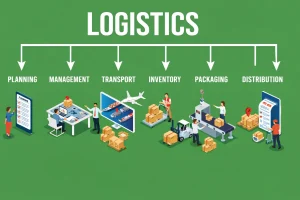 The efficient movement of goods, services, and information has become the lifeblood of modern commerce. To thrive in this environment, businesses must adopt a well-defined logistics strategy. According to recent statistics, companies that implement effective logistics strategies experience a 15% reduction in operational costs, on average. Strategic convergence is important to beware of and is covered in this link.
In this blog post, we will explore the concept of a logistics strategy, why it is crucial for businesses, and the key components that make it successful.
First a quick plug – Our sister companies Fresh Pharma whom are GDP Compliant Pharma couriers and ‘Fresh Fridge Hire‘ are our (compliant GDP) refrigerated vehicle hire.
Key Takeaways from the Article |
| 1. Logistics is Vital for Modern Business |
| – Efficient logistics is crucial for the success of businesses in the fast-paced and interconnected business world. |
| – It involves the movement of goods, services, and information, influencing various aspects of a business, including customer satisfaction and cost control. |
| 2. A Well-Defined Logistics Strategy is Essential |
| – Implementing a logistics strategy is necessary to achieve a 15% reduction in operational costs, on average. |
| – The strategy encompasses planning, implementation, and control of various activities, from procurement to customer service. |
| 3. Key Components and Benefits of a Logistics Strategy |
| – The logistics strategy includes components like transportation, warehousing, inventory management, and order fulfilment. |
| – Benefits include cost savings, efficiency improvements, and enhanced customer satisfaction.
|
Section 1: Understanding Logistics Strategies
Defining Logistics
Logistics, at its core, involves the planning, implementation, and control of the movement of goods, services, and information from their point of origin to their final destination. It encompasses a broad spectrum of activities, from procurement to production, warehousing, transportation, distribution, and customer service. Efficient logistics ensures the right products reach the right place at the right time, while minimising costs.
The Role of Logistics in Supply Chain Management
Logistics is the backbone of supply chain management. A seamless supply chain depends on the effective flow of materials, information, and finances. Inadequate logistics can disrupt this flow, resulting in delayed deliveries, increased costs, and customer dissatisfaction. Therefore, businesses must integrate logistics into their supply chain strategies to ensure optimal performance and competitiveness.
Impact of Logistics on Various Business Aspects
Logistics isn’t just about moving goods; it extends its influence across various aspects of a business. Here are some key areas where logistics plays a crucial role:
Customer Satisfaction
Timely and accurate deliveries lead to satisfied customers, repeat business, and positive reviews. Effective logistics ensures customers receive what they expect when they expect it.
Cost Control
Optimised logistics can significantly reduce operational costs. By streamlining processes and improving efficiency, businesses can save on transportation, inventory, and storage expenses.
Market Expansion
Efficient logistics can open doors to new markets and regions. It enables businesses to reach a wider customer base and tap into previously inaccessible opportunities.
Environmental Sustainability
Sustainable logistics practices, such as reducing emissions and minimising waste, are not only environmentally responsible but can also enhance a company’s reputation and appeal to eco-conscious consumers.
Section 2: The Basics of Logistics Strategies
Defining a Logistics Strategies
A logistics strategy is a comprehensive plan that outlines how a business will manage its logistics operations to achieve specific goals and objectives. It involves the strategic alignment of logistical activities with the overall business strategy. A well-defined logistics strategy provides a roadmap for all logistics-related decisions and actions.
Logistics Strategies v Tactics
It’s essential to distinguish between logistics tactics and a comprehensive strategy. Tactics involve the day-to-day activities and decisions made to execute a logistics strategy. In contrast, a logistics strategy provides the overarching framework that guides these tactics. Tactics are the “how,” while strategy is the “what” and “why.”
Objectives of Developing Logistics Strategies
Why should a business invest time and resources in developing a logistics strategy? Here are the primary objectives:
Efficiency and Cost Reduction
A logistics strategy aims to streamline processes and reduce costs. By optimising routes, minimising inventory levels, and enhancing warehouse operations, businesses can operate more efficiently and profitably.
Service Excellence
An effective logistics strategy focuses on delivering top-tier service to customers. This includes prompt deliveries, order accuracy, and responsive customer support.
Risk Mitigation
Businesses face various risks, such as supply chain disruptions or regulatory changes. A logistics strategy should include contingency plans to mitigate these risks and ensure business continuity.
Competitive Advantage
Incorporating logistics into the overall business strategy can provide a competitive edge. By offering superior service and value to customers, a business can stand out in the marketplace.
In conclusion, a logistics strategy is not just an option; it’s a necessity for businesses looking to thrive in the modern competitive landscape. It encompasses the very essence of efficient and cost-effective operations, customer satisfaction, and strategic positioning. As we delve deeper into the world of logistics strategy, you’ll gain a more profound understanding of its intricacies and learn how to develop one that suits your business needs.
Section 3: Key Components of Logistics Strategies
In the world of logistics strategy, success hinges on the careful integration of various components, each playing a pivotal role in the overall efficiency of supply chain operations. This section will delve into these key components, such as transportation, warehousing, inventory management, and order fulfilment, elucidating their significance and providing real-life examples or case studies to illustrate their relevance.
Transportation
Transportation is the lifeblood of logistics. It involves the movement of goods from one point to another, and the mode of transport chosen can significantly impact a business’s efficiency. Whether it’s by road, rail, sea, or air, selecting the most suitable transportation method is critical for ensuring timely and cost-effective deliveries.
Importance:
- Speed and Efficiency: Faster transportation options like air freight can reduce lead times and enable quicker order fulfilment.
- Cost Control: Choosing the most cost-effective transportation method helps in reducing operational expenses.
- Customer Satisfaction: On-time deliveries boost customer satisfaction and loyalty.
Example: Amazon’s Prime delivery service is an excellent example of the significance of transportation in logistics. By offering two-day or even same-day delivery to its Prime members, Amazon has set a new standard for customer expectations. The company’s extensive transportation network, including its fleet of delivery vans and partnerships with courier services, ensures rapid and reliable product delivery.
Warehousing
Warehousing is more than just a place to store goods. It involves the systematic storage, management, and movement of products within the facility. The strategic placement of warehouses can help minimise transportation costs and optimise order fulfilment.
Importance:
- Inventory Management: Warehousing facilitates efficient inventory management by providing space to store goods while minimising the risk of stockouts.
- Cross-Docking: Some warehouses are designed for cross-docking, enabling the seamless transfer of products directly from inbound to outbound vehicles, reducing storage time.
- Order Consolidation: Warehousing allows for the consolidation of various products, leading to more efficient order picking and packing.
Example: DHL’s global network of warehouses is a testament to the role of warehousing in logistics. DHL strategically places its warehouses to serve as central hubs for efficient distribution. This enables them to reduce transit times and provide cost-effective and reliable services to their customers worldwide.
Inventory Management
Inventory management is the art of finding the perfect balance between maintaining enough stock to meet customer demands and minimising carrying costs. Effective inventory management helps businesses avoid overstocking, understocking, and obsolescence.
Importance:
- Cost Efficiency: Proper inventory management reduces storage and holding costs while preventing stockouts and over-ordering.
- Order Accuracy: Well-managed inventory leads to accurate and on-time order fulfilment, enhancing customer satisfaction.
- Risk Mitigation: Managing inventory effectively can help a business withstand supply chain disruptions or unexpected demand spikes.
Example: Walmart’s inventory management system is a prime illustration of efficient inventory management. Walmart leverages technology to monitor stock levels in real-time, which allows for precise reordering. This approach ensures that their shelves are well-stocked with the right products, resulting in satisfied customers and efficient operations.
Order Fulfilment
Order fulfilment involves the process from the moment an order is placed to the point of delivery. It encompasses order processing, picking, packing, and shipping. Smooth order fulfilment ensures that customers receive their products in a timely and accurate manner.
Importance:
- Customer Satisfaction: A streamlined order fulfilment process leads to timely deliveries, order accuracy, and satisfied customers.
- Operational Efficiency: Efficient order fulfilment reduces labour costs, minimises order errors, and expedites the dispatch of goods.
- Competitive Advantage: Businesses with superior order fulfilment can gain a competitive edge by providing exceptional service.
Example: Zappos, an online shoe and clothing retailer, is renowned for its exceptional order fulfilment. The company offers free shipping and a 365-day return policy, along with a dedicated focus on customer service. Zappos’ commitment to seamless order fulfilment has earned it a loyal customer base and a reputation for outstanding service.
Table of Key Components of Logistics Strategies
| Component | Importance | Example |
| Transportation | – Speed and Efficiency<>- Cost Control<>- Customer Satisfaction | Amazon’s Prime delivery service |
| Warehousing | – Inventory Management<>- Cross-Docking<>- Order Consolidation | DHL’s global network of warehouses |
| Inventory Management | – Cost Efficiency<>- Order Accuracy<>- Risk Mitigation | Walmart’s inventory management system |
| Order Fulfilment | – Customer Satisfaction<>- Operational Efficiency<>- Competitive Advantage | Zappos’ exceptional order fulfilment |
Understanding and effectively implementing these components are vital for the development and execution of a successful logistics strategy. The interplay of transportation, warehousing, inventory management, and order fulfilment can lead to substantial improvements in operational efficiency and customer satisfaction.
Section 4: Benefits of a Well-Defined Logistics Strategies
A well-defined logistics strategy isn’t just a theoretical concept; it yields tangible benefits for businesses of all sizes. In this section, we will explore the advantages that a business can gain from having a logistics strategy, backed up by statistics and testimonials.
Cost Savings
One of the most evident advantages of a well-defined logistics strategy is cost savings. By streamlining processes, optimising routes, and enhancing overall efficiency, businesses can significantly reduce their operational costs.
Statistics:
A study conducted by the Council of Supply Chain Management Professionals (CSCMP) found that businesses with robust logistics strategies achieve, on average, a 20% reduction in logistics costs compared to those with less Efficiency Improvements
Efficiency improvements are at the heart of a logistics strategy. A well-executed strategy ensures that resources are allocated optimally, resulting in faster order fulfilment and reduced wastage.
Statistics:
According to a report by Deloitte, businesses that have invested in logistics strategies experience a 25% improvement in order fulfilment cycle times on average.
Enhanced Customer Satisfaction
Satisfied customers are the lifeblood of any business. A logistics strategy that prioritises timely deliveries, order accuracy, and exceptional service can lead to enhanced customer satisfaction and loyalty.
Statistics:
A survey by McKinsey & Company revealed that 70% of customers are willing to pay more for products if they receive faster deliveries and excellent service.
In conclusion, the benefits of a well-defined logistics strategy are clear and measurable. It offers businesses the opportunity to achieve cost savings, efficiency improvements, and enhanced customer satisfaction. These advantages are not just theoretical; they are demonstrated by real-world
Section 7: Potential Pitfalls and How to Avoid Them
Implementing a logistics strategy can be a challenging endeavour, and businesses often encounter common pitfalls along the way. This section will identify these potential mistakes and provide advice on how to avoid them. It will also include tips on the importance of continuous monitoring and making necessary adjustments.
Common Pitfalls
| Common Pitfalls | Description |
| Lack of Alignment with Business Goals | Failing to align the logistics strategy with broader business objectives, leading to inefficiencies and missed opportunities. |
| Inadequate Data Utilisation | Insufficient data analysis, resulting in suboptimal decision-making due to reliance on outdated or inaccurate information, potentially leading to misguided strategies. |
| Neglecting Technology | Failure to embrace technological advancements, hindering logistics efficiency, and potentially putting businesses at a competitive disadvantage. |
| Inflexibility | Lack of adaptability in the logistics strategy, making it challenging to respond to changing market conditions and causing inefficiencies during unexpected disruptions. |
| Overlooking Sustainability | Ignoring sustainability considerations, which can lead to reputational damage and missed opportunities for cost savings, particularly in an eco-conscious business world. |
Avoiding Pitfalls
| Avoiding Pitfalls | Description |
| Align with Business Goals | Ensure that your logistics strategy is closely aligned with your business’s broader objectives. Regularly revisit and reassess your strategy to guarantee alignment. |
| Data-Driven Decision-Making | Invest in data analytics and robust tracking systems to make informed decisions. Continuously update and analyse data to adapt to changing circumstances. |
| Embrace Technology | Stay updated on logistics technology trends and invest in the latest solutions that align with your strategy. Leverage automation and digital tools to enhance efficiency. |
| Flexibility and Adaptability | Build flexibility into your logistics strategy. Have contingency plans for unexpected events and regularly review your strategy for needed adjustments. |
| Sustainability Integration | Prioritise sustainability in your logistics strategy. This not only aligns with ethical considerations but also has the potential to reduce costs through eco-friendly practices. |
Continuous Monitoring and Adjustments
Continuous monitoring is crucial for the success of a logistics strategy. Here are some tips:
- Regularly review performance metrics and KPIs.
- Seek feedback from both internal and external stakeholders.
- Conduct scenario planning to anticipate potential disruptions.
- Stay updated on industry trends and best practices.
- Be prepared to make adjustments as needed to keep your strategy in line with evolving business and market conditions.
Section 8: Future Trends in Logistics Strategies
The field of logistics is continually evolving, with emerging trends shaping the future of logistics strategy. In this section, we’ll explore these trends, including automation, sustainability, and digitalization, and explain how they might influence logistics strategy development.
Automation
Automation is revolutionising logistics. Technologies such as autonomous vehicles, robotic warehouses, and AI-driven predictive analytics are streamlining processes and reducing human labour in logistics operations. The impact on logistics strategy is significant as it necessitates the revaluation of workforce needs, infrastructure, and data utilisation.
Sustainability
Sustainability in logistics is gaining prominence due to environmental concerns and regulatory changes. Green logistics practices, such as eco-friendly transportation options and reduced carbon emissions, are becoming integral to strategy development. Businesses are also focusing on supply chain sustainability, considering the entire lifecycle of products.
Digitalisation
The digitalisation of logistics involves the integration of technologies like the Internet of Things (IoT), blockchain, and cloud-based solutions. These technologies enhance real-time tracking, secure data sharing, and remote monitoring, resulting in more agile and efficient supply chains. Logistics strategies must adapt to incorporate these digital advancements to remain competitive.
Finally,
In this blog, we’ve explored the importance of a well-defined logistics strategy, emphasising its impact on cost savings, efficiency improvements, and customer satisfaction. A logistics strategy isn’t just a set of plans; it’s a roadmap for success in today’s dynamic business environment. Businesses that invest time and resources in developing and implementing effective logistics strategies position themselves for long-term success.
We’ve also discussed common pitfalls in logistics strategy development and provided advice on how to avoid them. Flexibility, data-driven decisions, and alignment with business goals are key to success. Moreover, continuous monitoring and adaptation are essential to keep your strategy relevant.
Lastly, we’ve delved into the future trends in logistics strategy, highlighting automation, sustainability, and digitalization. As businesses look forward, they must consider these trends in their strategy development to stay competitive, efficient, and environmentally responsible.
A logistics strategy is a plan that outlines how a company will manage the movement of goods and services from the point of origin to the point of consumption. It includes decisions on transportation, storage, and distribution of products, as well as management of information and resources required for these activities. Logistics strategy is important because it helps businesses optimise their operations, reduce costs, and improve customer satisfaction. By streamlining the flow of goods and services, companies can minimise transportation and storage costs, reduce inventory holding costs, and improve delivery times. This can lead to increased profitability and competitiveness in the marketplace. The key components of a logistics strategy include network design, inventory management, transportation management, and information management. Network design involves optimising the flow of goods and services from suppliers to customers, while inventory management focuses on managing inventory levels to ensure that the right products are available at the right time and in the right quantity. Transportation management involves managing the transportation of goods from one location to another, and information management involves managing the information and resources required for logistics operations. To develop a logistics strategy, companies should start by conducting a thorough analysis of their current logistics operations. This should include an evaluation of transportation and storage costs, inventory levels, and customer satisfaction levels. Based on this analysis, companies can identify areas for improvement and develop a plan to optimise their logistics operations. This plan should align with the overall business strategy and objectives of the organisation, and should consider the needs and expectations of customers and stakeholders. Logistics strategy focuses specifically on the movement of goods and services from the point of origin to the point of consumption. Supply chain management, on the other hand, encompasses the entire process from raw material sourcing to the delivery of finished products to customers. While logistics strategy is an important component of supply chain management, it is just one piece of the larger puzzle. Logistics Strategy

Managing Logistics Disruptions
Best Practices for Managing Logistics Disruptions in the UK
Managing logistics disruptions can pose significant challenges for businesses in the UK, especially in today’s globalised economy. Whether it’s due to natural disasters, political instability, or unexpected market fluctuations, disruptions can lead to delays, increased costs, and reduced productivity. This is particularly true for refrigerated logistics, where maintaining the integrity of temperature-sensitive goods is critical. In this blog post, we will explore the best practices for managing logistics disruptions in the UK, providing strategies to mitigate risks and ensure business continuity.
First a quick plug – Our sister companies Fresh Pharma whom are GDP Compliant Pharma couriers and ‘Fresh Fridge Hire‘ are our (compliant GDP) refrigerated vehicle hire.
Identify Risks and Vulnerabilities

Conducting a Comprehensive Risk Assessment
One of the key steps in managing logistics disruptions is to identify potential risks and vulnerabilities in the supply chain. This involves conducting a comprehensive risk assessment to pinpoint potential threats such as weather-related events, geopolitical risks, and supply chain disruptions. By understanding these risks, businesses can develop targeted strategies to mitigate them.
Developing Contingency Plans to assist Managing Logistics Disruptions
Once risks are identified, it is essential to develop robust contingency plans. These plans should outline specific actions to take in response to various types of disruptions. For instance, if a primary transportation route is blocked, the plan should detail alternative routes and modes of transport. Contingency plans should also include communication protocols to ensure all stakeholders are informed promptly.
Diversifying the Supply Chain when Managing Logistics Disruptions
Diversifying the supply chain is another effective strategy for mitigating risks. Relying on a single supplier or transportation route can leave a business vulnerable to disruptions. By sourcing from multiple suppliers and using various transportation methods, businesses can reduce the impact of any single disruption.
Build Strong Relationships with Suppliers
Establishing Open Lines of Communication
Strong relationships with suppliers are crucial for managing logistics disruptions. Establishing open lines of communication allows businesses to quickly learn about potential issues and work collaboratively to find solutions. Regular communication also builds trust and ensures that suppliers understand the business’s needs and expectations.
Understanding Supplier Capabilities and Limitations
Understanding the capabilities and limitations of suppliers is essential. This includes knowing their production capacity, lead times, and ability to respond to emergencies. By having a clear picture of what suppliers can and cannot do, businesses can plan more effectively and avoid over-reliance on any single supplier.
Building Trust and Transparency for clearly Managing Logistics Disruptions
Building trust and transparency with suppliers fosters a collaborative environment. When suppliers feel valued and trusted, they are more likely to go above and beyond to help resolve issues. Transparent relationships also mean that suppliers will be more open about potential problems, allowing businesses to address them proactively.
Utilise Technology
Predictive Analytics
Technology plays a critical role in managing logistics disruptions. Predictive analytics, for example, can help businesses anticipate potential disruptions by analysing patterns and trends. By identifying potential issues before they occur, businesses can take proactive steps to mitigate their impact.
GPS Tracking and Real-Time Visibility effects Managing Logistics Disruptions
GPS tracking and real-time visibility technologies provide businesses with greater control over their supply chain. These tools enable companies to monitor the location and status of shipments in real-time, allowing for quick identification and response to disruptions. Real-time data can also improve decision-making and enhance overall supply chain efficiency.
Automation and AI
Automation and artificial intelligence (AI) can further enhance logistics management. Automated systems can handle routine tasks, freeing up staff to focus on strategic activities. AI can analyse vast amounts of data to optimise routes, forecast demand, and identify potential disruptions. By leveraging these technologies, businesses can improve resilience and responsiveness.
Establish Effective Contingency Plans for Managing Logistics Disruptions
Clear and Actionable Plans
Effective contingency plans are clear and actionable. They should detail specific steps to take in response to various scenarios, including who is responsible for each action. Plans should cover communication protocols, backup suppliers, and alternative transportation routes. The goal is to ensure that everyone knows what to do and that the business can continue operating with minimal disruption.
Communication Protocols influence Managing Logistics Disruptions
Communication is a critical component of any contingency plan. Establishing clear communication protocols ensures that all stakeholders are informed quickly and accurately during a disruption. This includes having contact lists, predefined messages, and communication channels in place.
Backup Suppliers and Alternative Transportation
Identifying backup suppliers and alternative transportation options is essential. This ensures that if one supplier or transportation route is unavailable, the business can switch to an alternative with minimal delay. Backup options should be regularly reviewed and tested to ensure they remain viable.
Conduct Regular Testing and Training for Managing Logistics Disruptions
Regular Testing of Contingency Plans
Even the best contingency plans are only effective if they are regularly tested and updated. Regular testing helps identify weaknesses and areas for improvement. This can involve running simulations, conducting tabletop exercises, or participating in supply chain-wide tests.
Training for Stakeholders for Managing Logistics Disruptions
Training is crucial to ensure that all stakeholders are familiar with contingency plans and know how to respond in the event of a disruption. Regular training sessions, including drills and workshops, can help ensure that everyone is prepared. Training should also cover the use of any technologies or tools that are part of the contingency plan.
Continuous Improvement
Logistics management is an ongoing process. Regular reviews and updates of contingency plans, risk assessments, and training programs are essential. By continuously improving these elements, businesses can stay ahead of potential disruptions and maintain a resilient supply chain.
Conclusion
Logistics disruptions are an unfortunate reality for businesses in the UK, particularly in the fast-paced and interconnected global economy. However, by following best practices for managing logistics disruptions, businesses can mitigate risks, ensure business continuity, and build a more resilient and agile supply chain.
Identifying potential risks and vulnerabilities, building strong relationships with suppliers, utilising technology, establishing effective contingency plans, and conducting regular testing and training are all critical components of a comprehensive strategy. By implementing these best practices, businesses can better withstand disruptions and emerge stronger in the face of adversity.
Logistics disruptions refer to situations where the normal flow of goods and services in a supply chain is interrupted. This can be caused by a variety of factors, such as natural disasters, transportation issues, or unforeseen events. The consequences of logistics disruptions can be significant, including delayed shipments, increased costs, lost revenue, and damage to a company’s reputation. In some cases, it may even lead to lost business or supply chain failure. Logistics disruptions can be managed by: Developing a robust contingency plan to mitigate potential risks Maintaining open lines of communication with suppliers and customers Investing in technology to track and monitor supply chain operations in real-time Diversifying suppliers and transportation modes to reduce reliance on a single source A contingency plan should include: Identification of potential risks and their likelihood A plan of action to mitigate risks A list of key stakeholders and their roles and responsibilities A communication plan to ensure that all stakeholders are informed in a timely manner A process for reviewing and updating the plan regularly Open communication lines can help manage logistics disruptions by enabling quick and effective collaboration between suppliers, customers, and other stakeholders. This can help identify potential issues early and allow for prompt resolution.Logistics Disruption
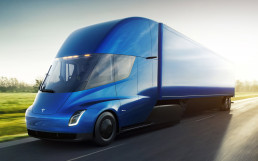
Electric Trucks: The commercial viability
Electric Trucks: The commercial viability
Electric trucks represent a significant innovation in the realm of commercial transportation, offering a promising alternative to traditional diesel-powered vehicles. This blog explores the fundamental aspects of electric trucks, including their benefits, cost savings, performance, charging infrastructure, and logistics implications.
First a quick plug – Our sister companies Fresh Pharma whom are GDP Compliant Pharma couriers and ‘Fresh Fridge Hire‘ are our (compliant GDP) refrigerated vehicle hire.
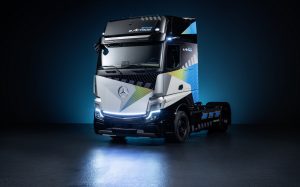 Benefits of Electric Trucks in Commercial Operations
Electric trucks bring several advantages to commercial operations:
- Environmental Impact: Electric trucks produce zero tailpipe emissions, contributing to cleaner air and reduced greenhouse gas emissions. This aligns with global efforts to combat climate change and improve urban air quality.
- Operational Efficiency: Electric motors provide instant torque, offering comparable or superior performance to diesel engines. This efficiency translates into smoother acceleration and quieter operations.
- Reduced Maintenance Costs: Electric trucks have fewer moving parts compared to internal combustion engines, resulting in lower maintenance costs over their lifetime. There’s no need for oil changes, and brake wear is reduced due to regenerative braking.
- Long-term Cost Savings: Despite higher upfront costs, ev trucks often achieve lower total cost of ownership (TCO) due to savings on fuel and maintenance expenses. This financial benefit increases with advancements in battery technology and decreasing prices.
- Regulatory Compliance: Many regions are implementing stringent emissions regulations. Electric trucks help businesses comply with these standards, avoiding fines and enhancing corporate sustainability credentials.
Cost Savings and Total Cost of Ownership of Electric Trucks
Electric trucks present compelling financial advantages:
- Fuel Savings: Electricity is generally cheaper than diesel fuel per mile travelled, leading to substantial fuel cost savings over the vehicle’s lifespan.
- Maintenance Savings: With fewer mechanical components prone to wear and tear, maintenance costs are significantly reduced. Routine servicing primarily focuses on battery health and electrical systems.
- Government Incentives: Various governments offer incentives such as tax credits, grants, and subsidies to promote the adoption of electric vehicles, including trucks. These incentives can offset initial purchase costs and reduce TCO.
- Resale Value: As electric vehicles gain popularity and infrastructure improves, resale values are expected to remain competitive, further enhancing TCO benefits.
Performance and Power Efficiency of Electric Trucks
Electric trucks excel in performance and power efficiency:
- Instant Torque: Electric motors deliver maximum torque from zero RPM, providing swift acceleration and robust towing capabilities. This enhances operational efficiency, especially in urban settings and stop-and-go traffic.
- Silent Operation: Compared to noisy diesel engines, ev trucks operate quietly, reducing noise pollution in residential and urban areas. This characteristic is advantageous for night-time deliveries and urban logistics.
- Adaptive Technologies: Advanced electric drivetrains incorporate regenerative braking, capturing kinetic energy during deceleration to recharge batteries. This technology enhances efficiency and extends driving range.
Charging Infrastructure and Logistics
Challenges and advancements in charging infrastructure play a pivotal role in electric truck adoption:
- Charging Speed and Infrastructure: High-capacity charging stations enable rapid charging, significantly reducing downtime compared to traditional slow-charging methods. Expansion of charging networks is crucial for long-haul and fleet operations.
- Battery Technology: Innovations in battery chemistry and energy density improve range capabilities and charging efficiency. Lithium-ion batteries dominate the market due to their reliability and scalability.
- Logistics Planning: Fleet operators must strategically plan routes and optimise schedules to accommodate charging stops. Real-time data analytics and telematics facilitate efficient logistics management and minimise operational disruptions.
Environmental Impact and Sustainability of Electric Trucks
Electric trucks offer significant environmental benefits:
Reduced Emissions
Ev trucks produce zero tailpipe emissions, contributing to cleaner air quality and mitigating climate change. This environmental advantage is crucial for urban areas striving to reduce pollution levels.
Energy Efficiency
Electric motors are inherently more efficient than internal combustion engines. They convert more energy from the grid into propulsion, minimising energy waste and enhancing overall sustainability.
Life Cycle Impact
While electric trucks emit no emissions during operation, the environmental impact varies throughout their lifecycle. Factors include battery production, electricity generation sources, and end-of-life disposal. Lifecycle assessments help quantify these impacts for informed decision-making.
Regulatory Support and Incentives for Electric Trucks
Government Initiatives
Governments worldwide are implementing policies to promote electric vehicle (EV) adoption, including trucks:
- Financial Incentives: Tax credits, grants, and subsidies reduce upfront costs and accelerate fleet electrification.
- Emission Regulations: Stringent emission standards encourage fleet operators to switch to zero-emission vehicles, avoiding fines and compliance issues.
Industry Collaboration
Collaboration between governments, automakers, and infrastructure developers is crucial. It drives regulatory alignment, funding for charging infrastructure, and standardisation of EV technologies.
Challenges in Adoption and Implementation OF Electric Trucks
Infrastructure Limitations
Charging infrastructure availability and reliability remain significant barriers to electric truck adoption. Challenges include:
- Charging Speeds: Rapid charging stations are essential for fleet operations but require substantial investment and grid capacity upgrades.
- Range Anxiety: Limited driving range compared to diesel trucks can impact logistics planning and operational flexibility.
Cost Considerations
High upfront costs of EV trucks, particularly battery packs, deter widespread adoption. However, declining battery prices and lower operational costs over time improve financial viability.
Technological Advancements in Electric Trucks
Battery Technology
Advancements in lithium-ion batteries enhance energy density, driving range, and charging efficiency. Innovations include solid-state batteries and battery management systems optimising performance and longevity.
Vehicle Design and Efficiency
Electric trucks integrate lightweight materials, aerodynamic designs, and regenerative braking systems. These features maximise energy efficiency and extend driving range per charge.
Autonomous and Connected Features
Integration of autonomous driving technologies and real-time data analytics optimise route planning, energy consumption, and fleet management. These innovations enhance operational efficiency and reduce environmental impact.
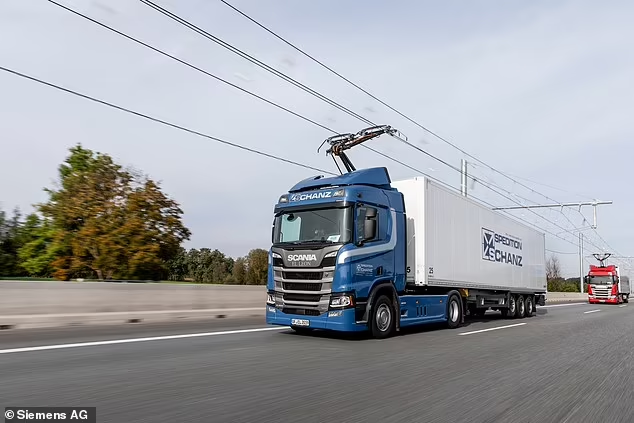 How Electric Trucks with Overhead Cables Work
Market Trends and Adoption Rates
Current Market Penetration
Electric trucks are gaining traction in urban delivery, last-mile logistics, and short-haul applications. Fleet operators prioritise sustainability, operational cost savings, and regulatory compliance.
Adoption Challenges
Challenges include high initial costs, range limitations, and charging infrastructure gaps. However, technological advancements, government support, and shifting consumer preferences are accelerating adoption rates.
Future Outlook
The electric truck market is poised for growth, driven by advancing technology, expanding charging networks, and regulatory pressures. Continued innovation and collaboration will shape the future of sustainable transportation.
Comparison with Conventional Diesel Trucks
Electric trucks vs. conventional diesel trucks: A comprehensive comparison
Environmental Impact
- Emissions: Electric trucks produce zero tailpipe emissions, reducing air pollution and contributing to better urban air quality.
- Energy Efficiency: EV trucKs are more energy-efficient than diesel trucks, converting more energy from the grid into propulsion.
- Life Cycle Impact: Consideration of environmental impacts throughout the lifecycle, from production to disposal, favours EV trucks due to lower emissions and energy efficiency.
Operational Performance
- Torque and Power: Electric trucks offer instant torque, providing quick acceleration and robust towing capabilities.
- Noise Levels: Electric trucks operate quietly, minimising noise pollution in urban areas compared to diesel trucks.
- Maintenance: Electric trucks have fewer moving parts, resulting in lower maintenance costs and reduced downtime.
Economic Considerations
- Total Cost of Ownership (TCO): Despite higher upfront costs, EV trucks often have lower TCO over their life cycle due to savings on fuel and maintenance.
- Fuel and Operating Costs: Electric trucks benefit from lower fuel costs (electricity vs. diesel) and reduced maintenance needs.
Case Studies of Successful Implementations
Real-world examples demonstrating the effectiveness of electric trucks
Example 1: UPS Electric Delivery Vans
- Deployment: UPS has integrated electric delivery vans into its fleet across several cities.
- Benefits: Reduced operational costs, compliance with emissions regulations, and positive public perception.
Example 2: Tesla Semi-Truck
Innovation: Tesla’s entry into the electric semi-truck market represents a significant leap in innovation within the commercial vehicle sector. The Tesla Semi promises not only to revolutionize the transportation industry but also to set new standards in terms of range, performance, and sustainability. By harnessing Tesla’s expertise in electric vehicle (EV) technology, the Semi is designed to deliver exceptional power and efficiency, capable of hauling heavy loads over long distances without compromising on performance.
Adoption: The reception of Tesla’s Semi among major logistics companies underscores its strong market potential. Pre-orders and trial deployments by industry leaders highlight a robust interest in adopting electric semi-trucks. These initiatives signify a shift towards sustainable transportation solutions and a growing recognition of the economic and environmental benefits offered by electric vehicles in the logistics and freight industries.
Tesla’s Semi-Truck is poised to redefine the landscape of commercial transportation, offering not just a mode of delivery, but a statement of commitment towards a greener future and technological advancement in logistics.
Future Prospects and Industry Growth
The evolving landscape of EV trucks and their role in the transportation sector
Market Trends
- Adoption Rates: Increasing adoption in urban delivery and short-haul logistics.
- Regulatory Support: Governments worldwide incentivize electric truck adoption to meet emissions targets.
- Technological Advancements: Continuous improvements in battery technology and charging infrastructure.
Investment and Funding in Electric Truck Technology
Financial backing and investment trends in the electric truck sector
Venture Capital
- Investment Flow: Significant venture capital funding supports research, development, and commercialization of electric truck technologies.
- Government Grants: Grants and subsidies encourage innovation and deployment of EV trucks in public and private fleets.
The Role of Electric Trucks in Sustainable Transportation
Summary of electric trucks’ contributions to sustainable transportation
Environmental Benefits
- Climate Impact: EV trucks mitigate climate change by reducing greenhouse gas emissions.
- Air Quality: Improved urban air quality with zero tailpipe emissions.
- Sustainability: Enhancing sustainability credentials for businesses and municipalities.
Economic and Operational Advantages
- Cost Efficiency: Lower TCO and operational savings compared to diesel trucks.
- Performance: Competitive performance with instant torque and quiet operation.
Future Outlook
- Expansion: Anticipated growth in electric truck adoption across global markets.
- Innovation: Continued technological advancements will enhance range, charging infrastructure, and vehicle capabilities.
Electric Vehicles
- What are electric vehicles (EVs)?
Electric vehicles are automobiles powered by electric motors, using rechargeable batteries or other energy storage systems. They operate without internal combustion engines, reducing or eliminating tailpipe emissions.
- What are the benefits of electric vehicles?
Electric vehicles offer several advantages, including environmental benefits due to zero tailpipe emissions, lower operating costs from cheaper electricity compared to gasoline or diesel, and enhanced performance with instant torque.
- What types of electric vehicles are there?
There are primarily two types of electric vehicles: Battery Electric Vehicles (BEVs), which run solely on electric power from rechargeable batteries, and Plug-in Hybrid Electric Vehicles (PHEVs), which have both an electric motor and a gasoline engine.
- What are the challenges of adopting electric vehicles?
Challenges include concerns about range anxiety for long trips, the availability of charging infrastructure, higher upfront costs compared to gasoline vehicles, and issues related to battery life, recycling, and production.
- Are electric vehicles suitable for everyone?
Electric vehicles are suitable for a wide range of drivers, particularly those with access to home or workplace charging facilities who primarily drive shorter distances. They are ideal for urban commuting, local errands, and fleet operations where charging infrastructure is readily available.
- Are there any fully electric trucks?
Yes. There are several fully electric trucks operating today, especially in short-haul and urban logistics. Big fleets in the UK — like Amazon — have deployed 160 electric heavy goods vehicles (eHGVs), including Mercedes-Benz eActros 600 and Volvo electric trucks, on UK roads for deliveries. These can cover hundreds of miles and cut carbon emissions on regional runs.(CILT
- What is the best EV truck in the UK?
For heavy electric HGVs, models like the Mercedes-Benz eActros and DAF CF Electric are among the most advanced specs being used by fleets in the UK. These suit local and regional freight, with up to ~310-mile range and fast charging solutions.
For pickup EVs (light trucks) coming soon, options such as the Isuzu D-Max Electric and Fisker Alaska are projected to arrive in the UK market — though currently full-electric pickups are limited
- Are there electric lorries in the UK?
Yes — major logistics firms are already operating them. For example, Amazon has expanded its electric lorry fleet in the UK significantly, with plans to support up to 160 eHGVs carrying goods between depots with zero tailpipe emissions.(CILT)
- What is the 80/20 rule for electric cars?
In EV charging context, the “80/20 rule” refers to charging the battery between 20% and 80% for everyday use. Charging beyond 80% (up to 100%) frequently can stress the battery, slowing long-term health, whereas staying above 20% avoids deep discharge that can also degrade cells. This practice optimises battery lifespan. (General EV guidance)
- What are the drawbacks of electric trucks?
Electric HGVs promise environmental benefits, but there are some challenges right now:
- Longer charging times compared to refuelling a diesel truck — often 8–12 hours in real-world conditions for a full charge.
- High upfront cost — electric trucks tend to cost more than diesel equivalents.
- Battery recycling/disposal concerns due to chemical contents.
- Payload reductions because battery weight takes space and weight limit share.
Infrastructure (chargers for HGVs across motorways) is still developing, which limits long-haul practicality.
- How many electric trucks are there in the UK?
Numbers are currently small compared to diesel fleets, but growing:
- Only a few hundred electric HGVs are reported to be registered and used across the UK, compared to hundreds of thousands of diesel lorries on the road.
- Major commercial orders (like Amazon’s) are expanding this number rapidly in logistics operations.
Industry sources estimate tens of thousands electric trucks could be needed — but currently they make up a tiny fraction of the fleet.
- Is Ford stopping electric trucks?
Ford is delaying some electric truck projects — for example, the next-gen electric full-size truck (codenamed T3) has been pushed to around 2028, later than originally planned.
Other industry news suggests Ford has shifted strategy away from some full EV truck projects toward hybrid or extended-range systems.
- What is the lifespan of an electric truck?
EV truck lifespan depends on battery health, use, charging cycles and maintenance. Generally:
- Battery packs are expected to maintain usable capacity for around 8–12 years or many thousands of kilometres before significant degradation occurs. (Typical EV battery guidance)
- The vehicle chassis and motors may last much longer with less maintenance than diesel engines.
- How long would it take to charge an electric truck?
Charging a large electric truck depends on charger power:
- High-power DC charging (250–400+ kW) can get a truck from ~20% to ~80% in about 1–2 hours with suitable infrastructure.
- Using lower-power chargers or depot charging, a full charge could take 8–12 hours or more.
This is longer than refuelling a diesel truck — part of the challenge for mass adoption.
- Why are there no EV trucks?
There are EV trucks, but they are not yet widespread because of a few key barriers:
- High cost of purchase and infrastructure investment.
- Lack of dedicated high-power charging network for HGVs nationwide.
- Range and charging speed makes long-haul logistics harder without network build-out.
As infrastructure improves and governments support adoption (e.g., subsidies in the UK), uptake is increasing.
- How long do electric truck batteries last?
Electric truck batteries typically last many years but gradually lose capacity:
- A typical EV battery pack may hold good capacity for 8–12+ years before needing replacement. (General EV battery longevity principle)
- Actual lifespan varies with temperature, charging habits, load and usage patterns.
- Is Cybertruck a hit or flop?
Tesla’s Cybertruck sales have fallen well below Musk’s original projections, with only about 20,000 units sold in the U.S. in 2025 — significantly short of earlier targets. It has faced quality and pricing challenges, and wider global availability has been limited due to regulatory, design and market factors.
That said, whether it’s a “hit” or “flop” depends on perspective: it continues to generate attention, but its sales haven’t matched Tesla’s initial expectations.
Range Anxiety
- What are electric vehicles (EVs)?
Electric vehicles are automobiles powered by electric motors, using rechargeable batteries or other energy storage systems. They operate without internal combustion engines, reducing or eliminating tailpipe emissions.
- What are the benefits of electric vehicles?
Electric vehicles offer several advantages, including environmental benefits due to zero tailpipe emissions, lower operating costs from cheaper electricity compared to gasoline or diesel, and enhanced performance with instant torque.
- What types of electric vehicles are there?
There are primarily two types of electric vehicles: Battery Electric Vehicles (BEVs), which run solely on electric power from rechargeable batteries, and Plug-in Hybrid Electric Vehicles (PHEVs), which have both an electric motor and a gasoline engine.
- What are the challenges of adopting electric vehicles?
Challenges include concerns about range anxiety for long trips, the availability of charging infrastructure, higher upfront costs compared to gasoline vehicles, and issues related to battery life, recycling, and production.
- Are electric vehicles suitable for everyone?
Electric vehicles are suitable for a wide range of drivers, particularly those with access to home or workplace charging facilities who primarily drive shorter distances. They are ideal for urban commuting, local errands, and fleet operations where charging infrastructure is readily available.

Fresh News
Fresh News update
Fresh News – The East Midlands Leadership Awards, which saw 19 trophies handed out this year, celebrate leaders who embody vision, resilience, and the ability to inspire.
First a quick plug – Our sister companies Fresh Pharma whom are GDP Compliant Pharma couriers and ‘Fresh Fridge Hire‘ are our (compliant GDP) refrigerated vehicle hire.
Our MD Alan White was a finalist in 3 categories. Green Leader, Diversity and Inclusion Leader and business 51-100 employee’s leadership awards. Alan won Business leader of the year for the second year in a row. The win underscores the importance of these qualities in building a successful and sustainable business. Alan White Fresh Logistics has not only elevated the company’s reputation but has also set a benchmark for others in the industry.
Alan said to Fresh news ‘it is a really great evening and to actually win and award demonstrates we are doing something right.’


Several other awards and accolades are on the horizon so watch this space and follow us for more Fresh News
A Culture of Innovation and Excellence
Alan White Fresh Logistics has consistently been at the forefront of the logistics sector, particularly in the niche of fresh logistics—ensuring the timely and safe delivery of perishable goods. This requires a level of precision, innovation, and dedication that aligns perfectly with the leadership qualities celebrated at the awards. Alan’s ability to navigate the complexities of the industry while maintaining a focus on sustainability and employee well-being is a hallmark of his leadership style.
Fresh News – People-Centric Leadership
One of the key themes of the East Midlands Leadership Awards is the importance of people-centric leadership. Alan White’s win highlights his ability to lead with empathy. Furthermore, vision, and a deep understanding of the value of his team. At Alan White Fresh Logistics, employees are seen as the backbone of the company. Alan has made it a priority to invest in their development, foster a culture of inclusivity, and encourage innovation. This approach has not only boosted employee morale but has also driven the company’s success.