
The Urgent Need for Sustainable Chilled Logistics
Importance of Chilled Logistics in the Modern Supply Chain
Sustainable Chilled Logistics within the Chilled delivery service, also known as the cold chain, plays a vital role in the transportation and storage of temperature-sensitive goods. 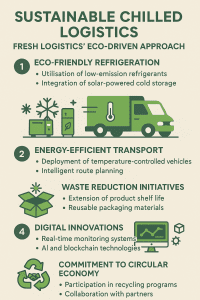 These goods include perishable foods, pharmaceuticals, certain chemicals, and even high-value floral products, all of which require specific temperature ranges to maintain quality and safety. In the United Kingdom, the demand for chilled logistics has surged due to growing consumer expectations for fresh and organic produce, increased pharmaceutical needs, and e-commerce expansion. For example, supermarkets like Tesco and Sainsbury’s rely on a robust chilled supply chain to ensure dairy products and meats are safe and fresh when they reach customers.
Modern supply chains have become globalised, and products often travel hundreds or thousands of miles before reaching the consumer. Chilled logistics ensures that these perishable goods arrive in optimal condition, which not only affects the quality and safety of the products but also the financial performance of suppliers and retailers. However, while chilled logistics is essential, its environmental impact is profound.
First a quick plug – Our sister companies Fresh Pharma whom are GDP Compliant Pharma couriers and ‘Fresh Fridge Hire‘ are our (compliant GDP) refrigerated vehicle hire.
The Environmental Cost of Sustainable Chilled Logistics
Refrigerated vehicles and storage units are energy-intensive. They often rely on diesel-powered refrigeration units, which emit substantial amounts of carbon dioxide and other pollutants. According to the Department for Transport, refrigerated trucks can consume up to 20% more fuel than their non-refrigerated counterparts. Additionally, many refrigeration systems use hydrofluorocarbons (HFCs), potent greenhouse gases that contribute significantly to climate change.
Moreover, the infrastructure supporting chilled logistics—from refrigerated warehouses to cold storage distribution centres—demands continuous power. This constant energy consumption has a direct environmental cost, especially when the electricity comes from non-renewable sources. For instance, a typical cold storage facility can use up to 30 kWh per square metre annually, contributing heavily to the carbon footprint of the logistics sector.
Why Sustainable Chilled Logistics is No Longer Optional
With the UK government setting ambitious climate targets, including reaching net-zero emissions by 2050, the logistics industry is under increasing pressure to adapt. Regulatory frameworks such as Clean Air Zones (CAZs) and the expansion of the Ultra Low Emission Zone (ULEZ) in London directly impact logistics operations. Companies that fail to comply face financial penalties and reputational damage.
 Moreover, consumers are becoming more environmentally conscious. A study by Deloitte UK found that over a third of British consumers consider sustainability when making purchasing decisions. This shift in consumer values means that companies investing in sustainable chilled logistics are not only future-proofing their operations but also aligning with market expectations.
Sustainability in chilled logistics is no longer a choice; it is a business imperative. It offers a strategic advantage in terms of compliance, cost savings, and customer loyalty, all while contributing positively to the planet.
What is Sustainable Chilled Logistics? A Brief Overview
Definition and Scope
Chilled logistics refers to the management and transportation of goods that must be kept within a specific cool temperature range, typically between 0°C and 8°C, to ensure product integrity. It includes all stages of the supply chain: production, storage, transportation, and distribution. This system ensures that products remain safe, effective, and consumable throughout their lifecycle. In the UK, this applies to sectors such as food and beverage, pharmaceuticals, and horticulture.
Difference Between Chilled and Frozen Logistics
Although often used interchangeably, chilled and frozen logistics are distinct. Chilled logistics deals with goods requiring cool temperatures, while frozen logistics concerns products that must be kept below freezing, generally -18°C or lower. Each has unique infrastructure requirements and handling protocols. For example, transporting chilled milk differs significantly from transporting frozen fish. The former requires gentle refrigeration and shorter shelf-life management, whereas the latter demands ultra-low temperatures and more robust insulation.
Furthermore, the energy requirements for frozen logistics are typically higher, given the need to maintain sub-zero temperatures consistently. Consequently, frozen logistics may have an even greater environmental footprint, underscoring the importance of tailored sustainability strategies for each.
Role in Food, Pharma, and Floral Supply Chains
Chilled logistics is integral to various industries. In the food sector, it preserves freshness and prevents bacterial growth. British retailers depend on cold chains to offer a wide range of dairy, meat, and fresh produce. For instance, chilled logistics ensures strawberries from Kent reach shelves in London without spoilage.
In the pharmaceutical industry, the stakes are even higher. Many vaccines, including those used during the COVID-19 pandemic, require strict temperature controls. NHS supply chains depend heavily on chilled logistics to maintain the efficacy of these life-saving drugs.
Floral logistics is another niche but essential area. Flowers are highly perishable and temperature-sensitive. Chilled logistics ensures that blooms from regions like Lincolnshire or imported varieties from the Netherlands remain vibrant and sellable in British flower shops and supermarkets.
Chilled logistics, therefore, is not merely a function of transport but a critical enabler of economic activity, public health, and consumer satisfaction.
Environmental Impact of Sustainable Chilled Logistics
CO₂ Emissions from Refrigerated Transport
Traditional refrigerated transport systems are major contributors to CO₂ emissions. Refrigerated vans and lorries often rely on auxiliary diesel engines to power cooling units, resulting in higher emissions than standard freight vehicles. A study by the Carbon Trust found that refrigerated vehicles can emit up to 29% more CO₂ per kilometre.
Moreover, these emissions are particularly concerning in urban areas, where logistics vehicles contribute to air quality issues. This has prompted initiatives such as London’s ULEZ, which imposes penalties on high-emission vehicles. As such, the carbon footprint of refrigerated transport is a significant environmental concern that must be addressed through cleaner fuels, electric refrigeration units, and route optimisation.
Energy Consumption in Cold Storage Facilities
Cold storage facilities are notoriously energy-hungry. These warehouses must maintain consistent temperatures, often over vast areas, resulting in continuous energy use. A report from the UK Green Building Council noted that cold storage warehouses consume nearly twice the energy of ambient storage facilities.
Inefficient insulation, outdated refrigeration systems, and poor building design contribute to excessive energy use. For example, older facilities may lack advanced insulation materials or rely on non-variable speed compressors, leading to energy wastage. Transitioning to energy-efficient systems, renewable energy sources like solar panels, and advanced building management systems can significantly reduce this environmental burden.
Waste Generation and Inefficiencies
In addition to emissions and energy use, traditional cold chains often generate waste due to temperature fluctuations, poor planning, and product spoilage. For instance, if a refrigeration unit fails or goods are left unrefrigerated during loading, entire consignments can be lost. This not only wastes resources but also contributes to landfill and methane emissions.
Packaging waste is another concern. Single-use plastics and non-recyclable insulation materials are commonly used in cold chain logistics. Once discarded, these materials add to the growing problem of plastic pollution. Sustainable alternatives, coupled with better inventory management and temperature monitoring technologies, can help mitigate these inefficiencies.
The Business Case for Sustainable Chilled Logistics
Regulatory Pressures (e.g., UK Clean Air Zones)
Government regulations are increasingly mandating sustainability. The UK’s Clean Air Zones, such as those in Birmingham, Bath, and Portsmouth, aim to reduce air pollution by charging high-emission vehicles. Logistics companies using traditional refrigerated lorries face financial penalties unless they upgrade to cleaner alternatives.
Compliance with such regulations is not optional; it affects operational viability. Companies that proactively adopt low-emission vehicles and environmentally friendly technologies can avoid penalties and gain a competitive edge. Moreover, as more cities implement CAZs, nationwide adaptation becomes essential.
Cost Savings from Energy-Efficient Systems
Sustainability also makes financial sense. While the initial investment in energy-efficient refrigeration units or solar-powered warehouses may be high, the long-term savings are substantial. Reduced fuel and electricity bills, coupled with lower maintenance costs, improve profitability.
For example, a logistics firm in Manchester retrofitted its fleet with electric refrigeration units and reported a 15% reduction in operating costs within two years. Similarly, warehouses using LED lighting, advanced insulation, and renewable energy sources have significantly reduced their overheads. These savings can be reinvested in business growth or passed on to consumers, enhancing competitiveness.
Consumer Demand for Sustainable Chilled Logistics
Modern consumers are more eco-aware. According to a 2024 YouGov survey, 41% of UK shoppers consider environmental impact when selecting brands. Companies with transparent, green logistics practices often enjoy higher customer loyalty and better brand perception.
Supermarkets like Waitrose have capitalised on this trend by showcasing their sustainable sourcing and distribution practices. By aligning logistics with consumer values, companies not only meet expectations but also create market differentiation. Investing in sustainability is thus a pathway to customer trust and long-term success.
Sustainable Packaging for Sustainable Chilled Logistics
Recyclable and Biodegradable Insulation Materials
Packaging plays a crucial role in chilled logistics, maintaining temperature integrity during transit. Traditional options include polystyrene and polyurethane foam, which are effective but non-recyclable. These materials contribute to plastic pollution and are increasingly viewed as unsustainable.
Innovations in sustainable packaging have introduced recyclable and biodegradable alternatives. For instance, sheep wool liners, starch-based foams, and recycled paper pulp offer excellent insulation while being compostable or recyclable. British companies like Wool cool and TemperPack UK have pioneered such materials, proving that sustainability and performance can go hand in hand.
Packaging Innovations for Temperature Control
Recent advancements have led to smart packaging solutions that actively monitor and regulate temperature. Phase Change Materials (PCMs) can absorb or release heat to maintain a constant temperature range, reducing the need for active refrigeration. Thermochromic labels and sensors also help monitor temperature breaches, enhancing accountability and reducing spoilage.
Reusable cold packs and modular container systems are also gaining traction. These innovations not only enhance temperature control but also reduce single-use waste, aligning with circular economy principles.
Case Studies from Leading Brands
Several UK brands have embraced sustainable chilled packaging. For example, Abel & Cole, an organic food delivery service, uses fully recyclable insulation and encourages customers to return packaging for reuse. Another example is Gousto, which transitioned from plastic-lined boxes to cardboard and recyclable wool liners, reducing plastic waste by 74%.
These success stories demonstrate that sustainable packaging is not just an environmental imperative but also a marketing advantage. Brands that innovate in this space build consumer trust and lead industry standards.
Sustainable chilled logistics is no longer the future; it is the present. By embracing environmental responsibility through every link in the cold chain, businesses can reduce costs, meet regulations, and satisfy a growing demand for greener solutions.
Energy-Efficient Refrigeration Technologies for Sustainable Chilled Logistics
Use of Natural Refrigerants
The use of natural refrigerants is increasingly recognised as a cornerstone of energy-efficient refrigeration technologies in sustainable cold chain logistics. Unlike traditional synthetic refrigerants such as hydrofluorocarbons (HFCs), natural refrigerants—including ammonia (NH3), carbon dioxide (CO2), and hydrocarbons like propane (R290)—have negligible or zero global warming potential (GWP) and no ozone depletion potential (ODP). For example, ammonia is highly efficient and widely used in large industrial refrigeration systems throughout the UK’s food processing and storage sectors. It offers excellent thermodynamic properties but requires stringent safety protocols due to its toxicity. Carbon dioxide, though less efficient under certain conditions, is ideal for high-pressure systems and has gained traction in commercial refrigeration settings, including supermarket chains.
Propane, known for its efficiency and lower flammability risk, is being adopted in smaller commercial refrigeration units and transport refrigeration systems. These natural options not only reduce environmental impact but also lower long-term operating costs due to their superior energy efficiency. Moreover, the EU F-Gas Regulation and UK environmental targets are pushing industries towards these eco-friendly alternatives, with companies like Waitrose and Iceland leading the transition. A key benefit is regulatory compliance coupled with brand value enhancement through visible sustainability efforts.
Solar-Powered Refrigerated Units
Solar-powered refrigerated units are a game-changing innovation for energy-efficient cold chain logistics. These systems utilise photovoltaic panels to generate electricity, which then powers refrigeration units directly or charges a battery for later use. This technology is particularly beneficial in remote or off-grid locations, such as rural distribution points or mobile markets in the British countryside. It is also instrumental in supporting low-carbon goals in urban logistics. In practice, solar-powered refrigeration has been employed successfully in sectors like pharmaceuticals and food delivery, ensuring cold storage without relying on diesel generators.
For instance, mobile solar cold rooms have been trialled for transporting vaccines and fresh produce across areas with unstable electricity supplies. Additionally, these units contribute to reduced operational costs by minimising dependence on fossil fuels and decreasing maintenance frequency. To optimise performance, many solar refrigeration systems incorporate hybrid models that can switch to grid power when solar energy is insufficient, ensuring consistent cooling. Despite initial capital investment, the return on investment is favourable due to savings on fuel and reduced carbon taxes. As battery technology improves, these systems are expected to become more widespread and cost-effective.
Smart Sensors and AI Temperature Control
Smart sensors and AI-driven temperature control represent a significant advancement in maintaining precise conditions within cold chain logistics. These technologies utilise real-time data collection and machine learning algorithms to optimise refrigeration performance, reduce energy usage, and minimise spoilage. Smart sensors monitor variables such as temperature, humidity, door opening frequency, and compressor efficiency, transmitting this data to centralised systems for analysis.
Artificial Intelligence (AI) processes this information to identify patterns, predict maintenance needs, and adjust settings dynamically. For example, AI might determine the most energy-efficient cooling cycle during off-peak hours or adjust humidity levels to prolong the shelf life of fresh produce. In the UK, retailers like Tesco and Sainsbury’s have begun integrating such systems in their distribution centres to enhance product safety and reduce emissions. These innovations also enable predictive analytics, allowing logistics operators to pre-emptively address issues before they escalate, thus avoiding costly disruptions. Furthermore, integration with Internet of Things (IoT) platforms provides visibility across the entire supply chain, supporting compliance with UK food safety regulations. The long-term benefit is a resilient, sustainable refrigeration infrastructure aligned with the broader goals of carbon neutrality.
Low-Emission Transport Options in Sustainable Chilled Logistics
Electric Refrigerated Vehicles (E-Trucks and E-Vans)
Electric refrigerated vehicles, encompassing e-trucks and e-vans, are crucial components in achieving low-emission transport within the cold chain logistics sector. These vehicles utilise electric drivetrains combined with battery-powered refrigeration units, eliminating the need for diesel engines and significantly reducing both greenhouse gas emissions and noise pollution. In urban centres like London and Manchester, local governments have implemented low-emission zones, incentivising the adoption of electric vehicles (EVs) in delivery fleets.
Companies such as Ocado and Tesco have already integrated e-vans into their last-mile delivery operations, showcasing the feasibility and benefits of this technology. The reduced operational costs, due to fewer moving parts and lower energy costs, make electric vehicles an attractive option over the long term. However, challenges remain, including limited range, battery weight, and charging infrastructure. To address this, UK logistics firms are investing in depot-based charging stations and exploring route planning software to optimise delivery schedules. Innovations such as regenerative braking and lightweight vehicle materials are further improving efficiency. Government grants under the UK Plug-in Van Grant scheme also provide financial incentives for adoption. As battery technology continues to advance, electric refrigerated vehicles are expected to become the backbone of sustainable urban cold chain logistics.
Biofuel and Hybrid Logistics Fleets
Biofuel and hybrid logistics fleets represent a transitional solution towards achieving a low-carbon cold chain. Biofuels, including biodiesel and hydrotreated vegetable oil (HVO), are derived from renewable biological sources and can significantly reduce the carbon footprint of transport operations. In the UK, companies like ASDA and DHL have begun trialling biofuel-powered lorries for cold chain logistics, often in combination with electric refrigeration units. Hybrid vehicles, which combine internal combustion engines with electric motors, offer enhanced fuel efficiency and reduced emissions, particularly during start-stop urban delivery routes.
This dual capability ensures reliable operation across various terrains and delivery requirements. The flexibility of using existing fuelling infrastructure also makes biofuel and hybrid options attractive for companies hesitant to adopt fully electric fleets. Additionally, the Renewable Transport Fuel Obligation (RTFO) encourages the blending of biofuels into the national fuel supply, further supporting market uptake. Real-world data from UK logistics operators indicates emission reductions of up to 80% when switching to HVO from traditional diesel. While not entirely carbon neutral, these technologies offer an immediate path to lower emissions, enabling companies to make tangible progress on sustainability targets while preparing for a fully electrified future.
Intermodal Transport for Reduced Emissions
Rail and intermodal transport are strategic solutions for reducing emissions in cold chain logistics, particularly for long-distance freight. Trains are significantly more energy-efficient than road freight, emitting up to 76% less CO2 per tonne-kilometre. In the UK, the use of refrigerated rail freight is gaining momentum, supported by infrastructure investments and policy incentives. For example, the Tesco-DB Cargo partnership leverages refrigerated rail routes to move perishable goods from distribution centres in the Midlands to Scotland, effectively reducing road congestion and carbon emissions. Intermodal transport combines multiple modes—typically rail and road—to balance cost, speed, and environmental impact.
Specialised refrigerated containers are used to maintain the cold chain throughout the journey, and automated systems facilitate seamless transitions between modes. The main challenge lies in coordination and infrastructure compatibility, but digital platforms are emerging to optimise scheduling and real-time tracking. With the UK Government’s Rail Freight Strategy aiming to increase rail freight usage by 75% by 2050, the integration of rail and intermodal logistics is set to play a critical role in decarbonising supply chains. Businesses adopting this model not only reduce their carbon footprint but also benefit from enhanced reliability and reduced exposure to fuel price volatility.
Cold Storage: Greener Warehousing Solutions in Sustainable Chilled Logistics
Renewable Energy in Chilled Warehouses
The integration of renewable energy in chilled warehouses is a fundamental step towards achieving greener warehousing in cold chain logistics. Photovoltaic solar panels, wind turbines, and biomass energy systems are being increasingly deployed to supply sustainable power for refrigeration and warehouse operations. In the UK, major logistics firms are installing rooftop solar panels on distribution centres, generating enough electricity to power entire facilities during daylight hours. For instance, Aldi’s Regional Distribution Centre in Cardiff is partially powered by solar energy, reducing dependence on the grid and lowering emissions.
Wind energy, particularly viable in coastal regions of the UK, offers another avenue for clean power generation. Combined Heat and Power (CHP) systems using biomass can also be integrated to supply consistent energy while reusing organic waste. These solutions not only contribute to environmental goals but also provide cost savings through lower energy bills and eligibility for schemes like the Renewable Heat Incentive (RHI). Energy storage systems, such as lithium-ion batteries, are increasingly used to store excess renewable power, ensuring uninterrupted operation. Moreover, companies leveraging green energy often benefit from improved public perception and alignment with corporate social responsibility targets.
Insulation Improvements
Improving insulation is one of the most cost-effective ways to enhance energy efficiency in cold storage facilities. Modern insulation technologies include vacuum insulated panels (VIPs), phase-change materials, and reflective foils, all of which significantly reduce heat ingress. In the UK, retrofitting older warehouses with high-performance insulating materials has demonstrated energy savings of up to 40%. VIPs, though more expensive initially, offer superior thermal resistance and are ideal for space-constrained environments.
Phase-change materials can absorb and release thermal energy during transitions, maintaining stable internal temperatures even during power outages. Insulated doors and high-speed roll-up doors also play a crucial role in minimising cold air loss during frequent loading and unloading activities. Additionally, thermal imaging and energy audits are being employed to detect and address weak spots in insulation. Government programmes such as the Energy Technology List (ETL) support businesses in identifying eligible insulation products with proven energy savings. The cumulative effect of these improvements is a substantial reduction in energy demand, operating costs, and greenhouse gas emissions, contributing to a more sustainable cold storage network.
Temperature Zoning and Automation
Temperature zoning and automation technologies allow cold storage facilities to operate more efficiently by tailoring environmental conditions to specific product requirements. By segmenting a warehouse into distinct temperature-controlled zones—such as frozen, chilled, and ambient—facilities can avoid overcooling areas unnecessarily, thus conserving energy. Advanced automation systems, including programmable logic controllers (PLCs), automated storage and retrieval systems (AS/RS), and robotics, enable precise control and monitoring of temperature conditions.
In the UK, cold storage operators are adopting these systems to improve operational efficiency and reduce labour costs. Automated conveyor systems integrated with smart sensors can direct goods to the appropriate zone based on their storage requirements and expiry dates. Machine learning algorithms further enhance performance by optimising energy use based on historical data and predictive analytics. Remote monitoring systems allow for real-time adjustments and maintenance alerts, reducing downtime and ensuring product integrity. The strategic implementation of temperature zoning and automation not only improves sustainability but also enhances compliance with food safety standards, delivering long-term value to stakeholders across the supply chain.
Route Optimisation for Lower Carbon Footprints in Sustainable Chilled Logistics
Role of Telematics and GPS Tracking
Telematics and GPS tracking are vital technologies in reducing the carbon footprint of cold chain logistics. These systems provide detailed data on vehicle location, speed, fuel consumption, idle times, and refrigeration unit performance. In the UK, logistics providers are leveraging these insights to streamline delivery operations and minimise environmental impact. For example, tracking software allows fleet managers to monitor and optimise driving behaviour, reducing unnecessary fuel use and emissions.
Data gathered from telematics systems also supports predictive maintenance, preventing breakdowns and ensuring vehicles operate at peak efficiency. Moreover, integrated GPS tracking enhances transparency and customer satisfaction by providing accurate delivery times. In addition to environmental benefits, these systems contribute to cost savings through reduced fuel consumption, extended vehicle lifespans, and improved asset utilisation. When combined with advanced routing algorithms, telematics can further optimise delivery paths, reducing mileage and emissions. Many UK firms now require telematics integration as part of their fleet management strategy, aligning with broader sustainability goals and regulatory requirements.
Routing and Load Consolidation
<p>Dynamic Routing (DR) and load consolidation strategies are essential for minimising emissions and improving efficiency in cold chain logistics. DR involves continuously adjusting delivery routes based on real-time data such as traffic conditions, road closures, and delivery windows. Load consolidation focuses on maximising vehicle capacity by combining multiple shipments into a single trip, thereby reducing the total number of journeys.
These strategies not only reduce fuel consumption but also decrease labour and vehicle wear-and-tear. For instance, a logistics provider in the Midlands might consolidate deliveries from several farms to a central hub before distributing to urban retailers. Software tools now enable automated route planning that considers delivery urgency, vehicle capacity, and road conditions. In the UK, firms like DPD and Yodel have adopted dynamic routing platforms to enhance delivery efficiency while cutting emissions. This approach supports sustainability by ensuring that cold chain vehicles operate at optimal capacity and on the most efficient routes, ultimately lowering the carbon footprint of each delivery mile.
Real-Time Traffic and Weather Data Integration
Integrating real-time traffic and weather data into cold chain logistics systems enhances both reliability and environmental performance. Weather fluctuations can have a significant impact on refrigerated transport, affecting cooling loads and delivery schedules. By incorporating meteorological data, logistics software can adjust routes and cooling requirements dynamically. For example, if high ambient temperatures are predicted along a delivery route, the system can pre-cool cargo or reroute to shaded or cooler pathways. Real-time traffic data allows for swift adjustments to avoid congestion, reducing idle times and emissions. In the UK, collaborations between logistics firms and the Met Office are helping to refine these capabilities. Predictive models also use this data to forecast potential disruptions, enabling pre-emptive rescheduling and resource reallocation. The integration of traffic and weather analytics ensures that goods are delivered on time, in optimal condition, and with minimal environmental impact.
Reducing Food Waste Through Smarter Sustainable Chilled Logistics Management
Real-Time Temperature Monitoring
Real-time temperature monitoring is a critical strategy for reducing food waste in cold chain logistics. This technology ensures that perishable goods are stored and transported under ideal conditions, preventing spoilage and maintaining quality. Wireless temperature sensors placed throughout transport vehicles and storage facilities transmit continuous data to central monitoring platforms. In the UK, logistics providers are increasingly using cloud-based systems that send immediate alerts if temperatures deviate from acceptable ranges.
This allows for rapid intervention, such as rerouting deliveries or adjusting refrigeration settings. Moreover, regulatory frameworks like the UK Food Safety Act require strict temperature control for perishable goods, making real-time monitoring a compliance necessity. Retailers benefit from extended shelf life and reduced returns, while consumers enjoy safer and fresher products. Real-time monitoring also supports traceability, allowing for detailed audits in case of spoilage claims. When integrated with AI, these systems can predict potential equipment failures, enabling preventative maintenance and further reducing waste.
Data-Driven Expiry Tracking
Data-driven expiry tracking enables precise inventory management, minimising waste by ensuring products are sold or used before they expire. By leveraging data from production dates, batch numbers, and real-time sales trends, logistics systems can dynamically assess stock lifespans and prioritise their movement through the supply chain. In UK distribution centres, barcode and RFID technologies are used to capture expiry data at the item level, feeding into centralised inventory systems that trigger automatic reorder points and stock rotation protocols. This approach prevents overstocking and reduces the likelihood of unsold, expired goods. Advanced analytics also allow for demand forecasting, aligning procurement with actual consumption patterns. Retailers like Morrisons have implemented data-driven inventory systems that use expiry data to trigger discounts on near-expiry items, reducing waste and improving sales. Integrating expiry tracking with logistics operations not only enhances sustainability but also improves profitability by reducing shrinkage and optimising stock levels.
Coordinating First-Expiry, First-Out (FEFO) Systems
Coordinating first-expiry, first-out (FEFO) systems is a practical and effective method for reducing food waste across the cold chain. Unlike first-in, first-out (FIFO), which organises products based on arrival date, FEFO prioritises goods based on their actual expiry dates, ensuring that items closest to expiration are dispatched first. This requires precise labelling, robust data management, and highly organised warehousing practices. In the UK, many cold storage facilities use automated picking systems integrated with warehouse management software to implement FEFO seamlessly.
Temperature-controlled environments must be meticulously managed to ensure the accuracy of expiry dates and prevent quality degradation. Supermarkets, such as Co-op and Marks & Spencer, have adopted FEFO strategies in their supply chains, supported by real-time tracking and AI-based decision support systems. By aligning product flow with actual shelf life, FEFO reduces spoilage, enhances food safety, and ensures that inventory is used most efficiently. This system not only benefits the bottom line but also aligns with sustainability objectives and corporate social responsibility commitments in reducing the UK’s food waste footprint.
Circular Economy in Sustainable Chilled Logistics
Reusable Packaging and Pallet Pooling in Circular Economy for Chilled Logistics
The adoption of a circular economy in chilled logistics has significantly redefined how businesses manage materials, particularly in terms of packaging and transportation resources. Reusable packaging and pallet pooling stand out as two of the most effective circular strategies within this context. Unlike traditional linear models—where resources are used once and discarded—these circular practices aim to minimise waste, maximise material reuse, and enhance the sustainability of cold chain operations.
Packaging
Reusable packaging involves the use of containers, crates, and insulated boxes. They are designed for multiple trips through the logistics cycle. In the UK. Companies such as Tesco and Ocado have adopted reusable crates for transporting perishable goods. Thereby cutting down significantly on single-use plastic and cardboard waste. These reusable systems often feature durable materials like HDPE (high-density polyethylene). Which withstand repeated use and cleaning cycles without compromising hygiene—a critical concern in chilled logistics.
Pallet pooling
Is another core aspect of circular logistics. Rather than purchasing and disposing of wooden pallets after each delivery. Businesses can join pallet pooling networks managed by third-party providers like CHEP or IPP. These services maintain, clean, and redistribute standardised pallets across the supply chain. In the UK, this model is gaining traction among food distributors and retailers. Due to its cost-effectiveness, consistency, and lower environmental impact. A pooled pallet reduces CO2 emissions by being used dozens of times before eventual recycling. Whereas one-way pallets often end up in landfill after a single use.
Table: Comparison of Traditional vs Circular Packaging Models in Chilled Logistics
| Feature | Traditional Model | Circular Model (Reusable) |
| Packaging Material | Single-use cardboard/plastic | Durable, sanitised plastic crates |
| Environmental Impact | High waste generation | Waste reduction, closed loop |
| Cost Over Time | Repeated purchase costs | Higher upfront, lower long-term |
| Hygiene Management | Disposed after use | Regular sanitisation cycles |
| Logistics Efficiency | Inconsistent packaging sizes | Standardised for optimisation |
In summary, reusable packaging and pallet pooling form the bedrock of a sustainable chilled logistics strategy underpinned by the circular economy. These methods not only enhance operational efficiency but also deliver tangible environmental and cost benefits over time. With rising regulatory and consumer pressure in the UK, more businesses are expected to transition toward these practices as part of broader green logistics initiatives.
Reverse Logistics and Returns Management in Circular Chilled Logistics
Reverse logistics plays a crucial role in enabling a circular economy in chilled logistics. Particularly when dealing with perishable goods and temperature-sensitive materials. At its core, reverse logistics encompasses all operations related to the reuse. Either return, remanufacturing, or disposal of goods after they have reached the end customer. In the UK food retail sector. For instance, major supermarkets such as Sainsbury’s and Waitrose have developed robust reverse logistics systems to manage unsold perishables and defective cold chain assets.
One of the primary applications is the return of reusable asset
Temperature-controlled packaging, crates, and pallets—from retail outlets back to distribution centres. These returned items are cleaned, inspected for damage, and then reintegrated into the supply chain. This closed-loop system significantly reduces packaging waste and cuts the need for constant manufacturing of new packaging materials.
Moreover, reverse logistics is critical for handling customer returns. In chilled logistics. This is a complex challenge, as returned goods must be rapidly assessed to determine their suitability. For resale, donation, repurposing, or safe disposal. For example, some chilled food products returned due to overstock or nearing sell-by dates can be redirected to food banks or converted into animal feed.
Technology
Supporting this process through digital tracking systems, such as RFID tags and IoT sensors, which provide real-time data on product location, temperature integrity, and expiration status. These tools ensure swift decision-making in reverse logistics, maintaining quality assurance and regulatory compliance.
The integration of reverse logistics also involves the coordination of transportation, warehousing, and inventory systems. Vehicles used for delivery are often tasked with collecting reusable packaging or unsold goods during their return journey, thereby optimising fuel usage and reducing emissions. Warehouse systems are adapted to process returns efficiently, often including dedicated zones for inspection and reprocessing.
Regulatory framework
Such as WRAP (Waste and Resources Action Programme) encourage companies to reduce food waste and adopt circular principles in logistics. Compliance with such frameworks not only enhances brand reputation but also contributes to long-term operational savings and environmental responsibility.
In essence, reverse logistics and returns management are vital to achieving circularity in chilled logistics. They facilitate the reintegration of materials, minimise environmental impact, and support compliance with national sustainability goals.
Repair, Reuse, Recycle: Real-World Applications in Circular Sustainable Chilled Logistics
The principles of repair, reuse, and recycle are fundamental to embedding circular economy practices in the chilled logistics sector. In real-world UK applications, these strategies are increasingly adopted to extend the lifespan of logistics equipment. Reduce waste, and ensure regulatory compliance in cold chain operations.
Repair:
In chilled logistics, repair typically involves the maintenance of temperature-controlled assets such as refrigerated trailers, insulated containers, and cooling units. Companies like Lineage Logistics and Gist in the UK have in-house maintenance teams dedicated to prolonging the life of cold storage equipment through routine servicing and prompt repairs. This prevents premature disposal and reduces the need for manufacturing new equipment. Which often involves significant material and energy consumption.
Reuse:
Reuse initiatives in chilled logistics primarily focus on packaging and transport units. For instance, reusable gel packs, ice packs, and insulated boxes are widely employed in e-grocery deliveries. These items are collected from customers during subsequent deliveries, sanitised, and redeployed. The NHS Supply Chain has implemented similar systems for delivering temperature-sensitive medical supplies, ensuring that costly and specialised packaging can be reused safely and efficiently.
Recycle:
Recycling is the final step when items can no longer be repaired or reused. In chilled logistics, this might include recycling plastics from broken insulated containers or metal components from decommissioned refrigeration units. UK-based recycling partners, such as Veolia, specialise in dismantling and recycling cold chain infrastructure in compliance with environmental standards.
Table: Application of Repair, Reuse, and Recycle in Chilled Logistics
| Principle | Application Example (UK) | Benefit |
| Repair | Refrigerated trailer maintenance (Lineage Logistics) | Extends asset life, reduces CAPEX |
| Reuse | NHS Supply Chain reusable packaging | Reduces single-use waste |
| Recycle | Plastics from expired insulated boxes | Minimises landfill, reuses materials |
Collectively, these practices reflect a mature approach to sustainability in chilled logistics. Rather than discarding valuable assets, companies increasingly seek to maximise their utility and recover materials whenever possible. As customer and regulatory pressures mount in the UK for greener supply chains, the repair-reuse-recycle model will only grow in importance.
Finally
As global demand for temperature-sensitive goods continues to grow, the importance of sustainable chilled logistics becomes increasingly clear. By embracing energy-efficient technologies, optimizing transportation routes, and adopting eco-friendly packaging and refrigeration methods. Businesses can significantly reduce their environmental impact while maintaining product integrity. Sustainability in cold chain logistics is not just an environmental imperative. It’s a competitive advantage that aligns with evolving consumer expectations and regulatory standards. The industry must continue to innovate and collaborate to build a greener, more resilient supply chain for the future.
Green Logistics
- What is Green Logistics?
Green Logistics refers to the practice of minimising the environmental impact of supply chain activities such as transportation, warehousing, and packaging.
- What are the economic benefits of implementing sustainable practices?
- What are the challenges of implementing sustainable practices in the UK?
The challenges include lack of awareness and understanding, high initial costs, and resistance to change.
- How can stakeholders in the supply chain industry collaborate to implement sustainable practices?
Stakeholders can collaborate by setting clear environmental goals and objectives, adopting technology and innovation, and partnering with supply chain partners.
- Can you provide examples of companies that have successfully implemented sustainable practices in the UK?
Yes, Tesco, John Lewis Partnership, and DHL are examples of companies that have successfully implemented sustainable practices in the UK.

Alan is the Founder and MD at the Fresh Group of companies. You are welcome to use any information you find interesting. Please give us a link back to our webpage or post. It really helps SME’s rank in the UK.