
The Ultimate Guide to Temperature-Controlled Vehicles in the UK
Temperature-Controlled Vehicles are a crucial component of the supply chain, ensuring the safe transportation of temperature-sensitive goods.  From food and beverages to pharmaceuticals and hazardous materials, temperature-controlled vehicles (TCVs) play an indispensable role in maintaining product integrity. The need for reliable Temperature-Controlled Vehicles has increased due to stringent safety regulations and consumer demand for fresh, high-quality products.
In this guide, we will explore temperature-controlled vehicles in detail, covering their types, features, industries that rely on them, and the regulatory landscape in the UK. Understanding these factors will help businesses make informed decisions when investing in Temperature-Controlled Vehicles.
First a quick plug – Our sister companies Fresh Pharma whom are GDP Compliant Pharma couriers and ‘Fresh Fridge Hire‘ are our (compliant GDP) refrigerated vehicle hire.
What Are Temperature-Controlled Vehicles?
See our slide share power point
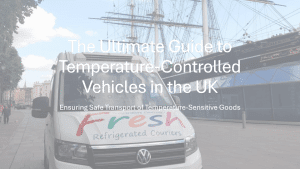 Temperature-controlled vehicles (TCVs) are specially designed transport units equipped with refrigeration or heating systems to maintain a constant temperature during transit. These vehicles are essential for the delivery of perishable goods, preventing spoilage, contamination, and loss of efficacy in temperature-sensitive products.
How They Work
Temperature-controlled vehicles operate using insulated compartments combined with active refrigeration or heating systems. These systems regulate internal temperatures, ensuring products remain within specified temperature ranges. The technology includes:
- Refrigeration units: Powered by diesel, electric, or hybrid systems, refrigeration units maintain a controlled environment within the cargo space.
- Insulated panels: High-quality insulation helps retain cold or warm air, reducing energy consumption.
- Temperature monitoring systems: Real-time tracking ensures compliance with safety regulations and maintains quality assurance.
- Multi-temperature compartments: Some vehicles feature multiple compartments, allowing for the transportation of different products at varying temperatures within a single journey.
Types of Temperature-Controlled Vehicles
Temperature-Controlled Vehicles offer different vehicle types tailored to specific business needs. Common options include:
| Type | Description | Typical Use |
| Refrigerated Vans | Small to medium-sized vehicles with built-in cooling systems. | Ideal for last-mile deliveries and small-scale distribution. |
| Refrigerated Lorries | Larger than vans, offering more cargo space and enhanced insulation. | Used for intercity and regional transport of perishable goods. |
| Refrigerated Trailers | Designed to be towed by lorries, allowing for bulk transport. | Common in large-scale logistics and international shipments. |
| Hybrid/Electric Refrigerated Vehicles | Environmentally friendly alternatives using electric or hybrid engines. | Reducing carbon footprint while maintaining temperature control. |
Industries That Rely on Temperature-Controlled Vehicles
Food & Beverage
The food industry heavily depends on temperature-controlled vehicles to transport perishable goods, including:
- Fresh produce – Fruits and vegetables require optimal humidity and temperature control to maintain freshness.
- Dairy products – Milk, cheese, and yoghurts need strict refrigeration to prevent bacterial growth.
- Meat and seafood – Highly perishable products that must be transported at ultra-low temperatures to prevent contamination.
- Frozen foods – Ice cream and ready-to-eat meals require sub-zero storage to maintain quality.
Pharmaceuticals & Healthcare
The pharmaceutical industry is bound by strict temperature regulations to ensure medicine efficacy. Examples include:
- Vaccines – Many vaccines must be stored between 2-8°C or lower to retain potency.
- Biopharmaceuticals – Temperature-sensitive drugs such as insulin require precise conditions.
- Blood products and organs – Essential for transfusions and transplants, needing stringent cold chain management.
Chemicals & Hazardous Materials
Many chemicals and hazardous materials require temperature control for stability and safety:
- Certain industrial chemicals can degrade or become hazardous if exposed to high temperatures.
- Laboratory samples need precise temperature conditions to maintain integrity.
- Specialty adhesives and coatings require controlled environments to prevent spoilage.
Floristry & Agriculture
Flowers and plants are highly perishable and need specific temperature ranges to stay fresh:
- Cut flowers must be transported in controlled environments to prevent wilting.
- Seedlings and young plants require stable temperatures to avoid damage during transport.
- Organic produce benefits from refrigerated transport to extend shelf life.
Key Features of Temperature-Controlled Vehicles
Insulation and Refrigeration Units
High-quality insulation and refrigeration units are essential for maintaining the desired temperature. Insulated panels help retain cold air, reducing energy loss. Modern refrigeration units use environmentally friendly refrigerants that comply with sustainability regulations.
Temperature Monitoring Systems
Real-time temperature monitoring ensures compliance and reduces the risk of spoilage. Advanced systems provide:
- GPS tracking integrated with temperature data.
- Alerts for temperature fluctuations.
- Automated reporting for regulatory compliance.
Multi-Temperature Compartments
Many temperature-controlled vehicles now feature multi-temperature compartments, enabling the simultaneous transport of different goods with varied temperature requirements. This is particularly useful in mixed-load deliveries.
Types of Refrigerated Vehicles
Vans vs. Lorries vs. Trailers
| Vehicle Type | Pros | Cons |
| Vans | Cost-effective for small businesses, easy to manoeuvre | Limited cargo space, shorter range |
| Lorries | More capacity, ideal for regional transport | Higher fuel consumption, requires HGV licence |
| Trailers | Large-scale transport, suitable for bulk loads | Requires a compatible lorry to tow, higher upfront costs |
Single-Temperature vs. Multi-Temperature Vehicles
Single-temperature vehicles are best for transporting a single type of perishable good, whereas multi-temperature vehicles allow for diverse cargo types, increasing operational efficiency.
Hybrid and Electric Refrigerated Vehicles
As the UK moves towards net-zero emissions, hybrid and electric refrigerated vehicles are gaining popularity. Benefits include:
- Reduced emissions.
- Lower running costs.
- Compliance with clean air regulations in major cities.
Compliance & Regulations for Temperature-Controlled Transport in the UK
UK and EU Regulations for Cold Chain Logistics
The UK follows stringent cold chain regulations to ensure food safety and pharmaceutical efficacy. Key legislations include:
- The Food Safety Act 1990 – Mandates safe food handling and storage.
- GDP (Good Distribution Practice) for Pharmaceuticals – Ensures medicinal products are transported under appropriate conditions.
F-Gas Regulations for Refrigerants
The UK government enforces F-Gas regulations to reduce greenhouse gas emissions from refrigerants. Businesses must:
- Use low Global Warming Potential (GWP) refrigerants.
- Ensure regular maintenance to prevent leaks.
HACCP Requirements for Food Safety
Hazard Analysis and Critical Control Points (HACCP) guidelines require food transport businesses to:
- Monitor temperature at critical control points.
- Maintain records of temperature logs.
- Train staff on cold chain management.
By understanding the different types of temperature-controlled vehicles, key features, and industry-specific needs, businesses can make informed decisions to optimise their Temperature-Controlled Vehicles.
Choosing the Right Temperature-Controlled Vehicle
Selecting the appropriate temperature-controlled vehicle is crucial in ensuring the integrity of perishable goods throughout the cold chain. Whether transporting pharmaceuticals, fresh produce, or frozen foods, businesses must carefully assess various factors to maintain optimal temperature conditions. Below are key considerations when choosing the right Temperature-Controlled Vehicles.
Factors to Consider When Selecting a Temperature-Controlled Vehicle
Several elements determine the suitability of a temperature-controlled vehicle for specific logistical needs. These include:
Load Size and Capacity
Understanding the volume and weight of the goods being transported is essential in selecting the right vehicle. Temperature-controlled vehicles come in various sizes, from small vans for urban deliveries to large articulated lorries for long-haul transportation.
| Vehicle Type | Load Capacity (approx.) | Common Use Cases |
| Small Van | 2 – 3 cubic metres | Last-mile deliveries, small businesses |
| Medium Van | 3 – 10 cubic metres | Regional distribution, fresh produce |
| Large Lorry | 10 – 40 cubic metres | Bulk shipments, nationwide logistics |
Temperature Range
Different products require specific temperature ranges. For instance, frozen food must remain at -18°C or lower, whereas fresh produce typically requires temperatures between 0°C and 5°C. Multi-temperature vehicles allow the transportation of varied goods simultaneously, enhancing efficiency.
Distance and Journey Duration
The distance and length of transportation affect refrigeration needs. Short-distance deliveries may require simple insulation, while long-haul logistics demand advanced refrigeration systems to maintain consistent temperatures.
New vs. Used Temperature-Controlled Vehicles
Advantages of New Vehicles:
- Advanced refrigeration technology
- Greater fuel efficiency
- Manufacturer warranty and lower maintenance costs
Advantages of Used Vehicles:
- Lower upfront cost
- Availability of tested and reliable models
- Faster procurement compared to ordering a new vehicle
Custom vs. Standard Refrigeration Units
Businesses must decide whether a standard refrigeration unit meets their needs or if a customised solution is necessary. Custom-built units allow for specific temperature zones and advanced insulation but come at a higher cost.
The Role of Technology in Temperature-Controlled Vehicles
Technology has revolutionised Temperature-Controlled Vehicles, improving efficiency, traceability, and compliance. Key technological advancements include:
Real-Time Temperature Monitoring
Modern temperature-controlled vehicles feature real-time monitoring systems, allowing businesses to track temperature fluctuations instantly. These systems alert operators of deviations, enabling prompt corrective action.
GPS Tracking and Telematics
GPS tracking provides real-time location data, enhancing delivery route optimisation and security. Telematics systems integrate vehicle diagnostics with logistics software, providing insights into fuel consumption, maintenance needs, and driver performance.
AI and Automation in Cold Chain Logistics
Artificial intelligence (AI) optimises delivery routes, predicts maintenance requirements, and enhances overall supply chain efficiency. Automated temperature controls adjust cooling levels based on real-time conditions, reducing energy consumption and preventing spoilage.
Benefits of Using Temperature-Controlled Vehicles
Utilising temperature-controlled vehicles offers numerous advantages:
Ensuring Product Quality and Safety
Temperature-Controlled Vehicles maintain product integrity by preventing spoilage, contamination, and bacterial growth. This is crucial for food, pharmaceuticals, and chemicals that require precise temperature conditions.
Reducing Wastage and Losses
Proper temperature control minimises product spoilage, reducing financial losses for businesses and lowering food wastage rates. This benefits both economic sustainability and environmental conservation.
Enhancing Business Reputation and Compliance
Adhering to regulatory requirements ensures businesses meet safety standards, reducing legal risks and improving customer trust. Compliance with UK regulations, such as HACCP and GDP for pharmaceuticals, is vital in maintaining a strong industry reputation.
Maintenance and Servicing of Temperature-Controlled Vehicles
Regular maintenance ensures that temperature-controlled vehicles remain operational and efficient.
Routine Maintenance Tips
- Inspect refrigeration units daily
- Check door seals for leaks
- Ensure temperature sensors are calibrated correctly
Common Issues and Troubleshooting
| Issue | Possible Cause | Solution |
| Inconsistent temperature | Faulty thermostat | Replace or recalibrate |
| Excessive fuel consumption | Inefficient refrigeration unit | Service or upgrade system |
Cost Considerations for Repairs and Servicing
Regular servicing helps avoid costly breakdowns. Businesses should factor in maintenance costs when budgeting for temperature-controlled logistics.
The Future of Temperature-Controlled Vehicles in the UK
Electric and Hybrid Refrigerated Vehicles
The UK is moving towards sustainability, and electric or hybrid refrigerated vehicles are gaining popularity. These vehicles reduce carbon emissions and operating costs compared to traditional diesel-powered trucks.
Sustainability and Eco-Friendly Refrigerants
New refrigerants with lower Global Warming Potential (GWP) are being adopted. CO2 and hydrofluoroolefin (HFO) refrigerants are replacing hydrofluorocarbons (HFCs), reducing environmental impact.
Impact of Brexit on Cold Chain Logistics
Brexit has introduced regulatory changes in import/export procedures, affecting Temperature-Controlled Vehicles. Businesses must comply with new customs requirements and consider the impact on supply chain timelines.
By integrating advanced technology, sustainable practices, and efficient vehicle selection, businesses can enhance their Temperature-Controlled Vehicles, ensuring product integrity and operational success.
Cost Factors for Temperature-Controlled Vehicles
Buying vs. Leasing
When considering Temperature-Controlled Vehicles, businesses must decide between buying and leasing temperature-controlled vehicles. Each option has advantages and drawbacks depending on the company’s financial capacity, operational needs, and long-term plans.
Buying a Temperature-Controlled Vehicle
Purchasing a temperature-controlled vehicle outright requires a significant initial investment but offers long-term benefits. Ownership allows businesses to have complete control over their fleet, enabling them to customise vehicles to suit their specific Temperature-Controlled Vehicles. Moreover, the asset remains on the company’s books, potentially increasing its net worth.
However, owning a vehicle means handling depreciation, maintenance, and replacement costs. A business must also account for technological advancements, as refrigeration systems evolve and regulations change, necessitating upgrades to remain compliant. Additionally, the resale value of such vehicles can decline rapidly, particularly if they have high mileage or outdated refrigeration units.
Temperature-Controlled Vehicle – Leasing
Leasing provides flexibility and lower initial costs, making it a viable option for businesses with fluctuating transport needs. Leasing agreements often include maintenance and servicing, reducing the burden on businesses. Moreover, it allows companies to upgrade to newer, more efficient refrigerated vehicles without the financial strain of outright purchases.
However, leasing costs can add up over time, and businesses may face restrictions on mileage and vehicle modifications. Additionally, leasing a fleet for an extended period could result in a higher overall expenditure than purchasing a vehicle outright.
Key Considerations
| Factor | Buying | Leasing |
| Initial Cost | High upfront cost | Low initial cost |
| Maintenance | Owner’s responsibility | Often included in lease agreement |
| Flexibility | Limited; vehicle remains in company’s fleet | High; vehicles can be upgraded easily |
| Depreciation | Business absorbs depreciation | No depreciation concerns for lessee |
| Long-Term Cost | Potentially lower over time | Can be higher over extended periods |
Running Costs (Fuel, Servicing, Insurance)
Fuel Costs
Fuel is one of the most significant expenses in Temperature-Controlled Vehicles. Diesel remains the most common fuel type for refrigerated vehicles, though electric and hybrid models are becoming more popular due to lower emissions and fuel efficiency. Businesses must consider fuel consumption rates, which can be impacted by vehicle size, load weight, and route planning.
Servicing and Maintenance
Regular servicing ensures that temperature-controlled vehicles remain compliant and efficient. Maintenance costs include:
- Refrigeration unit servicing
- Engine and mechanical upkeep
- Replacement of insulation materials
- Routine checks to prevent costly breakdowns
Ignoring maintenance can lead to vehicle downtime, loss of perishable goods, and regulatory non-compliance, all of which can severely impact a business.
Insurance Costs
Insurance for temperature-controlled vehicles is higher than for standard vans due to the added risk of transporting perishable or sensitive goods. Policies must cover vehicle damage, refrigeration unit failure, and cargo insurance to mitigate financial risks associated with spoilage.
Challenges in Temperature-Controlled Vehicles
Rising Fuel and Operational Costs
The rising price of fuel and increasing operational expenses put pressure on logistics businesses. Fleet managers must explore ways to optimise routes, use fuel-efficient vehicles, and invest in alternative energy sources to mitigate costs.
Meeting Stringent Regulatory Requirements
Temperature-controlled logistics must comply with strict UK regulations, including:
- HACCP (Hazard Analysis and Critical Control Points) for food transport
- MHRA (Medicines and Healthcare Products Regulatory Agency) guidelines for pharmaceuticals
- EU and UK Transport Regulations governing temperature monitoring and vehicle specifications
Failing to comply with these regulations can result in fines, legal action, and reputational damage.
Managing Temperature Fluctuations
Maintaining the correct temperature throughout transit is essential. Key challenges include:
- Ensuring refrigeration units function optimally
- Preventing temperature fluctuations due to frequent door openings
- Using advanced telematics and monitoring systems to track real-time temperature data
How to Hire a Temperature-Controlled Vehicle in the UK
Short-Term vs. Long-Term Rental
Short-term rental suits businesses with seasonal needs, while long-term leasing offers stability and cost savings for continuous operations.
Where to Hire
Major providers include Northgate Vehicle Hire, Enterprise Flex-E-Rent, and CoolVan. Costs vary depending on:
- Duration of hire
- Vehicle model and size
- Additional services like GPS tracking or insurance
Tips for Choosing a Provider
- Compare rental terms and maintenance inclusions.
- Check for hidden costs such as excess mileage fees.
- Ensure the rental provider complies with UK transport regulations.
Finally
Temperature-Controlled Vehicles are vital for industries requiring temperature-sensitive transportation. Businesses must consider costs, compliance, and vehicle selection carefully. Adopting eco-friendly and technologically advanced solutions will enhance efficiency and sustainability.
Temperature Control
- What is Temperature-Controlled Transportation?
Temperature-controlled transportation refers to the transport of goods that require specific temperature conditions to maintain their quality and integrity. This type of transportation uses specialized vehicles equipped with refrigeration or heating units to keep the cargo within a designated temperature range throughout the journey.
- What is a Temperature-Controlled Truck?
A temperature-controlled truck is a type of vehicle designed to transport goods at specific temperature conditions. These trucks are equipped with refrigeration or heating systems that can be adjusted to maintain the required temperature, ensuring the cargo remains in optimal condition. These trucks are commonly used for transporting perishable items such as food, pharmaceuticals, and certain chemicals.
- What is an Example of Temperature-Controlled Cargo?
An example of temperature-controlled cargo includes:
- Pharmaceuticals: Medicines and vaccines that must be kept at specific temperatures to ensure their efficacy and safety.
- Perishable Foods: Fresh produce, dairy products, meat, and seafood that need to be kept cool or frozen to prevent spoilage.
- Floral Products: Flowers and plants that require specific temperature conditions to remain fresh and vibrant.
- Certain Chemicals: Chemicals that must be stored at certain temperatures to maintain their stability and effectiveness.
- What is Temperature-Controlled Transport?
Temperature-controlled transport is the process of moving goods that require specific temperature conditions using specialized vehicles equipped with refrigeration or heating units. This type of transport ensures that the cargo remains within the required temperature range from the point of origin to the final destination, preventing spoilage, degradation, or loss of efficacy.
- What is a Temperature-Controlled Van?
A temperature-controlled van is a smaller vehicle equipped with refrigeration or heating systems, similar to those found in larger temperature-controlled trucks. These vans are used for the transport of smaller quantities of temperature-sensitive goods, providing the same level of control over the cargo’s temperature conditions. They are ideal for local deliveries and situations where access to larger vehicles might be limited.

Alan is the Founder and MD at the Fresh Group of companies. You are welcome to use any information you find interesting. Please give us a link back to our webpage or post. It really helps SME’s rank in the UK.