
Main Dealer HGV Workshop Rant Incoming: Why We’ve Had Enough
The Truth Behind the Main Dealer HGV Workshop Rant
In the often stressful, always deadline-driven world of haulage, Main Dealer HGV Workshop is a critical pillar of safety, compliance and operational efficiency. 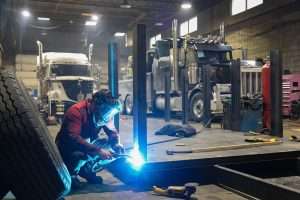 Yet, increasingly, transport professionals are finding themselves frustrated – or downright enraged – by the standards and accountability (or lack thereof) of main dealer HGV workshops. This isn’t just an angry outburst; it’s a long-overdue call for scrutiny, reform, and transparency. This blog was born from years of collective head-shaking, MOT failures that defy logic, and customer service that falls spectacularly short of professional.
Main dealer HGV workshops have traditionally held a reputation for reliability, bolstered by manufacturer backing and large-scale operations. However, many fleet operators and transport managers are now asking: is that reputation still deserved? Why are MOT fails rising under their watch? Why do internal audits paint a picture of perfection that falls apart under DVSA inspection? And most crucially, why are main dealers seemingly untouchable while the legal and professional consequences fall squarely on transport managers and business owners?
The truth behind this HGV workshop rant is not just a vent; it’s a spotlight. Aimed at unearthing the hard facts, sharing real-life frustrations, and opening the floor for much-needed industry change, this blog is your no-holds-barred guide to what’s going wrong – and what needs to be done about it.
First a quick plug – Our sister companies Fresh Pharma whom are GDP Compliant Pharma couriers and ‘Fresh Fridge Hire‘ are our (compliant GDP) refrigerated vehicle hire.
3 Key Takeaways:
- Transparency in workshop performance would raise national standards.
- IRTEC and DVSA are the right bodies to lead this initiative.
- Open data empowers safer, smarter transport operations.
Who’s Maintaining Your Fleet? Independents vs In-House vs Main Dealer HGV Workshops
Choosing who maintains your fleet is not just a matter of cost or convenience. It’s a decision that can significantly impact your legal compliance, vehicle safety, and operational efficiency. The three primary options are independent workshops, in-house teams, and main dealer HGV workshops. Each comes with its own set of advantages and drawbacks – and understanding these nuances is key to making an informed choice. Smaller firm maybe capable to DIY LGV Maintenance have a read of must read blog.
Independent Workshops: Often local, agile, and highly customer-focused, independents typically offer more flexible scheduling and a personalised service. Their survival depends on repeat business and reputation, so many go above and beyond to ensure high standards. Pricing is often more competitive, and transparency is generally stronger. However, not all independents have access to the latest diagnostic tools or training, especially for newer models. Ensuring an independent is IRTEC-certified and has strong MOT pass rates is essential.
In-House Maintenance Teams: Larger operators may opt to keep maintenance internal. This allows for full oversight, consistent standards, and quicker turnaround times. The downside is the significant upfront investment in facilities, equipment, and skilled personnel. For those who can afford it, this route offers ultimate control – but requires robust management and ongoing training investment.
Main Dealer HGV Workshops: These are often perceived as the gold standard. Backed by the manufacturer, they have access to OEM parts, cutting-edge diagnostic tools, and supposedly the best-trained technicians. But reality often paints a different picture. Booking lead times can be long, communication poor, and standards inconsistent. While their invoices come at a premium, the value returned – in terms of quality and compliance – is increasingly under scrutiny.
Comparison Table: HGV Maintenance Providers
| Criteria | Independent Workshop | In-House Maintenance | Main Dealer Workshop |
| Cost | Low to Moderate | High Initial, Lower Long-Term | High |
| Flexibility | High | High | Low |
| Access to OEM Tools | Limited | Depends on Investment | Full |
| Technician Training | Variable | Internal Control | Manufacturer-led |
| MOT Pass Rate (Typical) | Transparent, Variable | Controlled Internally | Claimed High, Reality Mixed |
| Customer Service | Often Personalised | Fully Internalised | Often Poor |
| Accountability & Oversight | Direct | Fully Controllable | Often Diffused |
Ultimately, the key message is this: don’t assume main dealer equals better. Do your due diligence. Request MOT pass rates. Ask tough questions about accountability. And remember – the legal responsibility always falls back to you, not the workshop.
Every MOT Fail in 3 Years – Courtesy of Main Dealer HGV Workshops!
When a fleet vehicle fails its MOT, it’s more than an inconvenience. It’s a compliance issue, a legal risk, and a potential red flag on your Operator Compliance Risk Score (OCRS). Now imagine if every single MOT fail across a three-year period came from vehicles supposedly maintained by the same main dealer workshop. That’s not coincidence. That’s systemic failure.
This is not a hypothetical scenario. Real-world fleet managers have documented patterns of MOT failures on vehicles with full, supposedly “dealer-standard” maintenance records. From minor defects like bulbs and wipers to major issues with braking systems or emissions compliance, the failures are consistent, predictable, and utterly unacceptable.
So why does this happen? A few key issues crop up repeatedly:
- Superficial Inspections: Many dealer workshops appear to prioritise speed (profit) over depth (safety). Vehicles go through quick checks that miss critical wear or developing faults.
- Inadequate Pre-MOT Prep: Some dealers claim to have done a pre-MOT (cost c£500), yet DVSA inspections reveal faults that should have been obvious.
- Technician Accountability: The same name never appears twice. Who is actually inspecting the vehicle? Who is held responsible?
- Poor Internal Oversight: There seems to be little correlation between failed MOTs and any internal performance consequences.
Worse still, many operators are finding that when vehicles fail, they’re the last to know. Communication from the workshop is often slow, vague, or defensive if at all. Many times the MOT failure is discovered on the OCRS.. The blame is frequently shifted back to the fleet operator for “bringing it in too late” or “wear and tear” or DVSA examiner wanted to go home so failed the vehicle.
It’s not good enough. As a customer paying premium rates for dealer maintenance, you should expect a service that catches faults before they lead to failure. An MOT fail under these circumstances is not just a cost – it’s evidence of negligence.
In the sections to follow, we’ll dive deeper into why these failures continue unchecked, what should be happening instead, and how schemes like IRTE’s MPRS are starting to hold the worst offenders to account.
The Auditing Illusion: Why Main Dealer HGV Workshops Always “Pass”
There’s a dangerous contradiction at the heart of HGV maintenance in the UK: how can vehicles consistently fail MOTs, yet pass every internal workshop audit (safety) with flying colours? The answer lies in the illusory nature of many audit processes. For years, main dealer HGV workshops have relied on internal audits – often conducted by head office or manufacturer representatives – that focus more on form than function. These audits might tick all the compliance boxes: is there a signed job sheet? Are the tools calibrated? Is there a technician training log? But what they don’t seem to assess properly is actual mechanical performance and outcomes.
Transport managers often report the surreal experience of receiving a perfect audit score from a dealer one week, only to have multiple vehicles fail MOTs days later for issues that should have been detected. The inconsistency is not just frustrating – it’s dangerous and expensive.
Auditing
 Part of the problem is the nature of auditing itself. Internal audits tend to be heavily procedural, focused on paperwork and systems rather than outcomes. There is minimal incentive to flag deeper issues or admit non-compliance. In contrast, DVSA roadside checks and MOT inspections are outcome-based – they look at whether the vehicle is roadworthy in real-world conditions.
Moreover, the current audit system lacks transparency. Operators are rarely given access to meaningful data about how workshops perform over time. There’s no centralised comparison of pass/fail rates, technician performance, or customer satisfaction. As a result, dealers can continue to claim high standards while delivering sub-par work.
A truly effective audit system should include:
- Real-world MOT outcome tracking
- Technician-specific accountability
- Customer feedback mechanisms
- External, independent auditors
- Data transparency across the sector
Until such changes are adopted, the audit system will remain a smokescreen – one that benefits workshops more than operators, and does little to improve real-world safety or compliance.
When Things Go Wrong, It’s Always on the Transport Manager
Why Transport Managers Carry the Can, Even When Others Are Responsible for Service Quality
In the complex and demanding world of logistics and haulage, few roles are as scrutinised or burdened with responsibility as that of the Transport Manager (TM). When something goes wrong — a missed delivery, a compliance failure, a safety issue, or worse — the finger almost invariably points at the TM.
Is it real accountability
This happens even when the root cause lies elsewhere: poor maintenance by a third-party workshop, failure by drivers to report defects, or inadequate investment from senior management.
Transport Managers are held legally accountable under the terms of their Operator Licence, as stipulated by the Office of the Traffic Commissioner. This responsibility is not diluted by the involvement of subcontractors, depot managers, or directors. Whether or not a TM had direct control over an issue, they are expected to have had the oversight and systems in place to prevent or catch it. In practice, this can be wildly unrealistic, especially in underfunded or stretched operations.
Let’s consider an example.
A vehicle is stopped at a DVSA checkpoint and found to have defective brakes. The TM had signed off on inspections completed by a third-party garage. The inspection sheet appeared compliant, but clearly, the job had been done poorly. Despite this, it is the TM who faces investigation, not the technician who ticked the boxes. The Traffic Commissioner will question whether the TM carried out sufficient oversight or audits, even if they were never given the time or budget to do so.
| Scenario | Root Cause | Who Gets Blamed |
| Vehicle defect missed | Third-party garage oversight | Transport Manager |
| Late delivery | Traffic or planning failure | Transport Manager |
| Driver hours breach | Driver did not follow advice | Transport Manager |
| Safety recall ignored | Director failed to act | Transport Manager |
This persistent scapegoating creates a toxic risk environment. Good TMs either leave the industry or become so risk-averse that they stifle efficiency. Those who remain are under pressure to perform miracles without the support, authority, or resources required to truly manage transport in a compliant and safe manner.
Transport Managers need to be empowered, not just blamed. Directors must recognise that delegating a legal responsibility does not remove their own accountability. Until the industry acknowledges the systemic causes of failure, TMs will continue to bear an unfair burden.
Directors and Due Diligence: “That’s What We Pay a Transport Manager For…”
Examining the Pressure on Transport Managers When Directors Shrug Off Legal Responsibility
The legal framework underpinning the UK’s transport operations is crystal clear: while Transport Managers have specific responsibilities for compliance, company directors and owners are also held accountable under the Operator Licensing system. However, in day-to-day operations, the reality is far murkier. All too often, directors view compliance as a “TM problem” and use the appointment of a TM as a shield against their own duties. This attitude not only undermines compliance but places impossible pressure on Transport Managers.
In hearings with the Traffic Commissioner,
One phrase crops up far too often from company directors: “That’s what we pay the TM for.” It’s a statement that reveals a fundamental misunderstanding of corporate responsibility. Directors have a duty to ensure adequate resources, systems, and culture to support compliance. This includes investment in proper maintenance, training, software, and staff. Simply paying a TM is not a get-out-of-jail-free card.
Take the case of a medium-sized operator where the TM raised concerns about outdated vehicles and insufficient workshop facilities. The directors declined to invest. A month later, a fatal incident occurs due to mechanical failure. The investigation reveals the TM had documented their concerns. While the TM is still held accountable, the directors are also found to have failed in their duty to support compliance.
| Duty | Who Holds It | Common Director Excuses | Reality |
| Ensure adequate facilities | Director | “TM should tell us what’s needed” | The director must act on advice |
| Fund training & systems | Director | “That’s not in our budget” | Ignorance is not an excuse |
| Monitor TM effectiveness | Director | “We trust the TM knows best” | Directors must oversee compliance |
The pressure on TMs becomes untenable when they are left to manage compliance with inadequate tools, poor internal communication, and little backing from above. In some cases, the TM may not even be a full-time employee but an external consultant working only a few hours a week. Expecting them to prevent every mishap in such scenarios is absurd.
To drive real change,
Directors must engage with the compliance process, not just delegate it. This includes attending compliance reviews, reading reports, and being proactive in resolving risks. The Traffic Commissioner is increasingly calling out directors who fail to act, and rightly so. Compliance must be a boardroom issue, not just a workshop one.
In summary, until directors take genuine ownership of their role in transport compliance, TMs will continue to face disproportionate accountability. A shift in mindset is overdue. Appointing a TM is a start – but it’s not the end of a director’s duty.
significantly expand each following section to at least 500 words, enhancing details, explanations, and tables for clarity. USE UK ENGLISH and examples….. no USA References . CHANGE all H1, H2, TO CONTAIN THE KEYPHRASE. IF H3 CAN BE USED WITHOUT SEEMING SPAMMY THAT’S GREAT….no line breaks…
Skills, Facilities & Process: The Real Workshop Metrics That Matter
When it comes to evaluating the performance and reliability of commercial vehicle workshops in the UK, most traditional systems focus heavily on compliance checklists and mandatory regulation adherence. However, this limited view fails to capture the true capabilities and day-to-day operations that determine whether a workshop genuinely upholds industry standards. This is where a more robust, outcomes-focused system like MPRS (Maintenance Performance Rating Scheme) steps in, offering a detailed analysis of workshop quality, not just paper-based compliance.
What MPRS Measures That Traditional Compliance Misses
Unlike conventional audits, MPRS does not merely check whether a box has been ticked. Instead, it evaluates the real-world impact of workshop practices. Key performance indicators include:
| Metric | Description | Example |
| MOT Pass Rate | The percentage of vehicles passing MOT on the first attempt | A workshop with 92% first-time pass rate is far more trustworthy than one with 68% |
| Rework Rate | Frequency of returns due to improper repairs | Low rework rates indicate precision and reliability |
| Rectification Time | Average time taken to correct faults after discovery | Faster times reflect better organisation and skilled workforce |
| Preventative Maintenance Failures | Vehicles failing due to issues that should have been caught during routine checks | High numbers here expose weak inspection routines |
These metrics focus not only on outcome but on the journey to those outcomes. MPRS thus promotes a culture of continuous improvement rather than one of box-ticking, encouraging workshops to invest in training, tools, and better operational discipline.
Why Skillsets and Equipment Shouldn’t Be Assumed
A workshop equipped with the latest diagnostic tools means nothing if the staff aren’t trained to use them effectively. MPRS audits look deeper into the competency of mechanics, the calibration of tools, and the consistency of processes. For example, it’s not enough for a workshop to own a brake tester; MPRS looks at whether it’s calibrated, how often it’s used, and whether technicians understand how to interpret results accurately.
A real-world case might involve a workshop that consistently records tyre tread depths incorrectly. Traditional compliance may never catch this, but MPRS will highlight it via pattern-based performance analysis.
MPRS, therefore, creates a performance narrative that is far more useful for fleet operators, safety officers, and compliance managers who want reliable, data-driven insights.
Voluntary Main Dealer HGV Workshop Standards: It’s Not About Regulation – It’s About Progress
The prevailing attitude in many sectors of the transport industry is that if something isn’t required by law, it isn’t worth doing. This mindset has led to widespread mediocrity in workshop practices across the UK. Yet, the most respected and high-performing workshops are not the ones doing the bare minimum to pass inspections. They are the ones proactively adopting voluntary schemes to push their standards beyond regulatory compliance.
Why Voluntary Accreditation Drives Quality
Voluntary schemes like MPRS, IRTEC technician accreditation, or FORS (Fleet Operator Recognition Scheme) demonstrate a commitment to excellence. Participation in these programmes isn’t mandated by law, but the workshops and operators that engage with them often outperform their counterparts in safety, reliability, and customer satisfaction.
By embracing voluntary standards, workshops signal that they view compliance as the floor, not the ceiling. They pursue benchmarking, peer reviews, and third-party inspections not because they have to, but because they want to learn and improve. This forward-thinking approach benefits the entire industry.
| Scheme | Focus | Benefit |
| MPRS | Workshop performance analytics | Promotes data transparency and service quality |
| IRTEC | Technician skills certification | Ensures individual competency and upskilling |
| FORS | Fleet and operational management | Enhances road safety and environmental impact |
How Voluntary Progress Elevates the Industry
Consider an operator who chooses to undergo IRTEC accreditation for all their technicians. This creates a competitive advantage, not just in tendering but also in safety outcomes. Drivers report fewer mechanical issues, service managers spend less on rework, and fleet downtime decreases.
Voluntary standards also encourage a more cooperative industry culture. Rather than hiding poor practices or fearing inspection, workshops begin to share best practices, tools, and techniques. This shift from secrecy to transparency drives faster innovation and collective improvement.
Ultimately, it’s about mindset. Regulation will always lag behind innovation. Workshops that chase progress, not compliance, become industry leaders.
Why MOT Pass Rates Should Be Publicly Available Data from all and Main Dealer HGV Workshops
In the current UK workshop environment, there’s little visibility for the end-user into how well a workshop actually performs. MOT pass rates, rework frequencies, and fault rectification stats are closely guarded or non-existent in the public domain. This opacity harms customers and perpetuates low standards. Publicising MOT pass rates could be a simple yet powerful way to improve accountability and empower informed decision-making.
The Case for Transparency
When MOT pass rates are made publicly available, fleet operators, vehicle owners, and even insurers gain an invaluable tool for assessing workshop competence. For instance, two workshops might both be approved to conduct HGV MOT prep. But one has a pass rate of 95%, and the other lingers at 63%. Without access to that data, customers make blind choices.
Transparency compels underperforming workshops to improve. No one wants to be seen as the weakest link, and reputational risk becomes a motivator for change. Conversely, high performers are rewarded with trust and increased business.
| Workshop | Pass Rate | Inferred Quality |
| ABC Ltd. | 96% | Highly skilled, thorough inspections |
| XYZ Services | 72% | Likely to miss key faults or cut corners |
Learning from Existing Models
The DVSA already publishes Operator Compliance Risk Scores (OCRS) for fleets, which informs roadside enforcement priorities. A similar framework for MOT centres could follow this precedent. Making this data available through an online portal would support procurement decisions, risk management, and ultimately road safety.
Public performance data would also encourage investment in technician training, better equipment, and process improvement. If workshops know their outcomes are visible, the internal conversation shifts from “What can we get away with?” to “How can we be the best?”
Making MOT pass rates public is not about punishment – it’s about improvement, fairness, and elevating the entire industry.
The “Headlight Discount” Main Dealer HGV Workshop: When Discounts Don’t Equal Solutions
It’s a scenario that’s all too common across fleet workshops in the UK. A vehicle rolls in with a known issue—let’s say a misaligned or malfunctioning headlight. The driver logs the defect correctly. The job gets authorised. The workshop takes the vehicle in, and then… a miracle happens. The issue is marked as resolved in record time, often without any diagnostic work done. The customer, sometimes reassured by the workshop’s quick turnaround and perhaps even offered a “discount”, assumes all is well. But within days, the fault reappears. Worse yet, it was never actually rectified in the first place.
Classic Scenario within a Main Dealer HGV Workshop
This is the classic “headlight discount” fail—a metaphor for workshops cutting corners or pacifying complaints with cost reductions rather than delivering genuine fixes. It’s a deceptive tactic that frustrates operators and undermines confidence in the industry. The discount isn’t really a bonus; it’s a band-aid to cover poor service.
Let’s break it down with an example rooted in reality. A logistics company based in the Midlands sends in a vehicle with an offside headlamp pointing too low. A safety concern, and an MOT failure item if not addressed. The vehicle returns from the workshop the same day. The invoice states: “Headlight checked and realigned. Discount applied – customer goodwill.” The technician’s notes? Minimal. No record of what equipment was used. No before-and-after photos. Within three days, another driver reports the same issue. This time, it goes to a different, more rigorous independent workshop. They discover the bracket is cracked—realignment was never going to fix it.
This example underlines several core issues:
- Poor documentation and accountability.
- Prioritising speed and cost-savings over correct diagnosis.
- Lack of proper technician training or motivation.
Here’s a simple comparison to illustrate the gap between workshops:
| Aspect | Poor Workshop Practice | Good Workshop Practice |
| Defect Resolution | Quick fixes, superficial checks | Thorough diagnostics and root-cause fixes |
| Documentation | Sparse notes, unclear outcomes | Full job cards, photographic evidence |
| Customer Handling | Discount offered, issue unresolved | Honest feedback, full repair completed |
| Technician Expertise | Inadequate training, rushed jobs | Certified, skilled staff |
Lack of Main Dealer HGV Workshop Consequences Means No Standards in the UK Transport Sector
One of the most pressing issues plaguing fleet maintenance across the UK is the absence of public workshop performance data. While transport operators are scrutinised through regular DVSA checks, OCRS scores, and potential Traffic Commissioner investigations, the workshops they depend on to maintain vehicle safety are subject to far less oversight—and even less transparency.
This lack of consequences leads to a dangerous level of complacency. Main dealer workshops, in particular, often carry an assumption of inherent trustworthiness, yet many fail to meet basic standards for diagnostic accuracy, repair quality, or timely turnaround. Because there’s little to no risk of reputational damage—no star ratings, public performance records, or mandatory reporting—there’s minimal pressure to improve.
In practice, this results in issues such as:
- Repeat defects being ignored.
- MOT advisories unaddressed.
- Paperwork being manipulated to “look right” on audits.
- Warranty work rejected due to poor record-keeping.
To illustrate the gap, let’s consider a main dealer in South Yorkshire. Despite repeated complaints from fleet clients about unresolved brake issues and poor customer service, the workshop continues to win service contracts. Why? Because there is no open-access data or feedback platform where operators can warn others. And even when complaints are raised directly to the manufacturer, responses are slow and protective, prioritising brand image over operator safety.
Imagine if every DVSA-approved workshop was scored on key metrics—first-time fix rates, turnaround time, audit compliance, and customer feedback—and those scores were publicly visible. Suddenly, workshops would be held to a standard that matters.
What Good Main Dealer HGV Workshop in the UK Transport Sector Do Differently
Amidst the frustration, there’s hope. Across the UK, there are standout workshops—independents and in-house operations alike—that are doing things right. These are the unsung heroes of fleet maintenance: the ones who care not just about ticking boxes, but about truly ensuring vehicle safety and longevity.
What sets them apart?
- Diagnostic Diligence: Good workshops go beyond the obvious. If a driver reports uneven tyre wear, they don’t just swap the tyres—they check alignment, bushes, and suspension geometry. They understand that treating the symptom without addressing the cause is a waste of everyone’s time.
- Skilled, Certified Technicians: These workshops invest in their staff. Many insist on ongoing IRTEC certification or equivalent technical development. They conduct regular toolbox talks, encourage fault replication during test drives, and take pride in their findings.
- Real-Time Communication with Operators: Good workshops don’t wait for the end of the day to report delays. They use WhatsApp, workshop management software like FleetCheck or r2c, and proactively share updates. This transparency reduces downtime and builds trust.
- Quality Over Quantity: The best operations limit their intake so they can spend the right amount of time on each vehicle. They’re not chasing volume at the cost of quality. If something needs to stay overnight to be safe, they’ll say so.
- Data-Driven Reporting: They document their work thoroughly. Job cards are completed with precision. Photos and fault codes are shared. Audits are a breeze, and operators don’t have to chase paperwork for compliance reports.
Here’s how they compare Main Dealer HGV Workshops:
| Feature | Poor Workshop | Good Workshop |
| Technician Training | Minimal, ad hoc | Certified, ongoing development |
| Communication Style | Passive, delayed | Proactive, transparent |
| Diagnostic Process | Reactive, checklist-based | Analytical, root-cause driven |
| Customer Relations | Dismissive, transactional | Supportive, long-term focused |
| Job Documentation | Incomplete or vague | Clear, comprehensive |
IRTEC & DVSA Must Mandate Transparent Workshop Data Across UK Fleets
For the UK transport industry to evolve, industry bodies like IRTEC and the DVSA need to take decisive action. One of the most impactful changes they could lead is the mandatory publication of workshop performance data. Just as operators are held accountable through compliance scores and audits, workshops must also be measured and compared.
Imagine an open-access dashboard where fleet operators could see how workshops performed across key KPIs: first-time fix rates, defect recurrence, MOT pass rate history, technician certification status, and customer satisfaction scores. This would revolutionise how operators choose their maintenance partners and push underperforming garages to raise their game.
Currently, there is little incentive for workshops to change. Many operate in an echo chamber—only responding when something goes catastrophically wrong. And for operators, there’s no easy way to tell whether the workshop that just quoted them £2,500 for a gearbox replacement is actually any good.
IRTEC and DVSA are perfectly positioned to lead this shift. They already have the credibility and reach. The groundwork could begin with pilot schemes where approved workshops voluntarily submit data. Over time, transparency could be tied to accreditation status.
A phased approach might look like this:
- Phase 1: Voluntary Reporting – Workshops submit performance KPIs via IRTEC or DVSA portal.
- Phase 2: Verified Auditing – Independent audits validate submitted data annually.
- Phase 3: Public Dashboards – Data is made available to operators through a central portal.
- Phase 4: Compliance-Based Incentives – High-performing workshops get fast-track approvals or insurance discounts.
Other sectors have done it. Think of the food hygiene “Scores on the Doors” system. Why shouldn’t the fleet maintenance sector have its equivalent?
Final Thoughts on Main Dealer HGV Workshop Standards: The Rant is Over, But the Campaign Continues
So here we are. After the frustrations, failures, and wishful thinking, we end with a call to arms—not a complaint, but a commitment. The UK transport sector is full of dedicated professionals, but it’s let down by opaque systems, inconsistent workshop standards, and a lack of public accountability.
Every operator has a story. The job that wasn’t done. The invoice that didn’t match the work. The technician who shrugged. And yet, for every one of those, there’s a positive story too. A workshop that went the extra mile. A mechanic who caught a serious fault before it became dangerous. A fleet manager who refused to cut corners.
Change doesn’t start with policy. It starts with people. If you’re reading this, you’re probably someone who gives a damn. And that matters.
Let’s keep pushing—through trade associations, networking groups, LinkedIn posts, or even open letters to the DVSA. Support good workshops and call out bad ones. Demand better data, better training, and better accountability.
Closing on a positive but firm note, urging others in transport to push for change.
LGV Maintenance
- What is a main dealer garage?
A main dealer garage (also called a franchised dealer) is a workshop authorised by a vehicle manufacturer, such as Ford Motor Company, Volkswagen Group or BMW.
They:
- Use manufacturer-approved parts and diagnostic tools
- Follow official service schedules
- Employ brand-trained technicians
- Can carry out warranty repairs and software updates
They usually cost more than independent garages.
- How often does an HGV need to be serviced?
For HGVs (Heavy Goods Vehicles):
- Typically every 6–8 weeks or every 6,000–10,000 miles (varies by use and manufacturer)
- Must also have:
- Daily walk-around checks
- Regular safety inspections
- Annual MOT (HGV test) via DVSA
Operators must keep full maintenance records to stay compliant with their Operator’s Licence.
- How much do main dealers charge per hour in the UK?
Typical 2026 labour rates:
- £100–£180 per hour (higher in London and for premium brands)
- Prestige brands (e.g., Mercedes-Benz or Audi) can exceed £180/hr
Independents often charge £50–£90 per hour.
- Is it worth getting a service done with a main dealer?
Pros:
- Protects manufacturer warranty
- Official digital service record
- Software updates included
- Better for newer/premium cars
Cons:
- Higher cost
- Not legally required for warranty (see below)
For cars under warranty or nearly new, dealer servicing can help resale value. For older cars, a reputable independent is usually more cost-effective.
- Does “full service history” have to be main dealer?
No.
A Full Service History (FSH) simply means:
- All scheduled services completed
- Done at correct intervals
- Properly documented
It can be:
- Main dealer
- Independent VAT-registered garage
- Specialist
Main dealer history may increase resale value slightly, especially for prestige cars.
- Why are dealership garages so expensive?
Because they have:
- Brand-trained technicians
- Manufacturer diagnostic systems
- Higher premises/showroom overheads
- Genuine OEM parts pricing
- Warranty administration costs
- Due to scarcity artificially creating high demand Vs supply
You’re partly paying for brand backing and facilities.
- Does doing my own maintenance void my warranty?
No — not automatically.
Under UK consumer law (post-Brexit rules similar to former EU Block Exemption):
- You do not have to use a main dealer.
- You must:
- Follow manufacturer service schedule
- Use correct-spec parts and fluids
- Keep receipts and records
However, if your DIY work causes damage, that repair won’t be covered.
- Do I have to go to the main dealer for service?
No.
As long as:
- The garage follows manufacturer guidelines
- Uses equivalent quality parts
- Records the service properly
Your warranty remains valid but the main dealer will not like it.
- How long is too long for a vehicle to be in the main dealer?
Typical expectations:
- Routine service: 1 -3 day
- Major repair: 2–20 days
- Parts delay/backorder: 1–6+ weeks (often happens)
If:
- You’ve had no updates for several days
- They can’t give a completion estimate
- The car sits untouched
You’re entitled to ask for progress updates and reasonable completion time under the Consumer Rights Act.
- Can you legally service your own vehicle in the UK?
Yes.
You can legally:
- Change oil & filters
- Replace brakes
- Carry out routine servicing
You must:
- Dispose of waste oil properly
- Ensure the vehicle remains roadworthy
- Keep service records
For leased, financed, or warranty vehicles, check contract terms first.

Alan is the Founder and MD at the Fresh Group of companies. You are welcome to use any information you find interesting. Please give us a link back to our webpage or post. It really helps SME’s rank in the UK.