

Accessible public transport
Ensuring Accessible Public Transport Travel for Disabled Passengers: Reporting Issues in the UK
As a disabled MD, this blog is not directly relevant to our business but it will be to our customers, suppliers and staff,  Accessible public transport is essential for independence, dignity, and equal participation in society. Across the United Kingdom, disabled passengers rely on buses and coaches for work, education, healthcare, and social connections. When Accessible public transport functions properly, it removes barriers and promotes confidence. When it fails, it can cause distress, delay, and discrimination. UK legislation places clear duties on operators to provide suitable equipment and reasonable assistance. These duties are not optional. They form part of enforceable national regulations. Many vehicles now include low floors, ramps, wheelchair spaces, visual displays, and audible announcements. Drivers must also provide assistance when it is safe to do so. However, compliance is not universal. Some services still fall below expected standards. Knowing how to challenge these failures is vital. Disabled passengers have the right to expect safe and accessible public transport at all times. Reporting issues ensures that operators remain accountable. It also strengthens enforcement efforts by regulators. Our Managing Director understands these realities personally. He is disabled and leads by example. His blog shares experiences of building successful companies while navigating accessibility challenges. His insights demonstrate resilience and practical leadership. They also reinforce why Accessible public transport matters for business, employment, and everyday independence. Everyone benefits when transport systems are inclusive and dependable.
First a quick plug – Our sister companies Fresh Pharma whom are GDP Compliant Pharma couriers and ‘Fresh Fridge Hire‘ are our (compliant GDP) refrigerated vehicle hire.
Ensuring Accessible public transport Travel for Disabled Passengers: 3 Key Takeaways
Accessible public transport Travel for Disabled Passengers depends on awareness, enforcement, and active reporting. The following table summarises the most important principles.
| 3 Key Takeaways | Description |
| Know Your Rights | Disabled passengers are legally entitled to accessible features on buses and coaches. These include ramps, wheelchair spaces, priority seating, audio-visual information, and driver assistance when required. Operators must comply with national accessibility regulations at all times. |
| Report Accessibility Failures | Passengers can report non-compliance to the Driver and Vehicle Standards Agency. Examples include broken ramps, refusal of assistance dogs, unsafe aisles, or drivers declining boarding assistance. Clear reporting supports investigation and enforcement. |
| Your Voice Drives Change | Each report strengthens accountability. Regulatory bodies rely on passenger evidence to identify patterns of non-compliance. Reporting improves standards and protects future travellers. |
Accessible public transport Travel for Disabled Passengers improves when passengers feel confident challenging poor service. Evidence-based reporting creates measurable improvement. It also ensures operators understand that accessibility is mandatory, not discretionary.
Recognising Accessible Issues
Understanding what constitutes a failure in Accessible public transport Travel for Disabled Passengers is crucial. Many issues relate to equipment malfunction or inadequate staff support. Others involve attitude or procedural neglect. The enforcing authority is the Driver and Vehicle Standards Agency. This body monitors compliance with national accessibility standards.
Common accessibility failures include:
- Drivers refusing boarding assistance without valid safety reasons.
- Non-functioning ramps or mechanical lifts.
- Wheelchair spaces blocked by luggage or prams.
- Refusal to carry recognised assistance dogs.
- Missing or poorly marked priority seating.
- Obstructed gangways creating unsafe movement.
- Broken stop request buttons within wheelchair spaces.
- Inadequate audio or visual route information displays.
For example, a broken ramp on a rural bus route can prevent employment access. A driver ignoring an assistance request can create anxiety and humiliation. These situations are not minor inconveniences. They may constitute breaches of statutory duties. Recognising these failings ensures that Accessible public transport Travel for Disabled Passengers remains protected by law. Detailed observation strengthens any subsequent report.
How to Report Issues
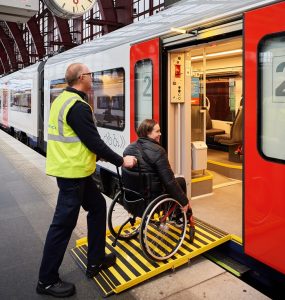 If Accessible public transport Travel for Disabled Passengers standards are not met, prompt reporting is essential. Accurate information increases the likelihood of effective investigation. Begin by recording the date, time, route number, and vehicle registration if possible. Note the operating company and the names of the boarding and alighting stops. Briefly describe what occurred and who was involved. Keep statements factual and concise.
Reports can be submitted online to the Driver and Vehicle Standards Agency. Contact details are optional but recommended. Providing contact information allows investigators to request clarification. Supporting evidence such as photographs may assist.
If the operator fails to resolve concerns directly, further assistance is available. Bus Users UK supports passengers across England outside London, Scotland, and Wales. London TravelWatch handles complaints within Greater London. The Travel Access Complaints Service offers specialist guidance for disabled passengers in England and Wales.
Reporting ensures Accessible public transport Travel for Disabled Passengers remains enforceable. Each documented complaint strengthens regulatory oversight. Consistent action encourages operators to prioritise compliance, staff training, and equipment maintenance.
Ensuring Accessible public transport Travel for Disabled Passengers: Legal Framework and Importance of Reporting
Accessible public transport Travel for Disabled Passengers is governed by the Public Service Vehicles Accessibility Regulations 2000. These regulations set mandatory technical standards for buses and coaches. Requirements include low floors, wheelchair spaces, handrails, colour-contrasted steps, and accessible information systems. Operators failing to comply may face enforcement action. The DVSA can issue improvement notices or pursue penalties.
The legal framework reflects the broader equality principles embedded within UK legislation. Accessibility is not optional customer service. It is a statutory right. Reporting failures protects these rights. It also creates data for monitoring trends and persistent offenders.
When passengers report incidents, they influence systemic improvement. Patterns of complaints may trigger inspections or targeted enforcement. Improved training often follows sustained reporting. This leads to better driver awareness and operational consistency.
Accessible public transport Travel for Disabled Passengers strengthens employment access and social inclusion. It reduces isolation and supports economic participation. Every report contributes to safer and fairer transport networks. Individual action therefore creates collective progress.
Ensuring Accessible public transport Travel for Disabled Passengers: Conclusion
Ensuring Accessible public transport Travel for Disabled Passengers requires vigilance, accountability, and informed action.  Accessibility is not a courtesy. It is a legal and moral obligation embedded within UK transport policy. When buses and coaches meet required standards, disabled passengers travel with dignity and confidence. When they fail, independence can be restricted. That restriction affects employment, healthcare access, education, and social participation.
Passengers must feel empowered to speak up. Clear reporting strengthens enforcement by the Driver and Vehicle Standards Agency. It also signals to operators that accessibility failures will not be ignored. Each report contributes to improved driver training, better vehicle maintenance, and stronger compliance monitoring. Small individual actions can produce lasting systemic change.
Accessible public transport Travel for Disabled Passengers benefits everyone, not only disabled travellers. Parents with pushchairs, older passengers, and temporary injury sufferers all gain from inclusive design. Reliable accessibility supports community cohesion and economic resilience. It reflects a society committed to fairness and equality.
By understanding your rights and using established complaint channels, you actively protect transport standards. You also support future passengers who may face similar barriers. Progress depends on awareness and consistent enforcement. Accessible public transport must remain safe, dependable, and genuinely inclusive across the United Kingdom.
Disability
- What are the 4 types of accessibility?
Commonly defined as:
- Physical accessibility – ramps, lifts, wheelchair space
- Sensory accessibility – braille, audio announcements
- Cognitive accessibility – simple signage, easy-read formats
- Digital accessibility – accessible websites and apps
- How to travel when you're disabled?
Steps that help:
- Plan ahead (check step-free routes online)
- Use Passenger Assist for rail
- Apply for relevant travel concessions
- Allow extra time for transfers
- Use accessible taxi or community transport if needed
Apps like National Rail Enquiries and TfL journey planner show step-free options.
- What is public transport accessibility?
Public transport accessibility means transport services are usable by everyone, including people with:
- Mobility impairments
- Visual or hearing impairments
- Learning disabilities
- Neurodivergent conditions
- Hidden disabilities
Accessibility includes:
- Physical access (ramps, lifts)
- Clear signage
- Audio announcements
- Staff training
- Affordable fares
- Can a disabled person get free train travel?
Not automatically free nationwide — but there are concessions:
🚆 Disabled Persons Railcard
With a Disabled Persons Railcard:
- 1/3 off rail fares
- A companion can also get 1/3 off
- Costs £20 per year (or £54 for 3 years)
Free bus travel
In England, eligible disabled people can apply for a Disabled Person’s Bus Pass for free off-peak bus travel.
In Scotland & Wales, similar schemes exist with broader free travel rights.
- How do disabled people use public transport?
Disabled people in the UK use public transport with support provided under the Equality Act 2010. Common features include:
- Step-free access (ramps, lifts, level boarding)
- Priority seating
- Audio-visual announcements
- Staff assistance
- Wheelchair spaces on buses and trains
- Passenger Assist booking for rail journeys
Most train operators (e.g. National Rail services) provide Passenger Assist, which can be pre-booked or requested on the day at staffed stations.
- What are examples of accessibility?
Examples include:
- Wheelchair ramps
- Induction loops for hearing aids
- Large-print timetables
- Step-free train platforms
- Accessible ticket machines
- Priority seating
- Visual and audio announcements
- What are the 4 types of transportation?
- Road (bus, car, taxi, coach)
- Rail (train, tram, metro)
- Water (ferry, boat)
- Air (airplane)
- What is the most common ADA violation?
Under the Americans with Disabilities Act (ADA) (US law), the most common violations include:
- Inaccessible entrances
- Lack of accessible toilets
- No ramps or incorrect ramp gradients
- Missing signage
(UK equivalent protection comes under the Equality Act 2010.)
- What are the barriers for disabled people in transport?
Common barriers include:
- Lack of step-free access
- Broken lifts
- Poorly trained staff
- Inconsistent assistance
- Cost of taxis when access fails
- Crowded services
- Lack of real-time information
Hidden disabilities often face attitudinal barriers rather than physical ones.
- How to apply for a Disabled Persons Railcard?
Apply via:
- The official Disabled Persons Railcard website
- Provide proof of eligibility (e.g. PIP, DLA, Attendance Allowance, Blue Badge)
- Upload evidence online or apply by post
Processing usually takes around 5 working days (online applications).
- Who is eligible for Dial-a-Ride?
Dial-a-Ride is for people who:
- Cannot use mainstream public transport due to disability
- Have a long-term physical or mental health condition
In London, this service is operated by Transport for London (TfL). Eligibility requires an application and assessment.
- What are the three types of accessibility?
Sometimes grouped as:
- Attitudinal accessibility (staff awareness & equality)
- Environmental accessibility (physical space)
- Communication accessibility (information formats)


Skills Gap in Logistics and How to Bridge It.
The Skills Gap in Logistics: Bridging the Divide
 Logistics is the backbone of every industry, ensuring the timely delivery of goods and services. However, the industry is facing a severe shortage of skilled workers, leading to a widening skills gap. The UK logistics industry has been struggling to attract and retain qualified workers, which is creating major challenges for businesses. This blog will explore the causes of the skills gap in logistics and discuss possible solutions to address this problem.
First a quick plug – Our sister companies Fresh Pharma whom are GDP Compliant Pharma couriers and ‘Fresh Fridge Hire‘ are our (compliant GDP) refrigerated vehicle hire.
The Current State of the Logistics Industry in the UK
The logistics industry is a vital part of the UK economy, contributing approximately £124 billion annually. However, the industry is facing a significant shortage of skilled workers, with an estimated shortfall of 59,000 workers by the end of 2023. This shortage is causing significant challenges for businesses in the industry, such as delayed deliveries and increased costs.
Causes
Several factors are contributing to the skills gap in the logistics industry. Some of the main causes include:
Lack of Awareness
Many young people are unaware of the opportunities available in the logistics industry. The industry is often viewed as old-fashioned and unattractive, leading to a lack of interest from potential candidates.
Ageing Workforce
The logistics industry has an ageing workforce, with a significant number of workers over the age of 50. As these workers retire, there is a shortage of younger workers to replace them.
Low Wages
The logistics industry has traditionally offered low wages, which makes it difficult to attract and retain skilled workers. The industry needs to offer competitive wages to attract and retain qualified workers.
Lack of Training
Many logistics companies do not provide adequate training and development opportunities for their employees. This lack of investment in training and development leads to a skills gap, as workers do not have the necessary skills to perform their jobs effectively.
Solutions to Address
Some of the main solutions include:
Raising Awareness
More needs to be done to raise awareness of the opportunities available in the logistics industry. This can be achieved by promoting the industry to young people through schools and colleges.
Offering Competitive Wages
The logistics industry needs to offer competitive wages to attract and retain skilled workers. This can be achieved by increasing wages and offering other benefits, such as flexible working hours and career development opportunities.
Providing Training and Development Opportunities
Logistics companies need to invest in training and development opportunities for their employees. This will help to develop a skilled workforce and ensure that workers have the necessary skills to perform their jobs effectively.
Promoting Diversity and Inclusion
The logistics industry needs to promote diversity and inclusion to attract a wider pool of candidates. This can be achieved by implementing policies that promote diversity and inclusion, such as flexible working hours and equal pay.
Automation and Technology
The logistics industry can also address the skills gap by investing in automation and technology. This will help to reduce the reliance on human workers and ensure that the industry remains competitive.
The Skills Gap in Logistics: Bridging the Divide
Logistics plays a pivotal role in facilitating the timely delivery of goods and services across industries. However, the UK logistics sector is grappling with a critical shortage of skilled workers, exacerbating operational challenges for businesses. This blog explores the root causes of the skills gap in logistics and proposes actionable solutions to mitigate its impact.
The Current State of the Skills Gap in Logistics in the UK
The logistics industry is a cornerstone of the UK economy, contributing approximately £124 billion annually. Despite its significance, the sector faces a looming shortfall of skilled workers, projected to reach 59,000 vacancies by 2023. This shortage undermines efficiency, leading to delayed deliveries and increased operational costs for businesses nationwide.
Causes of the Skills Gap
Several factors contribute to the widening skills gap in the logistics industry:
Lack of Awareness
Many young individuals are unaware of the career opportunities available within logistics, perceiving the industry as outdated or unappealing. This lack of awareness deters potential candidates from pursuing careers in logistics, perpetuating the skills shortage.
Ageing Workforce
The logistics sector grapples with an ageing workforce, with a substantial portion of employees aged 50 and above. As these experienced workers retire, there is a limited pipeline of younger talent to replenish their roles, exacerbating the skills deficit.
Low Wages
Historically, the logistics industry has offered lower wages compared to other sectors, making it challenging to attract and retain skilled professionals. Addressing wage competitiveness is crucial for attracting new talent and reducing turnover rates.
Insufficient Training Opportunities
Many logistics firms fail to invest adequately in training and development programs for their workforce. This deficit in skills training leaves employees ill-equipped to handle modern logistics challenges, perpetuating the skills gap.
Solutions to Address the Skills Gap
To mitigate the skills gap in logistics, industry stakeholders can implement several strategic initiatives:
Raising Awareness
Efforts should focus on promoting logistics careers through educational institutions and vocational training programs. Highlighting the industry’s technological advancements and career growth opportunities can attract a diverse pool of talent.
Offering Competitive Compensation
Enhancing wage structures and benefits packages can make logistics careers more attractive to skilled professionals. Competitive salaries, along with incentives like flexible working arrangements and career advancement prospects, can bolster retention rates.
Providing Training and Development
Investing in robust training and development initiatives is essential for upskilling existing employees and preparing them for evolving industry demands. Continuous professional development enhances workforce competency and adaptability.
Promoting Diversity and Inclusion
As a disable MD of a logistics business, embracing diversity and inclusion practices fosters a supportive workplace culture and attracts talent from diverse backgrounds. Policies promoting equal opportunity, flexible work arrangements, and inclusive recruitment practices can enhance workforce diversity.
Embracing Automation and Technology
Deploying advanced technologies and automation solutions can optimise operational efficiency and reduce dependency on manual labour. Embracing digital transformation enables logistics firms to streamline processes and remain competitive in a rapidly evolving market.
The Impact of the Skills Gap on the Logistics Industry
In today’s rapidly evolving logistics landscape, the skills gap presents a formidable challenge to industry players. This phenomenon refers to the mismatch between the skills required by employers and those possessed by the available workforce. For the logistics sector, this gap manifests in several critical ways, each exerting profound implications on businesses and their operational strategies.
Reduced Competitiveness and Operational Efficiency
One of the most pressing issues stemming from the skills gap in logistics is reduced competitiveness. Companies grappling with unfilled positions often find themselves at a disadvantage compared to their peers who have fully staffed teams. The inability to recruit and retain qualified personnel impedes operational efficiency. Tasks that require specialised skills may be delayed or compromised, impacting service delivery and customer satisfaction.
High Turnover Rates and Workforce Stability
Another significant consequence of the skills gap is the prevalence of high turnover rates within logistics companies. Difficulty in retaining skilled workers exacerbates the problem, leading to a revolving door of employees. This instability not only disrupts day-to-day operations but also hampers long-term workforce planning. Training new hires to fill the gaps left by departing employees adds to the workload and costs, further straining resources.
Impact on Operational Costs and Budget Allocation
Addressing the skills gap comes at a considerable financial cost for logistics firms. Investments in recruitment efforts, training programs, and competitive compensation packages are necessary to attract and retain skilled talent. These expenditures contribute to increased operational costs, squeezing profit margins and requiring careful budget allocation. Moreover, the financial burden extends beyond direct expenses to include indirect costs associated with productivity losses and operational inefficiencies caused by skill shortages.
Strategies to Mitigate the Skills Gap
To combat the challenges posed by the skills gap, logistics companies are adopting proactive strategies:
1. Investing in Training and Development
Recognizing the importance of upskilling and reskilling, firms are investing in robust training programs. These initiatives aim to bridge the gap between existing skills and industry demands, empowering employees with the knowledge and competencies needed to thrive in a dynamic environment.
2. Enhancing Recruitment Efforts to reduce the Skills Gap in Logistics
Improving recruitment practices is essential for attracting top talent. Logistics companies are refining their hiring processes to target candidates with the right skill sets and cultural fit. Leveraging technology and partnering with educational institutions help expand the talent pool and streamline the selection process.
3. Fostering a Culture of Continuous Learning
Promoting a culture that values continuous learning and professional development is crucial. Encouraging employees to pursue further education, certifications, and skills enhancement programs not only enhances individual capabilities but also strengthens the organisation’s overall competitiveness.
4. Adopting Technology and Automation
Embracing technological advancements and automation can alleviate some of the pressures caused by skill shortages. Robotics, artificial intelligence, and data analytics streamline operations, reduce dependency on manual labour, and augment human capabilities in complex decision-making processes.
In addition
The skills gap poses multifaceted challenges for the logistics industry, impacting competitiveness, operational efficiency, and financial stability. Addressing these challenges requires a strategic approach that combines investment in talent development, innovative recruitment practices, and the adoption of cutting-edge technologies. By proactively managing the skills gap, logistics companies can position themselves for sustained growth and resilience in an increasingly competitive global market.
Finally
The skills gap in the UK logistics industry demands proactive measures to attract, retain, and develop a skilled workforce. By raising awareness of career opportunities, enhancing compensation packages, investing in training, promoting diversity, and embracing technological innovations, the logistics sector can bridge the divide and thrive in a competitive global landscape. Addressing the skills gap not only strengthens industry resilience but also supports economic growth and sustainability in logistics operations.
Conclusion to Skills Gap in Logistics
The gap is a significant challenge that needs to be addressed. The industry needs to take proactive measures to attract and retain skilled workers, such as raising awareness of the opportunities available, offering competitive wages, providing training and development opportunities, promoting diversity and inclusion, and investing in automation and technology.
Skills Gap
- What is the skills gap in logistics?
The skills gap in logistics refers to the mismatch between the skills required by the industry and the skills possessed by workers.
- What are the consequences of the skills gap in logistics?
The consequences of the skills gap in logistics include reduced competitiveness, high staff turnover, and increased costs.
- How can the skills gap in logistics be addressed?
The skills gap in logistics can be addressed through education and training, apprenticeships, diversity and inclusion, and automation and technology.
- Why is education and training important for addressing the skills gap in logistics?
Education and training can help workers gain the necessary skills and knowledge to adapt to the changing nature of the industry. It can also help logistics companies to develop a workforce with the required skills.
- What are some benefits of apprenticeships for addressing the skills gap in logistics?
Apprenticeships can help workers gain practical skills and experience while earning a wage. They can also help logistics companies to develop a pipeline of skilled workers and reduce staff turnover.
- How can diversity and inclusion help to address the skills gap in logistics?
Encouraging more women, ethnic minorities, and people with disabilities to enter the industry can help to broaden the talent pool and address skills shortages. It can also bring new perspectives and ideas to the industry.
- How can automation and technology help to bridge the skills gap in logistics?
Automation and technology can help to reduce the need for manual labour and increase efficiency. Robotics, artificial intelligence, and other technologies can perform tasks that require specialised skills, freeing up workers to focus on more complex tasks.
- What are some challenges that may arise in addressing the skills gap in logistics?
Some challenges that may arise include the cost of education and training, the difficulty of attracting diverse talent, and the need to balance automation with human labour.
- What can logistics companies do to address the skills gap?
Logistics companies can partner with educational institutions to develop training programs, offer apprenticeships, promote diversity and inclusion, and invest in new technologies to improve efficiency and reduce the need for manual labour

Fresh News
Fresh News update
Fresh News – The East Midlands Leadership Awards, which saw 19 trophies handed out this year, celebrate leaders who embody vision, resilience, and the ability to inspire.
First a quick plug – Our sister companies Fresh Pharma whom are GDP Compliant Pharma couriers and ‘Fresh Fridge Hire‘ are our (compliant GDP) refrigerated vehicle hire.
Our MD Alan White was a finalist in 3 categories. Green Leader, Diversity and Inclusion Leader and business 51-100 employee’s leadership awards. Alan won Business leader of the year for the second year in a row. The win underscores the importance of these qualities in building a successful and sustainable business. Alan White Fresh Logistics has not only elevated the company’s reputation but has also set a benchmark for others in the industry.
Alan said to Fresh news ‘it is a really great evening and to actually win and award demonstrates we are doing something right.’


Several other awards and accolades are on the horizon so watch this space and follow us for more Fresh News
A Culture of Innovation and Excellence
Alan White Fresh Logistics has consistently been at the forefront of the logistics sector, particularly in the niche of fresh logistics—ensuring the timely and safe delivery of perishable goods. This requires a level of precision, innovation, and dedication that aligns perfectly with the leadership qualities celebrated at the awards. Alan’s ability to navigate the complexities of the industry while maintaining a focus on sustainability and employee well-being is a hallmark of his leadership style.
Fresh News – People-Centric Leadership
One of the key themes of the East Midlands Leadership Awards is the importance of people-centric leadership. Alan White’s win highlights his ability to lead with empathy. Furthermore, vision, and a deep understanding of the value of his team. At Alan White Fresh Logistics, employees are seen as the backbone of the company. Alan has made it a priority to invest in their development, foster a culture of inclusivity, and encourage innovation. This approach has not only boosted employee morale but has also driven the company’s success.