
The Complete Guide to Temperature Controlled Vehicle Hire
Introduction to Temperature Controlled Vehicle Hire
Temperature controlled vehicle hire plays a critical role in the modern supply chain, ensuring that sensitive goods maintain their required conditions during transport. 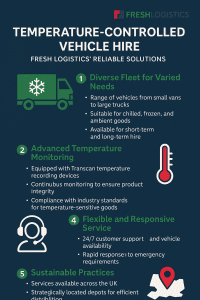 From pharmaceuticals that must remain within strict temperature parameters to perishable goods transport needing freshness, the need for reliable temperature management is paramount across numerous industries. Without effective temperature control during transit, businesses risk financial losses, regulatory penalties, and reputational damage. This guide explores the essential elements of temperature controlled vehicle hire, providing detailed insights into its importance, applications, and variations to support informed decision-making for businesses across the United Kingdom.
First a quick plug – Our sister companies Fresh Pharma whom are GDP Compliant Pharma couriers and ‘Fresh Fridge Hire‘ are our (compliant GDP) refrigerated vehicle hire.
What is Temperature Controlled Vehicle Hire?
Temperature controlled vehicle hire refers to the leasing or temporary use of vehicles specifically designed to maintain a fixed temperature range during the transportation of goods.
These vehicles include refrigerated vans, freezer lorries, and climate-controlled trailers, all equipped with specialist technology such as insulated walls and active refrigeration systems to safeguard product integrity.
The primary uses of temperature controlled vehicle hire range from the short-distance delivery of local produce to long-haul pharmaceutical shipments requiring rigorous temperature compliance. Companies may opt for vehicle hire rather than owning a fleet outright to remain flexible, reduce costs, and easily scale operations in line with seasonal demands or specific contracts.
Industries relying on temperature controlled vehicle hire include:
| Industry | Goods Transported | Typical Temperature Range |
| Food & Beverage | Fresh produce, dairy, meat, frozen meals | -25°C to +5°C |
| Pharmaceuticals | Vaccines, medicines, diagnostic kits | +2°C to +8°C |
| Floral | Fresh flowers, ornamental plants | +1°C to +10°C |
| Chemicals | Reactive or volatile chemicals | Varies (often 0°C to 25°C) |
| Technology | Sensitive electronics | 10°C to 25°C |
Choosing the appropriate type of temperature controlled vehicle ensures that transported goods arrive in optimum condition, meeting industry standards and customer expectations.
The Importance of Temperature Control in Transport
Understanding the importance of temperature control in transport is essential for businesses dealing with sensitive products. Even slight deviations from prescribed temperature ranges can cause irreversible damage, leading to product spoilage, safety risks, or invalidation of goods under regulatory standards.
For the food industry, maintaining a cold chain from production to consumption is vital for preventing the growth of harmful bacteria. According to the Food Standards Agency, failure to maintain foods at safe temperatures can result in significant public health risks.
In the pharmaceutical sector, temperature excursions can compromise the efficacy of vaccines and medicines, leading to potentially dangerous outcomes for patients. The Medicines and Healthcare products Regulatory Agency (MHRA) in the UK imposes strict guidelines for temperature controlled transportation to protect public safety.
Floral industries rely on precise temperature and humidity controls to ensure that flowers do not wilt or suffer from accelerated decay. Similarly, chemical manufacturers must maintain stable conditions to prevent dangerous reactions or degradation of sensitive compounds.
Example: A shipment of Covid-19 vaccines must be transported consistently between +2°C and +8°C. A one-hour deviation outside this range could render thousands of doses unusable, costing both financially and reputationally.
A simple table summarises the risks associated with poor temperature control:
| Sector | Risk of Temperature Deviation | Potential Impact |
| Food | Spoilage, bacterial growth | Food poisoning, legal action |
| Pharmaceuticals | Reduced efficacy | Health risks, product recalls |
| Floral | Wilting, loss of quality | Revenue loss, customer dissatisfaction |
| Chemicals | Chemical instability | Safety hazards, financial penalties |
| Technology | Malfunction | Product failure, costly replacements |
By ensuring the correct temperature control measures are in place, businesses not only preserve product quality but also adhere to regulatory compliance and maintain consumer trust.
Industries That Depend on Temperature Controlled Vehicle Hire
Numerous sectors within the UK economy depend heavily on temperature controlled vehicle hire to function effectively. These industries span beyond the obvious examples of food and medicine to include more specialist areas such as floriculture, chemical transportation, and the tech sector.
Food and Beverage Industry
Perhaps the most visible user of temperature controlled vehicles, the food and beverage industry requires precise temperature management to keep products fresh and safe. Meat, seafood, dairy, and ready-to-eat meals all have stringent temperature requirements to ensure compliance with health regulations and avoid spoilage.
Medical and Pharmaceutical Industry
Medicinal products often have narrow temperature margins critical for maintaining potency and safety. Vaccines, blood products, insulin, and certain antibiotics require climate-controlled conditions during distribution. MHRA guidelines dictate that temperature monitoring must be continuous and accurately recorded.
Floral Industry
The UK’s vibrant floristry sector depends on the safe transport of flowers, many of which are imported or grown in climate-sensitive conditions. Roses, lilies, and tropical plants, for example, must be kept at specific low temperatures to prolong shelf life and maintain visual appeal.
Chemical Industry
Specialist chemicals, including laboratory reagents and industrial solvents, may react adversely if exposed to fluctuating temperatures. Vehicles transporting such materials are often fitted with temperature alarm systems to detect and correct anomalies instantly.
Technology Sector
High-end electronics, such as servers, semiconductors, and medical devices, must sometimes be transported under carefully controlled conditions to prevent damage from heat or cold exposure.
Example: Transporting delicate microchips from a manufacturer in Cambridge to a tech company in London would require a temperature controlled van set between 15°C and 22°C, avoiding condensation or overheating.
This reliance on temperature controlled transport across so many sectors highlights its critical role in supporting the UK economy and maintaining public safety.
Different Types of Temperature Controlled Vehicles for Hire
Choosing the correct type of temperature controlled vehicle is vital to match the specific needs of the product and journey.
| Vehicle Type | Typical Use | Temperature Range |
| Small Refrigerated Van | Local deliveries of groceries, catering events | -5°C to +8°C |
| Medium Freezer Van | Frozen food distribution, ice cream deliveries | -25°C to 0°C |
| Large Refrigerated Lorry | Wholesale food supplies, pharmaceutical distribution | -25°C to +8°C |
| Dual Compartment Vehicles | Mixed load deliveries (e.g., frozen and fresh) | Separate zones: -25°C and +5°C |
| Climate-Controlled Trailer | Sensitive electronics, specialist chemicals | 0°C to +25°C |
- Refrigerated vans are ideal for urban deliveries due to their size and manoeuvrability.
- Freezer vans provide ultra-low temperatures suitable for frozen goods and are often used for long-haul trips.
- Refrigerated lorries can carry significant loads and maintain consistent low temperatures over long distances.
- Dual compartment vehicles are essential for businesses needing to transport both frozen and chilled products simultaneously.
- Climate-controlled trailers offer controlled ambient conditions, important for products that need protection from both heat and freezing.
For instance, a catering company in Manchester delivering fresh sandwiches and frozen desserts for a corporate event would benefit from hiring a dual compartment refrigerated van to maintain optimal conditions for both product types.
Refrigerated vs. Frozen Vehicle Hire: What’s the Difference?
A frequent source of confusion for businesses is the distinction between refrigerated and frozen vehicle hire. While both types of vehicles offer temperature regulation, their key differences lie in the specific temperature ranges they maintain and the nature of goods they are intended to transport.
| Feature | Refrigerated Vehicle | Frozen Vehicle |
| Typical Temperature Range | +1°C to +8°C | -18°C to -25°C |
| Goods Transported | Fresh produce, dairy, pharmaceuticals, flowers | Ice cream, frozen meat, frozen seafood |
| Technology | Standard refrigeration unit | High-power freezing system |
| Examples | Supermarket deliveries of fresh fruit | Wholesale frozen food suppliers |
Refrigerated vehicles are suited for goods that need to be kept cool but not frozen. For example, artisan cheeses from Somerset would require a refrigerated van kept at around +4°C to maintain taste and texture without freezing the product.
Frozen vehicles, on the other hand, are necessary for goods that must remain solidly frozen during transport. Delivering premium ice cream from Devon to retail stores across the South East would necessitate a frozen lorry capable of maintaining -20°C continuously.
Choosing the wrong vehicle type can have disastrous consequences. Fresh strawberries transported in a frozen van could suffer from cell damage upon thawing, resulting in an unsellable product. Likewise, failing to use a frozen vehicle for ice cream transport could cause the goods to melt, refreeze, and degrade, making them unsafe for consumption.
Understanding these distinctions enables businesses to select the correct vehicle hire service for their specific needs, ensuring that goods are protected throughout the entire journey.
Of course! Here’s your expanded and improved content in UK English, with key phrases integrated into the H1 and H2 headings, expanded explanations, examples (UK-based), and detailed tables. No unnecessary line breaks added:
Choosing the Right Vehicle for Your Needs in Temperature Controlled Transport
When it comes to selecting the most suitable temperature controlled vehicle for your business needs, several key factors must be carefully considered. The importance of choosing correctly cannot be overstated, as making the wrong selection could compromise your goods, customer satisfaction, and even your compliance with regulatory standards.
One of the first considerations is the temperature range required for your cargo. Not all goods have the same requirements; for instance, pharmaceuticals often need ultra-low temperatures, whereas fresh produce like strawberries or leafy greens may only require mild cooling. Vehicles vary significantly in their ability to maintain specific temperature bands. Chillers typically maintain between +2°C and +8°C, whereas freezers can go down to -25°C.
Vehicle size
Is another crucial factor. Businesses should match vehicle size to load size to optimise costs and efficiency. Overloading small vehicles can lead to insufficient cooling, while underloading larger vehicles wastes fuel and reduces cost-effectiveness. For example, a small bakery delivering locally around Bristol may only need a refrigerated van, whereas a seafood distributor covering Scotland might require articulated refrigerated lorries.
Distance
Delivery also plays a role. Short urban deliveries might only need light vehicles with basic refrigeration units. However, for longer hauls across the UK – such as from London to Glasgow – vehicles must be equipped with more robust systems capable of maintaining temperatures over extended periods without interruption.
Load type
Greatly affects vehicle choice as well. Perishable foods, medical supplies, and floral products all have very different handling and temperature needs. Some loads might benefit from multi-temperature compartments, allowing simultaneous transportation of goods requiring different conditions.
| Factor | Considerations | Examples |
| Temperature Range | Chilled, frozen, ambient | Ice cream needs -18°C; fresh dairy needs +4°C |
| Vehicle Size | Van, Lorry, Artic | Local catering van vs national grocer lorry |
| Distance | Short haul vs long haul | 20 miles around Manchester vs London to Edinburgh |
| Load Type | Food, flowers, pharmaceuticals | Fresh flowers need humidity control as well |
Making the right choice protects the integrity of your goods and supports your brand reputation.
Benefits of Hiring Over Buying Temperature Controlled Vehicles
The decision between hiring or buying temperature controlled vehicles is pivotal for many businesses across the UK. While ownership may seem attractive to some, the numerous benefits of hiring often outweigh the investment in purchasing, particularly when flexibility and cost are critical factors.
Flexibility is perhaps the most immediate advantage. Hiring allows companies to adjust their fleet size according to seasonal demands or specific contracts without long-term commitment. For instance, a chocolate distributor in Leicester might require additional refrigerated vans around Easter and Christmas but not during quieter months. Hiring gives the ability to scale up or down as needed.
From a cost-effectiveness perspective, hiring reduces the significant upfront capital expenditure involved in purchasing a temperature controlled vehicle. Instead of tying up large sums of money, businesses can allocate funds to other areas like marketing or product development. Operational expenses also tend to be more predictable with leasing, helping companies manage budgets more efficiently.
Maintenance savings are another important consideration. When hiring, maintenance and servicing are often included as part of the hire package. This ensures vehicles remain in prime condition without unexpected repair bills. It also minimises downtime, as hire companies often provide immediate replacements in the event of a breakdown.
Moreover, vehicle depreciation – which can be significant in the temperature controlled sector – becomes a non-issue for hirers. A bakery in Birmingham, for example, would avoid the hassle of selling an ageing vehicle that has lost much of its value.
| Benefit | Explanation | Example |
| Flexibility | Adapt fleet size as needed | Summer ice cream boom in Brighton |
| Cost-Effectiveness | Lower upfront investment | Start-up food delivery service in Leeds |
| Maintenance Savings | Servicing included in hire cost | Pharmacy deliveries in rural Wales |
In conclusion, hiring offers a practical, financially sound solution for businesses that need reliability without the burden of ownership.
Key Features to Look for in a Temperature Controlled Vehicle for Hire
When seeking the best temperature controlled vehicle for hire, businesses must prioritise several critical features to ensure product integrity and customer satisfaction.
One key feature is real-time temperature monitoring. Modern systems offer live tracking, allowing companies to monitor the internal climate of their cargo remotely. For instance, a Sheffield-based cheese distributor can monitor their load en route to London, ensuring compliance with Food Standards Agency (FSA) guidelines.
Backup systems are vital for ensuring no single failure compromises the entire load. A good vehicle will have secondary refrigeration units or emergency batteries. These fail-safes are particularly important for critical deliveries, such as vaccines, where a temperature breach could render the entire cargo unusable.
Another desirable feature is multi-compartment options. Vehicles with independently controlled compartments can carry multiple types of goods at once, each at their required temperature. For example, a catering company in Southampton might transport frozen desserts at -18°C in one section and chilled wines at +5°C in another.
Further features to consider include:
- Insulated curtains to minimise cold air loss when doors are opened.
- Temperature logging systems that store historical data for compliance audits.
- Remote diagnostics to detect issues before they cause major disruptions.
| Feature | Importance | Example |
| Real-Time Monitoring | Immediate problem detection | Live updates on fish deliveries to Cardiff |
| Backup Systems | Prevents spoilage | Dual compressor for vaccine delivery vans |
| Multi-Compartment Options | Versatile loads | Catering vans delivering hot and cold foods simultaneously |
Ensuring these features are present helps businesses meet both legal obligations and customer expectations with confidence.
Understanding Temperature Monitoring and Reporting in Temperature Controlled Vehicles
Understanding temperature monitoring and reporting is essential for any business using temperature controlled vehicles, especially when transporting sensitive goods across the UK.
Tracking systems form the backbone of modern temperature assurance. These systems record data at frequent intervals, sometimes every minute, and feed it back to a central dashboard where logistics managers can track multiple vehicles in real time. If any deviation from the set range occurs, alerts can be sent automatically via SMS or email.
The data captured is not just useful in real-time but also for compliance reporting. Many industries, including food service, healthcare, and floral supply, must demonstrate that their goods were transported under correct conditions. For instance, supermarkets receiving chilled meats from Lincolnshire suppliers often require detailed temperature logs as part of their delivery acceptance processes.
By providing an accurate, uneditable history of transportation conditions, businesses build customer trust. Clients can be assured that goods have been handled with care throughout their journey. Temperature breaches or gaps in recording can damage reputations and, worse, lead to legal penalties under UK law.
Key components of effective temperature monitoring include:
- Temperature sensors: strategically placed within the load space.
- GPS integration: linking location with temperature data.
- Cloud-based reporting: secure, accessible data storage.
| Component | Role | Example |
| Temperature Sensors | Capture precise internal conditions | Sensors inside pharmaceutical vans |
| GPS Integration | Correlate location with data | Track produce deliveries in Cornwall |
| Cloud-Based Reporting | Easy compliance and audit trails | Temperature logs for Edinburgh hospitals |
Effective monitoring and reporting systems are no longer optional; they are fundamental to running a reputable, compliant temperature controlled logistics business.
Seasonal Demand and Temperature Controlled Vehicle Hire in the UK
The subject of seasonal demand and temperature controlled vehicle hire in the UK is one that businesses must strategically plan for. As seasons change, so too do the needs for refrigerated and frozen transport solutions.
Summer months typically drive higher demand for temperature controlled vehicles. Warm weather in cities like London, Manchester, and Birmingham increases the need to protect perishable goods such as dairy products, meats, and chocolates. Without adequate cooling, even short transport times can result in spoilage, significant losses, and customer dissatisfaction.
Similarly, the holiday season – notably in November and December – spikes demand across many industries. Retailers and food suppliers stock up for Christmas, necessitating additional fleet capacity. For example, a Yorkshire-based turkey farm might hire several extra freezer vans to ensure their produce reaches supermarkets and farm shops in peak condition.
Other seasonal events influencing demand include:
- Spring weddings boosting floral deliveries requiring climate control.
- Easter holidays increasing the need for transporting confections.
- Back-to-school periods requiring foodservice distributors to ramp up operations.
Companies that fail to anticipate these surges can find themselves struggling to meet customer expectations. Forward planning, including securing hired vehicles well in advance, is crucial.
| Season/Event | Impact | Example |
| Summer Heat | Risk of spoilage increases | Ice cream delivery to Brighton beaches |
| Christmas Holidays | Higher retail demand | Christmas turkey deliveries across Kent |
| Spring Weddings | Floral preservation needs | Flower wholesalers serving London weddings |
Understanding and preparing for seasonal variations ensures smoother operations, better financial planning, and enhanced customer satisfaction.
Of course! Here’s the expanded and detailed content, in UK English, with your requested formatting and keyphrase usage integrated appropriately:
Legal and Compliance Requirements for Temperature Controlled Transport
Ensuring legal compliance in temperature controlled transport is crucial for businesses operating within sectors like food production, pharmaceuticals, and healthcare. In the United Kingdom, strict regulatory frameworks are enforced by agencies such as the Food Standards Agency (FSA) and the Medicines and Healthcare products Regulatory Agency (MHRA). These organisations set detailed requirements to protect public health and ensure the integrity of sensitive goods during transportation.
The FSA provides guidelines
Demand strict control over the temperature at which food products are stored and transported. According to FSA regulations, perishable foods such as meat, dairy, and seafood must be kept at temperatures that inhibit bacterial growth — typically below 5°C for chilled items and -18°C for frozen products. Vehicles used for food transport must be equipped with reliable temperature monitoring systems, and records must be maintained to demonstrate compliance during audits.
The MHRA oversees the transportation of pharmaceutical products, including vaccines, biologics, and temperature-sensitive medications. The MHRA’s Good Distribution Practice (GDP) guidelines stipulate that all medicinal products must be stored and transported within strict temperature ranges, often between 2°C and 8°C, depending on the product. Failure to comply can result in substantial financial penalties, product recalls, and serious reputational damage.
In practice,
Companies must ensure that their temperature controlled vehicles are not only fitted with calibrated temperature monitoring equipment but also have backup systems such as insulated containers and refrigeration units with emergency power sources. Staff training is also vital; drivers and handlers must be familiar with the procedures for maintaining temperature integrity, responding to equipment failures, and documenting any incidents.
An example of best practice would include a bakery delivering fresh cream cakes across London. The bakery’s fleet would need to ensure that each van maintains a temperature below 5°C throughout the journey. Each driver would log temperatures every hour and report any anomalies immediately.
Below is a table summarising key legal requirements:
| Regulatory Body | Sector | Key Requirements |
| FSA | Food Transport | Maintain chilled (≤5°C) and frozen (≤-18°C) temperatures, record keeping, vehicle hygiene standards |
| MHRA | Pharmaceutical Transport | Comply with GDP, maintain specified temperature ranges, incident reporting and risk management |
In short, complying with legal and compliance requirements for temperature controlled transport not only ensures safety but also builds trust with customers and regulatory bodies.
Top Questions to Ask Before Hiring a Temperature Controlled Vehicle
When sourcing a vehicle for temperature controlled transport, choosing the right provider is critical. Asking the right questions before entering into a hire agreement can save a great deal of hassle, cost, and risk. It ensures the vehicle meets your specific needs and that you are fully covered in case of emergencies.
Firstly,
Ask about insurance coverage. Comprehensive insurance should include not just vehicle damage, but also the goods being transported. Does the hire company provide Goods in Transit insurance, or will you need to arrange this separately? Understanding the insurance terms can prevent unpleasant surprises in the event of a mishap.
Secondly
Inquire about maintenance schedules. A well-maintained vehicle is far less likely to suffer mechanical failures, which could jeopardise your goods. Ask when the vehicle was last serviced, and request maintenance records if possible.
Emergency support is another critical area. Does the company offer 24/7 roadside assistance? What procedures are in place if the refrigeration unit fails? Prompt support can mean the difference between salvaging a load and losing thousands of pounds worth of goods.
Other important questions include:
- What is the vehicle’s temperature range and accuracy?
- Are backup systems available if primary refrigeration fails?
- Is real-time temperature monitoring provided?
- What is the cost structure for the hire period? Are there penalties for mileage overages or late returns?
- Is driver training provided if you are hiring with a driver?
For example, if you were a chocolatier needing to transport delicate truffles during a summer heatwave, you would want to ensure the vehicle could maintain a consistent 15°C and have robust contingency measures if external temperatures soared unexpectedly.
Below is a checklist to consider:
| Question | Why It Matters |
| Insurance coverage? | Protects goods and vehicle |
| Maintenance history? | Reduces risk of breakdown |
| Emergency support available? | Ensures fast response to issues |
| Temperature monitoring? | Guarantees compliance and quality |
| Cost transparency? | Avoids hidden charges |
Careful vetting ensures you select the right temperature controlled transport partner for your business needs.
Common Challenges in Temperature Controlled Transport (and How to Overcome Them)
Operating a successful temperature controlled transport service is not without its difficulties. Common challenges include vehicle breakdowns, fluctuating internal temperatures, and external factors like traffic delays — each of which can pose a serious threat to the quality of the transported goods.
Vehicle breakdowns are a significant risk. Even with regular maintenance, mechanical issues can occur. Breakdown-related temperature loss can quickly spoil sensitive products. To mitigate this, reputable companies use vehicles with dual refrigeration units and provide 24/7 roadside assistance. Planning routes carefully and scheduling regular vehicle checks further reduces this risk.
Out of Spec
Fluctuating temperatures within the vehicle can also endanger goods. Factors such as frequent door openings, faulty insulation, or a failing thermostat can cause internal temperatures to deviate from the required range. Overcoming this involves using temperature monitoring systems that provide real-time data to the driver and remote supervisors. Vehicles should also be equipped with insulated curtains and internal alarms that alert operators to temperature fluctuations.
Traffic delays, particularly in busy areas such as central London or major motorways like the M25, are another threat. Delays can extend journey times, potentially risking products if they have a limited time within a safe temperature range. Solutions include using route optimisation software, scheduling deliveries during off-peak hours, and ensuring that vehicles are fitted with battery-powered refrigeration systems that remain operational even when the engine is off.
An illustrative scenario: a flower distributor needs to deliver arrangements to multiple hotels in Manchester during peak tourist season. Unexpected road closures could cause delays. Having a dynamic routing system and continuous cooling allows deliveries to proceed without compromising the freshness of the flowers.
Here’s a table showing challenges and solutions:
| Challenge | Potential Impact | Solution |
| Vehicle breakdown | Spoiled goods | Dual refrigeration, roadside assistance |
| Temperature fluctuations | Compromised product quality | Real-time monitoring, insulated curtains |
| Traffic delays | Extended delivery times | Route optimisation, off-peak deliveries |
Proactively addressing these common challenges ensures smooth and reliable temperature controlled transport operations.
Cost Factors Involved in Temperature Controlled Vehicle Hire
Understanding the cost factors involved in temperature controlled vehicle hire is essential for budgeting and making an informed decision. Several elements influence the overall cost, from the type of vehicle hired to the insurance coverage required.
Mileage is a major factor. Some companies offer unlimited mileage, while others impose limits and charge excess fees per additional mile. Long-distance deliveries will naturally cost more, particularly if multiple stops or international transport is involved.
The hire period
Significantly affects pricing. Short-term hires — perhaps for a weekend event or a one-off delivery — tend to be more expensive per day than long-term contracts, but they offer greater flexibility. Conversely, long-term agreements often come with discounts but require a greater commitment.
Vehicle type plays a crucial role. Smaller vans with basic refrigeration are less expensive to hire than large, multi-compartment trucks capable of maintaining multiple temperature zones. Specialist vehicles with pharmaceutical-grade refrigeration systems or enhanced security measures, like GPS tracking and tamper alarms, will also attract a premium price.
Insurance considerations must not be overlooked. Comprehensive insurance, including Goods in Transit cover, is often a necessary addition. It’s important to clarify whether insurance is included in the hire price or an optional extra.
An example breakdown:
| Cost Factor | Description | Impact on Price |
| Mileage | Total distance covered | High mileage = higher cost |
| Hire Period | Duration of hire | Longer period = lower daily rate |
| Vehicle Type | Size and features | Specialist vehicles = higher price |
| Insurance | Coverage for vehicle and goods | Full coverage = higher upfront cost |
For example, a catering company needing to deliver chilled buffets to multiple wedding venues around the South East might choose a medium-sized refrigerated van for a 7-day hire, balancing vehicle capacity with cost efficiency.
By carefully considering all these factors, businesses can budget effectively and avoid unexpected costs when planning for temperature controlled vehicle hire.
Why Choose Fresh Fridge Hire for Temperature Controlled Vehicle Hire?
Choosing a provider for temperature controlled vehicle hire is not a decision to be taken lightly. At Fresh Fridge Hire, we believe we offer the ideal combination of quality, service, and value.
Our fleet consists of the latest model vehicles, each maintained to the highest standards. Equipped with advanced refrigeration units, real-time temperature monitoring, and dual-system redundancies, our vans and lorries can handle everything from frozen goods to ambient pharmaceuticals with equal ease.
We provide 24/7 support, including roadside assistance, replacement vehicles, and dedicated customer service. This means that no matter when an issue arises, our team is ready to respond immediately, ensuring that your delivery remains on track.
Our pricing is competitive and transparent. We offer flexible hire options to suit all needs, from short-term hires for weekend events to long-term contracts for ongoing logistics operations. There are no hidden charges, and we provide clear quotations upfront.
Moreover, our customers consistently praise us for our professionalism, reliability, and attention to detail. Here’s what one satisfied client had to say: “We have used Fresh Fridge Hire for over three years to transport our fresh produce across the Midlands. Their vehicles are impeccably clean, always on time, and the team goes the extra mile whenever needed.”
Here’s a quick summary of our USPs:
| Unique Selling Point | Benefit to You |
| Fleet Quality | Reliable deliveries, enhanced brand reputation |
| 24/7 Support | Peace of mind in emergencies |
| Competitive Pricing | Budget-friendly options with no surprises |
| Excellent Customer Service | Smooth, hassle-free experience |
When you choose Fresh Fridge Hire for your temperature controlled vehicle hire needs, you are choosing a partner you can trust to deliver quality, reliability, and exceptional service every time.
Benefits of Professional Temperature Controlled Vehicle Hire
Investing in professional temperature controlled vehicle hire offers numerous benefits. It ensures compliance with stringent regulatory standards, protects your valuable goods, and provides peace of mind through access to modern, well-maintained vehicles and comprehensive support services.
Professional providers like Fresh Fridge Hire offer flexible solutions, transparent pricing, and industry-leading customer service, making them an ideal choice for businesses that cannot afford to compromise on quality or reliability.
Whether you need to transport gourmet foods, pharmaceutical products, or temperature-sensitive flowers, a trusted partner ensures your goods arrive in perfect condition, every time.
Get a free quote today and discover how Fresh Fridge Hire can support your temperature controlled transport needs with excellence and reliability!
Refrigerated Transport
- What is temperature-controlled transportation?
Transporting goods in vehicles that maintain a specific temperature to keep products safe and fresh.
- What is a temperature-controlled van?
A van equipped with refrigeration or heating systems to keep goods within a required temperature range during delivery.
- What is a temperature-controlled item?
A product that must be kept at a specific temperature to maintain its quality, safety, or effectiveness.
- What is a temperature-controlled vehicle (TCV)?
A vehicle designed with insulation and cooling or heating systems to transport temperature-sensitive goods.
- What does temperature controlled mean?
It means keeping something within a specific temperature range to prevent damage or spoilage.
- How does temperature control work?
It uses refrigeration, insulation, and monitoring systems to maintain a stable temperature inside the vehicle.
- How is temperature controlled?
By using cooling units, heaters, insulation, and temperature sensors to regulate and monitor the temperature.
- Which are the four types of transport?
Road, rail, air, and sea transport.
- Why is temperature control necessary?
To prevent spoilage, maintain quality, and ensure safety of temperature-sensitive goods.
- Do DHL have refrigerated vans?
Yes, DHL uses temperature-controlled vehicles for transporting sensitive goods such as pharmaceuticals and food

Alan is the Founder and MD at the Fresh Group of companies. You are welcome to use any information you find interesting. Please give us a link back to our webpage or post. It really helps SME’s rank in the UK.